13 Jul, 2026 | Stephanie Sanders | No Comments
GLP-1 and GLP-2: Benefits, Risks, and How Nutrition Supports Your Body’s Natural Systems
Stephanie Larmour Sanders, MS, RDN, CDE, FNLP
Anti-Inflammatory Dietitian and Nutritionist
Symptoms Are Signals
Weight gain, persistent hunger, blood sugar swings, fatigue, and difficulty feeling satisfied after meals are often treated as isolated problems.
But these symptoms may also be clues.
They may point toward patterns involving:
- Blood sugar regulation
- Food quality
- Sleep
- Stress
- Muscle loss
- Hormonal changes
- Gut health
- Inflammatory load
- Certain medications
- Physical activity
As an Anti-Inflammatory Dietitian and Nutritionist, I encourage people to become detectives rather than simply chasing one symptom at a time. The increasing use of GLP-1 medications has created an important conversation about weight management, diabetes, appetite, and metabolic health.
These medications can be valuable tools for appropriately selected individuals. However, medication is only one part of the larger picture.Nutrition, movement, sleep, stress management, muscle preservation, and gut health remain essential whether a person uses medication or not.
Healthy anti-inflammatory meal with salmon, colorful vegetables, quinoa, berries, nuts, avocado, yogurt, legumes, and water.

A balanced meal containing protein, fiber, healthy fats, and colorful plant foods can support fullness, blood sugar balance, gut health, and overall metabolic wellness.
What Are GLP-1 and GLP-2?
GLP stands for glucagon-like peptide.
GLP-1 and GLP-2 are hormones released primarily by specialized intestinal cells called L-cells after we eat.
Although they are released from similar areas of the digestive tract, they have different roles.
What Does GLP-1 Do?
GLP-1 helps the body:
- Release insulin when blood sugar rises
- Reduce inappropriate glucagon release
- Slow stomach emptying
- Increase feelings of fullness
- Reduce appetite
- Improve blood sugar regulation
- Communicate with areas of the brain involved in hunger and satiety
Prescription GLP-1 receptor agonists imitate or enhance some of these natural effects.
Some medications also affect another hormone pathway called GIP, or glucose-dependent insulinotropic polypeptide.
What Does GLP-2 Do?
GLP-2 is less commonly discussed in conversations about weight loss.
Its primary actions involve the digestive tract.
GLP-2 helps support:
- Growth and maintenance of the intestinal lining
- Intestinal barrier integrity
- Nutrient absorption
- Digestive function
- Blood flow within the intestinal tract
- Recovery of intestinal tissue in certain medical conditions
Diagram comparing the roles of GLP-1 in appetite and blood sugar regulation with GLP-2 in intestinal health and nutrient absorption.
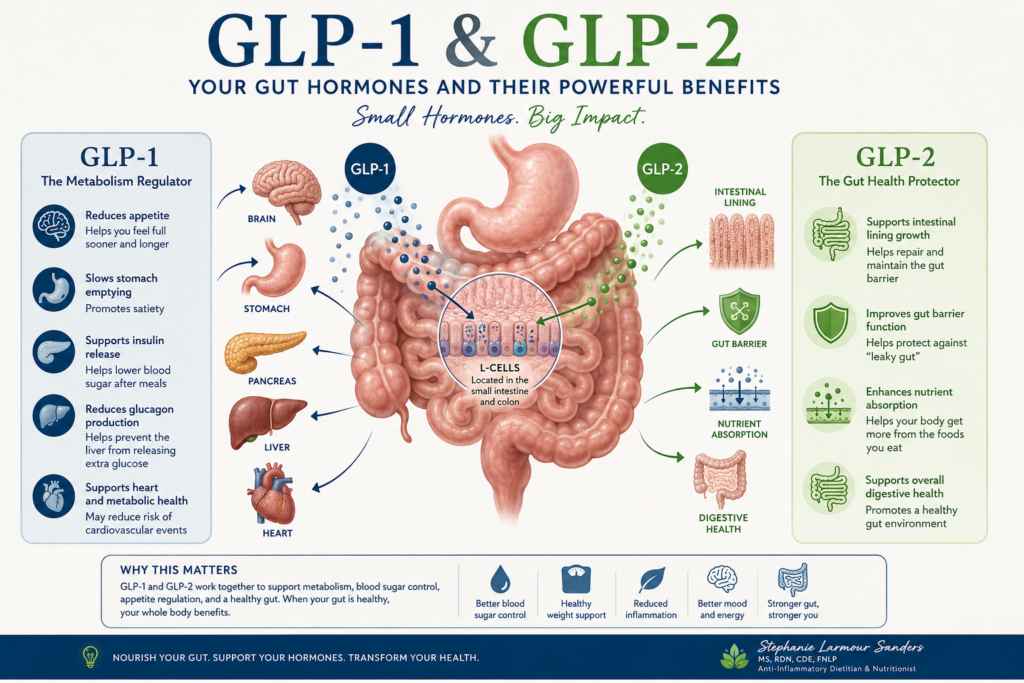
GLP-1 primarily helps regulate appetite, fullness, blood sugar, and insulin response. GLP-2 primarily supports intestinal structure, barrier integrity, and nutrient absorption.
Why Have GLP-1 Medications Become So Popular?
GLP-1 medications influence biological hunger and fullness signals.
For many people, this makes it easier to:
- Feel satisfied with smaller portions
- Experience less food noise
- Reduce hunger
- Improve blood sugar
- Lose weight
- Maintain a more structured eating pattern
This is important because weight management is not simply a matter of willpower.
Appetite is influenced by complex interactions among:
- Hormones
- The brain
- The digestive system
- Sleep
- Stress
- Food composition
- Medications
- Muscle mass
- Blood sugar regulation
- Genetics and environment
Potential Benefits of GLP-1 Medications
Improved Blood Sugar Control
GLP-1 medications may improve insulin release when blood sugar is elevated and reduce excessive glucose production.
For people with Type 2 diabetes, this can contribute to improved blood sugar and A1C levels.
Meaningful Weight Loss
Many people experience clinically meaningful weight loss while using these medications.
Weight loss may contribute to improvements in:
- Blood pressure
- Blood sugar
- Mobility
- Sleep apnea
- Joint discomfort
- Triglycerides
- Quality of life
Reduced Hunger and Food Noise
Some individuals describe having fewer persistent thoughts about food and feeling more satisfied after eating.
Cardiovascular Benefits
Certain GLP-1 medications have demonstrated cardiovascular benefits for selected patients at elevated risk.
Possible Metabolic and Liver Benefits
These medications may also improve several metabolic risk factors and may benefit some individuals with metabolic liver disease.
Potential Drawbacks and Considerations
Digestive Side Effects
Common side effects may include:
- Nausea
- Vomiting
- Constipation
- Diarrhea
- Reflux
- Bloating
- Abdominal discomfort
- Reduced tolerance for larger meals
These symptoms may improve as the body adjusts, but some individuals continue to experience difficulty.
Inadequate Nutrition
When appetite drops significantly, people may eat too little protein, fiber, fluid, vitamins, and minerals.
Eating less does not automatically mean eating better.
A very small diet composed mostly of low-nutrient foods may contribute to:
- Fatigue
- Weakness
- Constipation
- Nutrient gaps
- Poor recovery
- Reduced muscle mass
Loss of Lean Muscle
Weight loss can include both body fat and lean tissue.
This is especially important for middle-aged and older adults because muscle supports:
- Strength
- Mobility
- Balance
- Glucose disposal
- Metabolism
- Bone health
- Healthy aging
- Independence
Adequate protein and appropriate resistance exercise should be considered part of the treatment plan.
Weight Regain After Discontinuation
Some people regain weight after stopping medication, particularly when sustainable food and lifestyle habits have not been established.
This does not mean the person failed.
It reflects the ongoing biological forces that influence appetite and body weight.
Cost and Access
Cost, insurance coverage, medication availability, and eligibility can affect access.
Medical Risks and Contraindications
These medications are not appropriate for everyone.
A qualified healthcare practitioner should review:
- Medical history
- Current medications
- Digestive symptoms
- Gallbladder or pancreatic history
- Kidney status
- Pregnancy plans
- Personal and family history
- Individual risks and treatment goals
Comparison chart showing benefits, considerations, and long-term roles of GLP-1 medications and nutrition and lifestyle approaches.
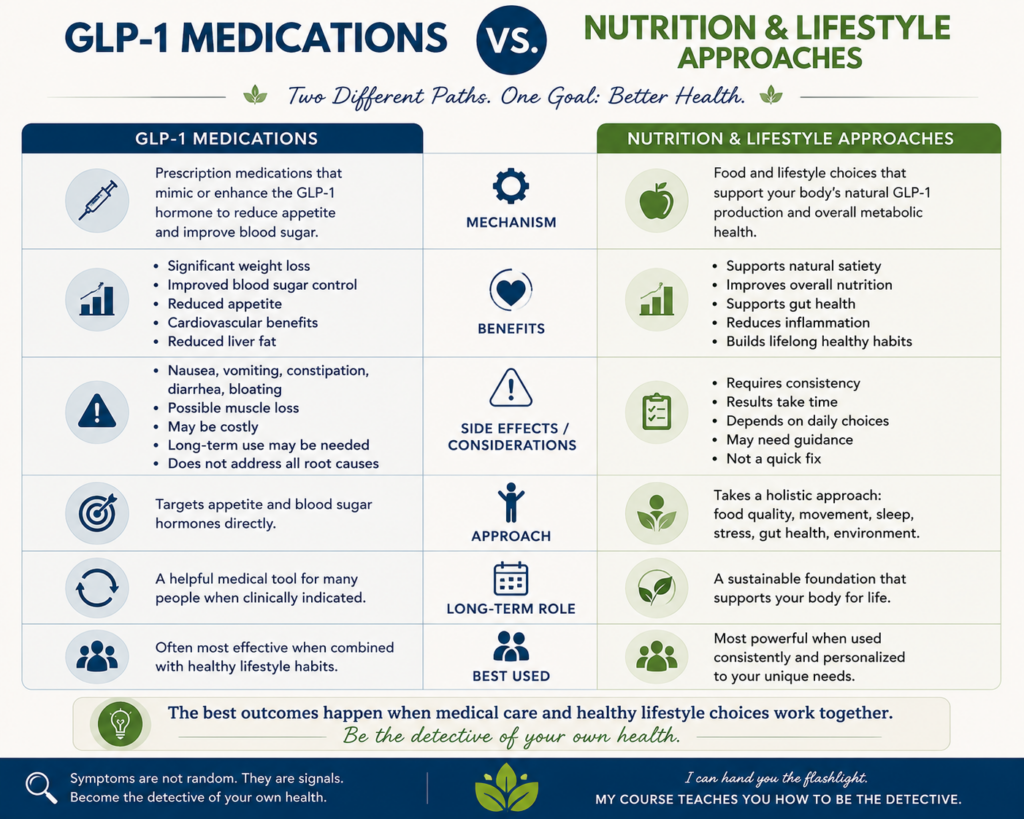
Medication and lifestyle are not competing approaches. When medication is medically appropriate, nutrition and lifestyle habits remain essential for supporting muscle, digestion, blood sugar, and long-term health.
Can Nutrition Support the Body’s Natural GLP-1 Response?
Yes, meals can stimulate the body’s natural release of fullness and digestive hormones, including GLP-1.
However, nutrition does not produce the same strength or duration of effect as a prescription GLP-1 medication.
It is therefore more accurate to say that nutrition can support the body’s natural GLP-1 system rather than claim that food directly replaces medication.
For some people, nutrition and lifestyle changes may be enough to improve fullness, weight, and blood sugar.
For others, medication may be medically appropriate.
Many people benefit most from combining appropriate medical care with strong nutrition and lifestyle support.
Seven Ways to Naturally Support Your GLP-1 System
1. Eat Enough Protein
Protein contributes to fullness and stimulates several digestive and appetite-regulating hormones.
Protein also helps protect muscle during weight loss.
Possible protein choices include:
- Fish
- Chicken
- Turkey
- Eggs
- Greek yogurt
- Cottage cheese
- Lean meat
- Tofu
- Tempeh
- Beans
- Lentils
Protein needs vary according to age, body size, kidney function, activity level, health status, and weight-loss goals.
2. Increase Fiber Gradually
Fiber can slow digestion, improve fullness, support bowel regularity, and nourish beneficial intestinal bacteria.
Fiber-rich foods include:
- Vegetables
- Berries
- Apples
- Pears
- Beans
- Lentils
- Oats
- Barley
- Chia seeds
- Ground flaxseed
Increase fiber gradually and drink adequate fluid, especially when constipation is already present.
3. Choose Healthy Fats
Healthy fats may help improve meal satisfaction and slow digestion.
Examples include:
- Extra-virgin olive oil
- Avocado
- Walnuts
- Almonds
- Pistachios
- Chia seeds
- Flaxseed
- Fatty fish
Portions still matter because fats are energy-dense, but they can be valuable parts of a balanced meal.
4. Eat Polyphenol-Rich Plant Foods
Polyphenols are plant compounds that help support antioxidant defenses and the intestinal microbiome.
Examples include:
- Blueberries
- Blackberries
- Cherries
- Colorful vegetables
- Herbs
- Spices
- Green tea
- Unsweetened cocoa
- Dark chocolate with a high cocoa percentage
A simple strategy is to include several different plant colors throughout the week.
5. Include Fermented Foods When Tolerated
Fermented foods may support microbial diversity and digestive health.
Examples include:
- Yogurt with live cultures
- Kefir
- Sauerkraut
- Kimchi
- Miso
- Tempeh
People with histamine intolerance, digestive disorders, or food sensitivities may not tolerate all fermented foods and should individualize their choices.
6. Move Your Body and Protect Muscle
Movement supports insulin sensitivity, blood sugar regulation, mood, mobility, and healthy aging.
Helpful forms of movement may include:
- Walking
- Swimming
- Resistance training
- Chair exercises
- Stretching
- Gardening
- Balance exercises
Resistance exercise is particularly important during intentional weight loss because it helps preserve lean muscle.
7. Prioritize Sleep and Stress Management
Poor sleep and chronic stress can affect:
- Hunger
- Cravings
- Insulin sensitivity
- Energy
- Food choices
- Emotional eating
- Motivation for movement
Small strategies may include:
- Maintaining a regular bedtime
- Reducing late-night screen exposure
- Using breathing exercises
- Spending time outside
- Journaling
- Practicing prayer or meditation
- Creating a relaxing evening routine
Infographic showing seven ways to support natural GLP-1 activity through protein, fiber, healthy fats, polyphenols, fermented foods, movement, sleep, and stress management.
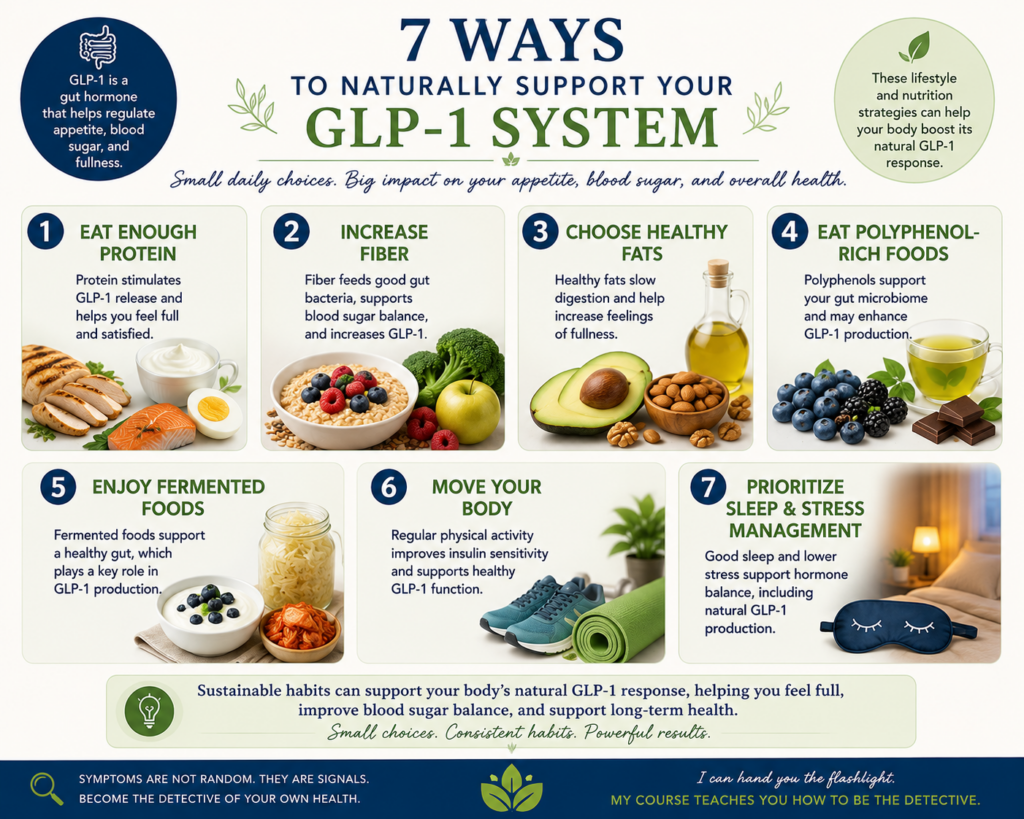
Protein, fiber, healthy fats, polyphenol-rich foods, fermented foods, movement, sleep, and stress management can support fullness, blood sugar regulation, gut health, and long-term metabolic wellness.
What Should You Eat While Taking a GLP-1 Medication?
Nutrition support is especially important while taking a GLP-1 medication because reduced appetite can make it difficult to meet basic nutritional needs.
Begin With Protein
Try to include protein at each meal.
When appetite is low, eat the protein portion first before becoming too full.
Choose Smaller, Balanced Meals
Large, rich, or high-fat meals may worsen nausea or fullness for some people.
Smaller meals may be better tolerated.
A balanced meal may include:
- A protein source
- A cooked or raw vegetable
- A high-fiber carbohydrate when tolerated
- A small amount of healthy fat
Hydrate Consistently
Reduced food intake, vomiting, diarrhea, or constipation can increase the importance of hydration.
Sip fluids regularly rather than waiting until you feel extremely thirsty.
Address Constipation Early
Helpful strategies may include:
- Adequate water
- Gradually increasing fiber
- Walking
- Kiwi
- Prunes
- Chia or ground flaxseed
- Appropriate magnesium under professional guidance
Severe or persistent constipation should be discussed with a healthcare practitioner.
Avoid Losing Muscle
Muscle preservation requires more than weight loss alone.
Focus on:
- Adequate protein
- Resistance exercise
- Sufficient calories
- Regular movement
- Appropriate vitamin and mineral intake
A dietitian can help create an individualized plan based on health conditions, food tolerance, medications, and personal needs.
Can Nutrition Be Used Instead of a GLP-1 Medication?
Sometimes—but not always.
Nutrition and lifestyle interventions may significantly improve metabolic health, particularly when they address:
- Food quality
- Protein intake
- Fiber intake
- Blood sugar patterns
- Sleep
- Stress
- Movement
- Muscle mass
- Emotional eating
- Meal timing
- Ultra-processed food intake
However, some individuals have medical conditions or biological factors for which medication may provide substantial benefit.
It would be misleading to promise that food will reproduce the effects of prescription GLP-1 therapy for everyone.
The better question is not:
“Which one is better?”
The better question is:
“What combination of nutrition, lifestyle support, and medical care is most appropriate for my body?”
Use the Detective Framework
Before deciding that weight gain, hunger, or fatigue is simply a willpower problem, begin gathering clues.
Ask yourself:
- When is my hunger strongest?
- Am I eating enough protein early in the day?
- How much fiber am I eating?
- Do I skip meals and overeat later?
- What happens to my energy after meals?
- How well am I sleeping?
- Am I losing strength or muscle?
- Is stress influencing my appetite?
- Are my medications affecting my weight or blood sugar?
- Do certain foods worsen nausea, reflux, bloating, or fatigue?
- What changed before my symptoms became worse?
A detective does not blame.
A detective observes, gathers evidence, looks for patterns, and makes informed adjustments.
Detective Framework health infographic showing symptoms as tree branches, possible root contributors, and five steps for recognizing patterns and taking action.
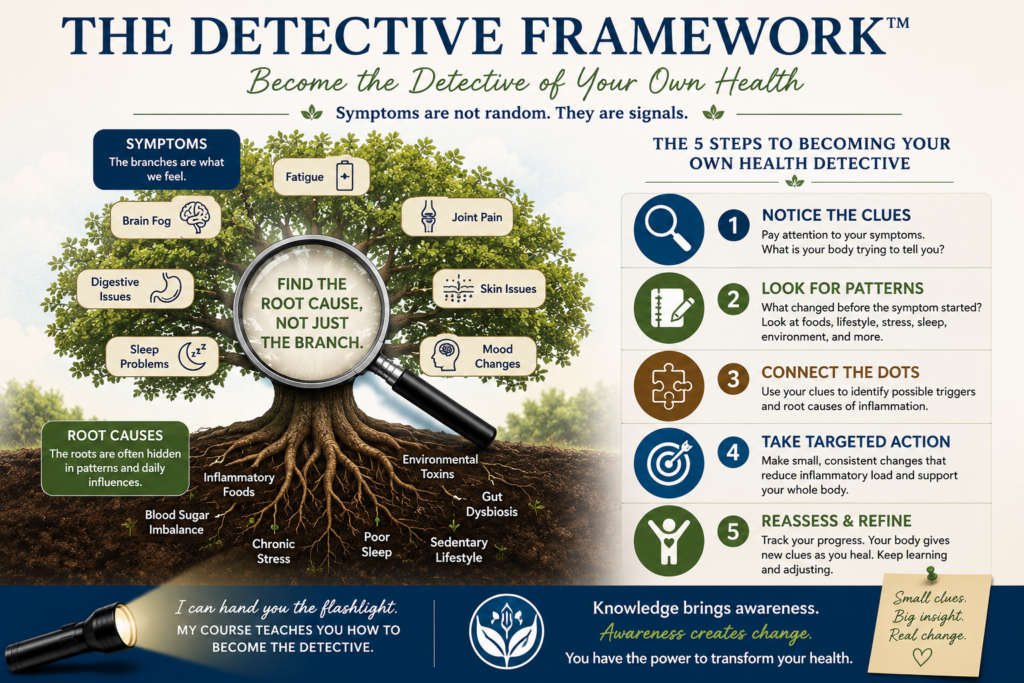
The Detective Framework helps us move beyond chasing symptoms. We notice the clues, look for patterns, connect the dots, take targeted action, and then reassess.
My Detective Perspective
I do not see this as a battle between medication and nutrition.
Medication can be a helpful medical tool.
Nutrition and lifestyle provide the foundation that supports the body before, during, and after weight loss.
Even when appetite is reduced by medication, the body still needs:
- Protein
- Fiber
- Vitamins
- Minerals
- Hydration
- Movement
- Muscle stimulation
- Rest
- Compassionate support
The goal is not simply to make the number on the scale smaller.
The goal is to protect your strength, support your metabolism, improve your health, and help you feel more confident caring for your body.
Final Thoughts
Weight management is not simply a matter of eating less or trying harder.
The body is influenced by hormones, sleep, stress, digestion, blood sugar, food quality, medications, movement, muscle mass, environment, and lived experience.
GLP-1 medications can provide important benefits for many people, but they do not eliminate the need for nutrition and lifestyle support.
Nutrition can help support the body’s natural fullness pathways, but it should not be presented as an exact replacement for prescription treatment.
Become curious about your symptoms.
Gather the clues.
Look for patterns.
Ask better questions.
Then work with your physician, registered dietitian, pharmacist, or other qualified healthcare practitioner to determine which tools are appropriate for you.
Symptoms are not random. They are signals.
I can hand you the flashlight, but my course teaches you how to become the detective.
Medical Disclaimer
This article is for educational purposes only and is not intended to diagnose, treat, cure, or prevent any medical condition. Do not begin, stop, or change a prescribed medication without consulting the healthcare practitioner who manages your care.
Seek prompt medical attention for severe or persistent abdominal pain, repeated vomiting, inability to keep fluids down, signs of dehydration, severe constipation, allergic symptoms, or other concerning changes.
About the Author
Stephanie Larmour Sanders, MS, RDN, CDE, FNLP is an Anti-Inflammatory Dietitian and Nutritionist with decades of healthcare experience.She helps adults recognize that symptoms may be clues and learn how food, sleep, stress, movement, digestion, blood sugar, and environmental factors can contribute to inflammatory load.
Her course, Detecting and Reducing Pro-Inflammatory Lifestyle Factors in 30 Days, gives participants a structured way to begin connecting the dots and becoming the detective of their own health.
Visit StephanieLarmour.com to learn more.
Write Reviews
Leave a Comment
No Comments & Reviews