23 Oct, 2026 | Stephanie Sanders | No Comments
Fiber, Microbial Diversity, and Digestive Health: How to Nourish Your Gut Naturally
By Stephanie Larmour Sanders, MS, RDN, CDE, FNLP
Anti-Inflammatory Dietitian and Nutritionist
Have you ever wondered why two people can eat the same food and have completely different digestive experiences? One person may feel comfortable after a bowl of beans, while another experiences bloating, gas, or abdominal discomfort. Our digestive systems are influenced by many factors, including the foods we eat, medications, health conditions, and the microorganisms living in our intestines.
One important nutritional factor is dietary fiber. Fiber does much more than help keep our bowels regular. Certain types also provide nourishment for beneficial intestinal microorganisms and help support processes involved in digestive and metabolic health. But supporting gut health does not mean eating enormous salads, taking expensive supplements, or following a restrictive diet.
It begins with understanding how fiber works and making realistic changes that your digestive system can tolerate.
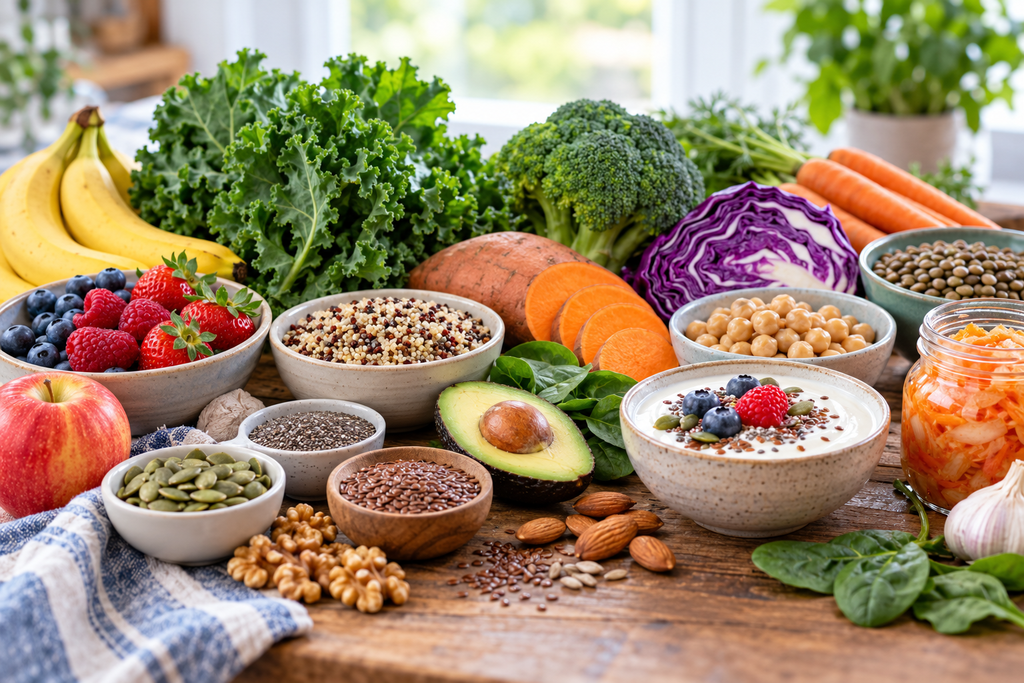
A variety of fiber-rich foods arranged naturally on a kitchen table.
What Is Dietary Fiber?
Dietary fiber is a type of carbohydrate found primarily in plant foods that our digestive enzymes cannot fully break down in the small intestine. Unlike digestible carbohydrates, fiber travels into the large intestine, where it can influence bowel function and, depending on the type, become food for intestinal microorganisms. Fiber is often described in two broad categories.
Soluble Fiber
Soluble fiber dissolves or swells in water. Some forms create a gel-like consistency that may help slow digestion, support cholesterol management, and moderate blood sugar responses.
Good sources include:
- Oats and barley
- Beans and lentils
- Apples and citrus fruits
- Psyllium
- Certain vegetables
Insoluble Fiber
Insoluble fiber generally does not dissolve in water. It can help add bulk to stool and support regular bowel movements.
Sources include:
- Whole grains
- Wheat bran
- Nuts and seeds
- Vegetable skins
- Many vegetables
These categories are useful, but they do not tell the whole story. Another important characteristic is whether a particular fiber can be fermented by gut microorganisms. Most plant foods contain a combination of fiber types, which is one reason variety can be helpful.
Meet Your Gut Microbiome
Your digestive tract is home to a complex community of bacteria, fungi, viruses, and other microorganisms. Together, these microorganisms and their genetic material are called the gut microbiome. Some microorganisms help break down food components that our own digestive enzymes cannot process. Others participate in the production of metabolites, interact with the intestinal lining, and communicate with the immune system.
Researchers are continuing to explore how these activities influence human health.
What Does Microbial Diversity Mean?
Microbial diversity refers to the variety and distribution of microorganisms living within a community.
Think of a garden.
A garden containing several different plants may have a different balance of organisms and functions than a garden growing only one type of plant. Our intestinal ecosystem is also complex.
However, more microbial diversity is not automatically better in every situation. The types of organisms present, what they do, and the person’s health circumstances all matter. There is no single ideal microbiome composition that applies to everyone.
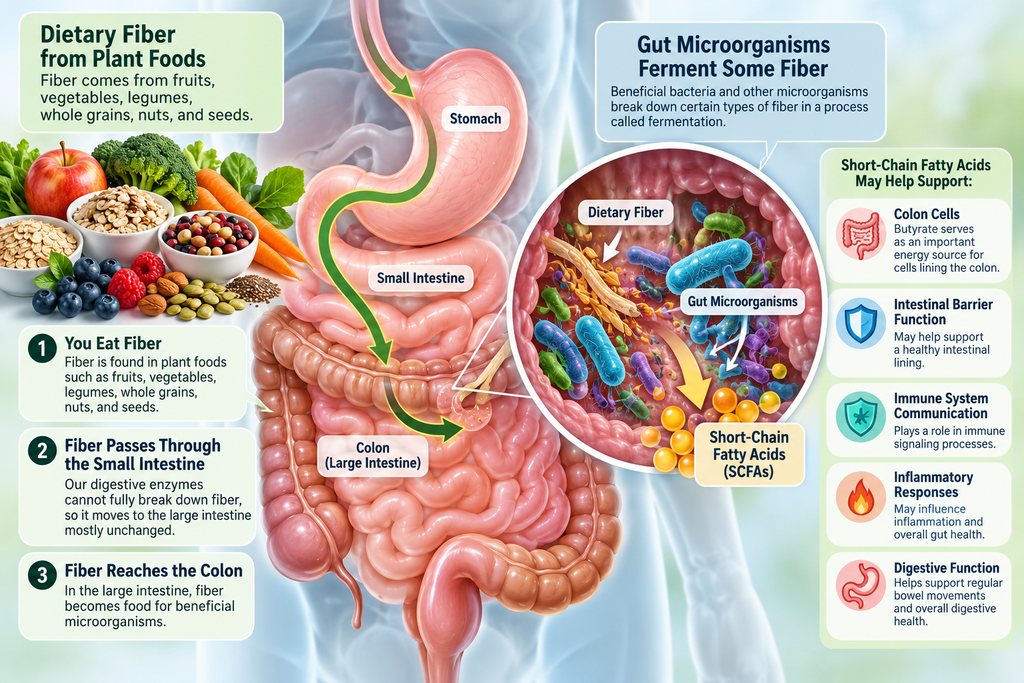
Educational diagram showing dietary fiber traveling to the colon, where microorganisms ferment some fiber.
How Does Fiber Nourish Gut Microorganisms?
Some dietary fibers are fermented by microorganisms in the large intestine. During fermentation, microbes break down certain carbohydrates and produce substances called short-chain fatty acids, or SCFAs.
Three commonly studied SCFAs are:
- Acetate
- Propionate
- Butyrate
Butyrate is particularly interesting because it serves as an important energy source for cells lining the colon. Short-chain fatty acids also participate in processes involving intestinal barrier function, metabolism, and immune signaling. This is one reason researchers are interested in the relationship between fiber, gut microorganisms, and inflammation.However, it is important to distinguish biological mechanisms from proven clinical outcomes. Although fermentation can produce SCFAs, eating more fiber does not guarantee that every person will produce more of every SCFA or experience the same health benefits.
Individual responses vary.
🔬 What Does Research Tell Us About Fiber and Microbial Diversity?
Research supports a relationship between dietary fiber and the composition and activity of intestinal microorganisms.
A systematic review and meta-analysis of 64 studies involving 2,099 participants found that fiber interventions increased certain bacterial groups, including Bifidobacterium and Lactobacillus. However, the analysis did not find a consistent increase in overall microbial diversity.
This is an important distinction.
Fiber can influence the microbiome without necessarily increasing every measure of microbial diversity.
Another systematic review published in 2022 examined fiber interventions and short-chain fatty acid production. The findings suggested that responses varied depending on the type and amount of fiber, as well as study methods.
What About Eating 30 Different Plants a Week?
You may have heard the recommendation to eat 30 different plant foods each week.This idea gained attention following the American Gut Project, which identified an association between greater plant-food variety and differences in gut microbial communities.
But this was observational research.
It does not establish that everyone needs exactly 30 plants per week or that reaching this number will prevent disease. A more practical message is to increase the variety of plant foods you enjoy and tolerate, without turning eating into another source of stress.
How Much Fiber Do We Need?
The National Institute of Diabetes and Digestive and Kidney Diseases notes that adults generally need approximately 22–34 grams of fiber per day, depending on age and sex. Individual needs vary.
Rather than immediately trying to reach a numerical target, begin by looking at the foods you already eat.
Could you add berries to breakfast?
Would lentils work in a familiar soup?
Could you include another vegetable at dinner?
Small additions can gradually increase your fiber intake without requiring a completely new way of eating.
Fiber-Rich Foods That Support Digestive Health
You do not need unusual or expensive ingredients to increase dietary fiber.
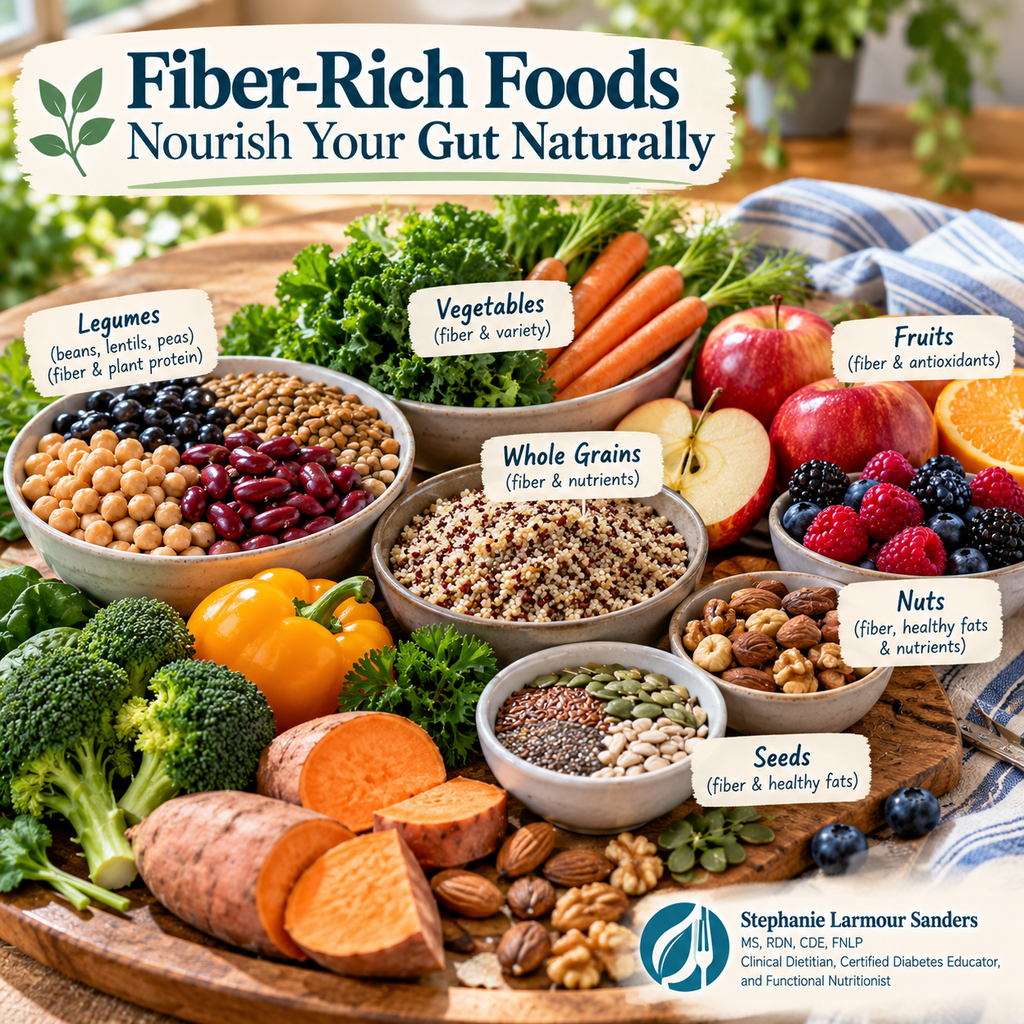
Consider these everyday foods:
Legumes: Lentils, chickpeas, black beans, kidney beans, and split peas.
Whole grains: Oats, barley, brown rice, quinoa, and whole-wheat products.
Vegetables: Broccoli, carrots, leafy greens, Brussels sprouts, and sweet potatoes.
Fruits: Berries, pears, apples, oranges, and kiwi.
Nuts and seeds: Almonds, walnuts, chia seeds, and ground flaxseed.
Different plant foods provide different combinations of fibers and other nutrients. Variety also makes meals more interesting and enjoyable. Tabletop display of legumes, whole grains, vegetables, fruits, nuts, and seeds.
Why Adding Fiber Too Quickly Can Cause Discomfort
If fiber supports digestive health, why do some people feel worse when they eat more? One explanation is fermentation. When certain fibers reach the colon, intestinal microorganisms ferment them. Gas is a natural byproduct of this process.
A sudden increase in fermentable fiber may contribute to:
- Bloating
- Gas
- Abdominal pressure
- Changes in bowel habits
These symptoms do not automatically mean fiber is harmful or that someone has an unhealthy microbiome.
However, persistent symptoms deserve evaluation rather than simply being attributed to normal fermentation.
A Gentler Way to Increase Fiber
1. Begin with one small addition.
Try adding a modest portion of a fiber-rich food to a meal you already enjoy.
2. Increase gradually.
Allow time to observe your digestive response before making another change.
3. Include adequate fluids.
Water and other appropriate fluids help support normal bowel function. Fluid needs depend on individual health circumstances.
4. Experiment with preparation.
Cooked vegetables, well-cooked lentils, and smaller portions of legumes may be more comfortable for some people than large servings of raw vegetables or beans.
5. Pay attention to patterns.
Notice which foods, portions, and meal combinations feel comfortable.
The goal is not to force your digestive system to tolerate everything immediately.
It is to find a realistic approach that supports nutrition and digestive comfort.
What If You Have IBS or Another Digestive Condition?
More fiber is not always the right immediate recommendation.
People with irritable bowel syndrome, inflammatory bowel disease, intestinal narrowing, gastroparesis, or other digestive conditions may need individualized advice about fiber amount and type. Some people experience greater discomfort with highly fermentable carbohydrates. Others may benefit from specific fibers, such as psyllium, depending on their symptoms and medical history. A temporary low-FODMAP approach may be appropriate for selected individuals with IBS under professional guidance, but it should not become an unnecessarily restrictive long-term diet. Do not assume that persistent bloating means you need to eliminate gluten, dairy, legumes, or entire food groups.
Symptoms are clues, not a diagnosis.
Do You Need a Prebiotic or Probiotic Supplement?
Not necessarily. Prebiotics are substances selectively used by microorganisms in ways that confer a health benefit. Certain dietary fibers qualify as prebiotics, but not every fiber meets that definition. Probiotics are live microorganisms that provide a health benefit when consumed in adequate amounts. Their effects can depend on the specific strain, dose, and condition being studied. For many people, beginning with a varied, balanced eating pattern is a practical first step. Supplements may have a role in particular circumstances, but they are not a universal requirement for gut health.
Discuss supplements with a qualified healthcare professional when you have significant digestive symptoms, medical conditions, or medication concerns.
When Digestive Symptoms Need Medical Attention
Seek medical evaluation for persistent or worsening digestive symptoms, particularly when they interfere with daily life.
Important warning signs include:
- Blood in the stool or rectal bleeding
- Unexplained weight loss
- Persistent or severe abdominal pain
- Repeated vomiting
- Significant changes in bowel habits
- Persistent diarrhea or constipation
- A family history of colorectal cancer or relevant gastrointestinal disease
Severe abdominal pain, especially with vomiting, marked swelling, or inability to pass stool or gas, warrants urgent assessment.
Do not try to manage these symptoms simply by increasing fiber.
Stephanie Says: Start With Variety, Not Perfection

After more than 40 years working in healthcare and nutrition, one lesson continues to guide my teaching:
Small, realistic changes are often easier to sustain than complicated rules. Your practical step this week: Choose one fiber-rich food you enjoy and add it to a familiar meal.
You do not have to change everything at once.
The Bottom Line
Fiber is an important part of digestive health and influences the activity of the gut microbiome.Research continues to explore how these relationships affect inflammation, metabolic health, and long-term wellbeing. We already know that fiber-rich foods can support bowel function and contribute to a nutritious eating pattern. What we are still learning is how different fibers influence individual microbial communities and health outcomes. Rather than chasing a perfect microbiome, focus on nourishing your body consistently.
Symptoms are signals. Patterns are information. And small changes can be a meaningful place to begin.
References
- National Institute of Diabetes and Digestive and Kidney Diseases. Eating, Diet, & Nutrition for Constipation. https://www.niddk.nih.gov/health-information/digestive-diseases/constipation/eating-diet-nutrition
- So D, et al. Dietary fiber intervention on gut microbiota composition in healthy adults: A systematic review and meta-analysis. American Journal of Clinical Nutrition. 2018. https://ajcn.nutrition.org/article/S0002-9165(22)02872-6/fulltext
- Effects of Dietary Fibers on Short-Chain Fatty Acids and Gut Microbiota Composition in Healthy Adults: A Systematic Review. Nutrients. 2022;14(13):2559. https://doi.org/10.3390/nu14132559
- McDonald D, et al. American Gut: An Open Platform for Citizen Science Microbiome Research. mSystems. 2018;3(3). https://doi.org/10.1128/mSystems.00031-18
- National Institute of Diabetes and Digestive and Kidney Diseases. Constipation: Definition, Causes, and Treatment. https://www.niddk.nih.gov/health-information/digestive-diseases/constipation
Educational disclaimer: This article provides general nutrition education and does not replace individualized medical evaluation, diagnosis, or treatment.
23 Oct, 2026 | Stephanie Sanders | No Comments
Ultra-Processed Foods and Artificial Food Colors: What Does the Science Say, and Why Are Policies Changing?
Understanding Nutrition, Food Safety, Government Regulation, and the Choices We Make Every Day
By Stephanie Larmour Sanders, MS, RDN, CDE, FNLP
Anti-Inflammatory Dietitian and Nutritionist
Updated October 15, 2026
Have you noticed more conversations about artificial food dyes, ultra-processed foods, and the ingredients in our food supply? You may have heard that certain food colors are being removed, that schools are changing nutrition standards, or that government agencies are examining the safety of ingredients. But what does this really mean for our health? Are all processed foods harmful? Do artificial food colors cause inflammation? And why has food policy become such an important political discussion?
After nearly four decades working in clinical nutrition and diabetes education, I believe these questions deserve thoughtful investigation rather than fear.
Let’s become the detectives and examine the evidence.
1. What Are Ultra-Processed Foods?
Not all food processing is the same. Washing vegetables, freezing berries, pasteurizing milk, and canning beans are examples of processing that can make foods safer, more convenient, or more accessible. The term ultra-processed food (UPF) is commonly associated with the NOVA classification system.
It generally refers to industrial formulations containing ingredients or additives not typically used in home cooking, often designed for convenience, flavor, texture, appearance, or shelf life.
Examples may include:
- Sugar-sweetened beverages
- Certain packaged snack foods
- Candy and confectionery
- Many commercially produced desserts
- Some ready-to-eat meals
- Certain breakfast cereals
- Some processed meat products
However, the category is nutritionally diverse. A whole-grain packaged bread and a sugar-sweetened soft drink may both meet a processing-based definition, but they do not necessarily have the same nutritional characteristics.
This distinction is important.
We need to investigate both how a food is manufactured and what nutrients it provides.

2. What Does Research Say About Ultra-Processed Foods and Health?
A Major 2024 Scientific Review
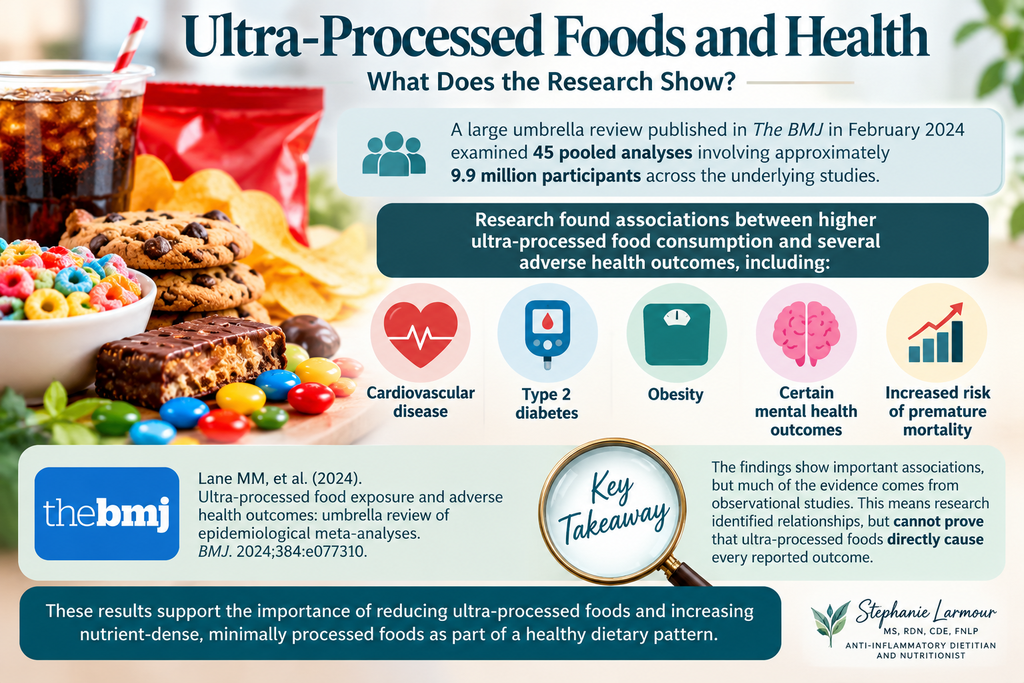
A large umbrella review published in The BMJ in February 2024 examined 45 pooled analyses involving approximately 9.9 million participants across the underlying studies.
Researchers found associations between higher ultra-processed food consumption and several adverse health outcomes.
These included:
- Cardiovascular disease
- Type 2 diabetes
- Obesity
- Certain mental health outcomes
- Increased risk of premature mortality
However, much of the evidence came from observational studies. That means researchers identified relationships, but could not establish that ultra-processing itself caused every reported outcome. The authors also rated much of the evidence as low or very low certainty.
What does this tell us?
The findings justify further investigation and consideration of public-health strategies, but we should avoid claiming that every ultra-processed ingredient directly causes disease.
Research: Lane MM, et al. Ultra-processed food exposure and adverse health outcomes: umbrella review of epidemiological meta-analyses. BMJ. 2024;384.
Read the full BMJ research article
What About Controlled Clinical Research?
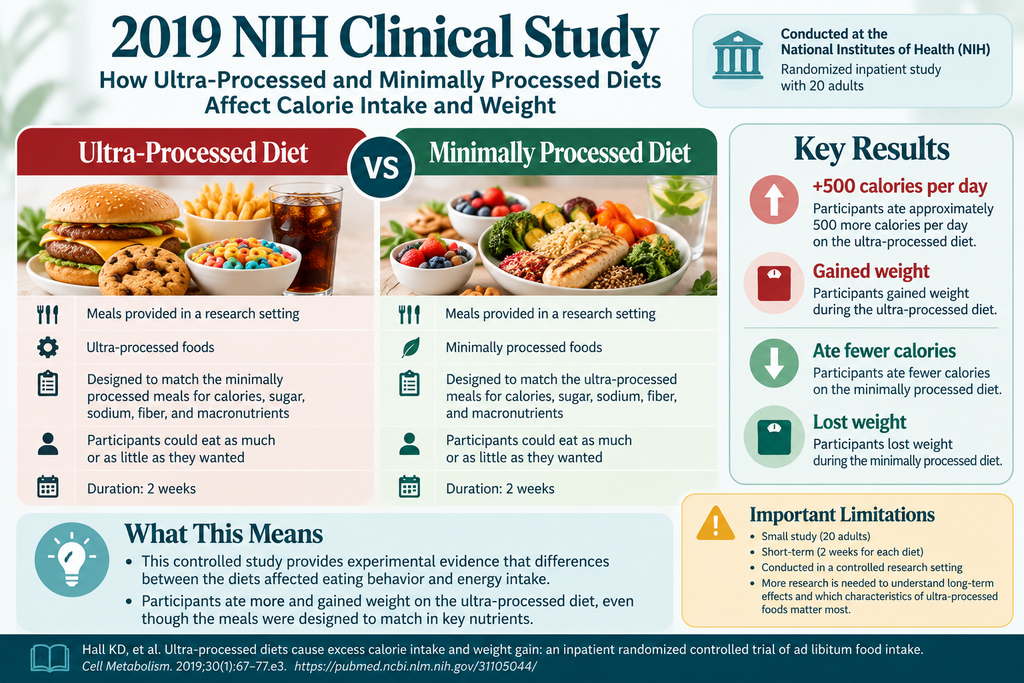
In 2019, researchers at the National Institutes of Health conducted a small randomized inpatient study involving 20 adults. Participants consumed an ultra-processed diet and a minimally processed diet for two weeks each. The meals were designed to be comparable in several nutritional characteristics, including presented calories, sugar, sodium, fiber, and macronutrients. Participants were allowed to eat as much or as little as they wanted. During the ultra-processed diet, participants consumed approximately 500 additional calories per day, on average, and gained weight. During the minimally processed diet, they ate fewer calories and lost weight. This study provided experimental evidence that differences between the diets affected eating behavior and energy intake under the study conditions. However, the study was small and short-term, so additional research is needed to understand long-term effects and which characteristics of ultra-processed foods matter most.
Research: Hall KD, et al. Ultra-processed diets cause excess calorie intake and weight gain: an inpatient randomized controlled trial of ad libitum food intake. Cell Metabolism. 2019;30(1):67–77.e3.
3. What Are Artificial Food Colors?
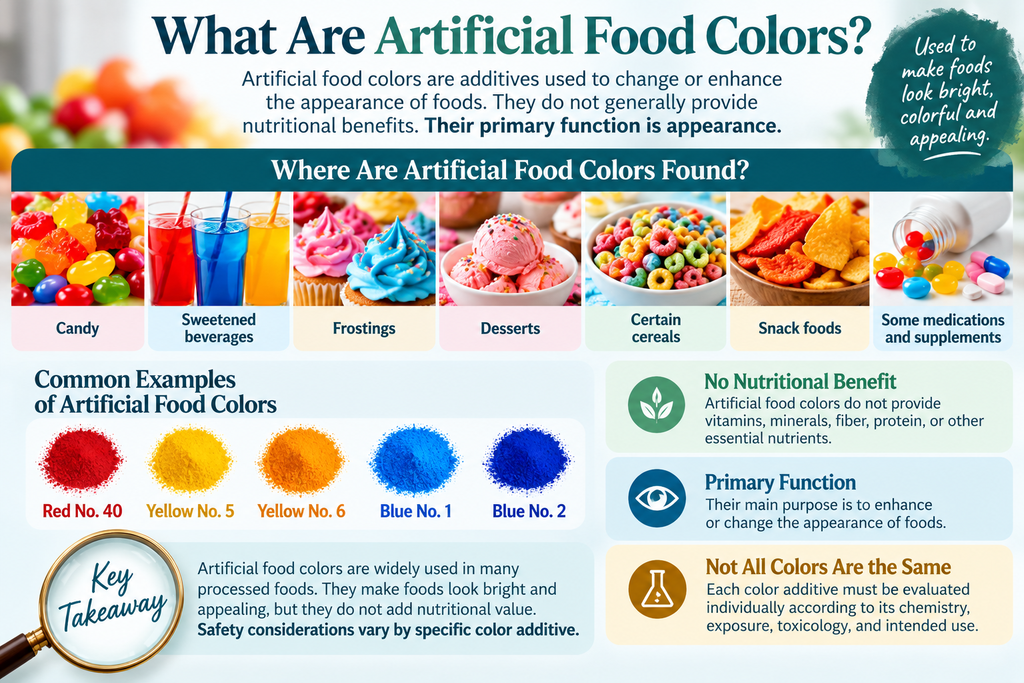
Artificial food colors are additives used to change or enhance the appearance of foods.
They may be found in:
- Candy
- Sweetened beverages
- Frostings
- Desserts
- Certain cereals
- Snack foods
- Some medications and supplements
Examples include:
Red No. 40, Yellow No. 5, Yellow No. 6, Blue No. 1, and Blue No. 2.
Artificial food colors do not generally provide nutritional benefits. Their primary function is appearance.But that does not mean every color additive has identical safety concerns. Each substance must be evaluated according to its chemistry, exposure, toxicology, and intended use.
4. Artificial Food Colors and Children’s Behavior
One of the most discussed concerns involves the possible effects of synthetic food colors on children’s behavior.
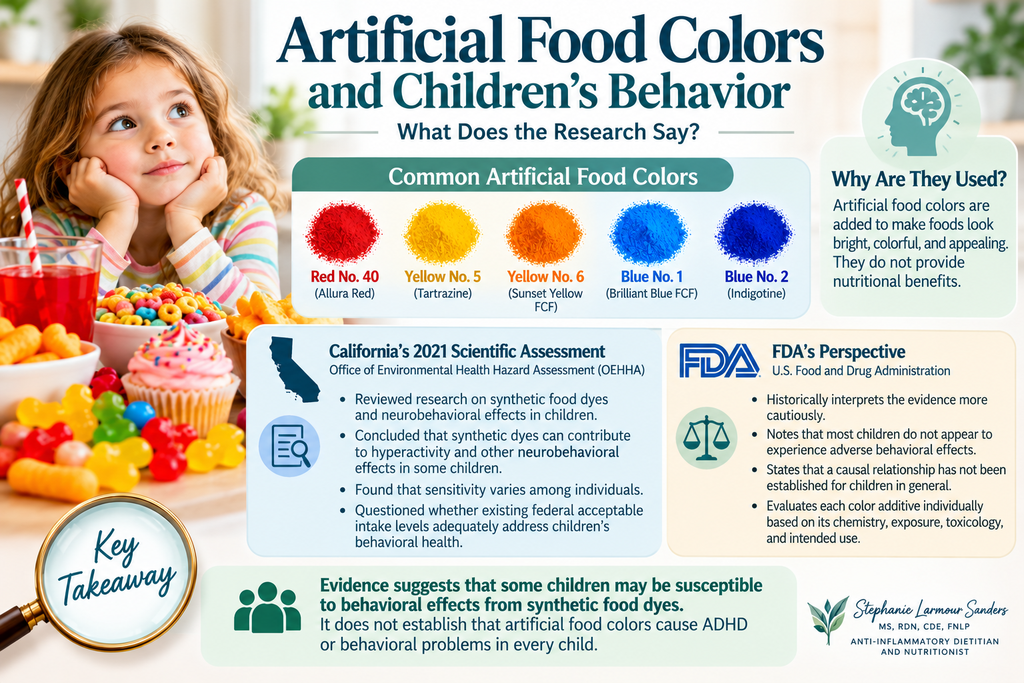
In 2021, California’s Office of Environmental Health Hazard Assessment (OEHHA) published a scientific assessment examining synthetic food dyes and neurobehavioral effects in children. The agency concluded that synthetic dyes can contribute to hyperactivity and other neurobehavioral effects in some children, and that sensitivity varies among individuals. The report also questioned whether existing federal acceptable intake levels adequately addressed children’s behavioral health. However, the FDA has historically interpreted the evidence more cautiously, noting that most children do not appear to experience adverse behavioral effects and that a causal relationship has not been established for children generally.
The important distinction: Evidence suggests that some children may be susceptible. It does not establish that artificial food dyes cause ADHD or behavioral problems in every child.
Read California OEHHA’s scientific assessment
Read FDA information on color additives
5. Why Was Red Dye No. 3 Banned?
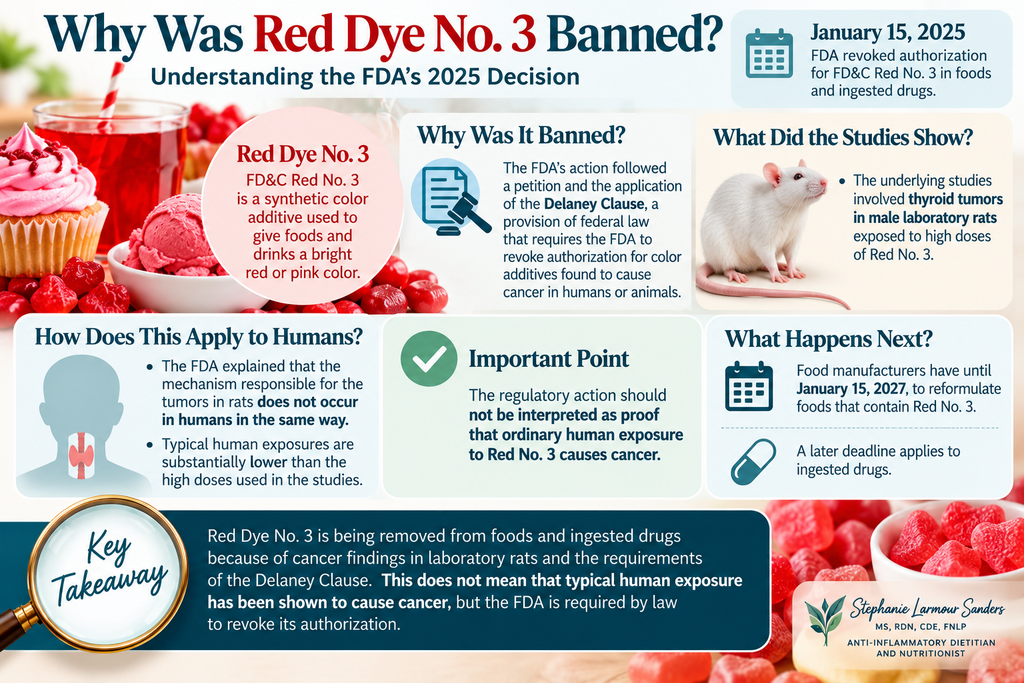
On January 15, 2025, the FDA revoked authorization for FD&C Red No. 3 in foods and ingested drugs. The action followed a petition and the application of the Delaney Clause, a provision of federal law addressing color additives found to cause cancer in humans or animals. The underlying studies involved thyroid tumors in male laboratory rats exposed to high doses. The FDA explained that the mechanism responsible for those findings in rats does not occur in humans in the same way and that typical human exposures are substantially lower. Therefore, the regulatory action should not be interpreted as proof that ordinary human exposure causes cancer.
Food manufacturers have until January 15, 2027, to reformulate foods, with a later deadline for ingested drugs.
Read the FDA’s Red No. 3 regulatory explanation
6. Federal Policy: The Trump Administration and Artificial Food Dyes
In April 2025, the U.S. Department of Health and Human Services and FDA announced an initiative to phase out petroleum-based synthetic food dyes.
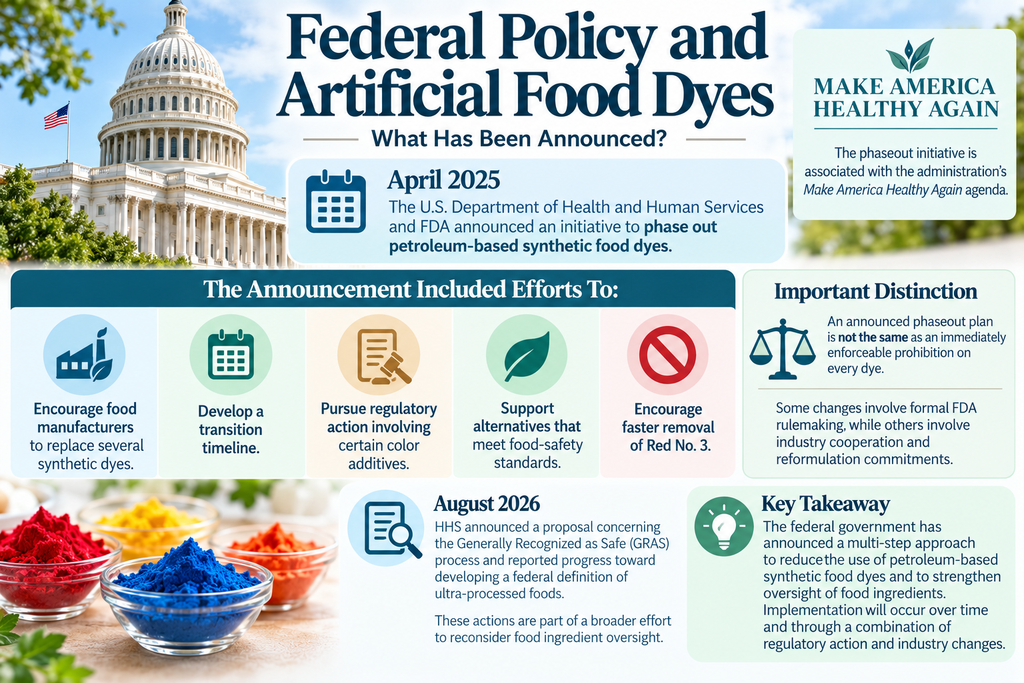
The initiative is associated with the administration’s Make America Healthy Again agenda.
The announcement included efforts to:
- Encourage food manufacturers to replace several synthetic dyes.
- Develop a transition timeline.
- Pursue regulatory action involving certain color additives.
- Support alternatives that meet food-safety standards.
- Encourage faster removal of Red No. 3.
An important policy distinction is that an announced phaseout plan is not the same as an immediately enforceable prohibition on every dye.
Some changes involve formal FDA rulemaking, while others involve industry cooperation and reformulation commitments.
In August 2026, HHS also announced a proposal concerning the Generally Recognized as Safe (GRAS) process and reported progress toward developing a federal definition of ultra-processed foods.
These actions are part of a broader effort to reconsider food ingredient oversight.
Read the April 2025 FDA announcement
Read the August 2026 HHS food-policy announcement
7. California’s Approach to Ultra-Processed Foods
California has also taken legislative action.

On October 8, 2025, Governor Gavin Newsom signed Assembly Bill 1264.
The legislation establishes a framework for identifying and phasing out certain ultra-processed foods of concern from California school meals. This policy is particularly relevant because children consume a substantial portion of their daily food at school. The legislation does not mean that every packaged food is automatically prohibited. Implementation depends on the law’s definitions, assessment process, and phaseout requirements.
The policy raises several practical questions:
- How should foods be classified?
- Which ingredients or manufacturing practices deserve priority?
- Can schools obtain appropriate alternatives?
- How will costs affect school nutrition programs?
- Will students continue to receive adequate calories and nutrients?
Read California’s announcement of AB 1264
8. Why Has Food Regulation Become Political?
Food policy affects more than the ingredients listed on a package.

It also involves:
Public health: Whether government intervention can reduce diet-related health risks.
Consumer choice: How much responsibility belongs to individuals and how much to manufacturers or regulators.
Food affordability: Whether reformulation or stricter standards increase manufacturing and purchasing costs.
School nutrition: What standards should apply when public funds purchase food for children.
Scientific uncertainty: How much evidence is necessary before restricting an ingredient.
Industry responsibility: Whether voluntary reformulation is sufficient or binding requirements are necessary.
These concerns do not divide neatly along political party lines. The Trump administration has pursued federal dye-reduction and food-ingredient initiatives. California, under Governor Newsom, has pursued state legislation addressing school food quality. Although their approaches differ, both reflect growing political attention to the American food supply.
For nutrition educators, the most useful approach is to explain what each policy actually does, what evidence supports it, and what remains uncertain.
9. Are Artificial Colors and Ultra-Processed Foods Pro-Inflammatory?
This is an especially important question for anti-inflammatory nutrition.
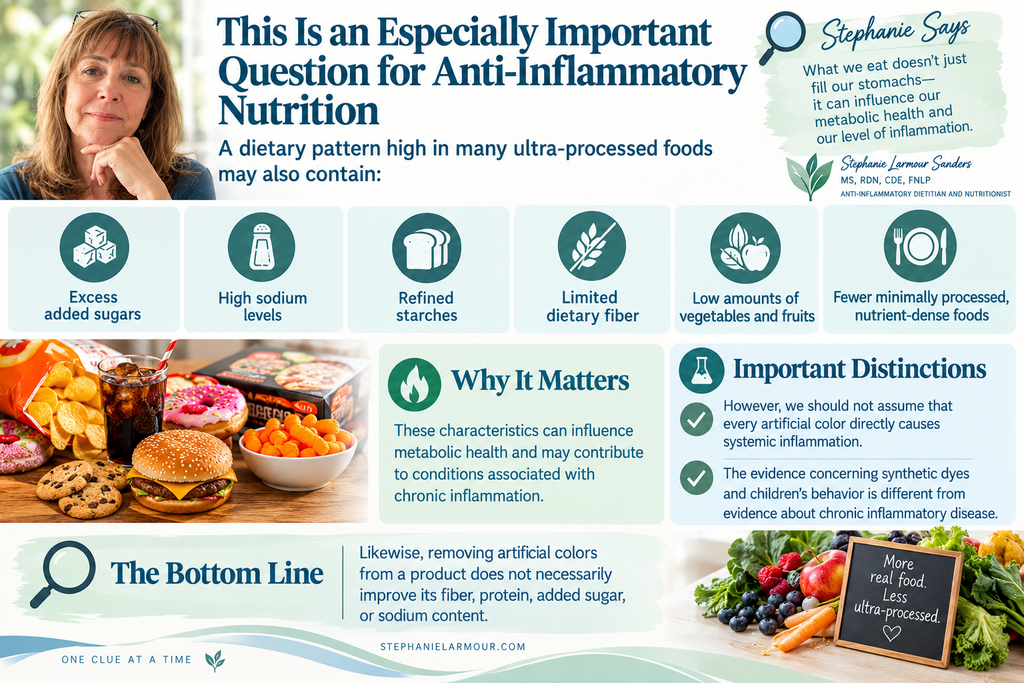
A dietary pattern high in many ultra-processed foods may also contain:
- Excess added sugars
- High sodium levels
- Refined starches
- Limited dietary fiber
- Low amounts of vegetables and fruits
- Fewer minimally processed, nutrient-dense foods
These characteristics can influence metabolic health and may contribute to conditions associated with chronic inflammation. However, we should not assume that every artificial color directly causes systemic inflammation.
The evidence concerning synthetic dyes and children’s behavior is different from evidence about chronic inflammatory disease. Likewise, removing artificial colors from a product does not necessarily improve its fiber, protein, added sugar, or sodium content.
That is why I encourage readers to investigate the entire dietary pattern.
10. Practical Nutrition Strategies for Families
You do not need to eliminate every packaged food to improve your diet.

Start with manageable changes.
Choose more minimally processed foods when practical.
Examples include vegetables, fruits, beans, lentils, nuts, seeds, eggs, and other nutrient-dense foods.
Read ingredient lists.
Look for ingredients you wish to monitor, including synthetic food colors.
Compare Nutrition Facts labels.
Pay particular attention to added sugars, fiber, protein, sodium, and saturated fat.
Make simple substitutions.
Consider water or unsweetened beverages instead of frequently consuming sugar-sweetened drinks.
Avoid assuming that “natural” means healthier.
A product colored with beet juice or another plant-derived ingredient can still contain considerable added sugar.
Respect affordability and accessibility.
Frozen vegetables, canned beans, plain yogurt, and nutritious packaged foods can be practical choices.
The goal is not perfection.
It is improving the overall quality of your food choices over time.
Stephanie Says
Become the Detective of Your Food Environment
During my years working in clinical nutrition and diabetes education, I have watched our understanding of nutrition continue to evolve. When I was a clinician we looked at the study of Malone et al, and blue dye in Enteral Nutrition feeding and the negative effects in certain patients.
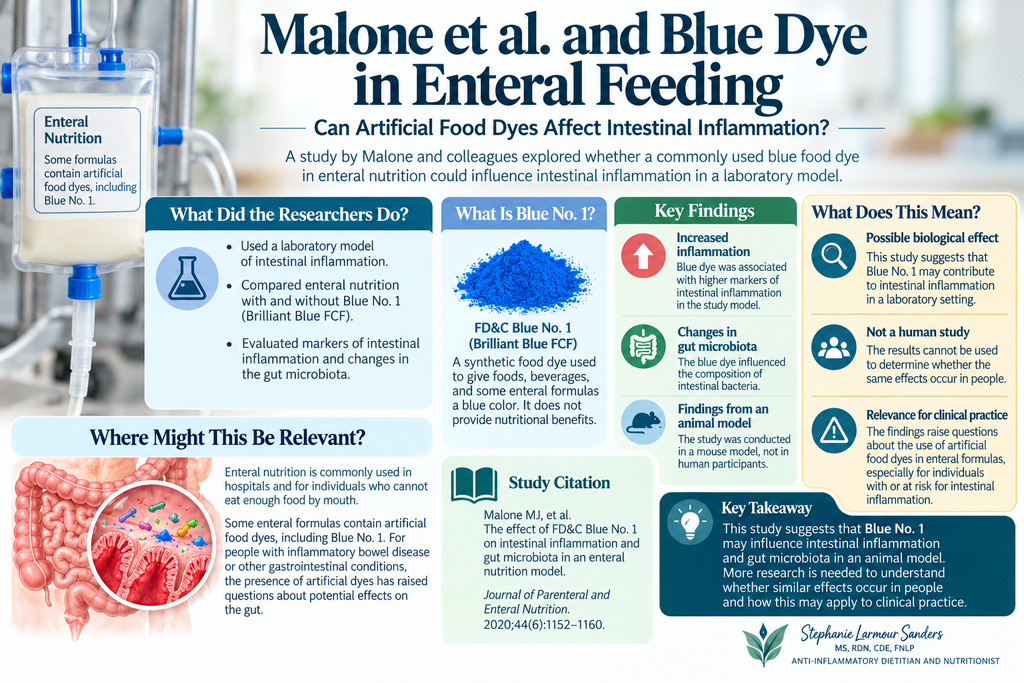
I believe it is important to examine the ingredients in our food supply and ask whether they contribute meaningful benefits or introduce unnecessary exposures. But I do not want families to become frightened every time they read an unfamiliar ingredient.
Instead, I want you to become curious.
Ask yourself:
- What is this ingredient?
- Why is it included?
- What does the research actually show?
- How often am I consuming this food?
- What nutrients does the food provide?
- Is there a practical alternative that fits my budget and lifestyle?
When policymakers discuss removing artificial dyes, I think it is important to examine both the potential health benefits and the evidence supporting the change. When we discuss ultra-processed foods, we also need to consider food quality, convenience, affordability, and accessibility.
A person working long hours or caring for a family may depend on convenient foods. That does not mean they have failed to make healthy choices.
My approach is to begin with one manageable change. Perhaps that means replacing one sugary beverage with water. Perhaps it means adding vegetables to a convenient meal. Or perhaps it means comparing two breakfast cereals and choosing one with more fiber and less added sugar.
Food labels are clues. Research provides evidence. Patterns help us understand the bigger picture.
And remember:
Reducing inflammation is not about fearing every ingredient. It is about building a nourishing dietary pattern, one clue at a time.
Stephanie Larmour Sanders, MS, RDN, CDE, FNLP
Continue Your Detective Journey
If you would like to learn how to identify lifestyle patterns that may contribute to inflammatory burden, explore my course:
Detecting and Reducing Pro-Inflammatory Lifestyle Factors in 30 Days
Visit StephanieLarmour.com and select the course page.
I can hand you the flashlight. My course teaches you how to become the detective.
Scientific and Government References
1. Lane MM, et al. (2024). Ultra-processed food exposure and adverse health outcomes: umbrella review of epidemiological meta-analyses. BMJ, 384, e077310.
https://doi.org/10.1136/bmj-2023-077310
2. Hall KD, et al. (2019). Ultra-processed diets cause excess calorie intake and weight gain: an inpatient randomized controlled trial of ad libitum food intake. Cell Metabolism, 30(1), 67–77.e3.
https://doi.org/10.1016/j.cmet.2019.05.008
3. California Office of Environmental Health Hazard Assessment (2021). Health Effects Assessment: Potential Neurobehavioral Effects of Synthetic Food Dyes in Children.
https://oehha.ca.gov/risk-assessment/report/health-effects-assessment-potential-neurobehavioral-effects-synthetic-food-dyes-children
4. U.S. Food and Drug Administration (2025). FDA to Revoke Authorization for the Use of Red No. 3 in Food and Ingested Drugs.
https://www.fda.gov/food/hfp-constituent-updates/fda-revoke-authorization-use-red-no-3-food-and-ingested-drugs
5. U.S. Food and Drug Administration (2025). HHS, FDA to Phase Out Petroleum-Based Synthetic Dyes in Nation’s Food Supply.
https://www.fda.gov/news-events/press-announcements/hhs-fda-phase-out-petroleum-based-synthetic-dyes-nations-food-supply
6. U.S. Department of Health and Human Services (2026). Secretary Kennedy Announces Food Policy Reforms Addressing Ultra-Processed Foods and GRAS Oversight.
https://www.hhs.gov/press-room/hhs-announces-ultra-processed-foods-gras-reforms.html
7. Office of Governor Gavin Newsom (2025). Governor Newsom Signs Law Addressing Ultra-Processed Foods in California School Meals.
https://www.gov.ca.gov/2025/10/08/governor-newsom-signs-first-in-the-nation-law-to-ban-ultra-processed-foods-from-school-lunches/
8. U.S. Food and Drug Administration. Color Additives: Information for Consumers.
https://www.fda.gov/food/food-ingredients-packaging/color-additives-information-consumers
Medical Disclaimer
This article is intended for nutrition and public-health education. It does not provide medical diagnosis or treatment advice. Scientific findings and regulatory policies may change as new evidence becomes available. Individuals with medical conditions or specific dietary needs should seek appropriate individualized guidance
22 Oct, 2026 | Stephanie Sanders | No Comments
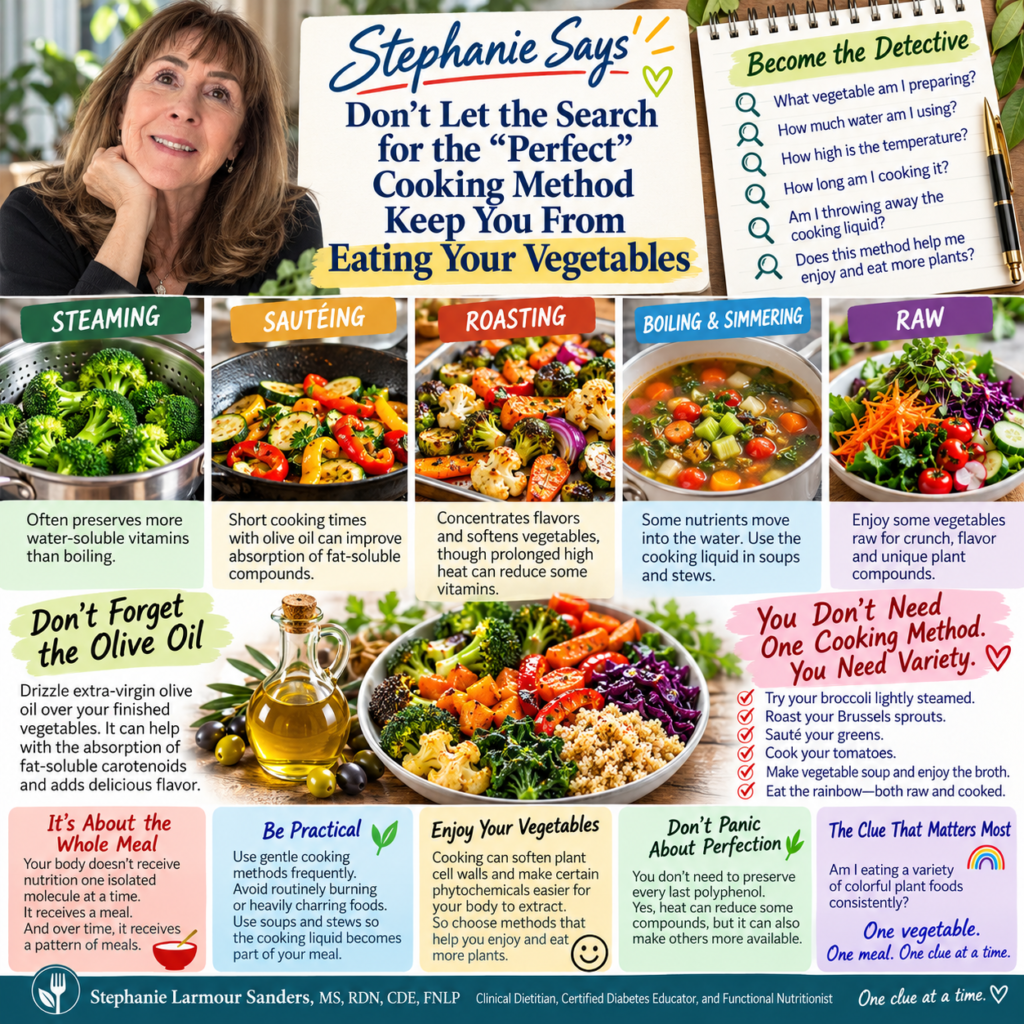
What Does Current Research Tell Us how to minimize nutrient loss when cooking?
Stephanie Larmour Sanders MSRD, CDE, FNLP
Anti-inflammatory Dietition Nutritionist
Research published in 2024 and 2025 reinforces an important point: we cannot simply divide foods into “raw equals nutritious” and “cooked equals nutrient loss.”
A comprehensive 2024 review examined how thermal processing affects polyphenols, carotenoids, glucosinolates, and vitamin C in fruits and vegetables. The researchers found that heating can either increase or decrease bioactive compounds depending on the food, plant tissue, temperature, cooking time, and method. They also emphasized something especially important: the amount of a compound present in a food is not the same thing as how much becomes accessible and available to the body. In some cases, thermal processing can improve the release and absorption of plant compounds.
Another 2024 review focusing specifically on natural antioxidants concluded that different thermal-processing techniques can substantially influence antioxidant retention, bioaccessibility, and overall food quality.
Flavonoids—a major family of polyphenols—also behave differently from one another when heated. A 2024 scientific review concluded that many flavonoids have relatively low thermal stability, but thermal processing can have either beneficial or detrimental effects depending on the particular compound and food matrix.
Newer Vegetable Research
A 2025 study compared raw, steamed, and sous-vide preparations of beetroot, red cabbage, red and green peppers, and kale.Again, there was no single winner.
Polyphenol content and measured antioxidant activity responded differently depending on the vegetable, cooking temperature, and method. Sous-vide cooking around 80–85°C performed favorably for several measurements, but the response varied among vegetables.
A separate 2025 study of several Brassica vegetables found that short steaming increased measured phytochemical content and antioxidant activity, while the effects depended on steaming duration and the individual vegetable.
This helps explain why nutritional science cannot give us one rule such as:
“Never heat vegetables.” or “Cooking always makes vegetables healthier.”
Neither statement accurately represents the evidence.
What About Extra-Virgin Olive Oil?
Extra-virgin olive oil deserves special attention because it contains naturally occurring phenolic compounds.
A 2024 study heated different varieties of extra-virgin olive oil at 180°C and 220°C, temperatures intended to simulate roasting conditions.
Higher temperatures produced greater losses of phenolic compounds and antioxidant activity.
However, the researchers also found something important:
A meaningful amount of phenolic compounds and antioxidant activity remained after heating.
Different olive varieties also responded differently. That gives us another useful clue.
Heat can reduce some of the beneficial compounds in extra-virgin olive oil, but that does not mean heated olive oil suddenly loses all nutritional value.
One practical strategy is to use extra-virgin olive oil appropriately in cooking while also enjoying some uncooked—drizzled over vegetables, beans, salads, soups, or other finished foods.
🔎 Stephanie Says
12 Oct, 2026 | Stephanie Sanders | No Comments
Gut Health: What Does the Term Really Mean?
October 11, 2026 | SLS LLC Anti-Inflammatory Nutrition
By Stephanie Larmour Sanders, MS, RDN, CDE, FNLP
Clinical Dietitian, Certified Diabetes Educator, and Functional Nutritionist

mindbodypelvis.com
Introduction: Everyone Is Talking About Gut Health
Gut health has become one of the most popular topics in nutrition and wellness.
Walk through a grocery store, browse social media, or listen to a health podcast, and you will likely hear claims about improving your gut, balancing your microbiome, healing your intestinal lining, or reducing inflammation. But what does gut health actually mean?
Is it simply having regular bowel movements? Is it having enough beneficial bacteria? Does it mean never experiencing bloating, gas, constipation, or diarrhea? The answer is more complicated—and much more interesting.
Your digestive system is not just a tube that processes food. It is a complex network of organs, microorganisms, immune cells, nerves, hormones, and protective barriers working together. And while gut health is important, not every digestive symptom means that something is wrong with your microbiome. As I often remind my readers: Symptoms are clues—not diagnoses.
Understanding gut health begins with knowing what your digestive system does, what can influence its function, and which clues deserve further investigation.
1. What Is Gut Health?
Gut health generally refers to how well the gastrointestinal system performs its many functions.
There is no single universally accepted clinical definition or laboratory test that tells us whether someone has a perfectly healthy gut.Instead, we consider several interconnected functions.
Digestion and absorption
Breaking down food and absorbing the nutrients needed for energy, growth, tissue repair, and normal body functions.
Intestinal barrier function
Helping regulate what passes from the intestinal contents into the body while maintaining protection against potentially harmful substances.
Microbial activity
Supporting a community of microorganisms that interact with food, intestinal cells, and the immune system.
Motility and elimination
Moving food and waste through the digestive tract at an appropriate rate.
Immune and nervous-system communication
Coordinating protective immune responses and communication between the digestive tract and the brain.
A healthy digestive system is not necessarily one that never produces symptoms. Occasional gas, changes in bowel habits, or discomfort can occur even in otherwise healthy people.
The important questions are whether symptoms persist, become more severe, interfere with daily life, or suggest an underlying condition.
2. Meet Your Gut Microbiome
Your gastrointestinal tract contains trillions of microorganisms, including bacteria, archaea, viruses, and fungi. Together, these organisms and their genetic material form what we call the gut microbiome.
Many of these microorganisms participate in useful activities, including:
- Fermenting certain fibers and carbohydrates that human digestive enzymes cannot fully break down.
- Producing metabolites such as short-chain fatty acids.
- Interacting with intestinal immune cells.
- Contributing to normal intestinal barrier function.
- Participating in the metabolism of some dietary compounds and medications.
One particularly interesting group of compounds is the short-chain fatty acids, including acetate, propionate, and butyrate.
Butyrate serves as an important energy source for many cells lining the colon and participates in intestinal signaling and immune regulation. However, there is an important distinction between microbiome research and individual treatment.
Researchers have identified associations between gut microbial patterns and conditions such as inflammatory bowel disease, obesity, and type 2 diabetes. But these associations do not necessarily prove that a particular bacterial pattern caused the disease.
There is no single ideal microbiome composition that applies to every person.
Microbiome diversity can be informative, but a higher diversity score is not always better in every context. Commercial stool microbiome tests also have important limitations and generally cannot diagnose the cause of routine digestive symptoms.
3. What Does Your Gut Have to Do With Inflammation?
Inflammation is a normal part of the immune system’s response to infection, injury, and other threats. Your digestive tract must perform a remarkable balancing act.
It encounters food proteins, microorganisms, and other substances every day. The intestinal immune system must respond appropriately to genuine threats while tolerating many harmless substances.
The intestinal lining, mucus layer, resident microorganisms, and immune cells all contribute to this process.When intestinal barrier or immune function is disrupted, inflammation may become part of the picture. For example, inflammatory bowel diseases such as Crohn’s disease and ulcerative colitis involve inappropriate, persistent inflammation of the gastrointestinal tract.
But it is important not to assume that every case of bloating, constipation, or abdominal discomfort represents intestinal inflammation. Irritable bowel syndrome, food intolerances, medications, changes in motility, and other conditions can cause digestive symptoms without the same inflammatory processes seen in inflammatory bowel disease. Inflammation is one possible clue—not the automatic explanation for every digestive complaint.
4. What About “Leaky Gut”?
You may have heard the expression leaky gut. The medical concept behind this popular phrase is altered intestinal permeability. The intestinal lining contains cells connected by structures called tight junctions. These help regulate the passage of substances across the intestinal barrier. Changes in intestinal permeability can occur in certain diseases and physiological circumstances.
However, the popular term leaky gut syndrome is not a well-established standalone medical diagnosis, and routine symptoms do not prove that a person’s intestinal barrier is damaged.
There is also no universally accepted commercial test that establishes “leaky gut syndrome” in otherwise undiagnosed individuals.
If you experience persistent digestive problems, the priority should be evaluating the symptoms and considering recognized medical conditions rather than automatically purchasing supplements advertised to repair the gut lining.
5. The Gut–Brain Connection: Why Stress Can Affect Digestion
Have you ever noticed that your digestive system reacts when you are nervous, anxious, excited, or under prolonged stress?
This is not imaginary. Your digestive tract contains an extensive nervous system called the enteric nervous system. It communicates with the central nervous system through neural, hormonal, and immune pathways. This communication is commonly described as the gut–brain axis.
Stress can influence digestive motility, visceral sensitivity, appetite, and the experience of gastrointestinal discomfort. At the same time, digestive symptoms can affect mood, sleep, social activities, and quality of life. This two-way relationship helps explain why gut health cannot be reduced to food choices alone.
It also explains why treatments for certain disorders of gut–brain interaction may involve nutrition, behavioral strategies, and medical care rather than a single supplement or elimination diet.
6. Seven Everyday Strategies That May Support Gut Health

1. Include fiber-rich foods
Vegetables, fruits, oats, beans, lentils, nuts, seeds, and whole grains provide different types of dietary fiber. Increase fiber gradually, particularly if you experience bloating, and drink adequate fluids.

2. Aim for plant-food variety
Different plant foods provide different fibers, nutrients, and phytochemicals. Variety may help support a range of microbial activities without requiring an arbitrary number of plants each week.

3. Consider fermented foods if tolerated
Yogurt with live cultures, kefir, and some fermented vegetables can fit into a nutritious eating pattern. Not every fermented food contains proven probiotic strains, and some may aggravate symptoms in sensitive individuals.

4. Maintain adequate hydration
Fluid intake supports normal body function and can be especially important when increasing dietary fiber or managing constipation.

5. Move regularly
Physical activity supports overall metabolic health and may help bowel regularity. Choose movement that is safe and appropriate for your abilities.

6. Give sleep and stress management attention
Consistent sleep opportunities and manageable daily routines support general health and may help with symptoms affected by gut–brain communication.

7. Observe individual tolerance
A food that is nutritious for one person may cause discomfort for another. Notice repeated patterns rather than eliminating entire food groups after a single reaction.
For people with celiac disease, inflammatory bowel disease, gastrointestinal surgery, significant food intolerance, or other digestive conditions, dietary recommendations may need individual adjustment.
7. Do You Need a Probiotic Supplement?
Not necessarily. Probiotics are live microorganisms that provide a health benefit when consumed in adequate amounts.
Research suggests that certain probiotic strains may help with specific conditions, but results depend on the strain, dose, individual, and medical circumstances.
Taking more probiotics—or choosing a product with a higher bacterial count—does not automatically produce better results.
For people with weakened immune systems or serious illnesses, probiotic supplements may carry additional risks. The NIH recommends discussing probiotic supplements with a healthcare professional rather than assuming that everyone needs them.
A food-first approach is often a reasonable place to begin.
8. When Should Digestive Symptoms Be Investigated?
Your symptoms may provide useful information, but some signs require medical attention. Contact your healthcare professional for persistent or worsening abdominal discomfort, ongoing constipation or diarrhea, unexplained weight loss, or recurring changes in bowel habits. Seek prompt medical care for blood in the stool, black tarry stools, severe abdominal pain, or signs of significant dehydration.
Do not assume these symptoms are caused by an unhealthy microbiome.

Scientific References
- National Institutes of Health, National Center for Complementary and Integrative Health. Probiotics: Usefulness and Safety.
- National Institutes of Health, Office of Dietary Supplements. Probiotics: Fact Sheet for Consumers.
- Porcari S, et al. International consensus statement on microbiome testing in clinical practice. The Lancet Gastroenterology & Hepatology. 2025;10(2):154–167. Read publication.
- National Institute of Diabetes and Digestive and Kidney Diseases. Your Digestive System & How It Works.
12 Oct, 2026 | Stephanie Sanders | No Comments
Why Am I Still Tired? Becoming the Detective of Fragmented Sleep

Article 3 of 3 in the Sleep Detective Series
Stephanie Larmour Sanders, MS, RDN, CDE, FNLP
Clinical Dietitian, Certified Diabetes Educator, and Functional Nutritionist
Stephanie’s Review
In Article 1, we explored sleep architecture—the repeating sequence of N1, N2, N3, and REM sleep.
We learned that:
- N1 opens the door to sleep.
- N2 helps maintain sleep and process information.
- Deep N3 sleep supports physical restoration.
- REM sleep supports memory, learning, and emotional processing.
- The early night contains more deep sleep.
- The later night contains longer REM periods.
- The brain needs the entire sequence.
In Article 2, we investigated deep sleep and the glymphatic system.
Human research shows that NREM sleep is associated with coordinated changes in brain activity, cerebral blood volume, and cerebrospinal-fluid movement.[1]
However, the phrase “brain detox” oversimplifies a complex and evolving area of research. Fluid movement is real, but researchers are still determining exactly how much metabolic waste is removed from the human brain during sleep.
This brings us to the next clue:
What happens when something repeatedly interrupts the normal sleep sequence?
Why Am I Still Tired?

Time in bed does not always equal restorative sleep. Repeated awakenings may interrupt the brain’s normal progression through sleep stages.
woman sitting on the edge of her bed in the morning beside symbols of repeated nighttime awakenings.
Eight Hours in Bed Does Not Always Mean Eight Hours of Restorative Sleep
Someone may go to bed at 10 PM, get out of bed at 6 AM, and assume they obtained eight hours of restorative sleep. But time in bed and time asleep are not the same.Sleep can be interrupted by brief awakenings that a person remembers—or by short arousals that the person never consciously notices.
These interruptions may be associated with:
- Changes in breathing
- Leg movements
- Pain
- Temperature changes
- Reflux
- The need to urinate
- Environmental noise
- Alcohol
- Medications
- Stress-system activation
Even when the total number of hours looks adequate, disrupted sleep may leave someone feeling:
- Tired
- Mentally foggy
- Irritable
- Unrefreshed
- Less focused
- Physically heavy
- Sleepy during the day
This is why sleep continuity is an important clue.
What Is Sleep Fragmentation?
Sleep fragmentation occurs when sleep is repeatedly interrupted by arousals or awakenings.
Some awakenings are normal.
Most people briefly awaken between sleep cycles or while changing position. These awakenings may be so short that they are not remembered in the morning.
Fragmentation becomes more concerning when awakenings are:
- Frequent
- Prolonged
- Associated with breathing changes
- Caused by recurring physical symptoms
- Followed by difficulty returning to sleep
- Associated with daytime fatigue or sleepiness
When the brain is repeatedly aroused, it may move from deeper sleep back into lighter sleep or wakefulness.
This may interfere with the normal progression through:
N1 → N2 → N3 → REM
The person may technically be asleep for much of the night while still experiencing disrupted sleep architecture.
What May Be Interrupting Your Sleep?
Sleep fragmentation is not one diagnosis. It is a pattern that may have many possible causes. The goal is not to guess. The goal is to identify the repeating clues and determine which ones deserve further evaluation.
What May Be Interrupting Your Sleep?
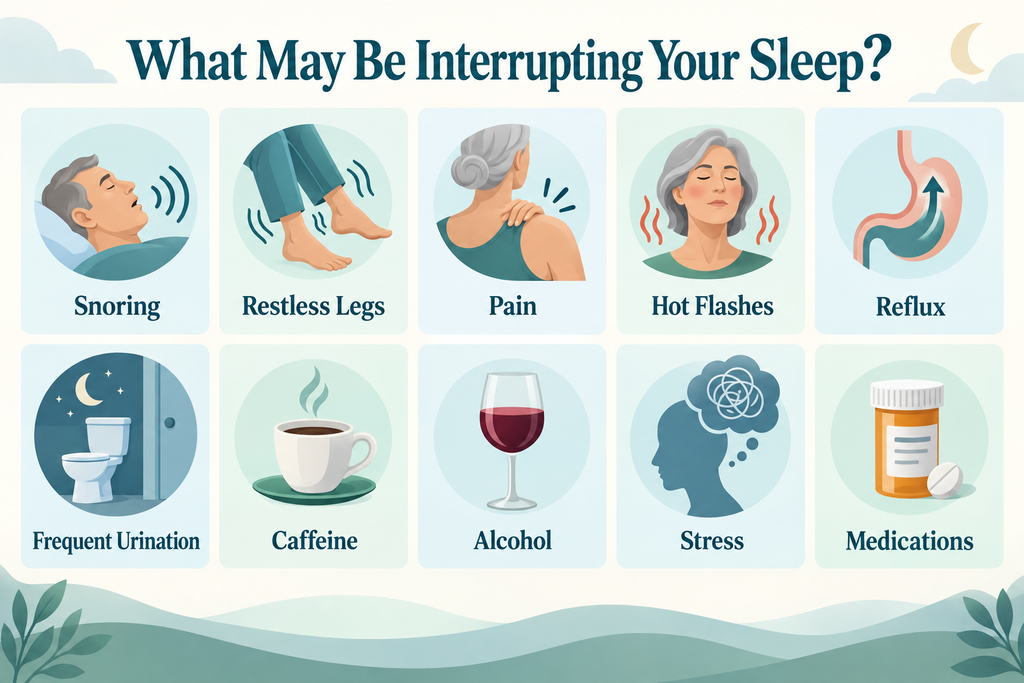
Snoring, restless legs, pain, hot flashes, reflux, frequent urination, caffeine, alcohol, stress, and medications can all provide clues about fragmented sleep.
Clue 1: Snoring, Gasping, or Pauses in Breathing
Obstructive sleep apnea occurs when the upper airway repeatedly narrows or closes during sleep. When breathing decreases or stops, oxygen levels may fall and the brain may briefly arouse the person enough to reopen the airway.
These arousals may happen repeatedly without the person remembering them.
Possible clues include:
- Loud, frequent snoring
- Breathing that stops and restarts
- Gasping or choking during sleep
- Dry mouth in the morning
- Morning headaches
- Frequent nighttime urination
- Daytime fatigue
- Excessive sleepiness
- Difficulty concentrating
- Insomnia or frequent awakenings
Women may not always report the “classic” picture of loud snoring and obvious daytime sleepiness. Fatigue, headache, insomnia, and mood or concentration changes may also be part of the presentation.[2,3]
A sleep study may be needed to determine whether sleep apnea is present and how severe it is. Sleep apnea cannot be diagnosed from snoring alone, a smartwatch, or a questionnaire.
Clue 2: Restless Legs and Periodic Limb Movements
Restless legs syndrome and periodic limb movements are related, but they are not identical.
Restless Legs Syndrome
Restless legs syndrome commonly involves:
- An urge to move the legs
- Crawling, pulling, tingling, aching, or uncomfortable sensations
- Symptoms that begin or worsen during rest
- Symptoms that become more noticeable in the evening or at night
- Temporary relief with movement
These sensations may delay sleep onset or cause someone to get out of bed repeatedly.
Periodic Limb Movements During Sleep
Periodic limb movements are repetitive movements that occur during sleep, often involving the feet, ankles, knees, or hips. A person may not know these movements are happening. A bed partner may notice kicking or twitching, or the movements may be identified during a sleep study.
Periodic limb movements can be accompanied by brief brain arousals and sleep disruption. However, finding periodic movements on a sleep study does not automatically establish periodic limb movement disorder. The movements must be interpreted along with symptoms and other possible sleep disorders.[4,5]
Potential contributors to restless legs symptoms include:
- Altered brain-iron availability
- Certain medications
- Kidney disease
- Pregnancy
- Neurological conditions
- Other medical or nutritional factors
Iron should be investigated with appropriate laboratory testing rather than supplemented blindly.
Clue 3: Pain
Pain and sleep can influence each other.
Pain may:
- Delay falling asleep
- Make it difficult to find a comfortable position
- Cause repeated awakenings
- Make it difficult to return to sleep
- Increase awareness of physical sensations
Poor sleep may also increase pain sensitivity the following day.
Possible pain-related clues include:
- Waking when changing position
- Shoulder or hip discomfort
- Burning or tingling sensations
- Muscle cramps
- Headaches
- Joint pain
- Neuropathy
- Back pain
Instead of assuming that the sleep problem and the pain are unrelated, notice whether one appears to intensify the other.
Persistent or worsening pain deserves evaluation.
Clue 4: Hot Flashes and Night Sweats
Hot flashes and night sweats can activate the nervous system and interrupt sleep.
A nighttime vasomotor episode may involve:
- Sudden warmth
- Sweating
- Flushing
- Increased heart rate
- Feeling chilled afterward
- Removing blankets or clothing
- Difficulty returning to sleep
Hot flashes and night sweats are common during the menopausal transition, but menopause is not the only possible cause.
Night sweats may also be associated with:
- Medications
- Infections
- Thyroid conditions
- Blood-sugar changes
- Cancer treatments
- Hormonal therapies
- Other medical conditions
Research supports an association between nighttime vasomotor symptoms and sleep disturbance during the menopausal transition.[6]
New, severe, drenching, or unexplained night sweats should not automatically be attributed to menopause.
Clue 5: Reflux
Gastroesophageal reflux can become more noticeable after lying down.
Potential nighttime clues include:
- Burning in the chest or throat
- Sour taste
- Coughing
- Throat clearing
- Hoarseness
- Choking sensations
- Waking after late or large meals
- Symptoms that worsen when lying flat
Sleep and reflux may affect each other. Reflux can cause awakenings, while sleep-related changes in swallowing and saliva production may make it harder to clear refluxed material.[7]
Persistent reflux, pain with swallowing, difficulty swallowing, vomiting, bleeding, or unexplained weight loss requires medical evaluation.
Clue 6: Frequent Nighttime Urination
Waking to urinate during the night is called nocturia.
It can fragment sleep, especially when it occurs more than once or when returning to sleep is difficult.
Possible contributors include:
- Evening fluid intake
- Alcohol
- Caffeine
- Diuretic medications
- Diabetes
- Bladder conditions
- Prostate conditions
- Leg swelling
- Heart or kidney conditions
- Sleep apnea
- Age-related changes
Sometimes the full bladder causes the awakening.
At other times, something else awakens the person first—and once awake, the person decides to use the bathroom.
A simple diary can help distinguish these patterns.
Record:
- What time you drank fluids
- What types of beverages you consumed
- When you awakened
- Whether bladder pressure woke you
- How difficult it was to return to sleep
Nocturia is associated with sleep disruption, daytime fatigue, and an increased risk of falls, particularly when someone walks through a dark room while sleepy.[8]
Clue 7: Caffeine
Caffeine blocks adenosine, a chemical involved in the buildup of sleep pressure.
A person may say:
“Coffee does not affect me. I can fall asleep after drinking it.”
But falling asleep is only one measurement.
Caffeine may still affect:
- Total sleep time
- Sleep depth
- Sleep efficiency
- Nighttime awakenings
- How rested someone feels
Caffeine sensitivity varies based on:
- Genetics
- Age
- Medications
- Liver metabolism
- Dose
- Timing
- Frequency of use
A controlled study found that a substantial caffeine dose taken six hours before bedtime could still disrupt sleep.[9] More recent research indicates that the effect depends on both dose and timing.[10]
The detective experiment is simple:
Move caffeine earlier for one or two weeks and observe whether sleep continuity changes.
Clue 8: Alcohol
Alcohol may make someone feel sleepy and reduce the time needed to fall asleep.
That does not mean it produces healthy sleep.
Alcohol can alter sleep architecture and contribute to:
- More disrupted sleep later in the night
- Longer periods of wakefulness
- Changes in REM sleep
- Worsening snoring
- Worsening sleep-disordered breathing
- Increased nighttime urination
- Reflux
- Dehydration
The sedating effect may occur during the first part of the night, while sleep becomes less stable as alcohol is metabolized.[11]
If sleep problems are present, compare nights with alcohol to nights without it rather than assuming that the initial drowsiness represents restorative sleep.
Clue 9: Stress and a Nervous System That Remains Alert
A tired body does not always mean a quiet nervous system.
Stress can keep the brain in a state of monitoring and readiness.
Possible signs include:
- Replaying conversations
- Planning tomorrow’s responsibilities
- Worrying about sleep itself
- Feeling tired but alert
- Muscle tension
- Rapid thoughts
- Checking the clock repeatedly
- Waking early with immediate worry
A person may begin to fear bedtime because they expect another difficult night.
This can create a cycle:
Poor sleep → Worry about sleep → Increased arousal → More difficulty sleeping
For persistent insomnia, cognitive behavioral therapy for insomnia, commonly called CBT-I, is an evidence-based treatment that addresses the thoughts and behaviors that can perpetuate insomnia.
Relaxation can be supportive, but persistent insomnia is not always solved by simply “trying harder to relax.”
Clue 10: Medications and Supplements
Medications can affect sleep in different ways.
Some may cause:
- Drowsiness
- Insomnia
- Vivid dreams
- Restlessness
- Increased urination
- Reflux
- Breathing suppression
- Changes in sleep architecture
Potentially relevant categories may include:
- Stimulants
- Decongestants
- Corticosteroids
- Some antidepressants
- Some blood-pressure medications
- Diuretics
- Thyroid medication
- Sedatives
- Opioid pain medications
- Certain antihistamines
- Supplements marketed for energy or weight loss
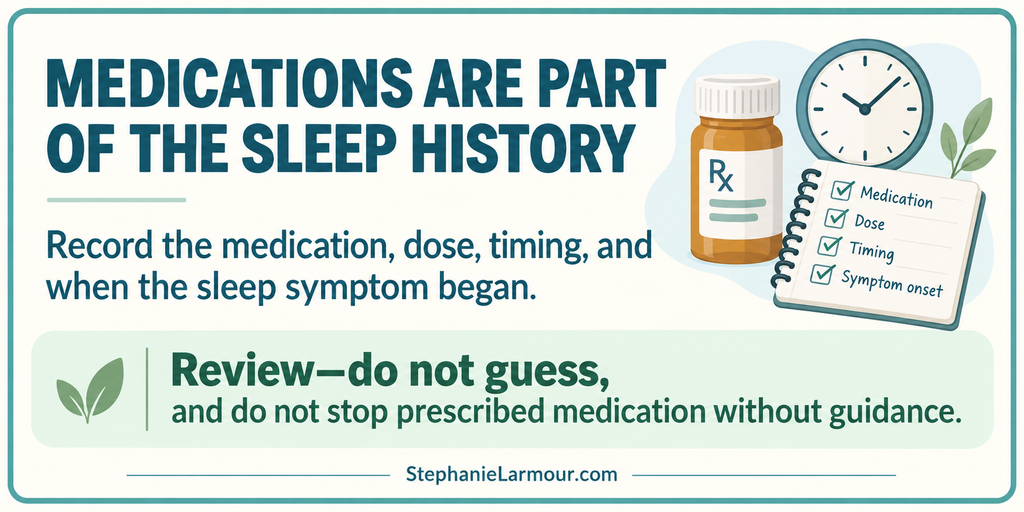
This does not mean a needed medication should be stopped.
Instead, ask:
- Did the sleep problem begin after starting or changing a medication?
- Does medication timing correspond with symptoms?
- Could two products contain similar stimulating ingredients?
- Is a nighttime medication causing morning grogginess?
- Could a medication be worsening restless legs or breathing?
Review medications and supplements with a pharmacist or prescribing healthcare professional.
Do not stop prescription medications abruptly without medical guidance.
Environmental Clues Matter Too
Not every interruption comes from inside the body.
Sleep may be affected by:
- Room temperature
- Light
- Noise
- Pets
- A partner’s snoring
- An uncomfortable mattress or pillow
- Phone notifications
- Television
- Caregiving responsibilities
- Safety concerns
- Shift work
The goal is not to create a perfect bedroom.
It is to identify modifiable conditions that repeatedly interfere with sleep.
How Aging Changes Sleep
Sleep architecture changes across the lifespan.
Compared with younger adults, older adults often experience:
- Less N3 slow-wave sleep
- More time in lighter sleep
- More nighttime awakenings
- Earlier evening sleepiness
- Earlier morning waking
- Reduced sleep efficiency
- Greater sensitivity to pain, noise, and temperature
Age-related changes are real, but poor sleep should not automatically be dismissed as normal aging.
Sleep disorders, health conditions, medications, pain, nocturia, and mood changes become more common with age and may contribute to sleep disruption.[12–14]
The question is not:
“Why can’t I sleep like I did when I was 20?”
A more useful question is:
“Which parts of my current sleep pattern may be expected, and which clues deserve investigation?”
What Can a Sleep Tracker Tell You?
Consumer sleep trackers may estimate:
- Total sleep time
- Bedtime and wake time
- Nighttime movement
- Heart rate
- Heart-rate variability
- Breathing patterns
- Estimated sleep stages
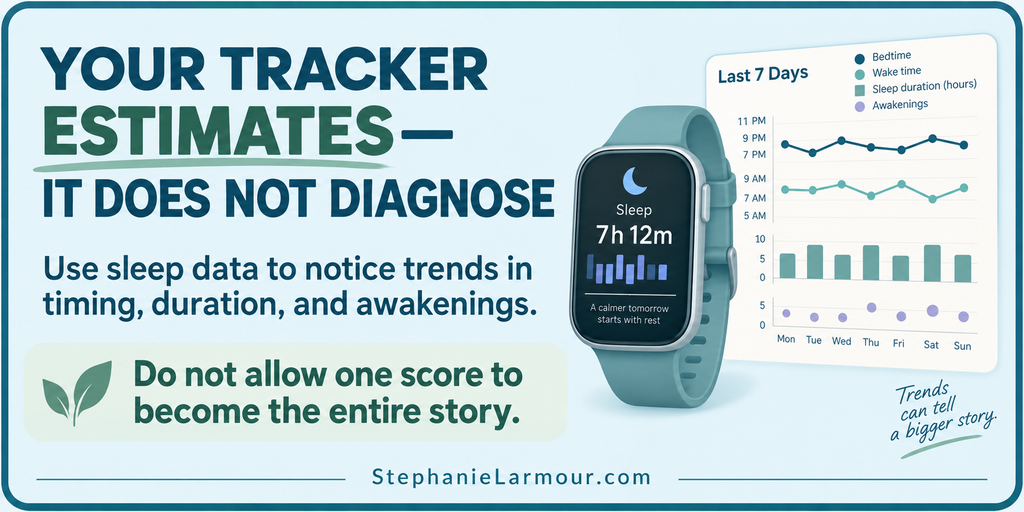
These devices can be useful for identifying trends.
However, most watches and rings do not directly measure brain waves. Their sleep-stage estimates may differ from clinical polysomnography.
Consumer sleep technology should not be used by itself to diagnose or treat a sleep disorder.[15]
Useful tracker questions include:
- Is my sleep schedule consistent?
- Does alcohol correspond with more awakenings?
- Does late caffeine correspond with shorter sleep?
- Am I allowing enough time in bed?
- Is a pattern repeating over several weeks?
Less useful questions include:
- Why was my deep sleep low last night?
- How do I force my score to become perfect?
- Does this one number mean I have a disease?
Becoming preoccupied with sleep data can itself increase anxiety. This has been described as orthosomnia—an unhealthy pursuit of perfect tracker-defined sleep.[16]
Use the tracker as a clue, not a verdict.
The Seven-Day Sleep Detective Challenge
For seven days, record only enough information to identify patterns.
Do not turn the journal into another source of stress.
Morning Questions
Record:
- Approximate bedtime
- Approximate wake time
- Number of awakenings you remember
- How rested you feel from 1–10
- Morning headache or dry mouth
- Daytime sleepiness
- Any unusual overnight symptoms
Evening Questions
Record:
- Last caffeine and approximate amount
- Alcohol
- Meal timing
- Medications and supplements
- Exercise or movement
- Stress level
- Pain level
- Hot flashes or night sweats
- Restless-leg symptoms
Interruption Questions
Ask:
- What woke me?
- Was it the same clue as another night?
- Could I return to sleep?
- Was the awakening associated with breathing, movement, pain, heat, reflux, urination, worry, noise, or another factor?
At the end of seven days, look for connections.
Examples might include:
- More awakenings after alcohol
- Restless legs on several evenings
- Reflux after late meals
- Hot flashes followed by prolonged wakefulness
- Morning headaches with loud snoring
- Better sleep when caffeine ends earlier
- Frequent urination on nights with more evening fluids
An observation is not a diagnosis. It is information that can help you ask a better question.
Practical Ways to Support Sleep Continuity
Keep a Reasonably Consistent Schedule
A consistent waking time helps anchor the circadian rhythm.
Seek Morning Light
Morning outdoor light helps communicate to the brain that the active portion of the day has begun.
Move Caffeine Earlier
If sleep is fragmented, experiment with moving caffeine earlier rather than assuming it has no effect.
Question Alcohol as a Sleep Aid
Feeling sleepy after alcohol is not the same as experiencing healthy sleep architecture.
Create a Wind-Down Transition
Dim lights and reduce work, upsetting media, and activating conversations close to bedtime when possible.
Support a Comfortable Environment
Adjust:
- Temperature
- Light
- Noise
- Bedding
- Phone notifications
Avoid Heavy Meals Immediately Before Bed
This may be particularly helpful for people who experience reflux.
Address the Physical Clue
A relaxing bedtime routine cannot correct an obstructed airway, iron-related restless legs, uncontrolled pain, or another untreated medical condition.
Sleep hygiene is useful. It is not a substitute for appropriate evaluation.
When Should Sleep Symptoms Be Evaluated?
Speak with a healthcare professional when sleep problems are persistent, worsening, or interfering with daily functioning.
Important clues include:
- Loud, frequent snoring
- Breathing pauses
- Gasping or choking during sleep
- Falling asleep unintentionally during the day
- Sleepiness while driving
- Morning headaches
- Persistent insomnia
- Strong nighttime urges to move the legs
- Frequent kicking or limb movements
- New or drenching night sweats
- Repeated nighttime urination
- Persistent reflux
- Worsening pain
- Confusion or unusual nighttime behaviors
- Significant changes in memory or concentration
Urgent evaluation is appropriate for severe breathing difficulty, chest pain, new neurological symptoms, thoughts of self-harm, or sleepiness that makes driving unsafe.
Stephanie Says
Sleep Continuity Is a Clue
Final Review of the Sleep Detective Series
Across these three articles, we followed three connected clues.
Article 1: Understand the Sequence
Sleep moves through N1, N2, N3, and REM.
The whole night matters.
Article 2: Understand the Evidence
NREM sleep supports distinctive brain-fluid movement, but “brain detox” is an oversimplification.
Follow the evidence rather than a magical clock window.
Article 3: Investigate the Interruptions
Time in bed does not always equal restorative sleep.
Breathing, movement, pain, temperature, reflux, urination, substances, medications, stress, and the environment may all provide clues.
The goal is not to create perfect sleep.
The goal is to understand your pattern well enough to ask the next useful question.
References
- Fultz NE, Bonmassar G, Setsompop K, et al. Coupled electrophysiological, hemodynamic, and cerebrospinal fluid oscillations in human sleep. Science. 2019;366(6465):628–631.
https://www.science.org/doi/10.1126/science.aax5440 - National Heart, Lung, and Blood Institute. Sleep apnea. Updated January 9, 2025.
https://www.nhlbi.nih.gov/health/sleep-apnea - National Heart, Lung, and Blood Institute. Sleep apnea symptoms. Updated January 9, 2025.
https://www.nhlbi.nih.gov/health/sleep-apnea/symptoms - Joseph V, Nagalli S. Periodic Limb Movement Disorder. StatPearls. Updated 2023.
https://www.ncbi.nlm.nih.gov/books/NBK560727/ - Hornyak M, Feige B, Riemann D, Voderholzer U. Periodic leg movements in sleep and periodic limb movement disorder: prevalence, clinical significance and treatment. Sleep Medicine Reviews. 2006;10(3):169–177.
https://pubmed.ncbi.nlm.nih.gov/16762807/ - Baker FC, Lampio L, Saaresranta T, Polo-Kantola P. Sleep and sleep disorders in the menopausal transition. Sleep Medicine Clinics. 2018;13(3):443–456.
https://pmc.ncbi.nlm.nih.gov/articles/PMC6092036/ - Jung HK, Choung RS, Talley NJ. Gastroesophageal reflux disease and sleep disorders: evidence for a causal link and therapeutic implications. Journal of Neurogastroenterology and Motility. 2010;16(1):22–29.
https://pmc.ncbi.nlm.nih.gov/articles/PMC2879818/ - Leslie SW, Sajjad H, Singh S. Nocturia. StatPearls. Updated 2024.
https://www.ncbi.nlm.nih.gov/books/NBK518987/ - Drake C, Roehrs T, Shambroom J, Roth T. Caffeine effects on sleep taken 0, 3, or 6 hours before going to bed. Journal of Clinical Sleep Medicine. 2013;9(11):1195–1200.
https://pmc.ncbi.nlm.nih.gov/articles/PMC3805807/ - Gardiner CL, Weakley J, Burke LM, et al. The effect of caffeine on subsequent sleep: a systematic review and meta-analysis. Sleep Medicine Reviews. 2023;69:101764.
https://pubmed.ncbi.nlm.nih.gov/36870101/ - Colrain IM, Nicholas CL, Baker FC. Alcohol and the sleeping brain. Handbook of Clinical Neurology. 2014;125:415–431.
https://pmc.ncbi.nlm.nih.gov/articles/PMC5821259/ - Li J, Vitiello MV, Gooneratne NS. Sleep in normal aging. Sleep Medicine Clinics. 2018;13(1):1–11.
https://pmc.ncbi.nlm.nih.gov/articles/PMC5841578/ - Miner B, Kryger MH. Sleep in the aging population. Sleep Medicine Clinics. 2017;12(1):31–38.
https://pmc.ncbi.nlm.nih.gov/articles/PMC5300306/ - Taillard J, Gronfier C, Bioulac S, Philip P, Sagaspe P. Sleep in normal aging, homeostatic and circadian regulation and vulnerability to sleep deprivation. Brain Sciences. 2021;11(8):1003.
https://pmc.ncbi.nlm.nih.gov/articles/PMC8392749/ - Khosla S, Deak MC, Gault D, et al. Consumer sleep technology: an American Academy of Sleep Medicine position statement. Journal of Clinical Sleep Medicine. 2018;14(5):877–880.
https://jcsm.aasm.org/doi/10.5664/jcsm.7128 - Baron KG, Abbott S, Jao N, Manalo N, Mullen R. Orthosomnia: are some patients taking the quantified self too far? Journal of Clinical Sleep Medicine. 2017;13(2):351–354.
https://jcsm.aasm.org/doi/10.5664/jcsm.6472
This article is intended for general education and is not a substitute for individualized medical evaluation, diagnosis, or treatment. Persistent, worsening, or concerning sleep symptoms should be discussed with a qualified healthcare professional.
2 Oct, 2026 | Stephanie Sanders | No Comments
Lupus and Cutaneous Lupus: When Inflammation Shows Up on the Skin
Stephanie Larmour Sanders, MS, RDN, CDE, FNLP
Clinical Dietitian, Certified Diabetes Educator, and Functional Nutritionist
A rash that keeps returning. A patch of irritated skin that seems worse after being outdoors. Changes in skin color. Hair thinning or hair loss. Perhaps fatigue, joint discomfort, or other symptoms are occurring at the same time. Skin changes can provide important clues—but they do not tell the whole story by themselves.
Lupus is a complex autoimmune disease, and the skin is one of the places it can appear. When lupus specifically affects the skin, it is called cutaneous lupus erythematosus (CLE).
Some people have cutaneous lupus without systemic lupus erythematosus (SLE), while others have skin manifestations as part of systemic disease. This distinction matters because diagnosis, monitoring, and treatment need to be individualized.
In this article, we will look at what cutaneous lupus is, what symptoms may be clues, how it is evaluated, and where nutrition and lifestyle fit into supportive care.
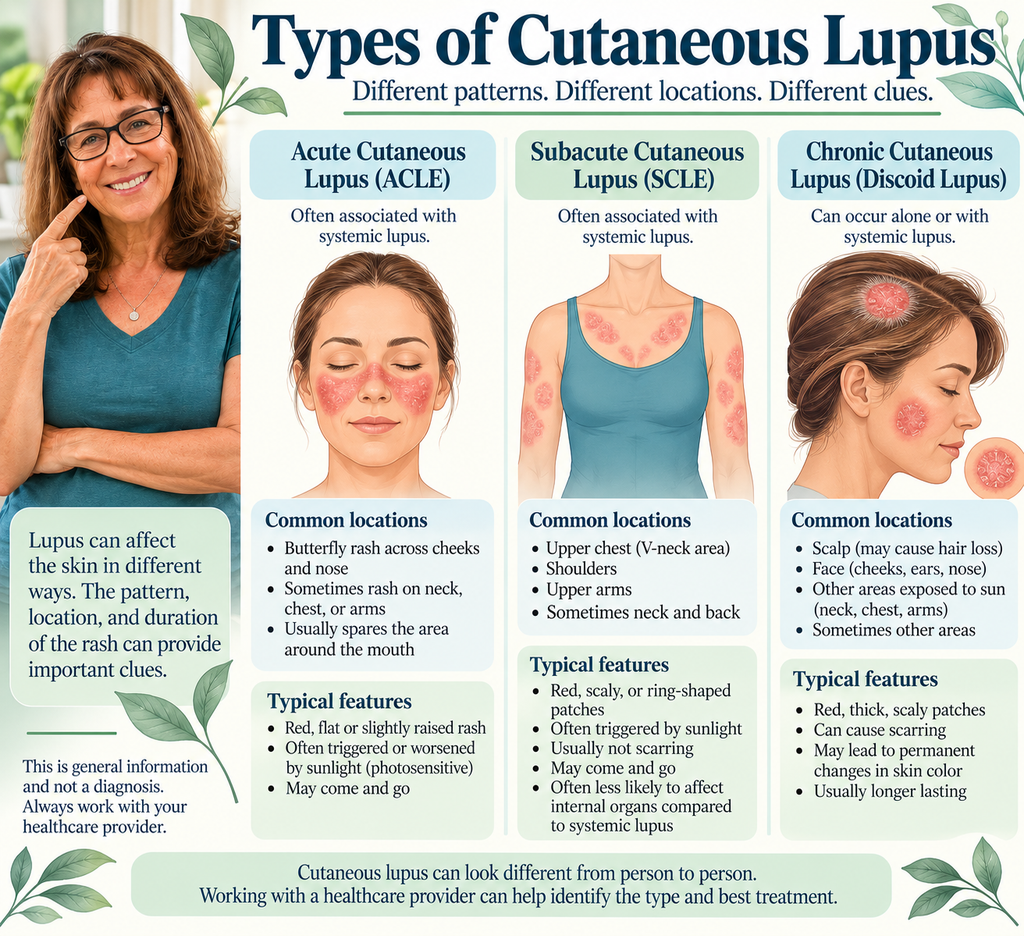
Cutaneous lupus is an autoimmune condition affecting the skin and may occur alone or alongside systemic lupus. Illustration shows areas of the face, scalp, and arms where cutaneous lupus may affect the skin.
What Is Lupus?
Lupus is an autoimmune disease. Normally, the immune system helps recognize and respond to infections and other potential threats.With autoimmune disease, that protective system becomes misdirected and attacks the body’s own tissues.
Systemic lupus erythematosus (SLE) can involve several areas of the body, including the skin, joints, kidneys, blood cells, nervous system, lungs, and heart.
Cutaneous lupus is different because its defining manifestations occur in the skin. Importantly, you can have cutaneous lupus without having systemic lupus. That is one reason a suspicious rash should not be self-diagnosed. A dermatologist—and sometimes a rheumatologist or other specialist—may need to determine what the skin is telling us.
What Is Cutaneous Lupus?
Cutaneous lupus erythematosus describes a spectrum of autoimmune skin disease. It is often grouped into three major categories:
Acute cutaneous lupus
This includes the well-known malar or “butterfly” rash, which may extend across the cheeks and bridge of the nose. Acute cutaneous lupus is often associated with systemic lupus.
Subacute cutaneous lupus
This can produce red, scaly or ring-shaped lesions, frequently on sun-exposed areas such as the arms, upper chest, shoulders, or back.Sun exposure can be an important trigger.
Chronic cutaneous lupus
The most familiar form is discoid lupus erythematosus.
Discoid lesions may be thick, scaly, and disc-shaped. They commonly occur on the face, ears, and scalp.
This form deserves prompt attention because some lesions can cause permanent scarring or changes in skin pigmentation. When the scalp is affected and scarring develops, permanent hair loss can occur.
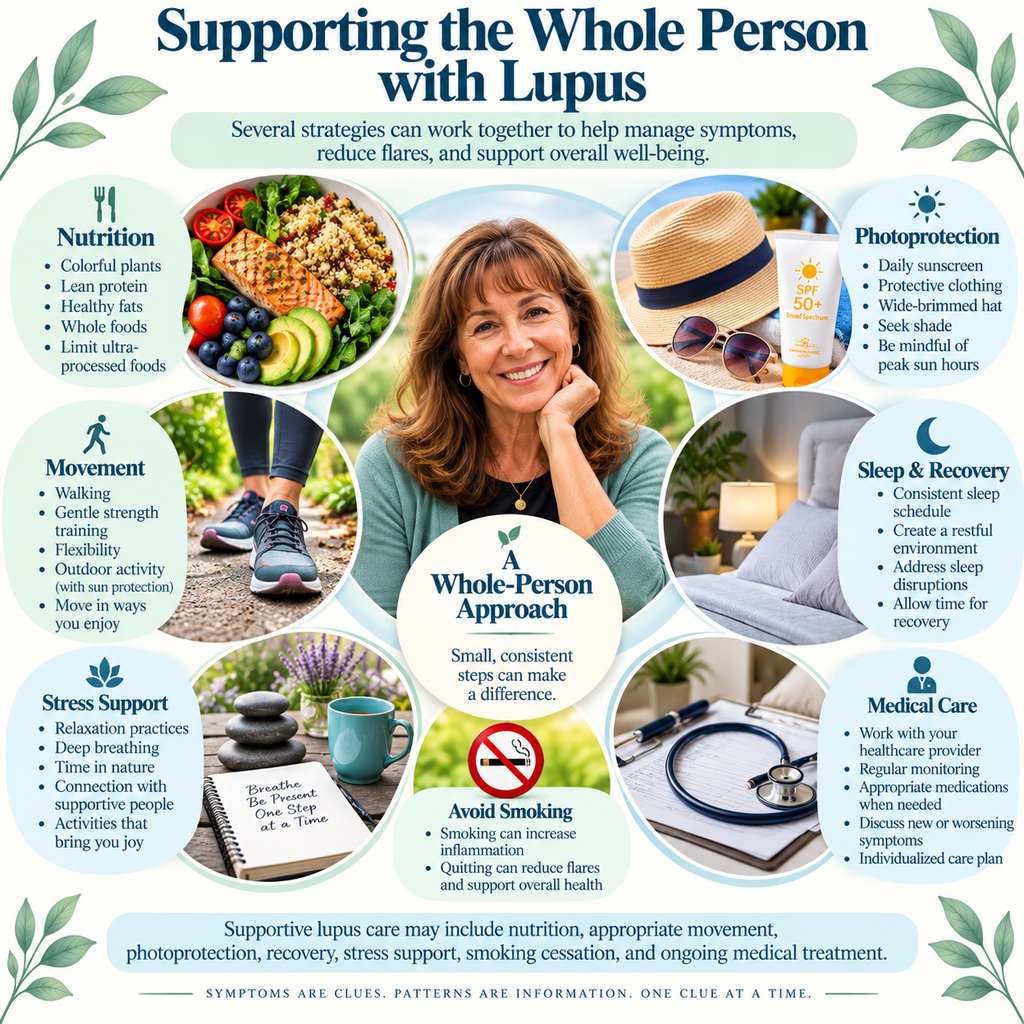
Diagram comparing acute, subacute, and chronic cutaneous lupus and showing common areas of skin involvement.
What Symptoms May Be Clues?
Cutaneous lupus does not look exactly the same in everyone. Possible clues can include:
- A butterfly-shaped rash across the cheeks and nose
- Red, scaly, or ring-shaped areas
- Thick or disc-shaped patches
- Skin changes that worsen after sunlight or ultraviolet exposure
- Changes in skin pigmentation
- Sores in the mouth or nose
- Hair thinning or hair loss
- Scalp lesions
- Burning, itching, or tenderness in affected areas
The same symptoms can also occur with other dermatologic and medical conditions. That distinction is important.
Symptoms are signals. They deserve attention, but they do not diagnose lupus by themselves. Sunlight Is More Than a Skin-Care Issue
One of the best-established lifestyle considerations in lupus is photoprotection. Ultraviolet (UV) exposure can provoke cutaneous lupus lesions and may contribute to lupus flares in susceptible individuals. For someone with lupus or cutaneous lupus, sun protection may therefore be part of disease management—not simply a cosmetic skin-care recommendation.
Depending on individual medical guidance, protective strategies can include:
- Broad-spectrum sunscreen
- Protective clothing
- Wide-brimmed hats
- Seeking shade
- Reducing direct exposure when UV levels are high
Some people can also be sensitive to certain artificial sources of UV light. This is an area where small, consistent protective habits may make an important difference.
How Is Cutaneous Lupus Diagnosed?
There is no single blood test that can diagnose every form of lupus.
When cutaneous lupus is suspected, evaluation may include:
- A detailed medical history
- Examination of the skin, scalp, hair, and nails
- Questions about sun sensitivity and symptom patterns
- Blood testing
- Review of medications
- A skin biopsy
A dermatologist may remove a small sample of affected skin so it can be examined under a microscope. Additional evaluation may be needed when symptoms suggest possible systemic lupus.
This is another reason not to assume that a recurring rash is “just inflammation”—or, on the other hand, that every unusual rash means lupus.We investigate the clues.
A calm “detective” style diagnostic pathway: Skin changes → Notice patterns → Dermatology evaluation → Possible biopsy/labs → Individualized diagnosis. Use a subtle magnifying-glass motif consistent with Stephanie’s brand. Diagnosing cutaneous lupus requires looking at the whole pattern rather than relying on one symptom or laboratory result.
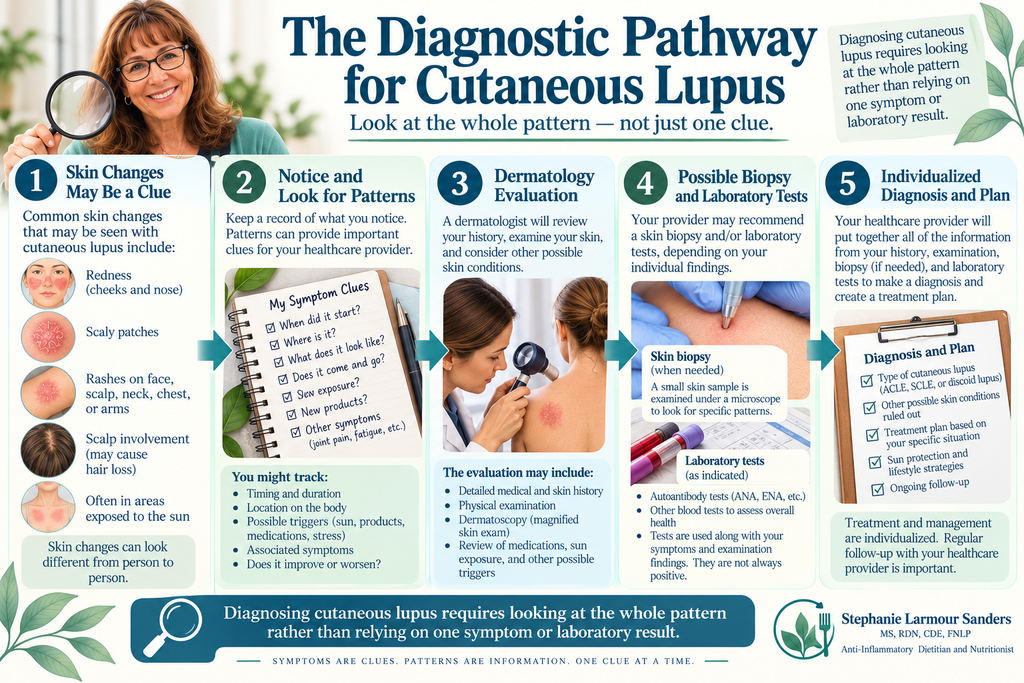
Flowchart showing skin symptoms leading to medical history, examination, laboratory testing, possible skin biopsy, and diagnosis.
Where Does Inflammation Fit?
Lupus is an inflammatory autoimmune disease, but the word inflammation can sometimes become so broad that it loses its meaning. Inflammation is not automatically bad. It is part of the body’s normal immune defense and healing response. The problem in autoimmune diseases is that immune activity becomes misdirected. That means our goal should not be to promise that a particular food or supplement can simply “turn off inflammation. Instead, medical treatment addresses the disease itself, while nutrition and lifestyle can help support overall health and potentially reduce additional sources of inflammatory burden. That distinction is especially important in lupus.
Can an Anti-Inflammatory Diet Treat Lupus?
There is currently no single “lupus diet” proven to cure lupus or replace appropriate medical treatment. However, a healthy, balanced dietary pattern is part of the non-pharmacological care recommended for people with systemic lupus. Research into specific dietary patterns is still developing.
🔬 Recent research: Reviews of lifestyle interventions in systemic lupus have found that the evidence for diet is considerably more limited than the evidence for areas such as physical activity. Research suggests that Mediterranean-style dietary patterns may be helpful particularly for cardiovascular health, but large intervention trials are still needed.
That evidence boundary matters.
A Mediterranean-style or anti-inflammatory eating pattern can emphasize:
- Colorful vegetables and fruits
- Beans and lentils
- Nuts and seeds
- Whole grains when tolerated
- Fish and other sources of omega-3 fats
- Olive oil and other unsaturated fats
- Adequate protein
- Fiber-rich foods
- Minimally processed foods more often
This is not about creating a restrictive “autoimmune diet.” It is about supporting nutritional adequacy, metabolic health, cardiovascular health, and overall wellbeing.
Avoid Unnecessary Food Restriction
People living with chronic symptoms can understandably become vulnerable to messages telling them they need to eliminate long lists of foods.
Gluten. Dairy. Nightshades. Grains. Lectins. Soy.
Sometimes an individual food does need to be restricted because of an allergy, celiac disease, intolerance, medication interaction, kidney-related dietary needs, or another medically appropriate reason. But automatically eliminating multiple food groups because someone has lupus can create its own problems.
Overly restrictive diets can reduce nutrient intake, make eating socially difficult, increase food anxiety, and make an already complicated condition even harder to manage.
The goal is reduction of inflammatory load, not perfection.
What About Supplements?
This is another area where we need to separate promising research from universal recommendations.
Vitamin D
Vitamin D deserves particular attention because people who carefully avoid UV exposure may have less opportunity for skin production of vitamin D.
🔬 Recent research: Vitamin D status and supplementation continue to be studied in systemic lupus. Recent meta-analyses suggest possible benefits in some measures of disease activity, but results across studies and outcomes have not been completely consistent. Rather than assuming everyone with lupus needs a high-dose supplement, vitamin D status can be evaluated and supplementation individualized with the healthcare team.
Omega-3 fatty acids
Omega-3 fatty acids have also been studied in systemic lupus. Some research suggests possible benefit, but trials have been relatively small and findings have varied. Foods such as salmon, sardines, trout, walnuts, chia seeds, and flaxseed can contribute omega-3 fats as part of a balanced eating pattern.
Supplement decisions deserve more caution because dose, medications, medical conditions, and bleeding risk can matter.
Supplements should support an appropriate treatment plan—not become a substitute for one.
Lifestyle Support Beyond Food
Nutrition is only one piece of the picture. Evidence-informed supportive care for lupus may also include:
Movement
Regular physical activity can support cardiovascular health, muscle, mobility, mood, and quality of life. Research in systemic lupus also supports benefits of appropriately individualized exercise for fatigue and physical functioning. Movement should be adapted to disease activity, medical conditions, physical ability, and energy levels.
Movement is support, not punishment.
Smoking cessation
Smoking is particularly important to address. Beyond its many other health effects, smoking may interfere with the effectiveness of some medications used for lupus.
Stress and psychological support
Stress does not mean someone caused their autoimmune disease. But living with an unpredictable chronic illness can itself be stressful. Psychological support, realistic stress-management practices, social connection, and adequate recovery can be valuable parts of whole-person care.
Sleep and recovery
Sleep deserves attention because it influences energy, appetite regulation, mood, metabolic health, and the ability to cope with chronic illness. Sleep problems can also have many causes and persistent fatigue should not automatically be attributed to lupus.
Image suggestion: A positive “supporting the whole person” graphic showing a colorful Mediterranean-style meal, sun-protective hat/sunscreen, walking shoes, sleep, stress support, and medical care arranged around a central person.
Caption: Supportive lupus care may include nutrition, appropriate movement, photoprotection, recovery, smoking cessation, and ongoing medical treatment.
Alt text: Illustration showing balanced meals, sun protection, movement, sleep, stress support, and medical care as complementary health strategies.
When Should You Seek Medical Care?
Talk with a healthcare professional if you develop a new or persistent rash—especially one that:
- Repeatedly appears after sun exposure
- Occurs across the cheeks and nose
- Becomes thick, scaly, or scarred
- Causes areas of hair loss
- Produces persistent changes in skin color
- Occurs with unexplained joint pain, fever, fatigue, mouth sores, swelling, chest symptoms, or other systemic symptoms
People already diagnosed with cutaneous lupus should also report significant changes or new symptoms to their healthcare team. Prompt diagnosis and treatment can be especially important when lesions have the potential to scar or cause permanent hair loss.
Call To Action: Have you noticed that symptoms change with sunlight, stress, sleep, food patterns, or other parts of daily life? Tracking patterns can give you useful information to discuss with your healthcare team.
Stephanie Says
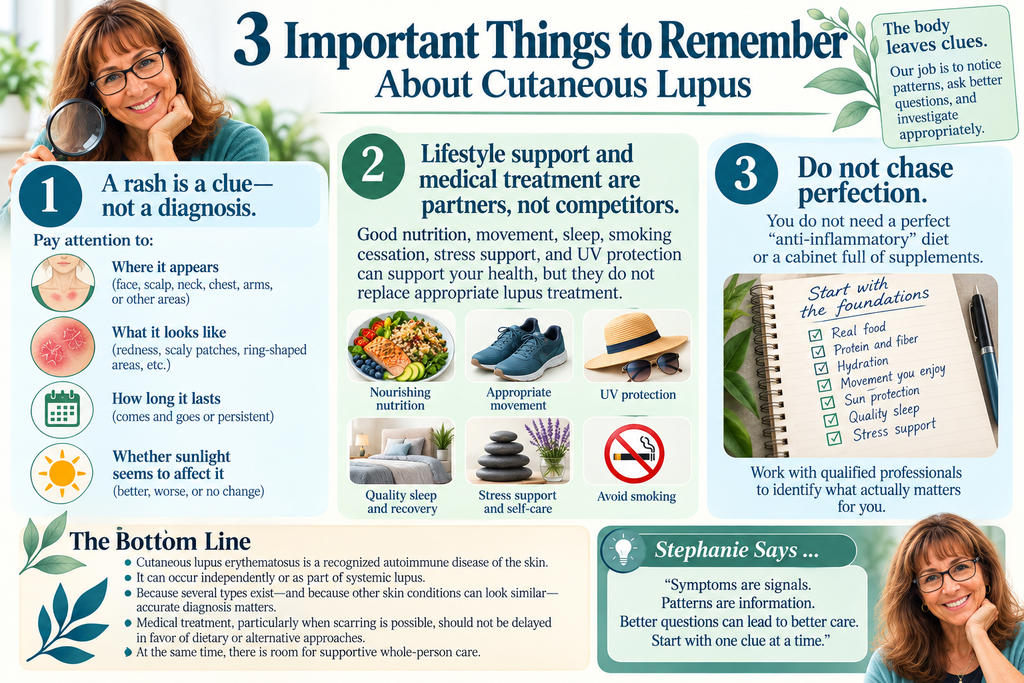
References
- American Academy of Dermatology. Lupus and your skin: Overview; Signs and symptoms; Diagnosis and treatment.
- Parodis I, et al. EULAR recommendations for the non-pharmacological management of systemic lupus erythematosus and systemic sclerosis. Annals of the Rheumatic Diseases. 2024;83:720–729.
- Fanouriakis A, et al. EULAR recommendations for the management of systemic lupus erythematosus: 2023 update. Annals of the Rheumatic Diseases. 2024;83:15–29.
- Xiong W, et al. Treatment of Cutaneous Lupus Erythematosus: An Evidence-Based Review. Dermatology. 2026;242(1):86–120.
- Pocovi-Gerardino G, et al. Beneficial effect of Mediterranean diet on disease activity and cardiovascular risk in systemic lupus erythematosus patients. Rheumatology. 2021.
- Ramessar N, Borad A, Schlesinger N. The effect of omega-3 fatty acid supplementation in systemic lupus erythematosus patients: A systematic review. Lupus. 2022;31(3):287–296.
- Effects of vitamin D supplementation on patients with systemic lupus erythematosus: A systematic review and meta-analysis. Autoimmunity Reviews. 2026.
2 Oct, 2026 | Stephanie Sanders | No Comments
Warm Apple-Cinnamon Quinoa Pudding
Stephanie Larmour Sanders MSRD, CDE, FNLP
This gently sweet dessert is anti-inflammatory and made without dairy, chocolate, citrus, or fermented ingredients.

Makes: 4 servings
Time: About 25 minutes
Ingredients
- ½ cup uncooked quinoa
- 1 cup water
- 1 cup unsweetened oat milk or tolerated milk
- 1 apple, peeled and finely diced
- 1–2 tablespoons pure maple syrup
- ½ teaspoon cinnamon, if tolerated
- ¼ teaspoon ground ginger
- 1 teaspoon pure vanilla extract, optional
- 1 tablespoon ground flaxseed, optional
- Pinch of salt
Directions
- Rinse the quinoa thoroughly in a fine-mesh strainer.
- Place the quinoa and water in a small saucepan.
- Bring to a boil, reduce the heat, cover, and simmer for about 12 minutes.
- Add the oat milk, diced apple, cinnamon, ginger, and salt.
- Cook uncovered over low heat for another 8–10 minutes, stirring frequently, until creamy and the apple is tender.
- Remove from the heat. Stir in the maple syrup, vanilla, and ground flaxseed.
- Let it rest for 5 minutes. Serve warm.
Optional toppings
- Freshly diced pear or apple
- A drizzle of maple syrup
- Unsweetened toasted coconut, if tolerated
- A spoonful of warm oat milk
- A sprinkle of cinnamon
Low-histamine note
Eat the pudding freshly prepared. Freeze any extra portions promptly in individual containers rather than storing them in the refrigerator for several days. Cinnamon, vanilla, flaxseed, coconut, and plant milks are tolerated differently, so omit or substitute anything that has caused symptoms for you.
For a softer custard-like texture, blend half of the cooked pudding briefly and mix it back into the saucepan.
2 Oct, 2026 | Stephanie Sanders | No Comments
Here are several anti-inflammatory quinoa side dishes plus a simple low-histamine dessert.
Stephanie Larmour Sanders MSRD, CDE, FNLP
Anti-inflammatory Dietitian and Nutritionist
More quinoa side-dish ideas
1. Quinoa with roasted vegetables
Combine cooked quinoa with:
- Roasted carrots
- Zucchini
- Broccoli
- Extra-virgin olive oil
- Fresh parsley
- Turmeric and a pinch of salt
Roast the vegetables at 400°F for 20–25 minutes, then fold them into freshly cooked quinoa.
2. Cucumber and herb quinoa
This is a fresh alternative to traditional quinoa salad—without vinegar or lemon.
Combine:
- 2 cups cooked and cooled quinoa
- 1 peeled and diced cucumber
- 2 tablespoons chopped parsley
- 1 tablespoon chopped dill
- 2 tablespoons extra-virgin olive oil
- 1–2 tablespoons water
- Salt to taste
Serve immediately. If raw cucumber bothers your digestion, substitute lightly steamed zucchini.
3. Apple, carrot and quinoa pilaf
Gently sauté:
- 1 diced apple
- 1 shredded carrot
- 1 tablespoon olive oil
- ¼ teaspoon turmeric
- A small pinch of cinnamon, if tolerated
Fold the mixture into 2 cups of warm cooked quinoa. This slightly sweet side dish would pair nicely with freshly cooked chicken or turkey.
4. Quinoa with green beans and basil
Combine warm quinoa with:
- Steamed green beans
- Diced yellow squash
- Fresh basil or parsley
- Extra-virgin olive oil
- A pinch of ground ginger
- Salt to taste
Dessert: Warm baked pears with oat topping
Makes: 4 servings
Bake: 25–30 minutes at 375°F
Ingredients
- 2 firm pears
- ½ cup rolled oats
- 2 tablespoons oat flour
- 1½ tablespoons extra-virgin olive oil or melted coconut oil
- 1–2 tablespoons pure maple syrup
- ½ teaspoon cinnamon, if tolerated
- ¼ teaspoon ground ginger
- 2 tablespoons water
Directions
- Heat the oven to 375°F.
- Peel the pears if desired. Cut them in half and remove the cores.
- Place the pears cut-side up in a small baking dish.
- Mix the oats, oat flour, oil, maple syrup, cinnamon, and ginger.
- Spoon the oat mixture over the pears.
- Pour 2 tablespoons of water around—not over—the pears.
- Cover loosely and bake for 20 minutes.
- Uncover and bake for another 5–10 minutes, until tender.
Optional creamy topping
Blend or stir together:
- ¼ cup unsweetened coconut milk
- ½ teaspoon maple syrup
- A pinch of cinnamon
Check that the coconut milk contains no ingredients you personally react to.
Low-histamine tolerance is individual. Prepare these dishes with fresh ingredients, eat them promptly, and freeze extra portions rather than keeping them refrigerated for several days.
Absolutely. Here are several anti-inflammatory quinoa side dishes plus a simple low-histamine dessert.
More quinoa side-dish ideas
1. Quinoa with roasted vegetables
Combine cooked quinoa with:
- Roasted carrots
- Zucchini
- Broccoli
- Extra-virgin olive oil
- Fresh parsley
- Turmeric and a pinch of salt
Roast the vegetables at 400°F for 20–25 minutes, then fold them into freshly cooked quinoa.
2. Cucumber and herb quinoa
This is a fresh alternative to traditional quinoa salad—without vinegar or lemon.
Combine:
- 2 cups cooked and cooled quinoa
- 1 peeled and diced cucumber
- 2 tablespoons chopped parsley
- 1 tablespoon chopped dill
- 2 tablespoons extra-virgin olive oil
- 1–2 tablespoons water
- Salt to taste
Serve immediately. If raw cucumber bothers your digestion, substitute lightly steamed zucchini.
3. Apple, carrot and quinoa pilaf
Gently sauté:
- 1 diced apple
- 1 shredded carrot
- 1 tablespoon olive oil
- ¼ teaspoon turmeric
- A small pinch of cinnamon, if tolerated
Fold the mixture into 2 cups of warm cooked quinoa. This slightly sweet side dish would pair nicely with freshly cooked chicken or turkey.
4. Quinoa with green beans and basil
Combine warm quinoa with:
- Steamed green beans
- Diced yellow squash
- Fresh basil or parsley
- Extra-virgin olive oil
- A pinch of ground ginger
- Salt to taste
Dessert: Warm baked pears with oat topping
Makes: 4 servings
Bake: 25–30 minutes at 375°F
Ingredients
- 2 firm pears
- ½ cup rolled oats
- 2 tablespoons oat flour
- 1½ tablespoons extra-virgin olive oil or melted coconut oil
- 1–2 tablespoons pure maple syrup
- ½ teaspoon cinnamon, if tolerated
- ¼ teaspoon ground ginger
- 2 tablespoons water
Directions
- Heat the oven to 375°F.
- Peel the pears if desired. Cut them in half and remove the cores.
- Place the pears cut-side up in a small baking dish.
- Mix the oats, oat flour, oil, maple syrup, cinnamon, and ginger.
- Spoon the oat mixture over the pears.
- Pour 2 tablespoons of water around—not over—the pears.
- Cover loosely and bake for 20 minutes.
- Uncover and bake for another 5–10 minutes, until tender.
Optional creamy topping
Blend or stir together:
- ¼ cup unsweetened coconut milk
- ½ teaspoon maple syrup
- A pinch of cinnamon
Check that the coconut milk contains no ingredients you personally react to.
Low-histamine tolerance is individual. Prepare these dishes with fresh ingredients, eat them promptly, and freeze extra portions rather than keeping them refrigerated for several days.
27 Sep, 2026 | Stephanie Sanders | No Comments
Quinoa: A Simple Way to Add More Protein, Fiber, Color, and Variety to Your Plate
By Stephanie Larmour Sanders, MS, RDN, CDE, FNLP
Clinical Dietitian, Certified Diabetes Educator, and Functional Nutritionist

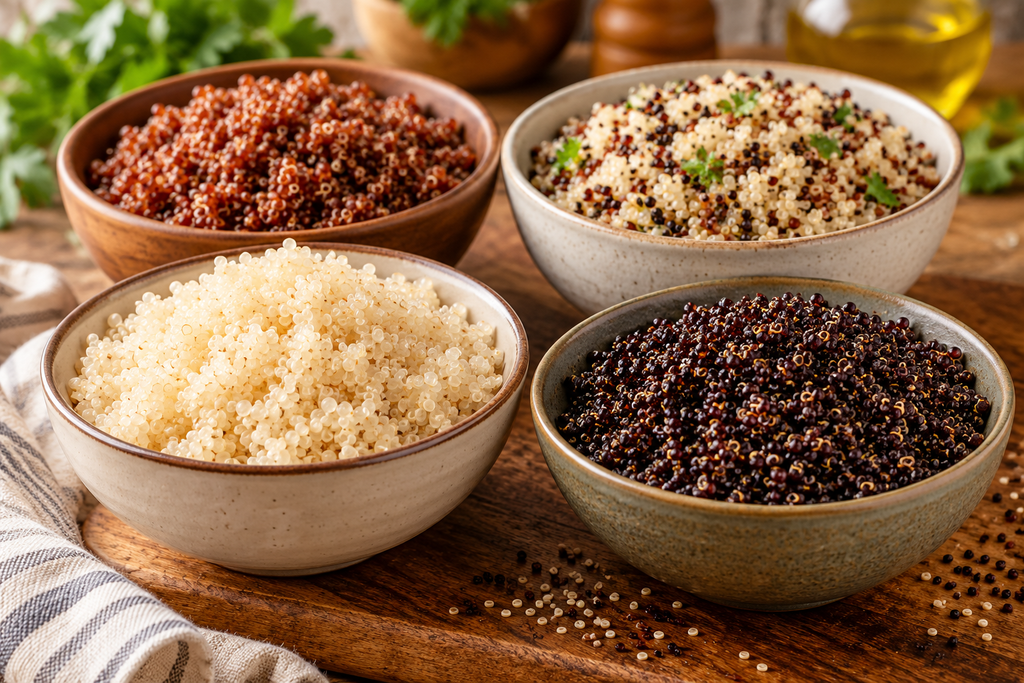
When we want to eat well at home, we do not always need another complicated recipe or an unfamiliar list of rules. Sometimes we simply need one flexible ingredient that can make familiar meals more nourishing.
Quinoa can fill that role. Although it is botanically a seed, it is prepared and eaten like a whole grain. It works in warm side dishes, soups, salads, breakfast bowls, stuffed vegetables—and even desserts.
The nutritional snapshot
One cooked cup of quinoa provides approximately 8 grams of protein and 5 grams of fiber. It also supplies magnesium, phosphorus, manganese, folate, iron, and other nutrients. Quinoa contains all nine essential amino acids, although it should still be viewed as one part of a varied eating pattern—not a replacement for every other protein food.
Why quinoa can be useful
- It adds plant protein. Quinoa offers more protein than many commonly used cooked grains.
- It contributes fiber. Fiber supports digestive health, fullness, and a steadier response to a mixed meal.
- It is naturally gluten-free. Plain quinoa can fit a gluten-free eating pattern. People with celiac disease should choose products labeled gluten-free to reduce cross-contact risk.
- It provides minerals. Quinoa contributes magnesium, iron, phosphorus, and manganese.
- It is flexible. Its mild flavor works with vegetables, herbs, poultry, fish, beans, fruit, and warm spices.
No single food can “turn off” inflammation. Quinoa is better understood as one ingredient that can support a fiber-rich, minimally processed, plant-forward eating pattern.
White, red, black, or tri-color: which quinoa should you choose?
The colors do not create entirely different foods. Protein, fiber, and mineral content overlap substantially, and natural variation exists among cultivars. Pigmented quinoa may contain different amounts of phenolic compounds and other plant pigments, but color alone does not guarantee a specific nutritional advantage.
| Type | Flavor | Texture | Useful for |
|---|---|---|---|
| White | Mildest | Soft and fluffy | Rice substitute, breakfast bowls, soups, puddings |
| Red | Earthier and nuttier | Firmer; holds its shape | Warm bowls, pilafs, meal-prep dishes |
| Black | Most earthy | Firmest and slightly crunchy | Color contrast, hearty bowls, vegetable dishes |
| Tri-color | Balanced and nutty | A mixture of soft and firm grains | Everyday side dishes and attractive presentations |
My practical answer: choose the color whose texture you enjoy and that suits the dish. White quinoa is a gentle starting point. Red and black quinoa are helpful when you want the grains to remain more separate and firm.
How does quinoa compare with rice and other grains?
The figures below are approximate amounts per cooked cup. Values vary with the variety, cooking method, water absorption, brand, and exact serving weight. The table is a planning tool—not a ranking of “good” and “bad” foods.
| Cooked food | Protein | Fiber | What stands out |
|---|---|---|---|
| Quinoa | ~8 g | ~5 g | Complete plant protein; naturally gluten-free |
| Brown rice | ~5 g | ~3–4 g | Familiar whole grain; chewy and mild |
| White rice | ~4 g | <1 g | Soft, easy to digest for many people; lower in fiber |
| Oatmeal | ~6 g | ~4 g | Contains soluble beta-glucan fiber |
| Pearled barley | ~3–4 g | ~6 g | High in fiber; contains gluten |
Quinoa generally provides more protein and fiber than white rice and more protein than brown rice. Barley may provide more fiber, while oats contribute a distinctive soluble fiber. Rice remains meaningful in many cultural eating patterns and may be easier to tolerate during certain digestive symptoms. Variety is often more useful than trying to identify one perfect grain.
Quinoa and blood sugar
Quinoa contains carbohydrate and can raise blood glucose. Its protein and fiber may make it more satisfying than a similar portion of refined grain, but portion size and the complete meal still matter. Pair it with non-starchy vegetables, a protein food, and healthy fat—and observe your own response when glucose monitoring is appropriate.

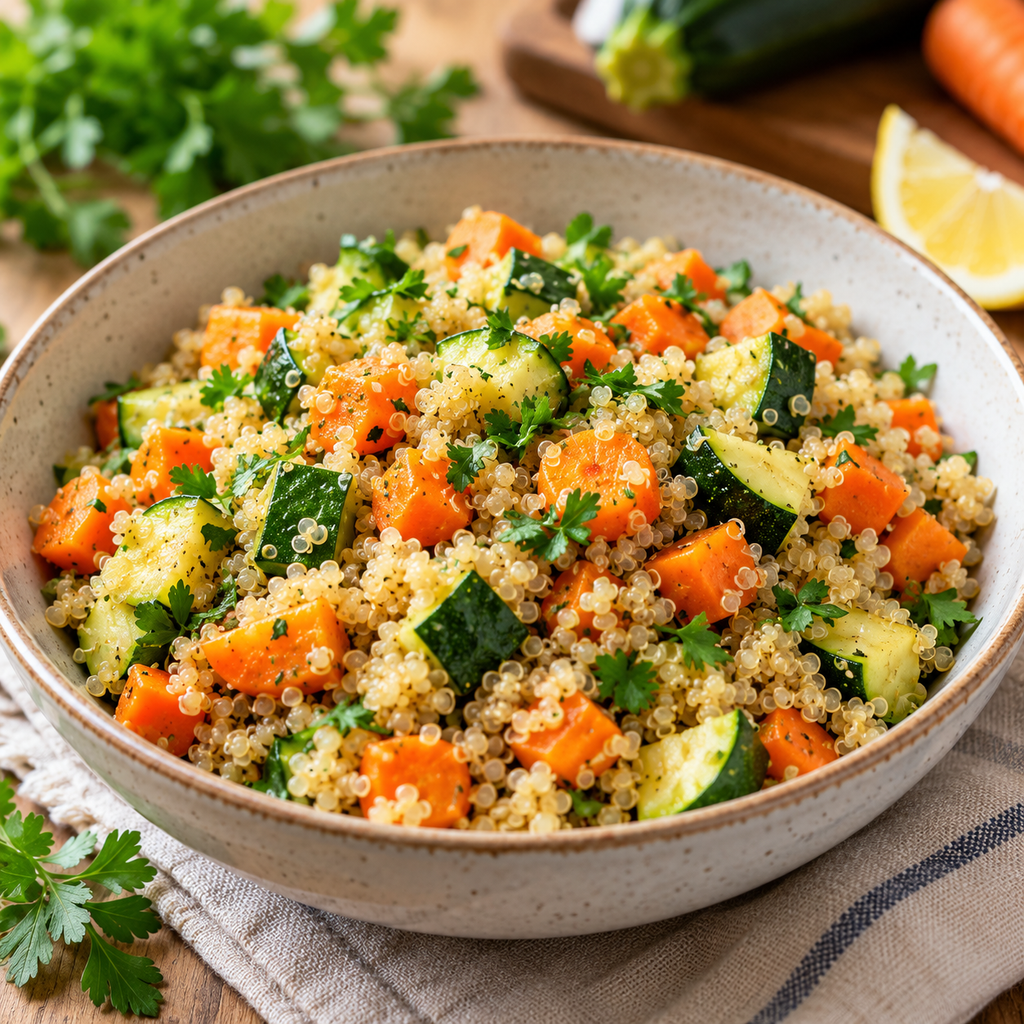
Stephanie Says: Expand what is already easy
I am always looking for realistic ways to expand what I can easily cook at home—without turning every meal into a project. Quinoa gives me another option when I want more protein and fiber than I would get from white rice alone.
I can cook a small pot and use it in more than one way: warm with vegetables and olive oil, stirred into soup, served beneath chicken or fish, or made into a gently sweet breakfast or dessert.
I do not have to change everything on my plate. I can begin by changing or adding one ingredient. That is how variety grows—one practical choice at a time.
The easiest way to cook quinoa
- Place 1 cup dry quinoa in a fine-mesh strainer and rinse it thoroughly.
- Combine it with 2 cups water in a saucepan.
- Bring to a boil, reduce the heat, cover, and simmer for approximately 15 minutes.
- Remove from the heat and let it rest, covered, for 5 minutes.
- Fluff it gently with a fork.
Some red, black, and tri-color products need a few extra minutes. Follow the package instructions when they differ.
Easy quinoa side dish
Herbed quinoa with zucchini and carrots
Ingredients: 2 cups cooked quinoa, 1 diced zucchini, 1 shredded carrot, 2 tablespoons extra-virgin olive oil, chopped parsley or basil, ¼ teaspoon turmeric, ¼ teaspoon ground ginger, and salt to taste.
Method: Gently sauté the zucchini and carrot in 1 tablespoon of olive oil. Add the turmeric and ginger, then fold the vegetables into the warm quinoa with the remaining oil and fresh herbs.

Quinoa dessert
Warm apple-and-pear quinoa pudding
Ingredients: 2 cups cooked white quinoa, 1½ cups unsweetened oat milk or another tolerated milk, 1 small diced apple, 1 small diced pear, 1–2 tablespoons pure maple syrup, ½ teaspoon cinnamon, ¼ teaspoon ginger, and a pinch of salt.
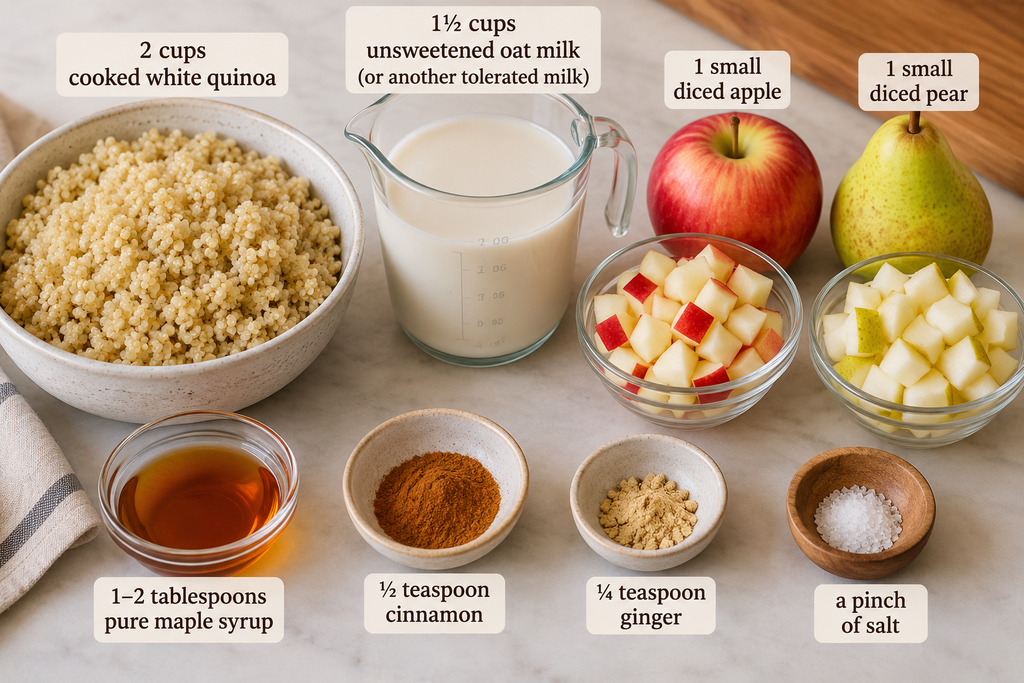
Method: Combine everything in a saucepan. Cook over low heat for 8–10 minutes, stirring frequently, until warm and creamy and the fruit is tender. Add more milk if you prefer a softer pudding.
A note for people using a low-histamine approach
Quinoa is commonly included in lower-histamine meal plans, but tolerance is individual and food lists are not completely consistent. Use ingredients you already tolerate.
Freshness also matters. Eat freshly prepared food promptly. If you cook more quinoa than you need, cool it promptly and freeze individual portions rather than allowing leftovers to remain in the refrigerator for several days.
Your quinoa detective experiment
Choose one familiar meal that normally includes rice or another grain. Replace half—or all—of that grain with quinoa. Then observe:
- Did you enjoy the flavor and texture?
- Did the meal keep you satisfied?
- How did your digestion respond?
- Would white, red, black, or tri-color quinoa work better next time?
Food is not a test you pass or fail. It is information. Try one change, notice the response, and build from there—one clue at a time.
References
- U.S. Department of Agriculture, Agricultural Research Service. FoodData Central.
- Harvard T.H. Chan School of Public Health. Quinoa: The Nutrition Source.
- Nowak V, Du J, Charrondière UR. Assessment of the nutritional composition of quinoa. Food Chemistry. 2016;193:47–54.
- Vilcacundo R, Hernández-Ledesma B. Nutritional and biological value of quinoa: an updated review. Food Science & Nutrition. 2017;5(4):873–879.
- Melini V, Melini F. Functional components and anti-nutritional factors in gluten-free grains: a focus on quinoa seeds. Foods. 2021.
Stephanie Larmour Sanders, MS, RDN, CDE, FNLP
Clinical Dietitian, Certified Diabetes Educator, and Functional Nutritionist
StephanieLarmour.com
A balanced look at the benefits, drawbacks, and digestive clues
By Stephanie Larmour Sanders, MS, RDN, CDE, FNLP
Clinical Dietitian, Certified Diabetes Educator, and Functional Nutritionist
Xanthan Gum: Helpful Tool or Hidden Concern?

Have you looked at the ingredient list in a baked good and wondered is this good or bad for me? I sure have.
Well Xanthan gum performs several useful functions in food, but individual digestive tolerance may vary.
Have you ever noticed xanthan gum on an ingredient label and wondered what it was—or whether you should avoid it?
You may find it in:
- Gluten-free bread and baked goods
- Salad dressings and sauces
- Soups and gravies
- Dairy alternatives
- Ice cream and frozen desserts
- Protein drinks and nutrition supplements
- Thickened liquids used for swallowing difficulties
The name may sound highly chemical, but xanthan gum is a carbohydrate produced through fermentation. It serves a practical purpose in food, and the small amounts normally consumed appear safe for most adults.
However, safe for the general population does not necessarily mean that every person will tolerate every amount.
Let’s examine the evidence without automatically placing xanthan gum in either the “good” or “bad” category.
What Is Xanthan Gum?
Xanthan gum—also identified as E415—is produced when the bacterium Xanthomonas campestris ferments a sugar source.
After fermentation, the xanthan gum is separated, purified, dried, and ground into a fine powder. The finished product does not contain active Xanthomonas bacteria.
When mixed with liquid, even a small quantity creates thickness and stability. It can keep ingredients suspended and prevent oil and water from separating.
The FDA permits xanthan gum for use as a food additive, including as a stabilizer, thickener, emulsifier and texturizer. The European Food Safety Authority has also concluded that its reported food uses do not pose a safety concern for the general population.
Why Is Xanthan Gum Used?
It improves gluten-free baking
Gluten normally helps dough stretch and hold together. When wheat is removed, gluten-free bread may become dry, crumbly or dense.
Xanthan gum helps bind the ingredients, retain moisture and create a more flexible texture. This can make gluten-free breads and baked goods easier to prepare and more enjoyable to eat.
It keeps products from separating
Xanthan gum helps stabilize salad dressings, sauces, plant-based beverages and other mixtures.
For example, it can help keep the oil and water in a salad dressing evenly distributed rather than quickly separating into two layers.
It thickens liquids
Xanthan-gum products are sometimes used to thicken liquids for people with dysphagia, or difficulty swallowing.
Clinical studies suggest that increasing liquid viscosity with a xanthan-based thickener can improve swallowing safety in some individuals. However, the correct consistency must be determined by a qualified healthcare professional—usually a speech-language pathologist. Adding extra thickener without professional guidance can make drinking more difficult and may contribute to inadequate fluid intake.
It may affect bowel function
Xanthan gum is not fully digested in the upper gastrointestinal tract. It reaches the colon, where certain intestinal microorganisms can ferment it.
In a small human study using much larger amounts than people normally obtain from food, xanthan gum increased stool output, bowel-movement frequency and gas. This suggests that it can act somewhat like a fermentable soluble fiber.
That effect may be useful for one person and uncomfortable for another.
Xanthan Gum: Pros and Cons
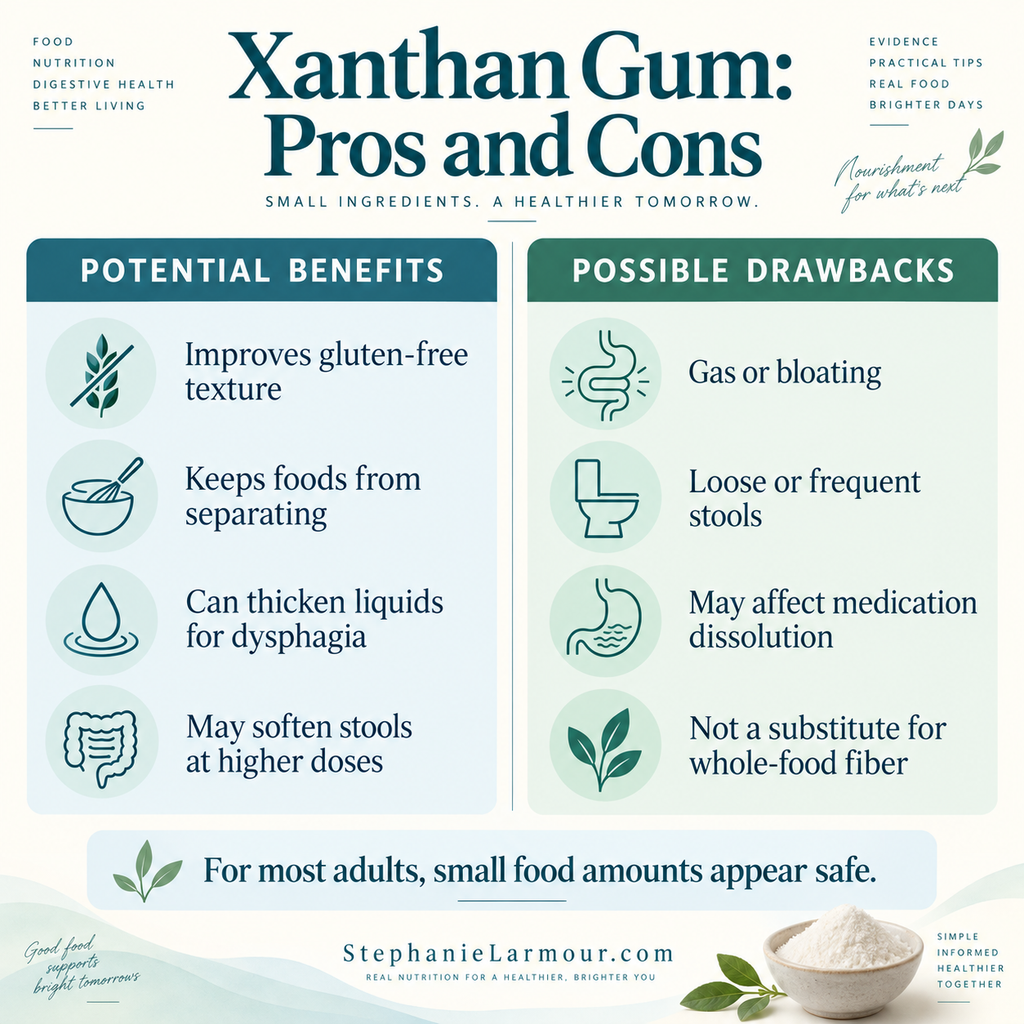
Xanthan gum has useful food and clinical applications, but higher amounts may cause digestive symptoms in sensitive individuals. Comparison infographic listing potential benefits and possible drawbacks of xanthan gum.
Potential Benefits of Xanthan Gum
1. It works in very small amounts.
Food manufacturers and home cooks generally need only a small amount to produce the desired texture.
2. It improves gluten-free food quality
For someone with celiac disease or another medical reason to avoid gluten, xanthan gum can make gluten-free foods less crumbly and more acceptable.
3. It may improve swallowing safety
When used correctly under professional supervision, xanthan-based thickeners can help selected patients control liquids more safely.
4. It may soften stools
Its ability to retain water and undergo fermentation may increase stool softness and frequency at higher intakes.
5. It may influence post-meal glucose
A few small studies suggest that xanthan gum’s viscosity may slow digestion and reduce the rise in blood glucose after certain meals.This is interesting, but the research is not strong enough to recommend xanthan gum as a treatment for diabetes.
Whole foods, dietary patterns, movement, sleep, medication when needed, and individualized medical nutrition therapy remain much more important.
Possible Drawbacks
1. Gas and bloating
Because intestinal organisms can ferment xanthan gum, some people may experience:
- Gas
- Bloating
- Abdominal pressure
- Cramping
- Changes in bowel habits
These reactions are more likely with larger quantities, but people with sensitive digestive systems may notice symptoms at lower amounts.
2. Loose or more frequent stools
Higher intakes may have a laxative effect. Someone already experiencing diarrhea, urgency or an irritable bowel may not tolerate concentrated amounts well. The quantities used in studies showing strong laxative effects were generally much greater than those found in an ordinary serving of food.
3. Microbiome changes
Research has found that certain intestinal bacteria can break down xanthan gum. Therefore, xanthan gum may influence the microbial community in the colon. That does not automatically mean the change is beneficial or harmful.
Animal and laboratory studies have raised questions about whether chronic exposure could affect the intestinal environment. However, we do not currently have strong human evidence showing that the small amounts used in food cause chronic intestinal inflammation, inflammatory bowel disease or a “leaky gut.”
This is an area where the evidence should continue to be monitored.
4. It is not equivalent to whole-food fiber
Although xanthan gum behaves like a fermentable fiber, it does not offer the full nutritional benefits of:
- Vegetables
- Fruit
- Beans and lentils
- Nuts and seeds
- Intact whole grains
These foods provide multiple types of fiber along with vitamins, minerals and protective plant compounds. Xanthan gum should not be promoted as a replacement for a varied, fiber-rich diet.
5. Thickened fluids can affect medications
A thickened liquid may change how quickly certain tablets or capsules break apart and dissolve. Anyone who requires thickened liquids should ask a pharmacist how each medication should be administered. Medications should not automatically be crushed or mixed into a thickened drink.
Does Xanthan Gum Cause Inflammation?
At this time, there is insufficient human evidence to conclude that normal dietary amounts of xanthan gum cause systemic or chronic intestinal inflammation.
This distinction is important:
- Fermentation is not automatically inflammation.
- A microbiome change is not automatically damage.
- Digestive discomfort is not automatically an allergy.
- An animal finding is not proof of the same outcome in people.
However, individual symptoms still matter. If a person repeatedly develops bloating, abdominal pain or diarrhea after eating products containing xanthan gum, that pattern deserves investigation.
The goal is not to dismiss the symptom—but it is also not to make a universal safety conclusion from one person’s response.
What About Xanthan Gum and Food Allergies?
A true allergy to xanthan gum appears to be uncommon. Digestive symptoms such as gas and bloating are more likely to reflect intolerance or fermentation than an allergic response.
Signs of a potentially serious allergic reaction include:
- Hives
- Swelling of the lips, tongue or throat
- Wheezing
- Difficulty breathing
- Dizziness or fainting
These symptoms require immediate medical attention. Xanthan gum may be produced using sugars derived from different sources. However, the fermentation product undergoes purification. Someone with a severe allergy who is concerned about a particular product should contact the manufacturer for its allergen-control information rather than assuming that every xanthan-gum product contains the original source protein.
An Important Infant Precaution
Xanthan-gum thickening products have been associated with reports of necrotizing enterocolitis, a serious intestinal disorder, in premature infants. This concern should not be applied directly to ordinary adult food exposure. Premature infants have uniquely vulnerable and still-developing digestive systems.
Nevertheless, parents and caregivers should never add xanthan gum or another commercial thickener to an infant’s feeding unless directed by the infant’s physician and clinical feeding team.
How to Investigate Your Own Response
If you think xanthan gum may be affecting you, begin by gathering clues.
Ask yourself:
- What food did I eat?
- Approximately how much did I eat?
- Was xanthan gum near the beginning or end of the ingredient list?
- What other gums, sweeteners or fermentable carbohydrates were present?
- When did my symptoms begin?
- Did the same reaction occur more than once?
- Do I react to every product containing xanthan gum—or only one particular food?
A packaged food may contain several possible digestive triggers, including:
- Inulin or chicory-root fiber
- Sugar alcohols
- Lactose
- Large amounts of fat
- Guar gum or other gum
- Artificial or natural sweeteners
- Large quantities of added fiber
Xanthan gum may be the cause, one contributing factor, or simply one ingredient on a much longer list.
A Simple Food Detective Experiment
If symptoms are mild and there is no history of a severe allergic reaction:
- Record the food, quantity and symptoms.
- Avoid the suspected product for a brief, defined period.
- Keep the rest of the diet reasonably consistent.
- Reintroduce the food under similar circumstances.
- Observe whether the same symptoms return.
Do not eliminate numerous foods indefinitely based on one uncomfortable experience. Extensive restriction can reduce dietary variety and make it harder to identify the true cause. People with severe symptoms, unintended weight loss, blood in the stool, persistent diarrhea, difficulty swallowing or a history of anaphylaxis should seek professional medical evaluation rather than perform an unsupervised food challenge.
Individual symptoms are meaningful clues, but they do not prove that an ingredient is harmful for everyone.
Individual symptoms are meaningful clues, but they do not prove that an ingredient is harmful for everyone.

Ask:
- How much did I eat?
- How often did I eat it?
- What other ingredients were present?
- Did the symptom occur more than once?
Your response is a clue—not proof that the ingredient is dangerous for everyone.Step back. Look for patterns. Ask better questions. One clue at a time.
The Bottom Line
Xanthan gum has legitimate food and clinical uses. It improves gluten-free baking, keeps products stable and can help create prescribed liquid consistencies for people with swallowing disorders. Current safety reviews indicate that normal food use is not a concern for most adults. Larger amounts can cause gas, bloating and changes in bowel habits, and individual tolerance varies.
There is not enough human evidence to claim that ordinary consumption causes chronic inflammation or damages everyone’s gut.
The most useful approach is not fear or automatic avoidance. It is observing your symptoms, considering the complete food, and looking for a reproducible pattern.
References
- U.S. Food and Drug Administration. Understanding How the FDA Regulates Food Additives and GRAS Ingredients.
- European Food Safety Authority. Re-evaluation of Xanthan Gum (E415) as a Food Additive. EFSA Journal. 2017.
- Daly J, Tomlin J, Read NW. The Effect of Feeding Xanthan Gum on Colonic Function in Man. British Journal of Nutrition. 1993.
- Bolívar-Prados M, et al. Effect of a Gum-Based Thickener on the Safety of Swallowing. 2019.
- Centers for Disease Control and Prevention. FDA Advisory Regarding a Xanthan-Gum Thickening Product and Premature Infants.