
19 Aug, 2026 | Stephanie Sanders | No Comments
What to Plant in August in a Zone 9 San Fernando Valley, California Garden
When the Tomatoes Are Thriving, the Lettuce Is Complaining, and Fall Is Waiting in the Wings
Stephanie Larmour Sanders, MS, RDN, CDE, FNLP
**Clinical Dietitian, Certified Diabetes Educator, and Functional Nutritionist **
August in a San Fernando Valley garden has a personality.
It is hot.
The tomatoes may be sprawling across their cages as if they own the place. The peppers are perfectly content. The basil may be trying to become a small shrub.
And somewhere, a hopeful gardener is standing in the blazing afternoon sun holding a packet of lettuce seeds and wondering:
“Can I plant this now?”
The answer is: maybe—but August gardening in our part of Southern California requires a little strategy.
This is the month when we can continue enjoying the summer garden while quietly preparing for fall. The trick is knowing which plants appreciate the heat, which ones can begin their fall journey now, and which ones would prefer that we wait until Mother Nature turns down the thermostat
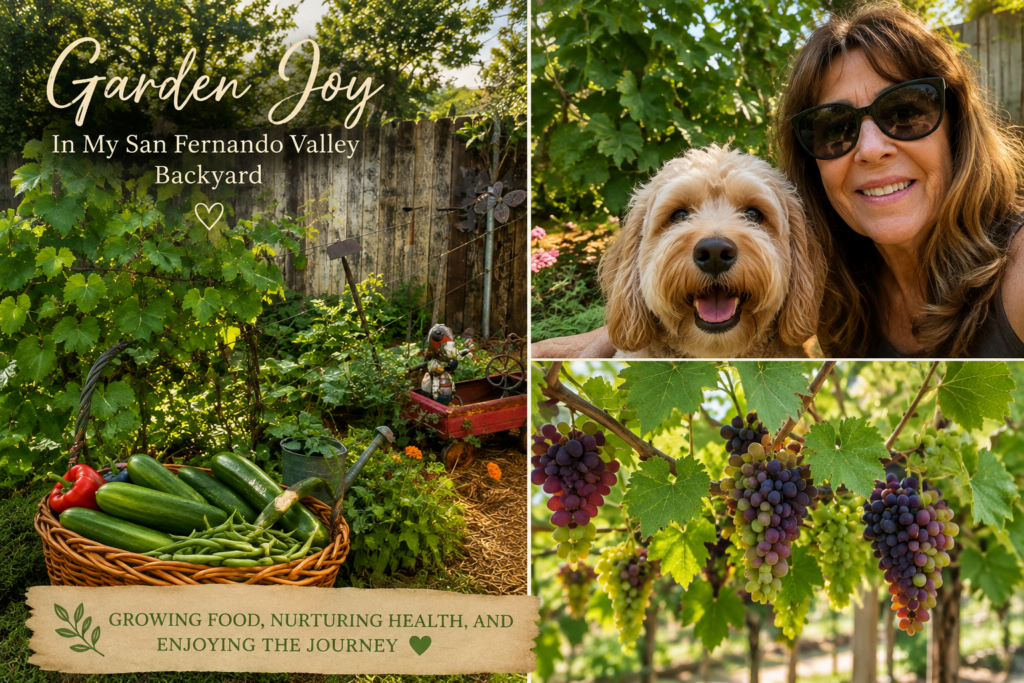
Southern California backyard vegetable garden with yummy Concord grapes in late summer with tomatoes, peppers, basil and other herbs.
August in the San Fernando Valley garden: enjoy the summer harvest while beginning to prepare for fall.
One foot in summer, one foot in fall. August is a transition month in the Southern California vegetable garden.
First, What Does “Zone 9” Actually Tell Us?
The USDA Plant Hardiness Zone system is helpful, but it doesn’t tell us everything we need to know about growing vegetables.
Hardiness zones are primarily based on a location’s average annual extreme minimum winter temperature. They are particularly useful when we’re trying to determine whether perennial plants are likely to survive winter.
But an August vegetable garden in the San Fernando Valley has another concern:
Heat.
A Zone 9 garden in one part of the country may have very different summer conditions from a Zone 9 garden in Southern California.
Even two gardens in the San Fernando Valley can behave differently. One may receive intense afternoon sun reflected from a wall, while another has afternoon shade. Raised beds and containers can also dry much faster than garden soil.
That’s why California planting guidance—and your actual garden conditions—matter in addition to the number on the USDA zone map.
The University of California Master Gardener Program notes that warm-season vegetables generally grow best when average temperatures are approximately 65°F–95°F, while cool-season vegetables generally prefer approximately 55°F–75°F. [1]
That gives us a much better August question than simply:
“What grows in Zone 9?”
Instead ask:
“What makes sense to plant in my Zone 9 garden while August is still hot?”
🌱 The August Garden Has Two Jobs
Think of August as the garden standing with one foot in summer and the other stretching toward fall.
Job #1: Keep the summer garden producing
Don’t be too quick to evict a healthy tomato plant simply because you’ve seen your first packet of fall seeds.
Established warm-season crops such as:
- Tomatoes
- Peppers
- Eggplant
- Beans
- Basil
- Some squash and cucumbers
may continue producing during warm Southern California weather when they’re healthy and adequately watered.
Keep harvesting. Regular harvesting can encourage continued production in several summer vegetables. [2]
Job #2: Begin preparing for fall
This is where August gets interesting.
California planting recommendations include August planting windows for several vegetables, including snap beans, beets, carrots, cabbage, cauliflower, kale, lettuce and spinach, depending on the California climate region. [1]
But planting dates are guides—not commands.
In a hot San Fernando Valley garden, we need to look at the calendar and the thermometer.
🫘 Snap Beans: “It’s Hot? I’m Fine.”
If you have space for another warm-season crop, snap beans may be worth considering.
UC planting guidance includes August within the planting period for snap beans in several California climate regions, including the South Coast and Interior Valleys. [1]
Bush beans can be particularly convenient in a smaller garden because they don’t require the same vertical support as pole beans.
Give them adequate sun, consistent moisture and suitable soil, and you may be able to enjoy another crop while warm weather continues.
Garden personality:
“Still summer? Excellent. Carry on.”
🥕 Carrots and Beets: Fall Is Beginning to Whisper
Carrots and beets signal that our garden is beginning its transition.
UC California planting calendars include August within planting windows for these crops in several regions. [1]
The challenge in August isn’t simply getting the seed into the soil.
It’s keeping that tiny seed alive while the surface of the garden is trying to impersonate the Mojave Desert.
Seeds need consistent moisture while germinating. Hot, dry conditions can make that more difficult, so pay particular attention to the surface of the seedbed.
This is one of those times when small, frequent observation beats gardening by a rigid schedule.
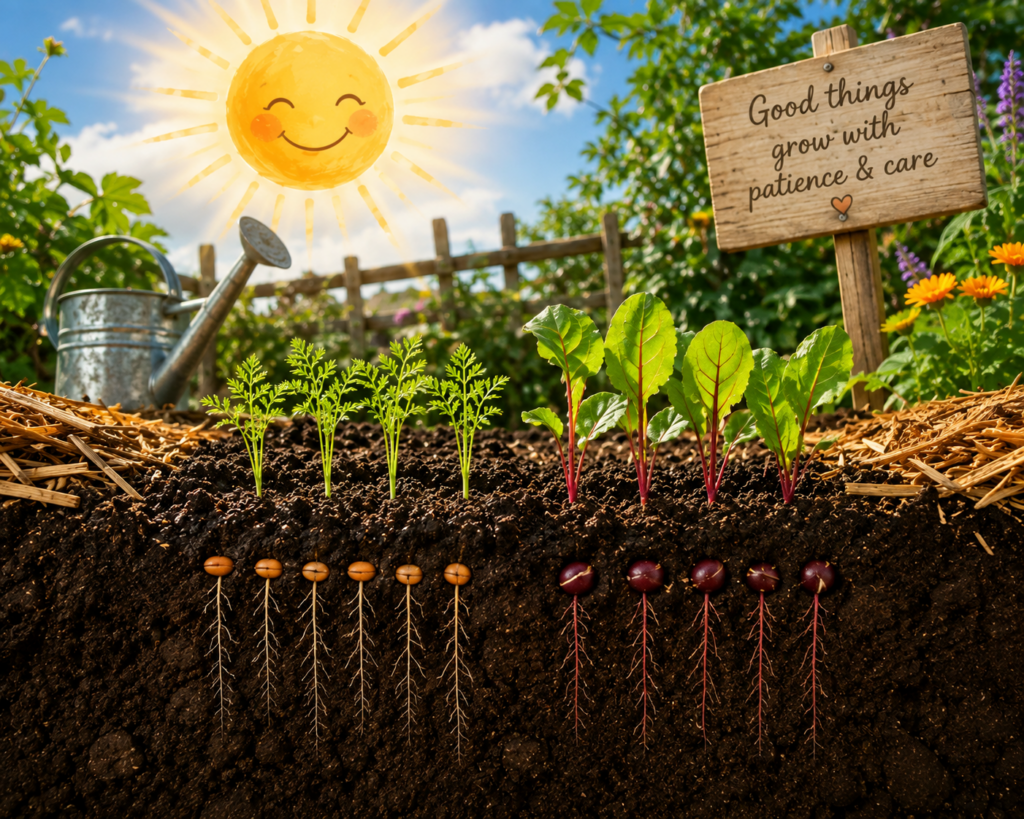
Here is an animated close-up garden illustration showing carrot and beet seeds beneath moist soil, with a small amount of mulch nearby .Avoid showing heavy mulch directly over newly germinating seeds.
Carrots and beets can begin the transition toward fall, but August seedbeds need careful attention to moisture.
Tiny seeds have tiny reserves. In August heat, successful fall planting begins with protecting moisture while seeds germinate. Note planting tiny seeds creates food for bugs. May want to wait till a bit more established, or purchase older plants. I love Green Thumb in the Canoga Park area. They have good prices(relatively speaking), and experts to answer your questions.
🥬 Kale Is Waiting in the Wings
Kale is one of the cool-season vegetables we can begin thinking about now.
California planting guidance lists August within the planting period for kale in the South Coast and Interior Valley regions. [3]
But there’s an important distinction between:
“August is within the planting window”
and
“Put a tender kale transplant into scorching soil at 2:00 p.m. during a 105°F heat wave.”
Those are not the same recommendation.
🔬 Recent research/guidance: A 2026 UC Master Gardener August vegetable guide specifically cautions gardeners to consider extreme late-summer temperatures when transplanting brassicas(as known as cruciferous vegetables or cole crops) and suggests protecting young plants from severe afternoon heat. [2]
Starting seeds in a protected location and transplanting when conditions become more favorable can be a sensible strategy.
Sometimes the best gardening decision is simply:
Wait three days.
🥬 Lettuce and Spinach May Have Something to Say About This
Lettuce and spinach are cool-season crops.
California planting calendars begin including them during August in some regions. [1]
But your San Fernando Valley lettuce doesn’t read planting calendars.
It experiences the temperature in your backyard.
Imagine lettuce stepping outside at noon, looking around and saying:
“Absolutely not.”
During sustained high temperatures, I wouldn’t make a huge bed of directly seeded lettuce the centerpiece of my August garden.
Instead, consider starting small amounts in a cooler or protected location, experimenting with afternoon shade, or simply waiting until temperatures become more favorable.
There’s no gardening prize for planting something three weeks before it wants to grow.
🥦 Broccoli, Cabbage and Cauliflower: Prepare Rather Than Panic
These vegetables are another sign that fall is approaching.
Cabbage and cauliflower appear in August planting windows for some California regions, while timing for broccoli and other cool-season vegetables varies according to location. [1]
One practical strategy is to start fall seedlings in a protected location rather than immediately filling a blazing-hot garden bed with vulnerable young transplants.
UC Master Gardener guidance also identifies August as a time when gardeners can start several cool-season vegetables from seed for later transplanting. [4]
That lets you work with the season rather than against it.
🍅 Don’t Forget the Plants Already Feeding You
It’s easy to become so excited about the fall garden that we overlook what’s already producing.
Your August garden may still be giving you:
- Tomatoes
- Peppers
- Eggplant
- Beans
- Herbs
- Cucumbers
- Squash
Harvest regularly and pay attention to plant stress.
UC Master Gardener August guidance emphasizes continued irrigation and harvesting of summer vegetables during hot weather. [2]
In other words:
Don’t become so excited about your future carrots that you forget the tomato plant currently handing you dinner.
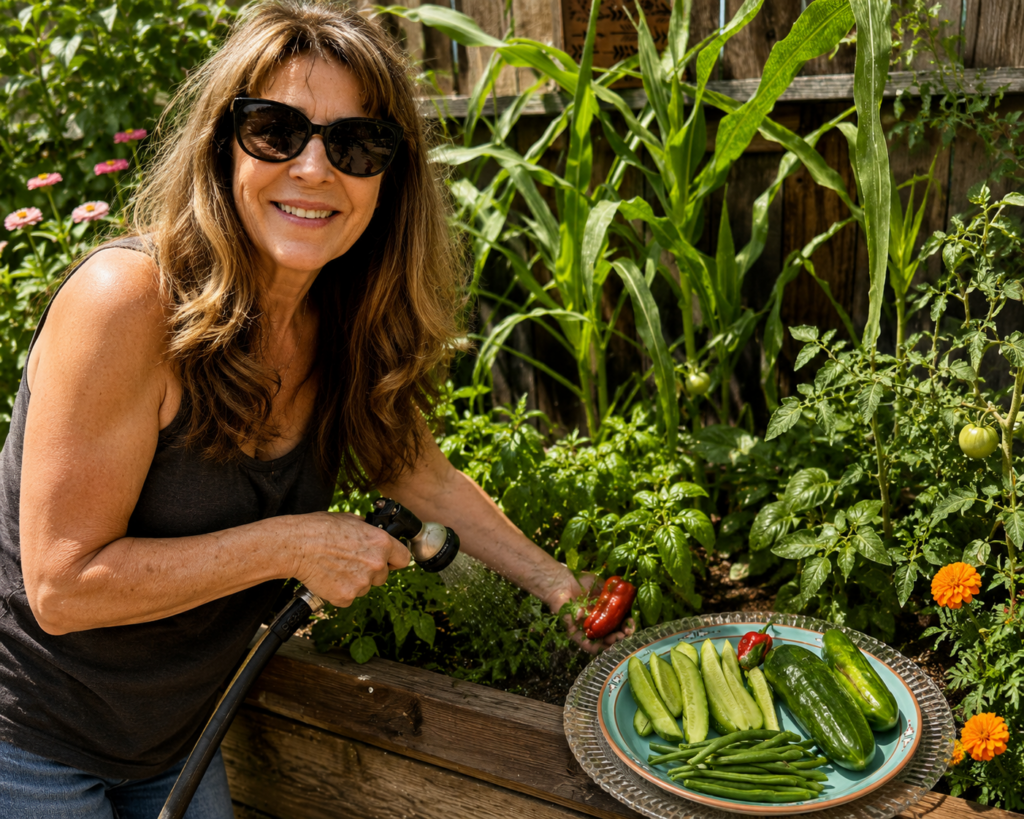
August bridges two gardening seasons: harvest summer while preparing for fall.
Before you plant the next garden, take a moment to enjoy the one that’s already feeding you.
💧 In August, Water Is Part of the Planting Plan
We can’t talk about August gardening in the San Fernando Valley without talking about water.
During hot weather, plants can lose water rapidly. Newly planted seeds and young transplants are particularly vulnerable because their root systems are limited.
UC Master Gardener guidance recommends monitoring irrigation carefully during August and using mulch as one strategy for conserving soil moisture. [5]
Mulch can help reduce evaporation and moderate conditions around plant roots.
But don’t simply water everything according to the same calendar.
A tomato growing in a large mulched garden bed and basil growing in a little dark-colored pot against a west-facing wall may technically be experiencing the same weather.
They are not experiencing the same Tuesday.
Check the soil.
Observe the plant.
Consider the container.
Look at the weather.
That’s gardening.
🌿 What About Fertilizer?
Healthy plants need nutrients, but more fertilizer does not automatically mean more vegetables.
Different crops have different nutrient requirements, and what your garden needs depends partly on what’s already in the soil.
A productive tomato, a young kale plant and a row of carrots don’t necessarily need the same fertilizer—or the same amount.
And when plants are severely stressed by heat or lack of water, fertilizer isn’t a substitute for addressing those conditions.
Rather than turning this into a fertilizer article inside a planting article, we’re going to give fertilizer the attention it deserves separately.
Coming Next: Article 2 — How to Fertilize a Southern California Vegetable Garden
In Article 2, we’ll dig into:
- What the three numbers on a fertilizer bag actually mean
- Compost versus fertilizer
- How often vegetables may need fertilizing
- Why tomatoes and leafy greens have different needs
- Fertilizing raised beds versus containers
- Why more nitrogen isn’t always better
- When not to fertilize
- Whether organic fertilizer is automatically better
- How soil testing can help take some of the guesswork out of feeding your garden
We’ll also tackle a question I hear frequently:
Should you put your used coffee grounds around your plants?
Spoiler: Your compost pile may appreciate them more than your blueberry bush does.
☀️ Your Simple August San Fernando Valley Garden Plan
If all of this sounds like a lot, simplify it.
KEEP
Healthy, productive summer vegetables such as tomatoes, peppers, eggplant and other crops that are still giving you a harvest.
CONSIDER PLANTING
Snap beans, carrots and beets, depending on your garden conditions and the forecast.
BEGIN PREPARING
Kale, cabbage, cauliflower and other fall vegetables.
PROCEED CAUTIOUSLY
Lettuce, spinach and tender cool-season transplants when temperatures remain extremely high.
PROTECT
New seeds, young transplants and your soil from excessive drying.
OBSERVE
Your own microclimate.
UC specifically cautions that planting dates are approximate because conditions vary within California regions. [1]
That’s an important gardening lesson:
The planting calendar gives you directions. Your garden tells you what’s actually happening.
Caption: August is a transition month: continue harvesting summer crops while gradually preparing the fall garden.
Suggested social caption: You don’t have to choose between summer and fall in August. Harvest one while gently preparing for the other.
🌻 Stephanie Says
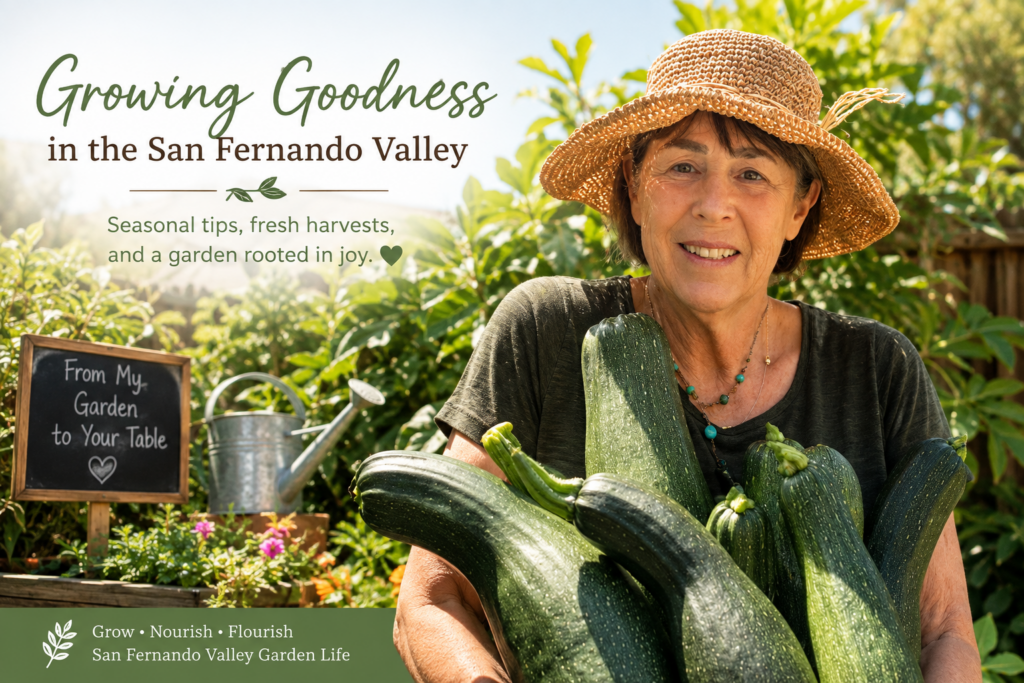
I love gardening because it reminds us to observe before we act. Funny, in this case my zucchini got away from me. However I was able to add to soups, use in my air fryer, and cut up and freeze for zucchini bread.
The calendar may say August, but your garden might be telling you something more specific.
What’s still producing?
Which part of the yard is brutally hot at 4:00 in the afternoon?
Where does the soil stay moist longer?
Which plants are thriving?
Which ones look like they’re begging you to wait until September?
You don’t have to rip everything out and start over because the season is changing.
Harvest what’s working. Plant what makes sense. Protect your soil. Prepare for what’s coming next.
And when the San Fernando Valley thermometer is flirting with triple digits?
Don’t argue with the thermometer.
The garden isn’t asking us for perfection.
It’s asking us to pay attention.
References
- University of California Agriculture and Natural Resources, UC Master Gardener Program. Time of Planting. California vegetable planting recommendations.
- Smith P. UC Master Gardeners of Napa County. August Vegetable Guide. July 26, 2026.
- University of California Agriculture and Natural Resources, UC Master Gardener Program. How Much and What to Plant? California planting recommendations.
- UC Master Gardeners of Santa Clara County. August Tips: Cool Season Vegetables.
- UC Master Gardener Program Statewide Blog. August Garden Tips—Keeping Our Summer Gardens Going.
Stephanie’s Review
Planting dates vary within Southern California because the San Fernando Valley contains different microclimates and August temperatures can fluctuate considerably. The recommendations are therefore intentionally presented as flexible planting guidance rather than guarantees.
Write Reviews
Leave a Comment
No Comments & Reviews