27 Aug, 2026 | Stephanie Sanders | No Comments
When Should I Fertilize My Vegetable Garden?
A Simple Guide to Feeding Your San Fernando Valley Garden Without Loving It to Death
Stephanie Larmour Sanders, MS, RDN, CDE, FNLP
Clinical Dietitian, Certified Diabetes Educator, and Functional Nutritionist
Gardening has a funny way of making us want to do something.
The tomato looks a little tired? Fertilize it.
The zucchini isn’t growing fast enough? Fertilize it.
The basil looks fabulous?
Maybe fertilize it anyway—just in case.
But plants don’t necessarily work that way.
More fertilizer doesn’t automatically mean more vegetables.
In fact, one of the most useful things I’ve learned about gardening is that feeding plants is a little like feeding people: we want to provide what is needed, in an appropriate amount, rather than assuming more is always better.
And here in the San Fernando Valley, there’s another consideration in August:
Heat.
So let’s make fertilizer a little less mysterious.
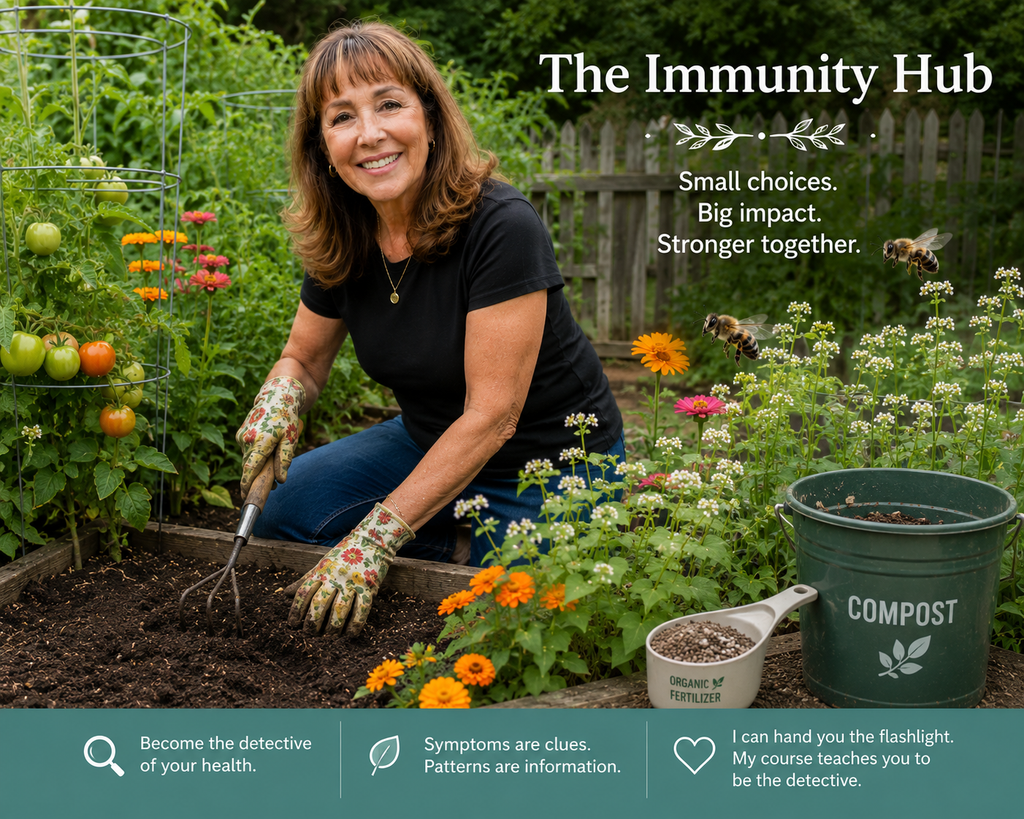
Stephanie tending vegetables in her backyard garden in the San Fernando Valley.Before reaching for fertilizer, look at the plant, the soil, the weather and what you’ve already added to the garden.
Sometimes our plants need nutrients. Sometimes they need water, cooler soil or simply a little patience. The trick is learning the difference.
Note : If you want to join my Membership page “The Immunity Hub”, comment on my website, under comments, or in my Email: StephanieLarmourSanders@Gmail.com
🌱 First: What Is Fertilizer Actually Doing?
Plants need a variety of nutrients to grow.
On most fertilizer packages you’ll see three numbers, perhaps:
5-5-5
10-10-10
5-10-10
These numbers are commonly referred to as N-P-K and represent the percentages of nitrogen, phosphate and potash in the product.
For the home gardener, here’s the simple version:
N — Nitrogen: particularly important for leafy, green growth.
P — Phosphorus: plays important roles in plant growth, including roots, flowering and reproduction.
K — Potassium: contributes to numerous plant functions, including water regulation and overall plant function.
UC Master Gardener guidance notes that many California soils particularly need additional nitrogen, while the need for phosphorus and potassium varies with the soil.
And that leads us to an important point:
You don’t necessarily need a fertilizer containing lots of everything.
A soil test can help determine what your garden already has and what it may actually need.
🌿 Compost and Fertilizer Aren’t Quite the Same Thing
I love compost in a vegetable garden.
Finished compost contributes organic matter and nutrients and can improve the soil environment.
But compost and fertilizer aren’t interchangeable terms.
Think of compost as part of building and maintaining the garden’s soil. A fertilizer is generally a more concentrated source of specific plant nutrients. Sometimes your garden may benefit from both.
Sometimes it may not need additional fertilizer at all.
This is why I prefer:
Feed thoughtfully rather than fertilize automatically.
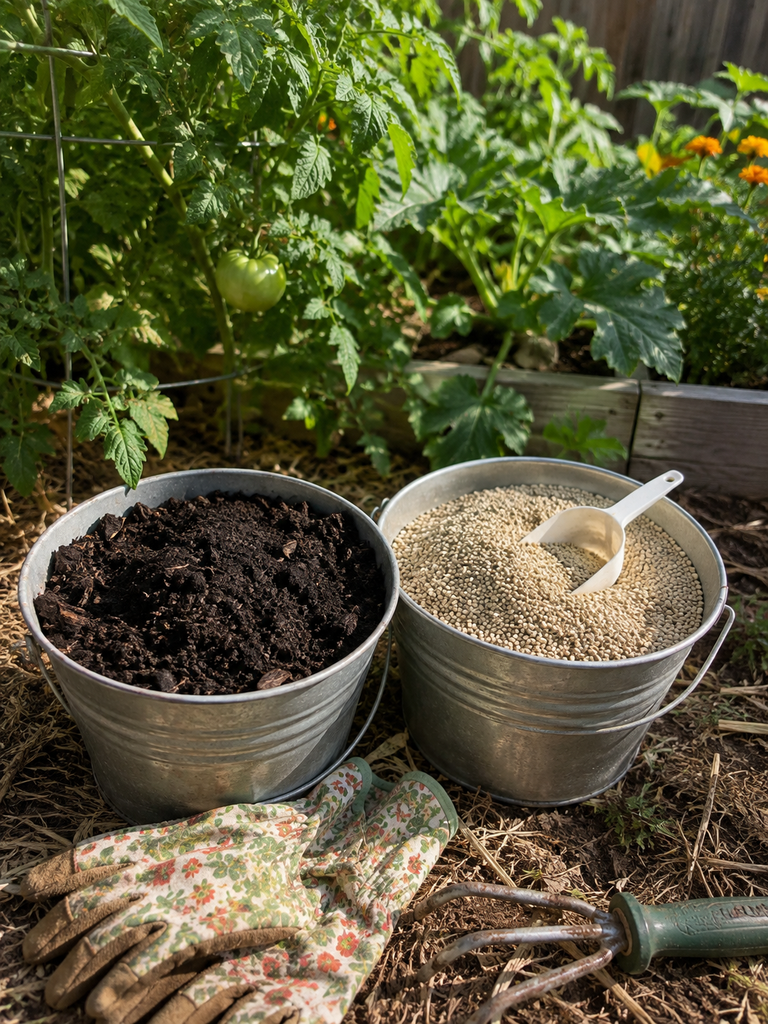
Finished compost and measured vegetable fertilizer . Compost helps build healthy garden soil, while fertilizers provide more concentrated amounts of particular nutrients. Healthy gardening isn’t about pouring more products onto plants. Start with the soil and add nutrients thoughtfully.
🗓️ So When Should I Fertilize?
Here’s where I want to get away from the idea that every vegetable needs fertilizer every Tuesday.
It doesn’t.
1. Before planting
This is a logical time to prepare your soil.
UC guidance notes that vegetables in many California soils benefit from fertilizer before planting, particularly nitrogen, although specific needs depend upon the soil.
This is also an appropriate time to incorporate finished compost when needed.
2. During active growth—when the particular crop needs it
Some vegetables benefit from additional nutrients during the growing season.
But how much and when depend on the crop, soil and fertilizer you’re using.
That’s why the fertilizer label matters.
A granular product intended to be applied every several weeks should not suddenly become a weekly treatment because the gardener is feeling enthusiastic.
Follow the application rate and frequency on the label.
3. Containers need their own strategy
Containers are different.
Every time we water, nutrients can leach out of the potting mix. UC Master Gardeners therefore recommend lighter, more frequent fertilization for many container-grown vegetables.
🔬 Recent 2026 UC Master Gardener guidance describes beginning a dilute water-soluble fertilizer approximately two to four weeks after planting for container vegetables. Another approach is a slow-release fertilizer incorporated into the potting mix.
Check your potting mix first, however. Some mixes already contain fertilizer.
We don’t want to feed the plant twice simply because we didn’t read the bag.
🍅 Tomatoes, Peppers and Eggplant
Here’s where gardeners sometimes get into trouble with nitrogen.
A tomato plant can look magnificent after generous nitrogen fertilization:
Green! Lush! Enormous!
And you stand there waiting for tomatoes.
Excess nitrogen can encourage vegetative growth rather than giving us the balance we’re looking for in a fruiting plant. UC agricultural guidance also cautions that nitrogen and phosphorus applications beyond crop requirements can be detrimental to both crops and the environment.
For established fruiting vegetables, don’t automatically keep adding a high-nitrogen fertilizer.
Consider what’s already been applied and follow recommendations for the particular crop and product.
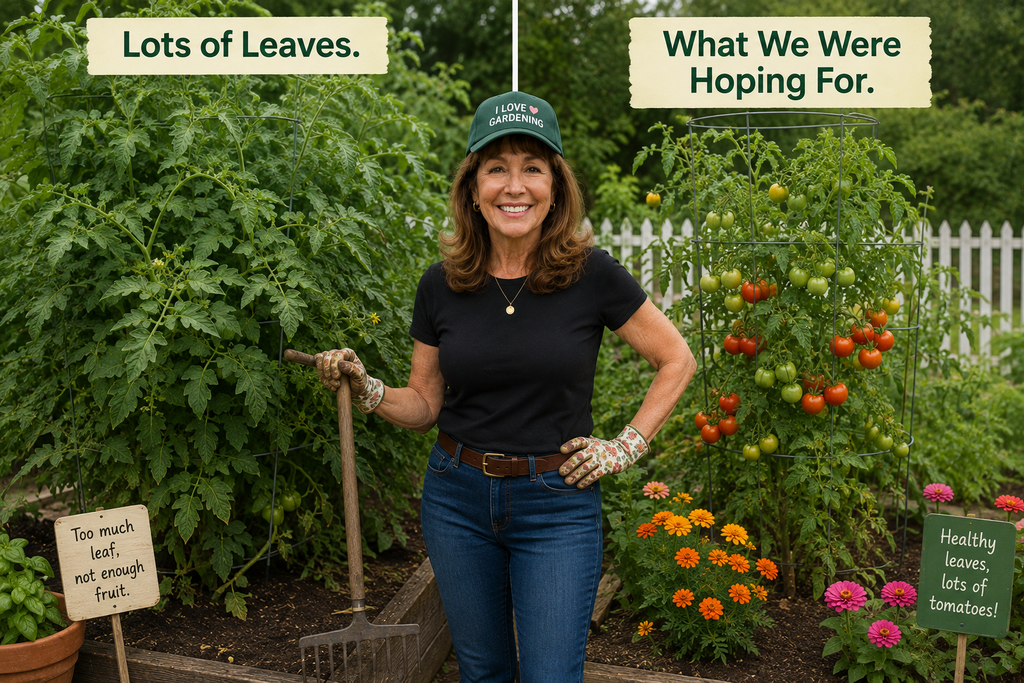
I have had this problem before “Lots of Leaves, less tomatoes”. After research I found my fertilizer was not balanced, it was too high in Nitrogen. Of course “What I wanted was a balance of tomatoes and leaves. I was happy when I solved this problem. Gardening can be fun, as long as you stay flexible, open minded and use your resources to follow up on your challenge.
More nitrogen doesn’t necessarily mean more tomatoes. A gorgeous jungle of tomato leaves isn’t quite the same thing as a basket of tomatoes.
🥬 What About Kale and Other Leafy Greens?
Now the story changes.
If we’re growing something for its leaves, nitrogen becomes especially relevant because nitrogen supports leafy vegetative growth.
That doesn’t mean:
“Dump nitrogen on the kale.”
It means that leafy vegetables and fruiting vegetables don’t necessarily have identical nutrient needs. This is one reason I don’t love the idea of one fertilizer schedule for the entire backyard.
Your kale doesn’t know what your tomato is doing.
🥕 Carrots, Beets and Root Vegetables
Root vegetables give us another reason to be cautious about automatically applying lots of nitrogen.
We want healthy foliage—but we’re ultimately interested in what’s developing underground.
Before adding fertilizer, consider the fertility of the bed and what’s already been added.
And remember that problems such as poor germination during a San Fernando Valley August may have more to do with heat and moisture than fertilizer.
A seed sitting in hot, dry soil isn’t asking for a vitamin.
It’s asking for water.
☀️ Should I Fertilize During a Heat Wave?
This is especially important for our San Fernando Valley garden.
If a plant is wilted and severely heat- or water-stressed, my first response would not be fertilizer.
Check the soil moisture.
Check irrigation. Consider whether the roots are overheating. Look for pests or disease.Make sure the plant isn’t simply reacting to an exceptionally hot afternoon.Then address nutrition if there’s reason to believe nutrition is the problem.Fertilizer cannot compensate for inadequate water or unsuitable growing conditions.
For container plants, UC guidance recommends moist soil before fertilization, and California container guidance emphasizes the additional challenges created by heat, rapid drying and salt accumulation.
🪴 Containers: The Exception to “Less Often”
Remember those patio tomatoes, peppers and herbs?
Containers are their own little ecosystems. Their roots can’t wander through the surrounding soil looking for nutrients, and frequent watering can wash nutrients from the potting mix.
That means containers may need light feeding more frequently than vegetables growing in the ground.
One UC Master Gardener recommendation for container vegetables is to begin a water-soluble fertilizer at one-quarter strength two to four weeks after planting, potentially applying it with watering during active growth. Other guidance suggests slow-release fertilizer as an alternative.
The exact schedule still depends on your fertilizer.
So read the label.
That’s not the glamorous gardening advice anyone puts on a T-shirt.
But it’s good advice.
☕ And What About Those Coffee Grounds?
Ah, coffee grounds.
Somehow our morning coffee has acquired an impressive second career on social media as a fertilizer, soil acidifier and general garden miracle.
Let’s separate fact from folklore.
🔬 Recent 2026 UC Master Gardener guidance specifically addressed the claim that used coffee grounds acidify soil.
They generally do not.
The acids in coffee are largely water-soluble and end up in the beverage. Used grounds are much closer to neutral, so scattering them around an acid-loving plant isn’t a reliable way to lower soil pH.
Used grounds can, however, go into the compost pile.
UC guidance also cautions that grounds spread directly onto soil can create issues, including becoming water-repellent when they dry.
My simplest recommendation?
Let the compost pile have your coffee grounds.
Mix them with the other materials rather than repeatedly dumping thick layers around individual plants.
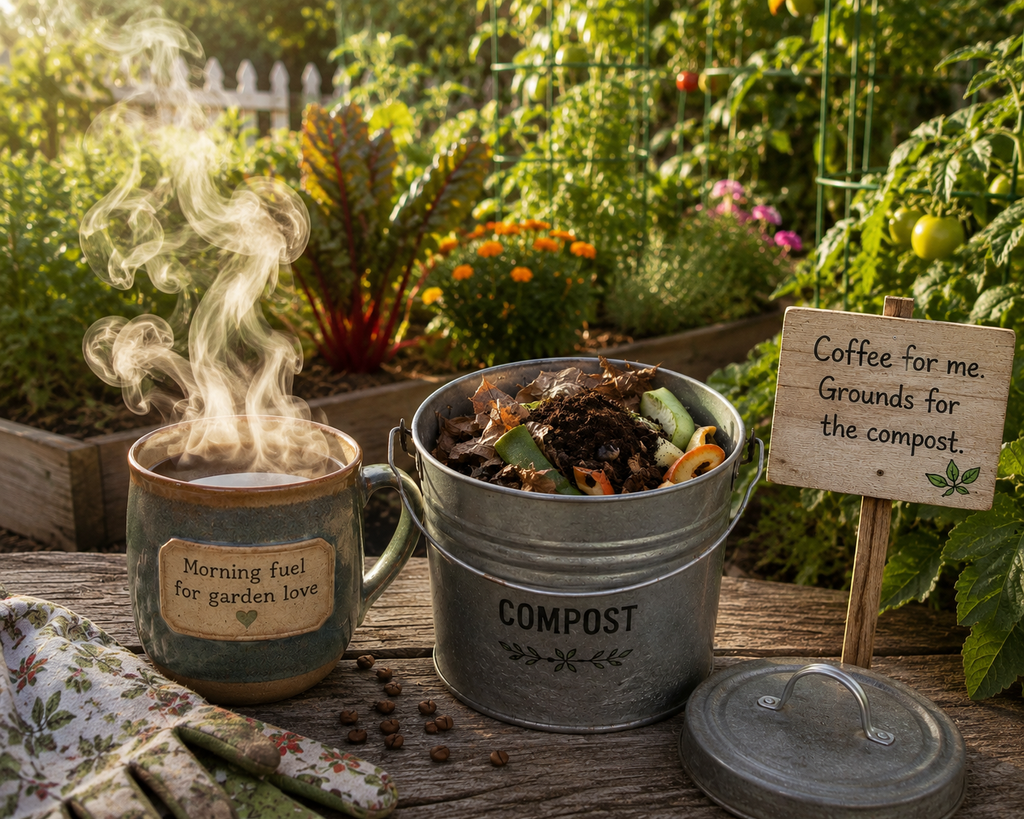
Compost pail can contain coffee grounds, dry leaves and vegetable scraps. Coffee grounds aren’t a reliable way to acidify garden soil. Coffee for the gardener. Grounds for the compost pile. Everybody gets something.
🧂 Can You Overfertilize?
Absolutely.
Fertilizers contain soluble salts. Excess fertilizer can injure plant roots and contribute to salt accumulation, particularly in containers. Too much fertilizer can also contribute to nutrient movement into waterways and groundwater.
So if the label says one amount:
Doubling it isn’t twice as loving. Measure.
Follow directions. And don’t keep adding fertilizer because you’re impatient for a tomato to turn red. The tomato has not read your schedule.
🌱 Stephanie’s Simple Fertilizer Checklist
Before I fertilize, I want to ask:
- What am I growing—leaves, roots or fruit?
- Is it in the ground, a raised bed or a container?
- What fertilizer or compost has already been added?
- Does my potting mix already contain fertilizer?
- Is the plant actively growing, or is it stressed from extreme heat or lack of water?
- Have I followed the fertilizer label?
- Would a soil test give me a better answer than guessing?
If I can’t answer those questions, I probably shouldn’t be reaching for another scoop quite yet.
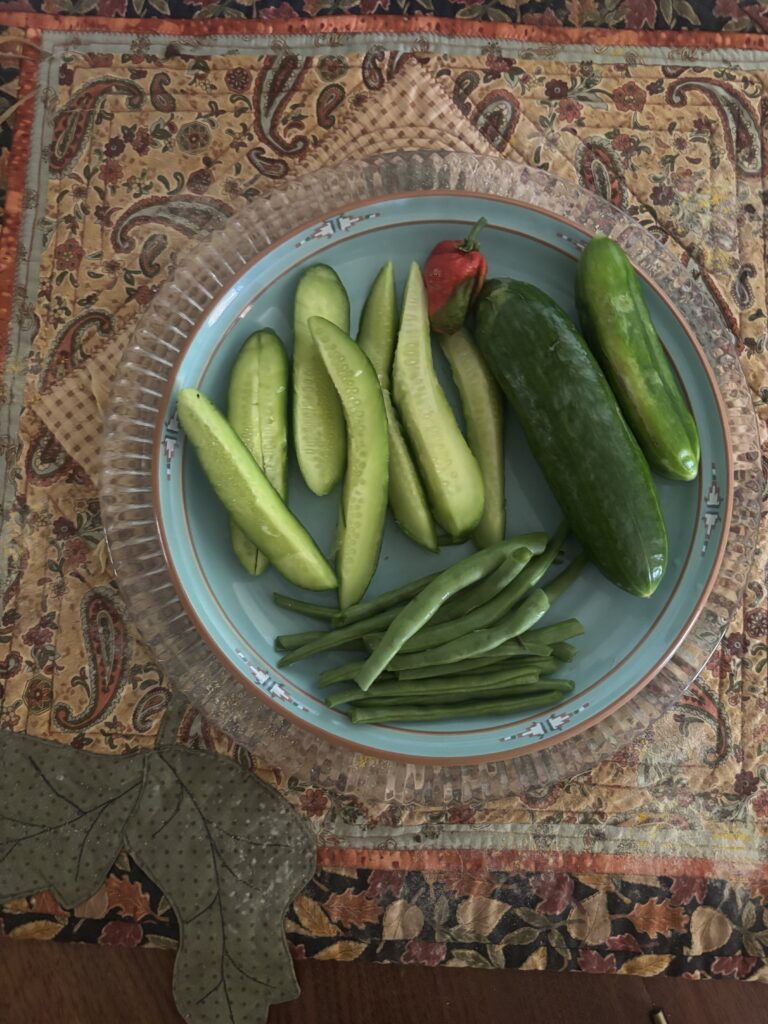
My homegrown cucumbers, green beans and one small pepper.
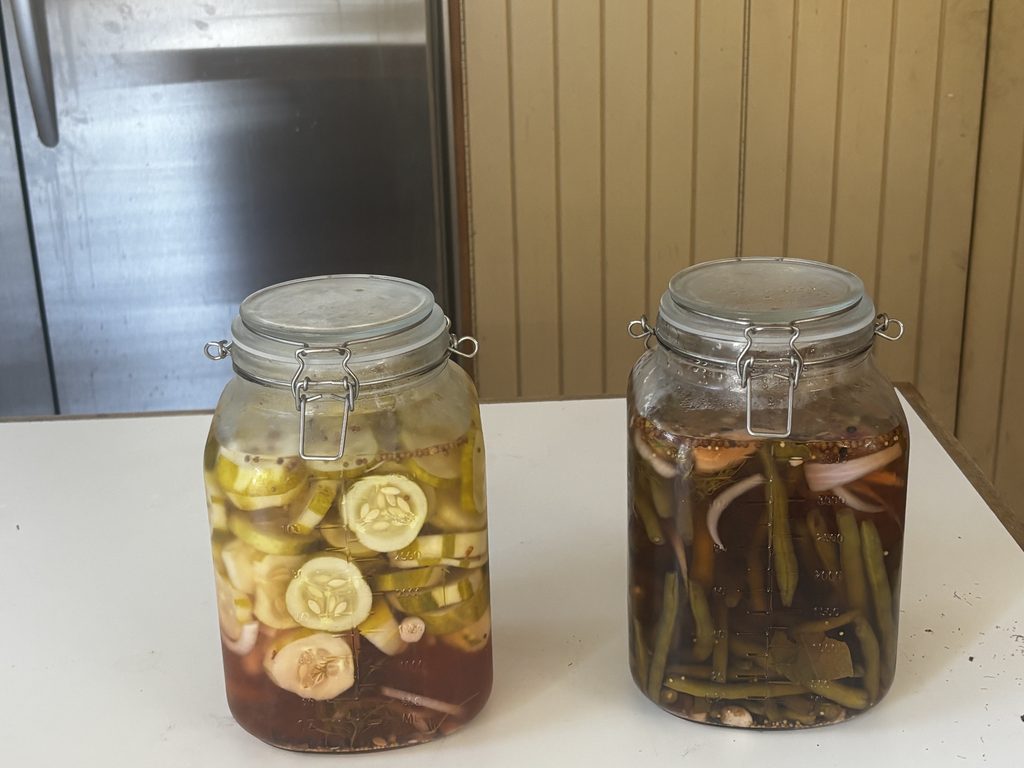
I pickled both my homegrown cucumbers and green beans I harvested in July.
The goal is healthy soil, healthy plants and food we can actually enjoy harvesting.
This is the part of gardening I love—the moment something we’ve tended makes its way from the garden to the table. I was also able to share with my family and friends. They loved these. Now that makes me happy, and all worthwhile
🌻 Stephanie Says
Feed the soil first. Feed the plant when it needs it. and don’t assume more fertilizer means more food.
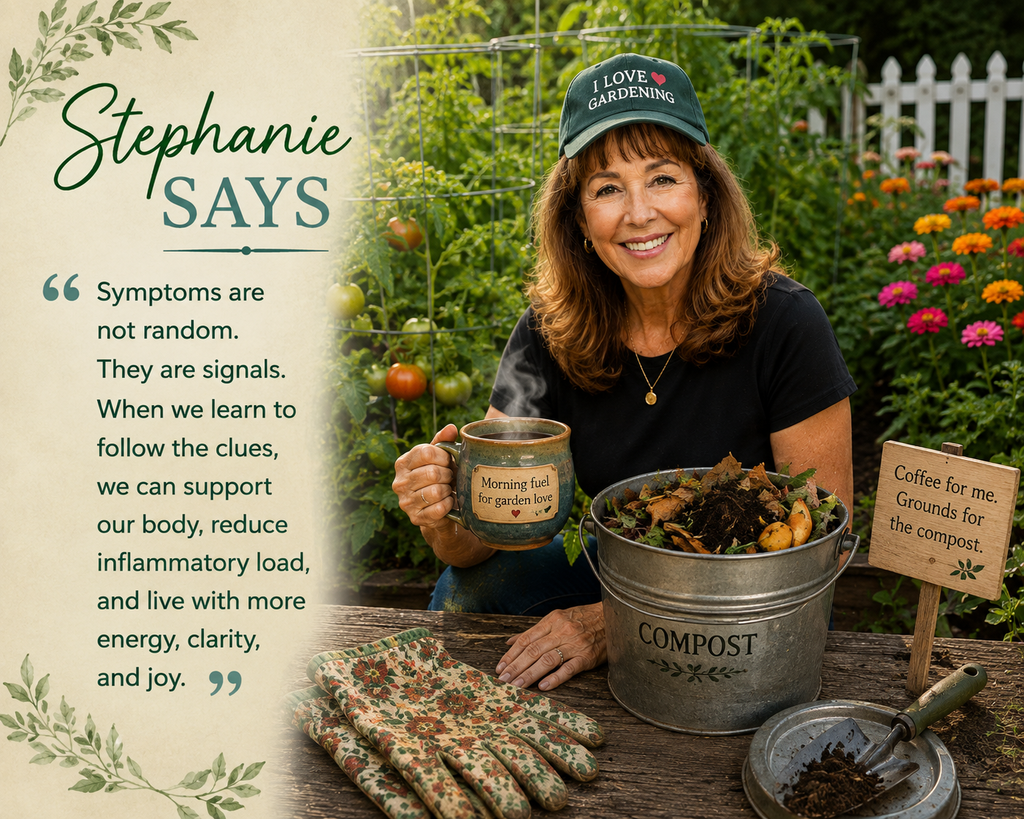
I like keeping this simple. Start with good soil. Add compost when appropriate.Learn what you’re growing. Use fertilizer thoughtfully. Measure instead of guessing. Pay particular attention to container plants because frequent watering can carry nutrients away. And during one of our scorching San Fernando Valley afternoons, remember:
A wilted plant may be asking for water and relief from the heat—not dinner.
Gardening is observation. Sometimes the most helpful thing we can do is add something. And sometimes the smartest thing we can do is leave the fertilizer bag in the shed.
CTA: What’s one gardening question you’ve always wanted answered? Send it my way—it may become the next garden article.
References
- University of California Agriculture and Natural Resources, UC Master Gardener Program. Soil Improvements and Preparation.
- UC Master Gardener Program of Alameda County. Adding Fertilizer to the Soil.
- UC Master Gardeners of Santa Clara County. Container Gardening Basics.
- UC Master Gardener Program of Contra Costa County. Growing Vegetables in Containers. April 25, 2026.
- University of California Statewide Integrated Pest Management Program. Tomato: Fertilization.
- UC Master Gardener Program of Sonoma County. Debunking a Few Common Garden Remedy Myths. June 13, 2026.
- UC Master Gardeners of Placer County. Using Coffee Grounds in the Garden. November 30, 2025.
Stephanie’s Review
I intentionally avoided prescribing one universal fertilizer product, N-P-K ratio or schedule for all vegetables. Fertilizer requirements vary by crop, soil, container medium and product formulation.
Write Reviews
Leave a Comment
No Comments & Reviews