23 Nov, 2026 | Stephanie Sanders | No Comments
Is Your Toxic-Load Bucket Overflowing?
Understanding Environmental Exposures, Detoxification, and Our Body’s Ability to Respond
By Stephanie Larmour Sanders, MS, RDN, CDE, FNLP
Anti-Inflammatory Dietitian and Nutritionist
Have you ever considered how many substances our bodies encounter in a single day? We eat, drink, breathe, use household cleaning products, apply personal-care products, and interact with our environment. Our bodies also continuously produce waste products through normal metabolism.
Fortunately, we have remarkable systems that help us process and eliminate many of these substances. But what happens when exposure becomes excessive, or when a particular chemical is difficult to eliminate?
I like to explain this concept using an analogy.
Imagine your body as a bucket.
1. The Overflowing Bucket: A Simple Way to Understand Toxic Load
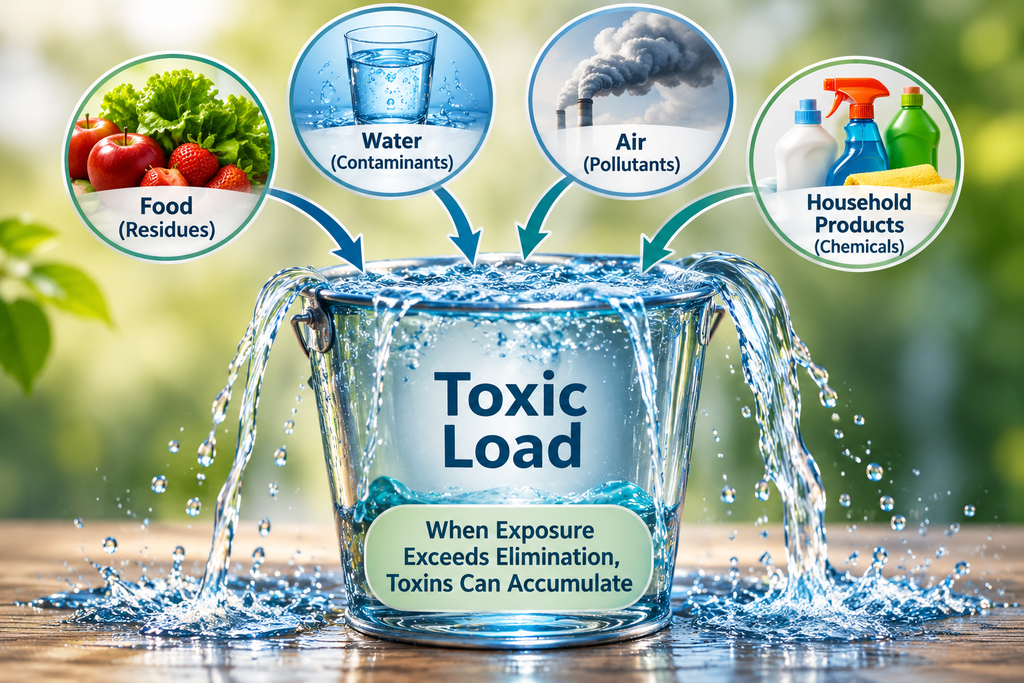
Imagine placing an empty bucket under a slowly dripping faucet. Water enters the bucket throughout the day. Now imagine that the bucket has a drain at the bottom. If the water flows out as quickly as it enters, the water level remains relatively stable. But if water enters faster than it can leave, the level begins to rise. Eventually, the bucket may overflow. Our bodies handle certain chemical exposures in a somewhat similar way.
Chemicals may enter through the foods we eat, water we drink, air we breathe, or contact with our skin. Our liver, kidneys, intestines, and lungs help process and eliminate many substances.
However, some chemicals can accumulate when exposure continues faster than the body can eliminate them. Others may cause harm without accumulating for long periods.
There is an important limitation to this analogy: we do not have one universal bucket for all chemicals. Each substance behaves differently. The amount of exposure, duration, chemical properties, and individual health all influence what happens.
2. What Might Be Going Into Our Bucket?
Potential sources of environmental chemical exposure include:
- Pesticides: Used to control insects, weeds, and plant diseases. Some pesticide residues may remain on food or surfaces.
- BPA and certain phthalates: Chemicals associated with some plastics, food-contact materials, fragrances, and personal-care products.
- PFAS: A large family of chemicals used in certain industrial and consumer applications. Many persist in the environment.
- VOCs: Volatile organic compounds released by some paints, cleaning products, solvents, fragrances, and other materials.
- Smoke and combustion pollutants: Including substances released by tobacco smoke, wildfires, and improperly ventilated combustion appliances.
Some of these substances have been investigated for their potential to interfere with hormonal signaling. These are called endocrine-disrupting chemicals. The endocrine system helps regulate metabolism, thyroid activity, reproduction, growth, and development. Certain pesticides, BPA, phthalates, and PFAS have endocrine-related effects. Some individual VOCs may also affect hormonal processes, but not every VOC is an endocrine disruptor. And although many PFAS are called forever chemicals, BPA, phthalates, and VOCs are not generally classified that way.
The goal is not to become afraid of our environment. It is to understand where meaningful exposures may occur and identify practical opportunities to reduce them.
3. How Does the Body Detoxify?
Detoxification is a normal part of human physiology.
It is not something that must be activated by a special cleanse, supplement, or juice.
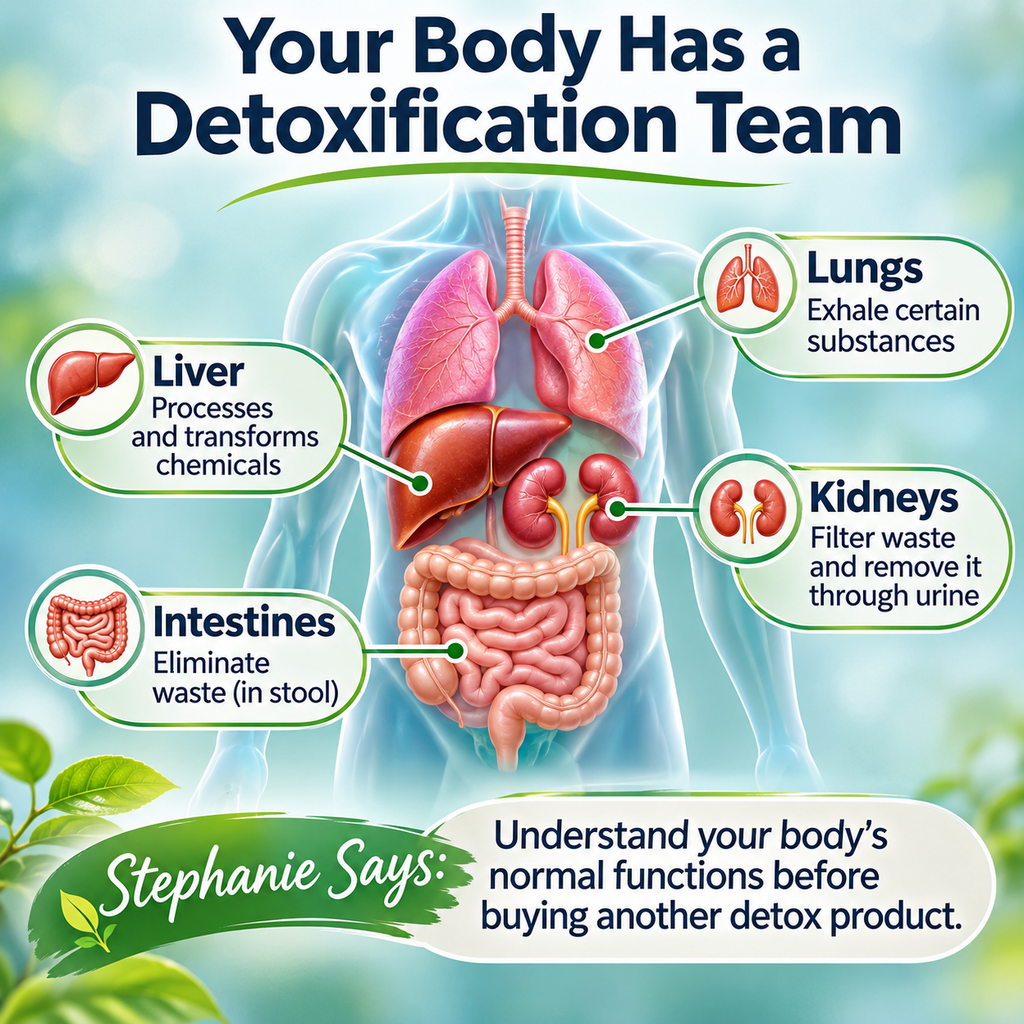
Several organs work together.
The Liver: Processing Chemicals
The liver performs many functions, including transforming medications, environmental chemicals, and substances produced during metabolism.
Two broad stages of chemical metabolism are commonly described.
Phase I metabolism: Enzymes, including members of the cytochrome P450 family, may chemically modify a substance through processes such as oxidation or reduction.
Phase II metabolism: The body may attach another molecule to the substance through processes such as glucuronidation, sulfation, or glutathione conjugation. These reactions often make substances easier to eliminate.
Not every chemical passes through both phases, and not every transformation makes a substance harmless.
Some chemicals form reactive intermediates during metabolism, which is one reason these processes must be carefully regulated.
The Kidneys: Filtering and Elimination
The kidneys filter blood, regulate fluid and electrolyte balance, and remove many dissolved waste products through urine.
The Intestines: Eliminating Waste
Some substances processed by the liver enter bile and travel into the intestinal tract. They may then be eliminated in stool. Certain substances can also be reabsorbed from the intestine, a process called enterohepatic recirculation.
The Lungs: Exhaling Certain Substances
Our lungs eliminate carbon dioxide and some volatile substances. Together, these systems help maintain normal internal balance.
4. What Happens When Exposure Exceeds Elimination?
When a substance enters the body faster than it is eliminated, its concentration may increase. Sometimes this occurs after a large exposure. In other situations, repeated exposures lead to accumulation over time, particularly when a chemical has a long biological half-life.
Certain PFAS are an example. Some remain in the body for years. By comparison, BPA and many phthalates are generally processed and eliminated more rapidly, although repeated exposure can still matter.Importantly, the effects of chemical exposure are substance-specific. There is no single measurement of an individual’s total toxic load that explains every symptom or health condition.
5. Could Environmental Exposures Affect Our Health?
Depending on the chemical and exposure level, possible health effects may involve the nervous, respiratory, endocrine, immune, reproductive, liver, or kidney systems.
For example:
- Respiratory system: Certain cleaning-product fumes may irritate the airways.
- Skin: Some chemicals can trigger contact dermatitis or irritation.
- Endocrine system: Certain chemicals can interfere with hormonal signaling.
- Immune system: Exposure to some PFAS has been associated with reduced antibody responses to certain vaccines.
- Liver and kidneys: Particular toxic substances may cause organ injury at sufficient exposures.
But I want to emphasize something important.
Fatigue, brain fog, digestive discomfort, joint pain, flushing, and sleep disruption are not specific indicators that a person’s detoxification system is overwhelmed.
They may have many possible causes.
Persistent, unexplained, severe, or worsening symptoms deserve appropriate medical evaluation.
Symptoms are clues, not diagnoses.
6. Reducing What Enters Our Bucket
One of the most practical approaches is to reduce avoidable sources of exposure.

Consider these small changes.
- Food storage: Use glass or suitable food-safe containers, particularly when reheating.
- Produce: Wash fruits and vegetables under running water. Choose organic produce when practical if reducing exposure to certain pesticide residues is a priority. Conventional produce is still nutritious and worth including.
- Cleaning products: Choose products appropriate for the job, use ventilation, and consider EPA Safer Choice-certified options.
- Personal-care products: Read ingredient labels and consider fragrance-free options when appropriate.
- Drinking water: Learn about local water quality. If a specific contaminant is present, choose a filter certified for its reduction.
- Indoor air: Avoid indoor smoking, unnecessary aerosol products, and poorly ventilated combustion sources.
You do not need to replace everything in your home.
Choose one exposure that is meaningful and reasonably within your control.
7. Supporting Our Normal Detoxification Systems Through Nutrition
Nutrition plays an important role in normal metabolism and organ function.

Rather than purchasing products that claim to flush toxins from the body, I encourage focusing on foods that provide essential nutrients.
Colorful Vegetables and Fruits
Vegetables and fruits contain vitamin C, carotenoids, minerals, fiber, and polyphenols. These compounds contribute to normal antioxidant defenses and overall health.
Adequate Protein
Protein supplies amino acids needed to maintain tissues, enzymes, and many metabolic pathways.
Fiber
Fiber supports digestive health and regular bowel function. Some dietary fibers also support beneficial intestinal microorganisms, which produce compounds that influence gut and immune function.
Nutrient-Rich Foods
B vitamins, magnesium, zinc, selenium, and other essential nutrients contribute to normal metabolic processes. Vitamin D supports bone and immune health, while omega-3 fatty acids contribute to normal cellular function. Adequate intake matters, but taking excessive amounts does not necessarily improve detoxification.
Healthy Fats
Extra-virgin olive oil, avocado, nuts, seeds, and suitable sources of omega-3 fatty acids can contribute to a nutritious eating pattern. The goal is not to find one magical detoxification food.
It is to provide the body with the nourishment necessary for normal function.
8. What About Sleep, Stress, and Movement?
I also teach that pro-inflammatory lifestyle factors extend beyond food. Insufficient sleep, persistent stress, inactivity, and poor dietary quality can influence metabolic and inflammatory pathways. These factors are important for overall health, but they should not be confused with chemical accumulation. Getting more sleep, walking, or practicing meditation does not necessarily accelerate the elimination of PFAS or other persistent environmental chemicals. However, these habits may support sleep quality, emotional well-being, cardiovascular health, and metabolic regulation.
This is why I encourage examining the whole person.
9. Two Related Buckets: A Useful Distinction
I like to think about two related but separate concepts.

Bucket One: Environmental Chemical Exposure
This represents the balance between exposure, absorption, distribution, metabolism, and elimination of particular chemicals.
Bucket Two: Lifestyle-Related Health Burden
This represents the combined effects of inadequate sleep, chronic stress, poor dietary quality, and insufficient physical activity. The two can interact, but they are not identical. A person may have significant stress and poor sleep without having toxic chemical accumulation. Similarly, someone may have a relevant chemical exposure without noticeable symptoms.
Understanding this distinction helps us ask better questions.
Stephanie Says: Don’t Wait for the Bucket to Overflow
When I teach about anti-inflammatory nutrition, I encourage people to look beyond individual symptoms. Our bodies encounter a variety of environmental substances every day, and they have remarkable systems for processing and eliminating many of them. Yet some exposures can be harmful, and certain chemicals remain in our bodies or environment much longer than others. I don’t want people to panic over every ingredient label or believe that they need another expensive detoxification program. I want them to become curious.
- What cleaning products am I using?
- How am I storing and reheating my food?
- What do I know about my drinking water?
- Am I providing my body with adequate nutrition, rest, and movement?
- Are there symptoms that deserve a medical evaluation?
These questions help us investigate meaningful patterns rather than assuming that every symptom means we are filled with toxins.
The goal is not to empty an imaginary bucket overnight. The goal is to reduce unnecessary exposures and support the body’s normal functions.
I can hand you the flashlight. My course teaches you to become the detective of your own health.
Your Seven-Day Toxic-Load Detective Challenge
This week, choose one action:
- Review one household cleaning product.
- Replace a frequently heated plastic food container with glass.
- Learn more about the quality of your drinking water.
- Add another colorful vegetable or fruit to your meals.
- Establish a consistent sleep or relaxation routine.
Notice what is realistic, what you learn, and what you would like to investigate further. Small, informed changes can be an important beginning.
Progress, not perfection.
Continue Learning
My course, Detecting and Reducing Pro-Inflammatory Lifestyle Factors in 30 Days, explores nutrition, stress, sleep, movement, environmental exposures, and how to recognize patterns that may influence health.
Visit StephanieLarmour.com and select Course.
Stephanie Larmour Sanders, MS, RDN, CDE, FNLP
Anti-Inflammatory Dietitian and Nutritionist
Educational information only. This article does not replace individualized medical evaluation or treatment.
Write Reviews
Leave a Comment
No Comments & Reviews