
2 Aug, 2026 | Stephanie Sanders | No Comments
Alzheimer’s Disease: What Your Heart, Blood Sugar, Liver, Hormones, and Lifestyle May Be Telling You
“Symptoms are signals. Patterns are information. Better questions can lead to better care.“
By Stephanie Larmour Sanders, MS, RDN, CDE, FNLP
Clinical Dietitian, Certified Diabetes Educator, and Functional Nutritionist
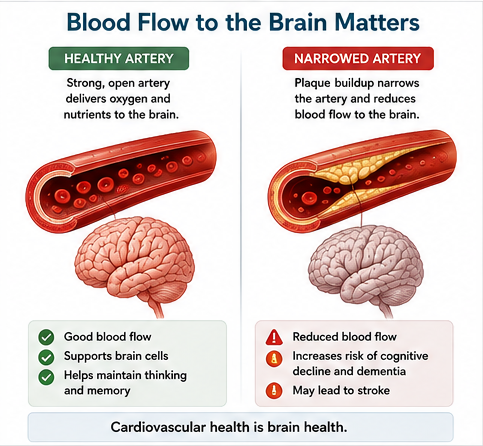
Alzheimer’s disease is becoming more common, but it rarely appears overnight. The changes that affect the brain often begin years-sometimes decades-before memory loss or confusion show up.
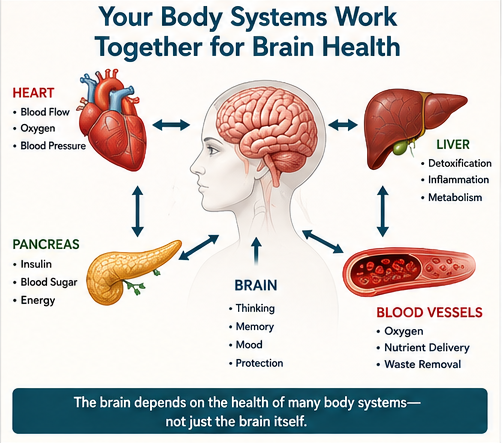
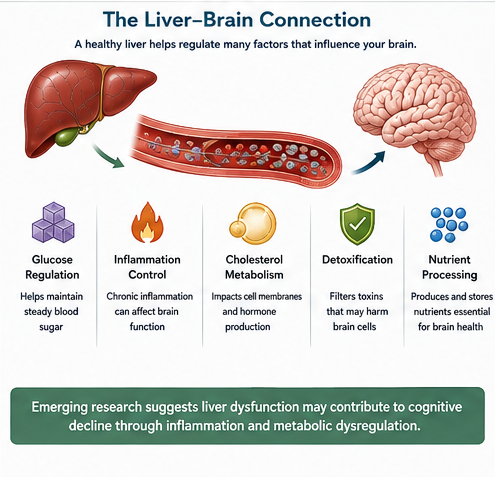
The good news is that many of these changes are influenced by the daily choices we make. Research now shows that the brain does not function in isolation. It depends on healthy blood sugar, adequate oxygen, balanced hormones, quality sleep, and a body with lower inflammation.
This article explores how heart health, insulin resistance, diabetes, liver disease, hormones, and lifestyle factors may influence Alzheimer’s risk-and what you can do now to protect your brain for the future.
What is Alzheimer’s Disease?
Alzheimer’s disease is the most common cause of dementia, a term used to describe a decline in memory, thinking, and daily functioning that interfers with life.
Inside the brain, Alzheimer’s is characteirzed by the buildup of amyloid plaques between nerve cells and Tau tangles inside nerve cells. These changes can trigger neuroinflammation, damage connections (synapses), and lead to brain cell loss and shrinkage-especially in areas involved in memory and learning.
It is important to know that Alzheimer’s is a disease process, while dementia is a clinical syndrome with many possible causes. Many people have a mix of Alzheimer’s pathology and vascular chances in the brain.
Is Alzheimer’s “Type 3 Diabetes”?
You may have heard Alzheimer’s called “Type 3 Diabetes.”
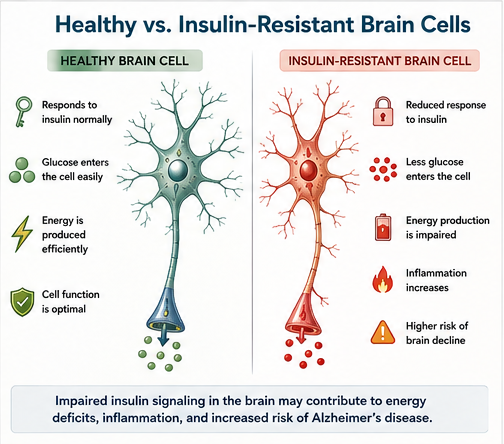
This is not an official medical diagnosis. Instead, researchers use the term because Alzheimer’s disease shares some features with type 2 diabetes, including insulin resistance, impaired glucose metabolism, and chronic inflammation in the brain.
The idea is still being studied. While there is strong evidence of impaired insulin signaling in Alzheimer’s, more research is needed to fully understand cause, effect, and the best ways to intervene.
Diabetes and Alzheimer’s Disease
Type 2 diabetes roughly doubles the risk of developing Alzheimer’s disease.
Higher blood sugar (high HbA1c), insulin resistance, and spikes in glucose can lead to inflammation, oxidative stress, and the formation of advanced glycation end products (AGEs). These can damage blood vessels and brain cells.
Good blood sugar management, a nutrient-dense diet, regular movement, and adequate sleep may help lower the risk.
Why Are Women More Likely to Develop Alzheimer’s?
Women make up nearly two-thirds of Alzheimer’s cases.
There are several likely reasons:
- Longer life: Women live longer on average, and age is the greatest risk factor.
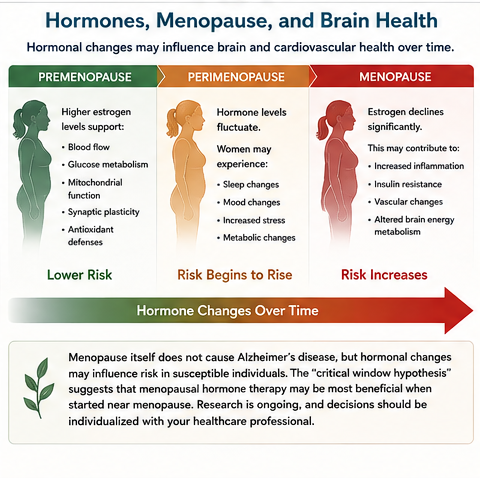
- Estrogen: Estrogen supports blood flow, glucose metabolism, mitochondrial function, synaptic plasticity, and antioxidant defenses. During menopause. estrogen drops, which may increase inflammation, insulin resistance, and vascular risk in the brain.
- Critical window: The “critical window hypothesis” suggests that menopausal hormone therapy may be most beneficial when started near menopause.
Research is ongoing, and decisions should be individualized with a healthcare professional.
Other Factors That Influence Alzheimer’s Risk
- Physical inactivity
- Poor Sleep
- Sleep apnea
- Smoking
- Ultra-processed diets
- Social isolation
- Hearing loss
- Depression
- High blood pressure
- Obesity
- High LDL cholesterol
- Air pollution
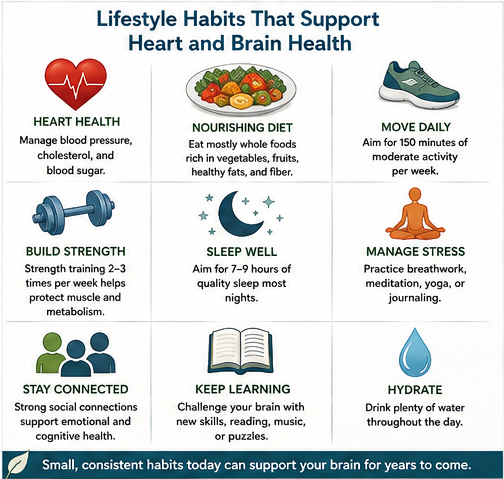
Healthy Lifestyle Habits That Support Heart and Brain Health
Small, consistent habits can make a big difference. Focus on what you can do today.
Write Reviews
Leave a Comment
No Comments & Reviews