8 Aug, 2026 | Stephanie Sanders | No Comments
Perimenopause: Understanding the Hormonal Transition(1 of 3 articles)
What Every Woman Should Know About This Natural Life Stage
Stephanie Larmour Sanders, MS, RDN, CDE, FNLP
Clinical Dietitian • Certified Diabetes Educator • Functional Nutritionist
Womens Reproductive Journey
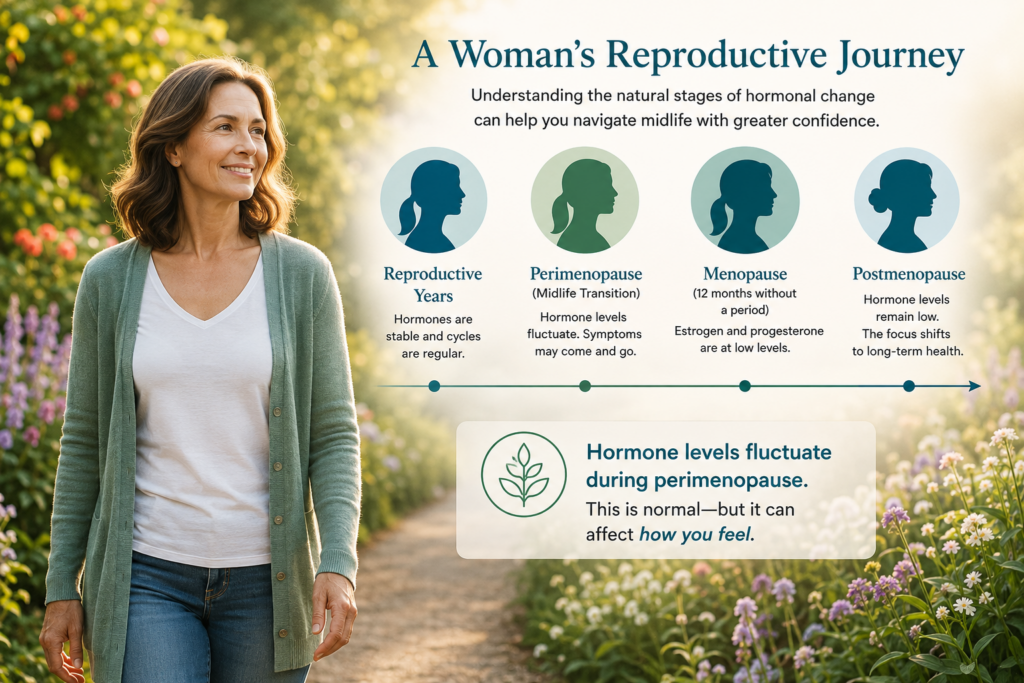
Perimenopause is a natural transition. Understanding what’s happening can help you navigate it with confidence.
🌿 Stephanie Says
Symptoms are signals—not random.
Your body is constantly communicating with you. Rather than fearing new symptoms or assuming they’re “just hormones,” think of them as clues. Looking for patterns can help you ask better questions and make informed decisions about your health.
Many women enter their forties expecting a few changes to their menstrual cycle.
Instead, they may find themselves struggling with interrupted sleep, hot flushes, mood changes, brain fog, fatigue, or weight changes that seem to appear almost overnight.
For some women, these changes are mild. For others, they can significantly affect quality of life. “My symptoms of hot flashes and sweats would occur any time. During my work meetings, I would have to keep my hands off the table or I would leave a puddle.”
It is understandable to wonder:
“Is this normal?”
“Is something wrong?”
“Could this really be perimenopause?”
The answer is often yes—but hormones are rarely the whole story.
One of the biggest myths surrounding perimenopause is that every symptom is caused by falling estrogen levels. In reality, many body systems are changing at the same time.
Hormones influence the brain, muscles, bones, cardiovascular system, metabolism, immune system, digestive system, and nervous system. They interact continuously with sleep, stress, nutrition, physical activity, and overall health.
That is why no two women experience perimenopause in exactly the same way.
🔬 Research Snapshot
Research shows that perimenopause is characterised by fluctuating ovarian hormone production rather than a smooth, gradual decline. These hormonal changes can influence multiple body systems, contributing to the wide variety of symptoms women experience.
Perimenopause literally means “around menopause.”
It is the natural transition leading to menopause, when the ovaries gradually become less responsive and hormone production begins to change.
Unlike menopause, which is defined retrospectively after twelve consecutive months without a menstrual period, perimenopause can last several years.
During this time, hormone levels fluctuate considerably from one menstrual cycle to the next.
Some months you may ovulate normally.
Other months you may not ovulate at all.
This explains why menstrual cycles often become unpredictable and why symptoms may come and go.
Understanding Hormone Patterns
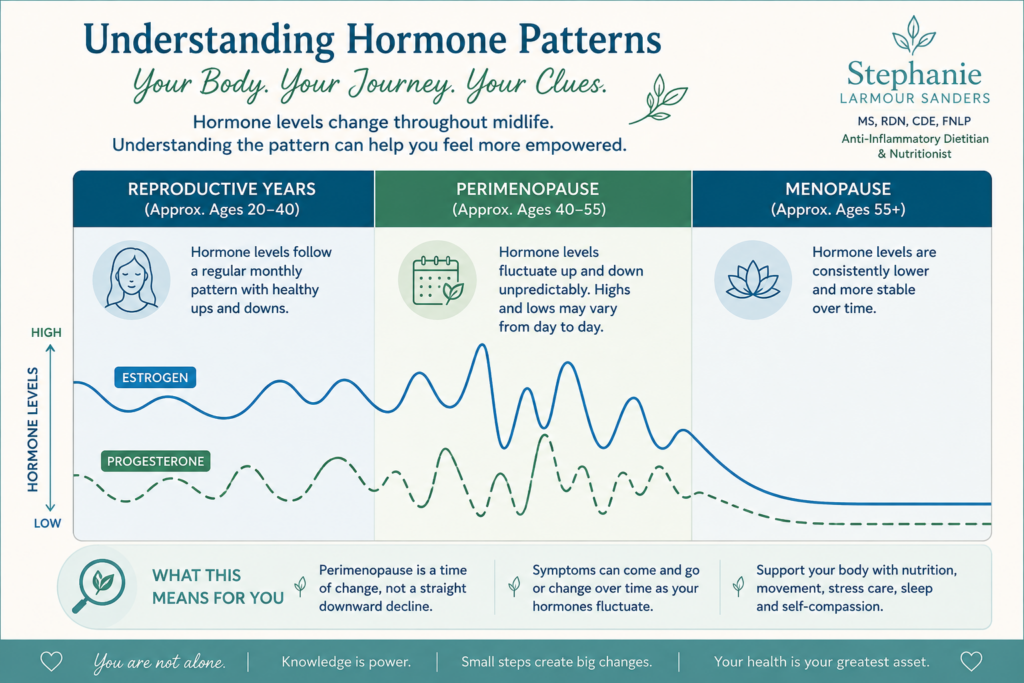
Hormones fluctuate during perimenopause rather than declining steadily.
✅ Key Takeaways
✔ Perimenopause is a normal life transition.
✔ Hormones fluctuate—they don’t simply decline.
✔ Every woman’s experience is different.
✔ Symptoms are clues—not a diagnosis.
✔ Looking for patterns is more helpful than making assumptions.
Read Articles on Perimenopause 2, 3 for continued conversation.
Write Reviews
Leave a Comment
No Comments & Reviews