12 Aug, 2026 | Stephanie Sanders | No Comments
Supporting Your Body Through Perimenopause: A Practical Anti-Inflammatory Approach(Article 3 of 3)
Hormones, Perimenopause, and Midlife Health
Stephanie Larmour Sanders, MS, RDN, CDE, FNLP
Clinical Dietitian, Certified Diabetes Educator, and Functional Nutritionist
In Articles 1 and 2, we looked at what happens to hormones during the menopause transition and why changes in sleep, body composition, blood sugar, mood, temperature regulation, and other symptoms may appear.
Now let’s make it practical.
You cannot control every hormonal fluctuation during perimenopause. And you do not need a perfect “hormone-balancing” diet.
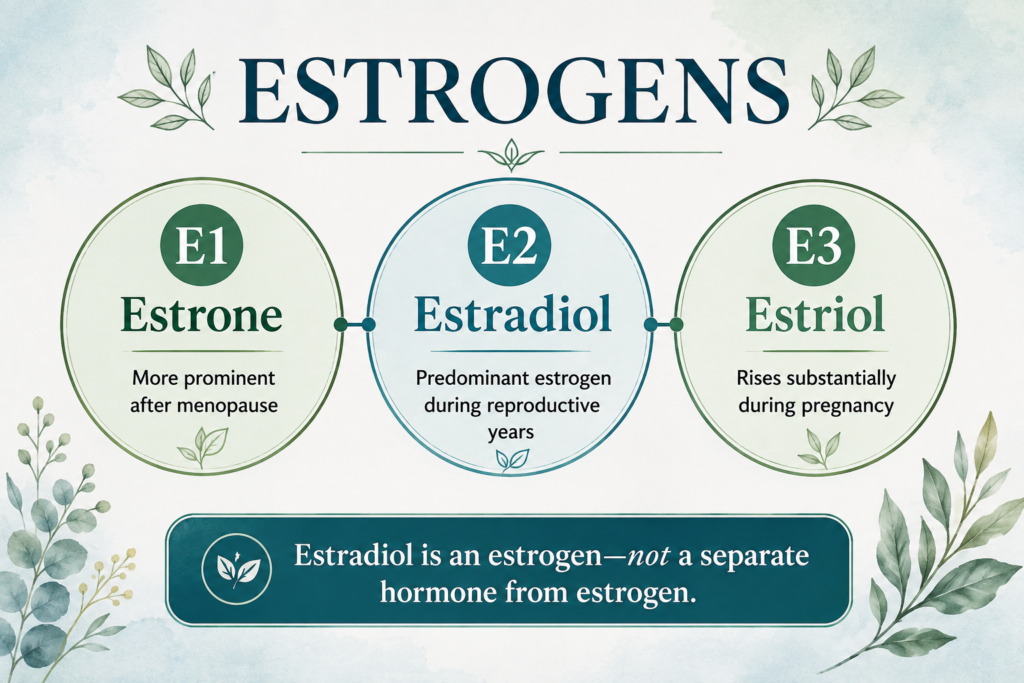
What you can do is strengthen the foundations that support your body during this transition: nourishing food, muscle, movement, sleep, recovery, and appropriate medical care.
WHOLE-PERSON PERIMENOPAUSE SUPPORT
Estrogen, Estradiol, and Progesterone: A Quick Refresher
One point is worth clarifying before we talk about food.
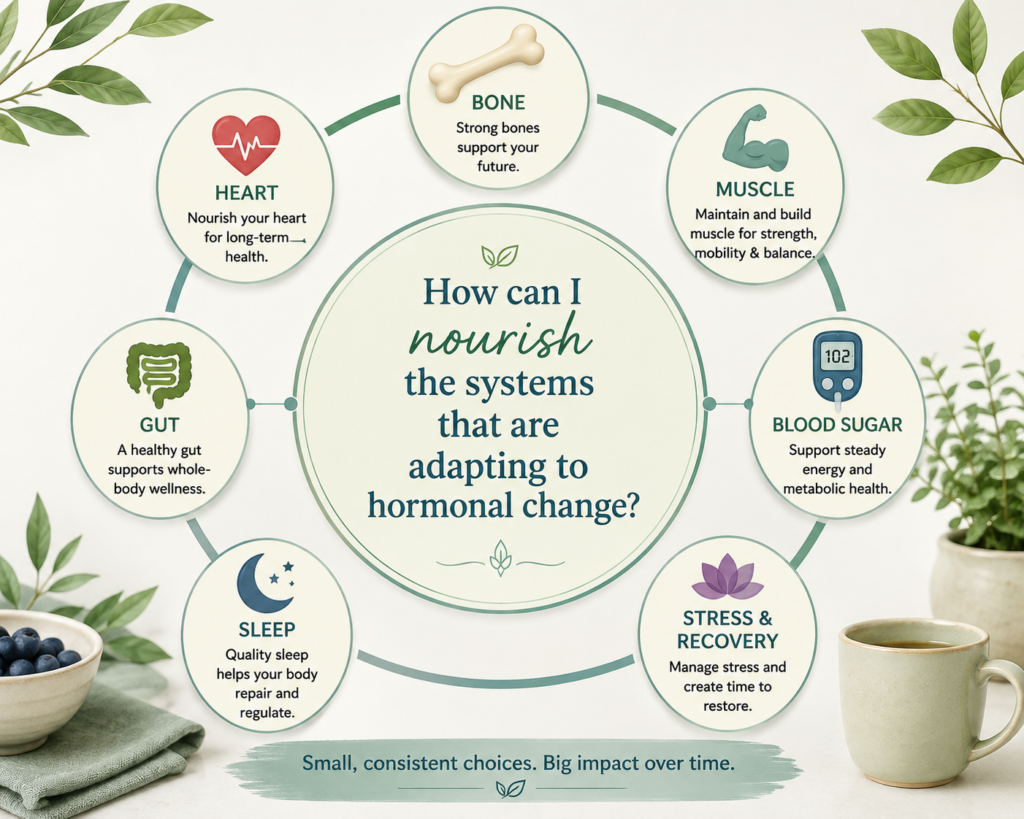
Estrogen is not one hormone. It is the name for a family of related hormones.
- Estradiol (E2) is the predominant estrogen during the reproductive years and is the estrogen we are often discussing when we talk about ovarian estrogen changes during perimenopause.
- Estrone (E1) becomes the predominant circulating estrogen after menopause.
- Estriol (E3) is present in smaller amounts outside pregnancy.
- Progesterone also changes as ovulation becomes less predictable during perimenopause.
The important takeaway is simple:
Perimenopause is not usually a smooth, predictable decline in one hormone. Hormonal patterns fluctuate.
That is one reason symptoms can change from month to month.
And remember that insulin is a hormone too. Blood sugar regulation, muscle, food, sleep, movement, and metabolic health remain important parts of the midlife picture.
HORMONES DURING PERIMENOPAUSE
Can Food Support Hormonal Health?
Yes—but food should not be presented as a replacement for estrogen or medical treatment.
Instead, think about food as providing the building materials your body needs during a period of change.
Include Protein Regularly
Protein becomes especially important as we think about maintaining muscle, strength, function, and metabolic health.
Practical choices include:
- fish
- eggs
- poultry
- Greek yogurt or cottage cheese
- beans and lentils
- tofu and tempeh
- edamame
- nuts and seeds
Rather than obsessing over a perfect number, start by asking:
Do I have a meaningful source of protein at each meal?
What About Foods That Contain Phytoestrogens?
This is where there can be a lot of confusion.
Phytoestrogens are plant compounds. They are not human estrogen.
Soy foods contain compounds called isoflavones, while flaxseed contains lignans. These compounds can interact with estrogen receptors, but eating soy or flax is not the same as replacing estradiol.
Useful foods include:
- tofu
- tempeh
- edamame
- soybeans
- unsweetened soy milk
- ground flaxseed
These foods can fit naturally into an overall nutritious eating pattern.
I would not think of them as foods that “balance your hormones.”
Think of them as nutritious plant foods that may provide useful compounds while also contributing protein, fiber, healthy fats, vitamins, or minerals.
Fill Your Plate With Color and Fiber
You don’t need an exotic menopause diet.
Look for familiar foods such as:
- leafy greens
- broccoli and other cruciferous vegetables
- peppers
- tomatoes
- berries
- apples and pears
- beans and lentils
- oats and barley
- nuts and seeds
- whole grains
Fiber supports digestive health and can contribute to meal satisfaction. Plant foods also provide a wide range of vitamins, minerals, and phytochemicals.
If you currently eat very little fiber, increase it gradually.
Choose Supportive Fats
Include foods such as:
- extra-virgin olive oil
- avocado
- walnuts
- almonds
- chia and flaxseed
- salmon
- sardines
- trout
These foods provide unsaturated fats and, in some cases, omega-3 fatty acids.
Keep Carbohydrates—Choose Them Thoughtfully
Carbohydrates do not need to disappear during perimenopause.
Instead, consider their quality and what you eat with them.
Examples include:
- beans
- lentils
- oats
- barley
- quinoa
- sweet potatoes
- intact whole grains
- fruit
Pairing these foods with protein, fiber, and healthy fat can help create a more satisfying meal.
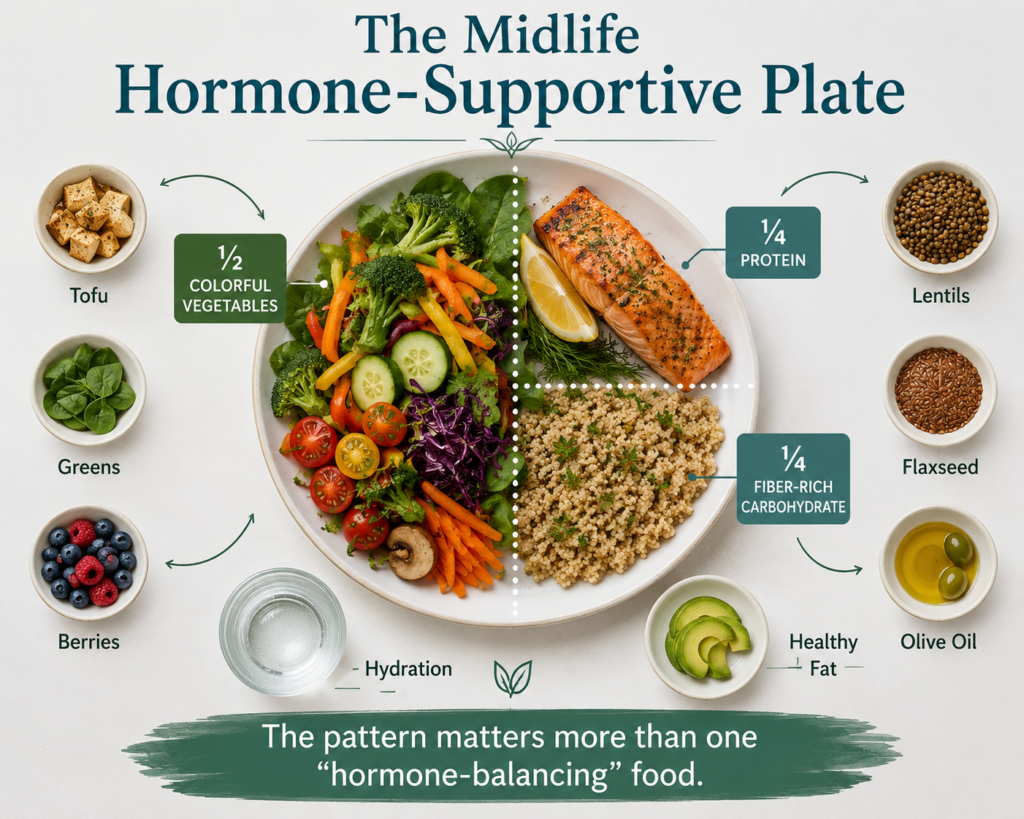
THE MIDLIFE SUPPORT PLATE
Protect Muscle and Bone
This is one of the most important parts of the midlife conversation.
I don’t want women thinking only about becoming smaller.
I want us thinking about becoming stronger.
Muscle supports strength, mobility, independence, and glucose metabolism.
Resistance exercise might include weights, resistance bands, machines, body-weight exercises, gardening, carrying, or other activities appropriate for your ability.
Bone health also deserves attention as estrogen declines. Calcium, vitamin D, protein, weight-bearing activity, and resistance exercise all belong in the conversation.
Food sources of calcium can include dairy foods, calcium-fortified soy milk, calcium-set tofu, and canned fish with edible bones.
Individual needs vary, particularly if you have osteoporosis, osteopenia, kidney disease, digestive conditions, or a history of fractures.
Movement is support, not punishment.
Sleep and Recovery Matter Too
A perfect plate cannot compensate for everything happening outside the kitchen.
Hot flashes and night sweats may interfere with sleep. Stress, caffeine, alcohol, pain, medications, and sleep disorders can also contribute.
Start simply:
- keep your bedroom comfortably cool
- notice whether alcohol affects your sleep or hot flashes
- consider the timing of caffeine
- move regularly during the day
- create a realistic wind-down routine
- seek evaluation when sleep problems persist
You don’t need to fix everything at once.
What About Supplements?
Be cautious with products promising to “balance hormones,” “detox estrogen,” or fix menopause naturally.
Supplements marketed for perimenopause may contain herbs, concentrated phytoestrogens, vitamins, or minerals. Evidence varies, and supplements can interact with medications or be inappropriate for certain medical conditions.
A simple approach is:
Food first when food can meet the need. Targeted supplementation when there is a clear reason. Medical treatment when medical treatment is appropriate.
And What About Hormone Therapy?
Nutrition and hormone therapy do not have to compete.
For some women, menopausal hormone therapy may be an appropriate and effective treatment for symptoms such as hot flashes and night sweats. Other hormonal and nonhormonal treatments are also available depending on the symptoms.
Food cannot replace estradiol when medical treatment is indicated.
Treatment decisions should consider your symptoms, age, stage of the menopause transition, medical and family history, risks, and personal preferences.
This is an individualized conversation to have with a qualified healthcare professional.
Your Practical Perimenopause Foundations
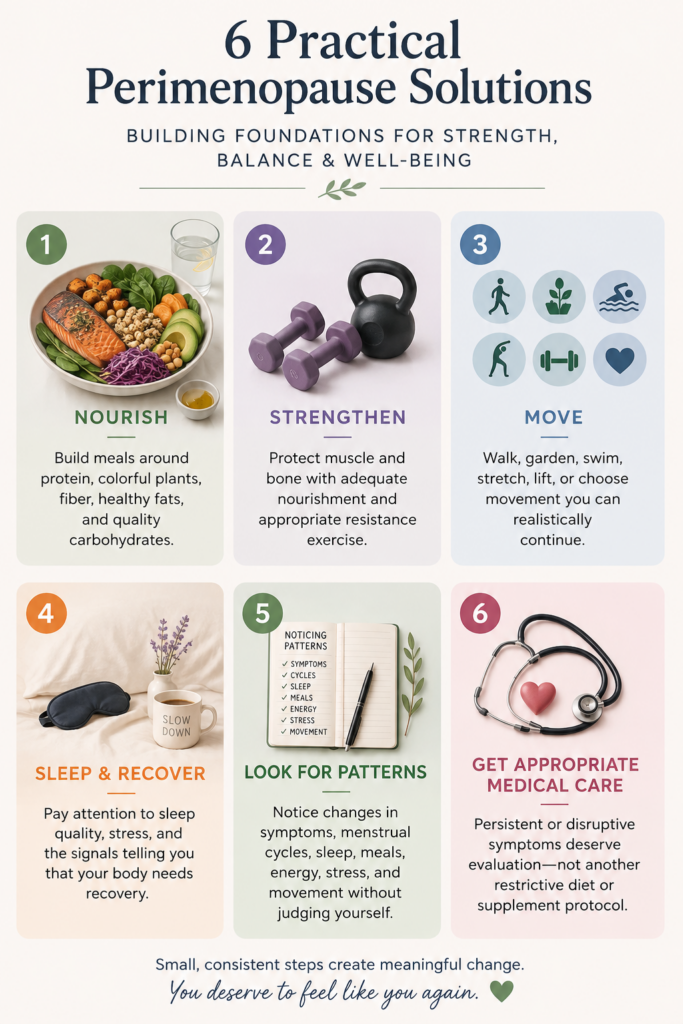
Instead of trying to remember everything in this series, remember these six foundations:
1. Nourish
Build meals around protein, colorful plants, fiber, healthy fats, and quality carbohydrates.
2. Strengthen
Protect muscle and bone with adequate nourishment and appropriate resistance exercise.
3. Move
Walk, garden, swim, stretch, lift, or choose movement you can realistically continue.
4. Sleep and recover
Pay attention to sleep quality, stress, and the signals telling you that your body needs recovery.
5. Look for patterns
Notice changes in symptoms, menstrual cycles, sleep, meals, energy, stress, and movement without judging yourself.
6. Get appropriate medical care
Persistent or disruptive symptoms deserve evaluation—not another restrictive diet or supplement protocol.
SIX MIDLIFE SUPPORT FOUNDATIONS
When Should You Seek Medical Care?
Talk with your healthcare professional about significant changes such as very heavy or unusual bleeding, bleeding after menopause, persistent or severe mood symptoms, unexplained fatigue, significant sleep problems, or symptoms that interfere with daily life.
Evaluation may also be important when symptoms could reflect another condition, such as anemia, thyroid disease, diabetes, or sleep apnea.
Seek urgent medical attention for severe chest pain, significant shortness of breath, fainting, signs of stroke, or thoughts of self-harm.
The Bottom Line
Perimenopause does not require you to overhaul your entire life.
Start with one foundation.
Add protein to breakfast.
Try tofu or edamame.
Sprinkle ground flaxseed on oatmeal.
Add another colorful vegetable to dinner.
Take a walk.
Lift something appropriately challenging.
Protect your sleep.
Or make the healthcare appointment you’ve been postponing.
Small actions may not stop hormonal change—but they can help support the body moving through it.
The goal is not perfection. It is learning what your body needs and taking the next useful step.
Symptoms are signals. Patterns are information.
References
- American College of Obstetricians and Gynecologists (ACOG). The Menopause Years.
- American College of Obstetricians and Gynecologists (ACOG). Hormone Therapy for Menopause.
- The Menopause Society. Menopause education and treatment resources.
- National Institute on Aging. What Is Menopause?
- U.S. Department of Health and Human Services and U.S. Department of Agriculture. Dietary Guidelines for Americans.
Write Reviews
Leave a Comment
No Comments & Reviews