
13 Aug, 2026 | Stephanie Sanders | No Comments
Restless Legs Syndrome: What Your Legs May Be Trying to Tell You
Stephanie Larmour Sanders, MS, RDN, CDE, FNLP
Clinical Dietitian, Certified Diabetes Educator, and Functional Nutritionist
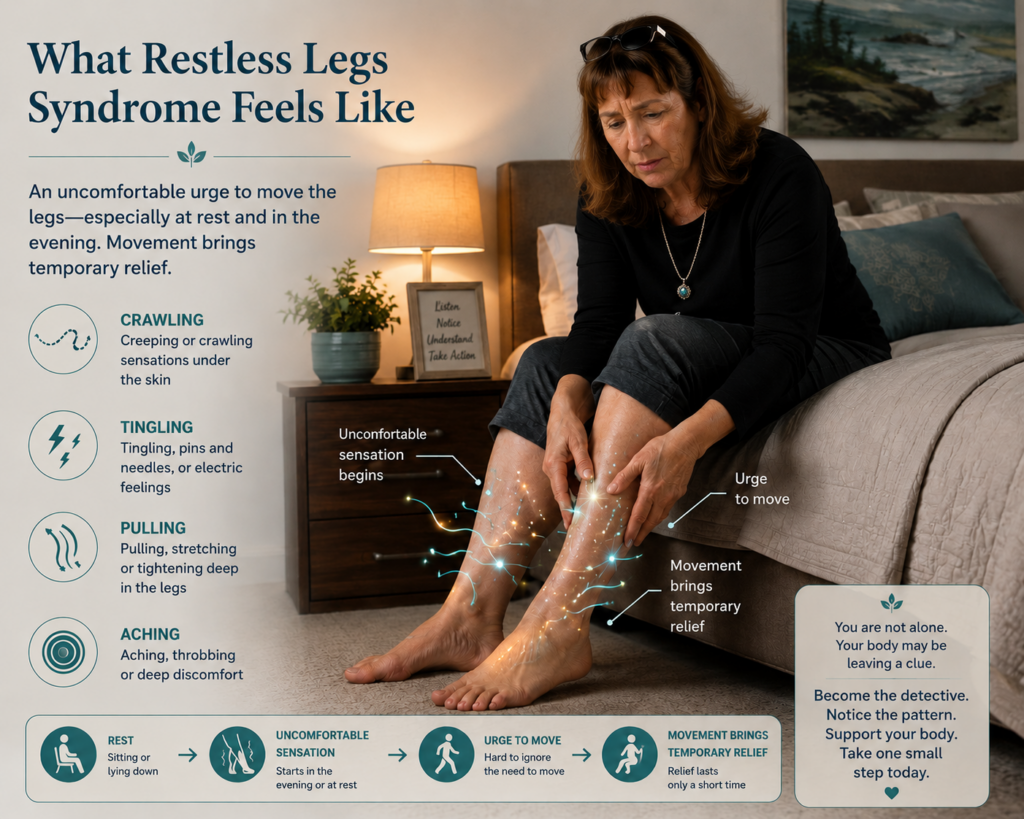
Restless Legs Syndrome (RLS), also called Willis-Ekbom disease, is much more than simply having restless legs at bedtime.
It is a neurological sensorimotor disorder that produces an uncomfortable urge to move the legs. Symptoms typically appear or become worse while sitting or lying down, improve temporarily with movement, and are usually strongest during the evening or at night.
People describe the sensation in many different ways:
- Crawling
- Tingling
- Pulling
- Aching
- Throbbing
- Electrical sensations
- An uncomfortable feeling deep inside the legs
- An almost irresistible need to move
Because RLS frequently interferes with falling asleep or staying asleep, it can also contribute to daytime fatigue, difficulty concentrating, irritability, and reduced quality of life.
But why does it happen?
The answer takes us into an interesting relationship between brain iron, dopamine, the nervous system, sleep, and nutrition.
What Is Happening Physiologically?
RLS was once thought of primarily as a dopamine disorder.
We now know the physiology is considerably more complex.
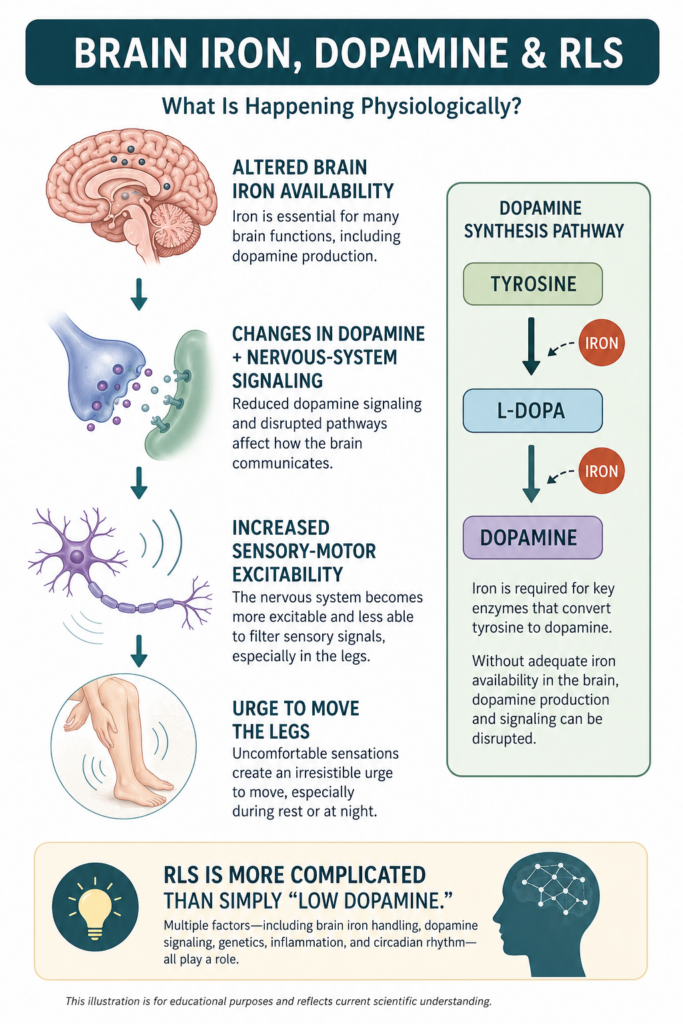
One of the most important biological abnormalities associated with RLS is altered iron availability within the brain.
Iron is required for numerous neurological processes and is a cofactor for tyrosine hydroxylase, an enzyme involved in producing dopamine.
A simplified pathway looks like this:
Tyrosine → L-DOPA → Dopamine
Dopamine helps regulate movement and sensory-motor signaling.
When brain iron metabolism and dopamine signaling become disrupted, the nervous system may become more excitable.
Research also points toward changes in other signaling systems, including adenosine and glutamate.
This helps explain the classic RLS pattern:
Rest → uncomfortable sensations → urge to move → movement → temporary relief
There is also a strong circadian component. Symptoms are generally much more pronounced in the evening and nighttime hours.
Iron: The Most Important Nutrient to Investigate
If I were looking at RLS through a nutrition detective lens, iron would be one of my first clues.
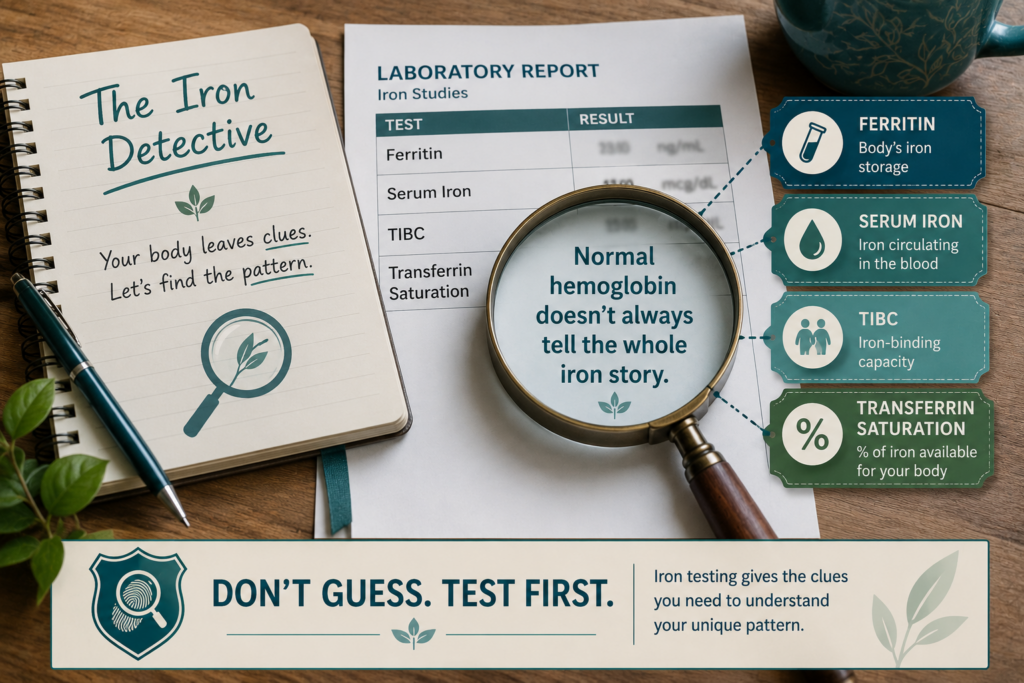
Importantly, someone can have a normal hemoglobin and still have iron status that is not optimal for RLS.
That means a CBC alone is not enough.
Current RLS guidance recommends evaluating an early-morning iron panel, including:
- Serum ferritin
- Serum iron
- Total iron-binding capacity (TIBC)
- Transferrin saturation (TSAT)
This is an important distinction because the iron thresholds used in RLS management are different from the thresholds generally used simply to diagnose iron-deficiency anemia.
Current Iron Guidance
Recent RLS guidelines recommend considering iron therapy based on both symptoms and iron studies.
Oral iron is generally most relevant when ferritin is low. Current guidance particularly considers iron supplementation when ferritin is below approximately 75 ng/mL, with transferrin saturation helping interpret iron availability.
People with persistent RLS and higher ferritin levels may sometimes be candidates for intravenous rather than oral iron. This decision belongs with a physician because iron overload can be harmful.
Which Oral Iron?
Ferrous sulfate has the strongest guideline support for oral treatment of RLS.
A commonly studied dose provides approximately:
65 mg elemental iron
This is approximately the amount supplied by 325 mg ferrous sulfate, although the label should always be checked for the actual elemental iron content.
Older RLS algorithms commonly paired this with approximately:
100–200 mg vitamin C
taken every one or two days to assist absorption.
Iron should not simply be added because someone has restless legs. Iron studies should be obtained first and supplementation should be medically monitored.
What About Iron Bisglycinate?
Iron bisglycinate is often marketed as a gentler form of iron and may produce fewer gastrointestinal complaints for some individuals.
However, this distinction is important:
Ferrous sulfate is the oral iron specifically supported in current RLS clinical guidelines.
There is not comparable RLS-specific evidence showing that iron bisglycinate treats RLS better than ferrous sulfate.
Therefore, I would not call bisglycinate the “best iron for RLS.” It may be a tolerability alternative that can be discussed with a healthcare professional when standard oral iron causes constipation, nausea, or gastrointestinal discomfort.
Food Sources of Iron
Nutrition should support iron status as well.
Heme iron
Heme iron is generally absorbed more efficiently and is found in:
- Beef
- Lamb
- Dark poultry
- Sardines
- Clams and other shellfish
- Other meats and seafood
Non-heme iron
Plant sources include:
- Lentils
- Beans
- Tofu
- Tempeh
- Pumpkin seeds
- Sesame/tahini
- Spinach and leafy greens
- Iron-fortified whole grains and cereals
Pairing plant iron with a vitamin-C-rich food can increase absorption.
For example:
Lentils + bell peppers
Beans + tomatoes
Spinach + citrus
Tea and coffee can decrease non-heme iron absorption when consumed with an iron-rich meal, so spacing them away from the meal may be helpful when improving iron status is a priority.
Magnesium: Promising, But Not Yet an Established RLS Treatment
Magnesium is frequently recommended online for restless legs.
The science is much less definitive than it is for iron.
Magnesium participates in:
- Neuromuscular signaling
- Muscle function
- Nerve transmission
- Energy metabolism
- Sleep physiology
A small randomized clinical trial studied:
250 mg/day magnesium oxide
for approximately two months and reported improvements in RLS severity and sleep quality.
However, this is not enough evidence to establish magnesium as a standard treatment for RLS.
Which magnesium would I choose nutritionally?
The clinical trial used magnesium oxide, so we should not claim that another form was the one demonstrated to improve RLS.
For general magnesium supplementation, however, magnesium glycinate is often better tolerated gastrointestinally than magnesium oxide and is a reasonable form when the goal is correcting inadequate magnesium intake rather than claiming to treat RLS.
A conservative supplemental range often used for general nutritional support is approximately:
100–200 mg elemental magnesium in the evening
depending upon dietary intake and medical history.
Magnesium supplements require caution in significant kidney disease.
Food first
Excellent magnesium sources include:
- Pumpkin seeds
- Almonds
- Cashews
- Beans
- Lentils
- Spinach
- Avocado
- Whole grains
- Dark chocolate
A food-first approach can easily provide substantial magnesium without immediately turning to a supplement.
Vitamin B6: Food First
Vitamin B6 is involved in neurotransmitter metabolism, including pathways related to dopamine, serotonin and GABA.
One randomized trial of RLS studied:
40 mg vitamin B6 daily
for two months and reported improvement in RLS symptoms and sleep quality.
But I would not recommend 40 mg of supplemental B6 routinely simply because someone has RLS.
High-dose supplemental B6 taken chronically can itself cause peripheral neuropathy—exactly the type of neurological complication we do not want when investigating uncomfortable leg sensations.
Instead, I prefer a food-first B6 strategy.
Good sources include:
- Salmon
- Tuna
- Chicken
- Turkey
- Chickpeas
- Potatoes
- Bananas
- Avocado
- Pistachios
- Fortified whole grains
The adult requirement is only approximately 1.3–1.7 mg/day, depending upon age and sex.
That is very different from the 40 mg experimental dose used in the RLS trial.
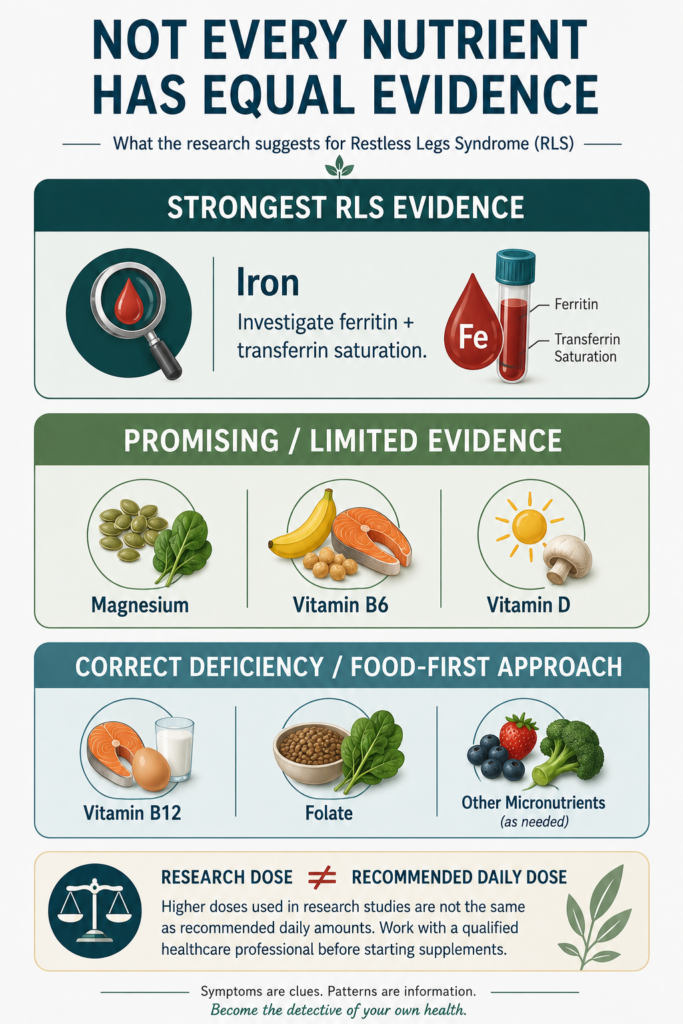
Research dose does not automatically equal recommended daily dose.
Vitamin B12: Check Before Supplementing
Vitamin B12 is essential for:
- Myelin formation
- Normal nerve function
- Red blood cell production
- DNA synthesis
Some observational research has found lower B12 concentrations among people with RLS.
However, we do not yet have strong evidence showing that giving B12 to someone with adequate B12 status treats RLS.
Therefore, the better approach is:
Test → identify deficiency → correct deficiency.
Food sources include:
- Clams
- Sardines
- Salmon
- Trout
- Eggs
- Milk
- Yogurt
- Meat
- Nutritional yeast or other B12-fortified foods
Adults generally require approximately:
2.4 mcg B12 per day
People taking metformin or long-term acid-suppressing medications, older adults, vegans, and people with gastrointestinal malabsorption may deserve particular attention to B12 status.
Folate: Another Food-First B Vitamin
Folate participates in:
- DNA synthesis
- Red blood cell production
- Methylation
- Homocysteine metabolism
- Nervous-system function
The relationship between folate and RLS is not strong enough to recommend high-dose folic acid as an RLS treatment.
Recent research suggests that low folate may be particularly relevant to RLS during pregnancy, but evidence in the general RLS population remains limited.
My preference would therefore be food first, unless laboratory findings or another medical indication suggests supplementation.
Excellent folate sources include:
- Lentils
- Black beans
- Chickpeas
- Asparagus
- Spinach
- Romaine lettuce
- Avocado
- Broccoli
- Brussels sprouts
- Oranges
The usual adult recommendation is:
400 mcg dietary folate equivalents (DFE) per day
rather than automatically taking a high-dose folic acid supplement.
Vitamin D: Correct Deficiency Rather Than Treat RLS Blindly
Vitamin D has attracted increasing interest in RLS research.
Studies have found that vitamin D deficiency appears relatively common among people with RLS.
But association does not prove that vitamin D deficiency causes RLS.
Clinical trials investigating supplementation have produced mixed results.
Therefore, rather than telling everyone with restless legs to take high-dose vitamin D, I would recommend checking:
25-hydroxyvitamin D [25(OH)D]
and correcting an identified deficiency with the individual’s healthcare professional.
Food sources include:
- Salmon
- Sardines
- Trout
- Egg yolks
- Fortified milk
- Fortified plant milks
- UV-exposed mushrooms
Vitamin C
Vitamin C deserves attention for two reasons.
First, it can increase absorption of non-heme iron.
Food sources include:
- Bell peppers
- Citrus
- Kiwi
- Strawberries
- Broccoli
- Tomatoes
- Brussels sprouts
Second, vitamin C has been studied directly in RLS.
A clinical trial in people receiving hemodialysis used:
200 mg vitamin C daily
and found improvement in RLS symptoms.
However, this was a very specific population—people undergoing hemodialysis—so we should not assume the same treatment effect applies to everyone with RLS.
For most people, vitamin C’s clearest role is helping support iron absorption.
Vitamin E
The same hemodialysis trial also investigated:
400 mg vitamin E daily
and reported improvement.
Again, this does not mean I would recommend 400 mg of vitamin E to everyone with RLS.
High-dose vitamin E supplementation can increase bleeding risk and interact with medications.
Instead, food sources provide vitamin E safely:
- Almonds
- Sunflower seeds
- Avocado
- Olive oil
- Wheat germ
- Hazelnuts
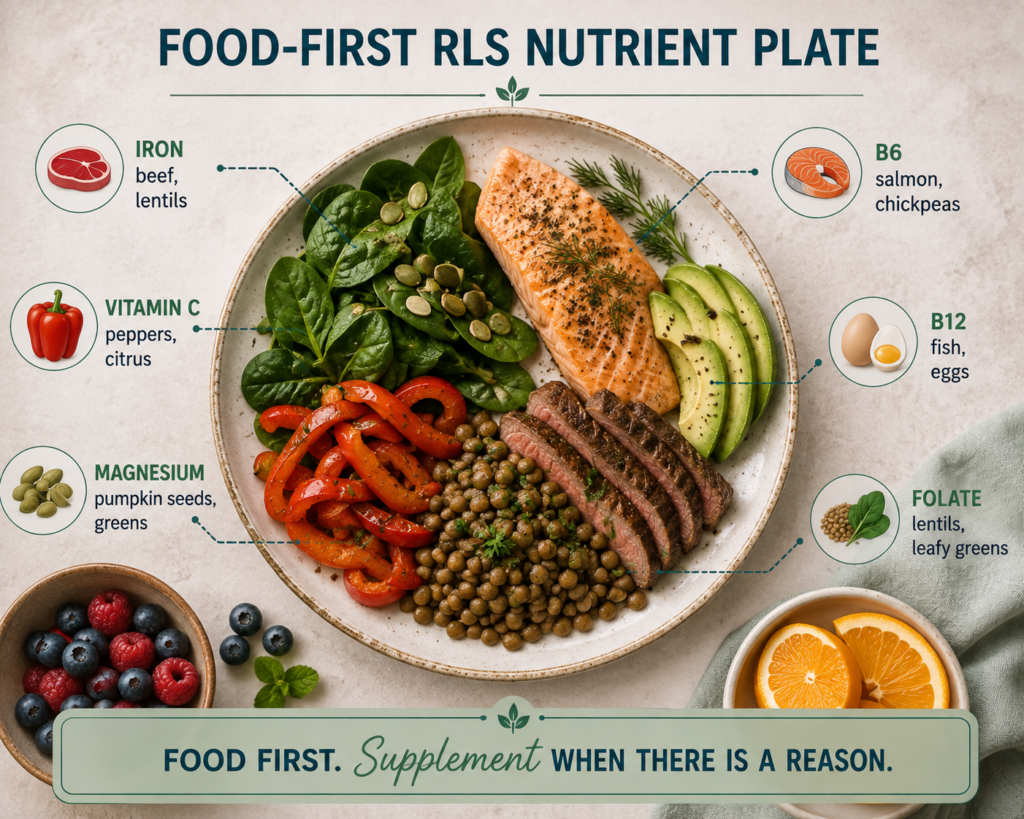
A Food-First RLS Plate
Instead of creating a long supplement list, think about building meals that naturally provide the nutrients involved in neurological function.
For example:
Protein
Salmon, chicken, eggs, tofu, beans or lentils
Iron
Lean beef, lentils, beans, tofu or shellfish
Vitamin C
Bell peppers, tomatoes, broccoli, berries or citrus
Magnesium
Pumpkin seeds, greens, beans, nuts and whole grains
B vitamins
Fish, eggs, legumes, leafy vegetables and whole grains
Healthy fats
Olive oil, nuts, seeds and avocado
One meal can supply several of these nutrients simultaneously.
The RLS Nutrition Detective Checklist
Before buying multiple supplements, ask:
Have my iron stores actually been evaluated?
Do I know my ferritin AND transferrin saturation?
Could inflammation be affecting the interpretation of my ferritin?
Have B12, folate or vitamin D deficiencies been considered?
Am I eating enough iron, magnesium, protein and B-vitamin-rich foods?
Do caffeine or alcohol make my symptoms worse?
Am I taking an antihistamine or another medication that can aggravate RLS?
Do my symptoms truly meet the criteria for RLS, or could this be neuropathy, leg cramps or another condition?
That is where becoming the detective becomes valuable.
Nutrient Evidence at a Glance
| Nutrient | Research/clinical amount | Form studied or recommended | Strength of RLS evidence |
|---|---|---|---|
| Iron | ~65 mg elemental iron when medically indicated | Ferrous sulfate | Strongest nutritional evidence |
| Vitamin C with iron | Historically 100–200 mg with oral iron | Ascorbic acid or food | Supports iron absorption |
| Magnesium | 250 mg/day in one RCT | Magnesium oxide | Promising, limited |
| Vitamin B6 | 40 mg/day in one RCT | Pyridoxine | Promising but insufficient for routine high-dose use |
| Vitamin B12 | No established RLS treatment dose | Prefer food/correct deficiency | Association; treatment evidence insufficient |
| Folate | No established RLS treatment dose | Prefer food/correct deficiency | Limited; possibly more relevant in pregnancy |
| Vitamin D | No established universal RLS dose | Dose according to blood level | Deficiency associated with RLS; treatment results mixed |
| Vitamin C | 200 mg/day in one hemodialysis RCT | Vitamin C | Limited to special population |
| Vitamin E | 400 mg/day in one hemodialysis RCT | Vitamin E | Limited to special population |
When Nutrition Is Not Enough
RLS is a neurological disorder, and nutrition is only one part of treatment.
Current medical management may include:
- Correcting iron deficiency
- Reviewing medications that aggravate RLS
- Addressing sleep apnea
- Reducing alcohol or caffeine when they trigger symptoms
- Gabapentin or pregabalin for persistent RLS
- Intravenous iron in appropriately selected patients
- Other specialized therapies for severe or refractory disease
Current guidelines have moved away from routinely using dopamine agonists such as ropinirole and pramipexole as first-line long-term therapy because they can eventually cause augmentation—RLS symptoms beginning earlier, becoming stronger, or spreading to additional parts of the body.
Stephanie Says
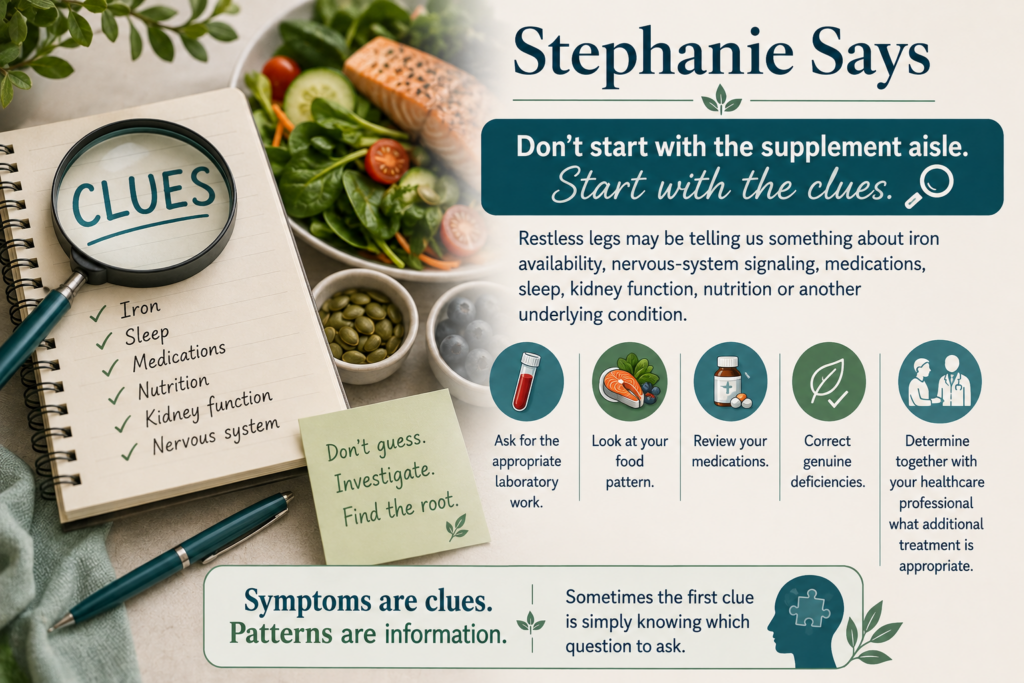
Don’t start with the supplement aisle. Start with the clues.
Restless legs may be telling us something about iron availability, nervous-system signaling, medications, sleep, kidney function, nutrition or another underlying condition.
The most important nutritional clue is iron—but even iron needs to be investigated rather than guessed.
Ask for the appropriate laboratory work.
Look at your food pattern.
Review your medications.
Correct genuine deficiencies.
Then determine, together with your healthcare professional, what additional treatment is appropriate.
Symptoms are clues. Patterns are information.
Sometimes the first clue is simply knowing which question to ask.
Important Safety Note
Iron should not be supplemented at therapeutic doses without checking iron status. Excess iron can cause toxicity and organ damage. High-dose vitamin B6 can cause neuropathy, magnesium requires caution with significant kidney impairment, and vitamin E may increase bleeding risk. Pregnancy, kidney disease, anemia, gastrointestinal disease, medications and other medical conditions can substantially change nutrient recommendations.
References
- Silber MH, et al. An Updated Algorithm for the Management of Restless Legs Syndrome. Mayo Clinic Proceedings. 2026.
- Winkelman JW, et al. Treatment of Restless Legs Syndrome and Periodic Limb Movement Disorder: An American Academy of Sleep Medicine Clinical Practice Guideline. Journal of Clinical Sleep Medicine. 2025.
- González-Parejo P, et al. Effects of Dietary Supplementation in Patients with Restless Legs Syndrome: A Systematic Review. 2024.
- Xu XM, et al. Role of Vitamins in the Pathogenesis and Treatment of Restless Legs Syndrome: A Systematic Review and Meta-analysis. 2025.
- Jadidi A, et al. Therapeutic Effects of Magnesium and Vitamin B6 in Alleviating the Symptoms of Restless Legs Syndrome: A Randomized Controlled Clinical Trial. 2022.
- Sagheb MM, et al. Efficacy of Vitamins C, E, and Their Combination for Treatment of Restless Legs Syndrome in Hemodialysis Patients: A Randomized, Double-Blind, Placebo-Controlled Trial. Sleep Medicine. 2012.
- Cederberg KLJ, et al. Vitamin D and Restless Legs Syndrome: A Review of Current Literature. 2023.
- National Institutes of Health, Office of Dietary Supplements. Iron Fact Sheet for Health Professionals.
Write Reviews
Leave a Comment
No Comments & Reviews