27 Aug, 2026 | Stephanie Sanders | No Comments
🐝 Don’t Forget the Pollinators: Plant a Little Something for Them, Too
Stephanie Larmour Sanders MSRDN,CDE, FNLP
Amateur Gardener, and Anti-inflammatory Dietitian and Nutritionist
A vegetable garden isn’t only about vegetables.
Look closely on a summer morning and you may discover an entire neighborhood at work—bees moving between flowers, butterflies stopping for nectar and other beneficial insects quietly visiting the garden.
Many of the foods we grow depend on or benefit from insect pollination, including squash, cucumbers and melons.
So while we’re deciding what vegetables to grow, let’s save a little garden space for the pollinators, too.
🌸 What Can I Plant in a Hot San Fernando Valley Garden?
Consider a mixture of flowering plants such as:
- Zinnias — colorful, heat-loving flowers that can attract butterflies and bees.
- Cosmos — cheerful flowers that provide nectar and pollen and fit beautifully into an informal vegetable garden.
- Sunflowers — dramatic, useful and attractive to numerous pollinating insects.
- Salvias — especially valuable when choosing varieties suited to Southern California conditions.
- California buckwheats — native options that can provide valuable resources for many insects.
- Yarrow — clusters of small flowers create convenient landing and feeding areas for beneficial insects.
- Marigolds — easy to tuck around vegetable beds and useful for increasing floral diversity.
- Flowering herbs — don’t be too quick to remove every basil flower! Allowing some basil and other herbs to bloom can provide additional food for visiting pollinators.
You don’t need every flower on this list.
A few thoughtfully chosen plants are enough to begin.
Even better, choose different flower shapes and plants that bloom at different times. That can provide a more continuous source of nectar and pollen rather than one enormous floral buffet that disappears two weeks later.
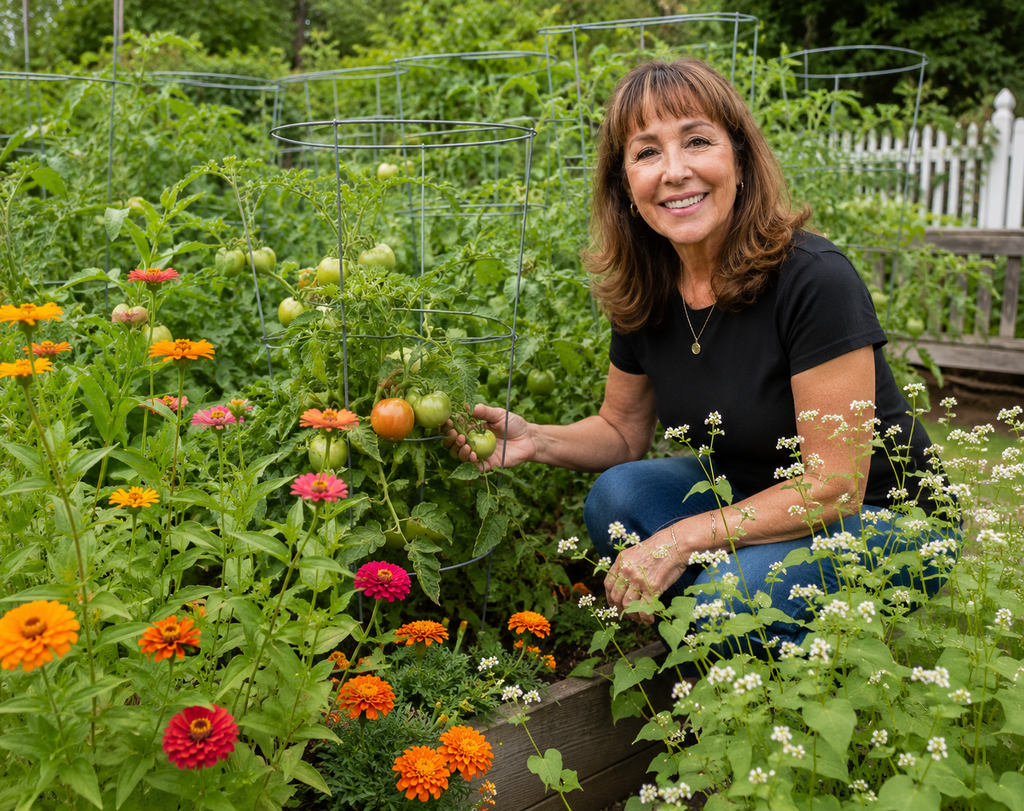
San Fernando Valley vegetable garden with tomatoes, cucumbers and squash surrounded by zinnias, cosmos, and flowering basil. Flowers mixed into the vegetable garden can provide nectar and pollen for bees, butterflies and other beneficial insects.
Plant something for yourself—and something for the pollinators. A little flower diversity can bring color, movement and life into the vegetable garden.
🐝 One More Pollinator-Friendly Tip
Try not to make the garden too tidy.
A perfectly manicured landscape isn’t necessarily the most useful habitat.
Allow some herbs to flower. Include different plant heights. Consider native flowering plants. And before reaching automatically for an insecticide, identify the insect and decide whether intervention is actually necessary.
Remember: if we’re inviting beneficial insects to dinner, we need to be thoughtful about what we’re spraying around their table.
🌻 Stephanie Says
I love the idea that when I plant my vegetable garden, I’m not gardening alone.
The bees, butterflies and other beneficial insects are part of this little ecosystem, too.
You don’t need to transform your entire yard into a pollinator sanctuary overnight.
Plant a few flowers.
Let some basil bloom.
Notice who arrives.
Grow food for your table—and leave a little something blooming for your garden visitors. 🐝🌻
Write Reviews
Leave a Comment
No Comments & Reviews