5 Nov, 2026 | Stephanie Sanders | No Comments
Pomegranates: Should We Eat the Hard Seeds Inside? What Happens During Digestion?
By Stephanie Larmour Sanders, MS, RDN, CDE, FNLP
Anti-Inflammatory Dietitian and Nutritionist
We have two pomegranate trees in our yard and my husband takes a few days to break down the fruit to release the Aril. A question come up if we can eat the entire aril, along the seed inside. Pomegranates are beautiful fruits, filled with hundreds of ruby-red, juicy pieces that add color, flavor, and nutritional value to our diets. But have you ever bitten into a pomegranate and wondered about the hard little seed inside?
Should we chew it? Swallow it whole? Spit it out?And perhaps most importantly, are we missing valuable nutrients when we don’t eat the entire seed.
As a dietitian who encourages a whole-food approach to nutrition, I find these questions particularly interesting. Let’s look at what makes up a pomegranate aril, what happens to its nutrients during digestion, and what research tells us about its potential health benefits.
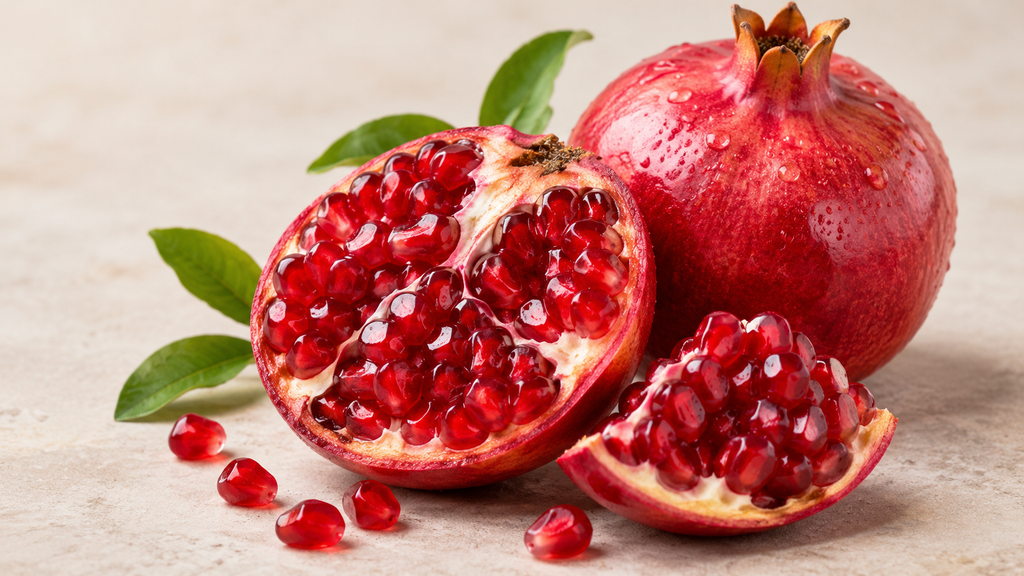
Whole and sliced pomegranate with ruby-red arils.
What Exactly Is a Pomegranate Aril?
Those beautiful red pieces we commonly call pomegranate seeds are technically known as arils.
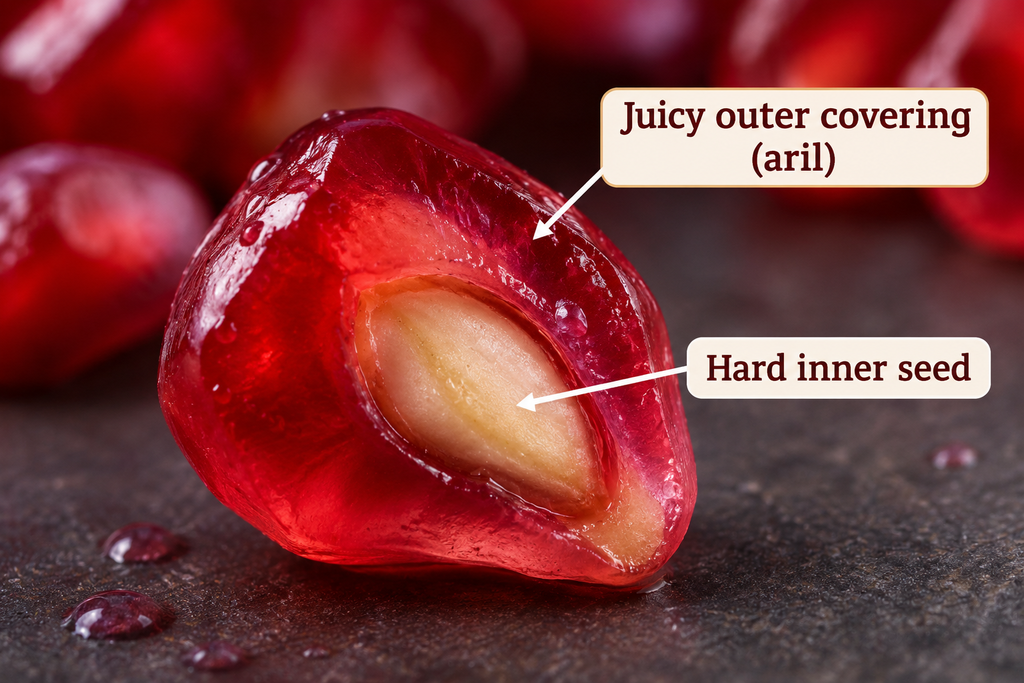
Each aril has two important components.
1. The juicy outer covering
This portion contains:
- Water and naturally occurring sugars
- Vitamin C
- Potassium
- Polyphenols, including anthocyanins that contribute to the fruit’s beautiful red color
2. The hard inner seed
The small, crunchy center contains:
- Structural dietary fiber
- Small amounts of protein
- Seed oil containing punicic acid
- Other naturally occurring plant compounds
The hard seed is edible, and you do not need to remove it. However, understanding its structure helps explain why chewing may be beneficial.
What Makes Pomegranate Seeds So Hard?
The hard inner seed has a protective coat composed of plant structural materials, including cellulose and other components of plant cell walls. This covering helps protect the developing plant embryo.
Humans do not produce the enzymes needed to completely digest cellulose. That means some of the hard seed material may pass through our digestive system without being fully broken down.
But something interesting happens when we chew the seed. Breaking its protective covering may make the oils and other nutrients inside more accessible to digestion.
What Happens When We Eat Pomegranate Seeds?
Step 1: Chewing Begins the Process
When we chew pomegranate arils, our teeth break apart the juicy covering and may crush the hard seed. This mechanical action can expose more of the seed’s contents.
If we swallow the seed intact, its protective covering may limit access to some of those nutrients. However, researchers have not yet established precisely how much additional oil humans absorb from chewing whole pomegranate seeds.
Step 2: Digestion Continues in the Stomach and Small Intestine
Once food enters the digestive tract, stomach mixing, digestive fluids, and enzymes help prepare nutrients for absorption. In the small intestine, enzymes called lipases help break down accessible fats.
One of the most interesting compounds found in pomegranate seed oil is punicic acid. Punicic acid is a conjugated omega-5 fatty acid being studied for its potential effects on metabolic health and inflammatory pathways. A 2025 laboratory digestion study found that punicic acid from extracted pomegranate seed oil became accessible during simulated digestion. This does not necessarily mean the same amount will be absorbed from an intact seed, but it helps us understand how the digestive system may handle the oil once released.
Step 3: Nutrients Enter the Circulation
After digestion, absorbable fatty acids can enter intestinal cells and eventually reach the circulation.
Research indicates that humans can absorb punicic acid from dietary sources and metabolize some of it into a form of conjugated linoleic acid, commonly called CLA. However, we need more human studies to determine how much punicic acid is actually absorbed from ordinary servings of whole pomegranate arils.
Step 4: Fiber Travels to the Colon
Not everything we eat is completely digested. The more resistant structural components of the seed may continue into the large intestine.
Some dietary fibers can be fermented by intestinal microorganisms, producing beneficial metabolites called short-chain fatty acids. Other resistant materials contribute to stool bulk and pass through the digestive tract.
It is important to recognize that not every type of fiber is fermented equally. Much of a hard seed coat may remain resistant to microbial breakdown.
A cut-open pomegranate aril showing the juicy outer covering and hard inner seed.
Pomegranate Seeds and Inflammation: What Does the Research Say?
Pomegranates contain several interesting plant compounds.
Three deserve special attention.
1. Polyphenols
Pomegranates provide polyphenols, including anthocyanins and ellagitannins. These compounds have been investigated for antioxidant activity and their potential influence on inflammatory signaling.
However, antioxidant activity observed in the laboratory does not automatically translate into a proven reduction in chronic inflammation in humans.
The clinical evidence varies depending on the population studied, the dose, and whether researchers used whole fruit, juice, or concentrated extracts.
2. Punicic Acid
Punicic acid is a major fatty acid found in pomegranate seed oil.
Researchers are investigating its potential effects on lipid metabolism and inflammatory processes.
Although some experimental results are promising, more high-quality human research is needed before we can conclude that eating pomegranate seeds meaningfully reduces inflammation or prevents chronic disease.
3. Ellagitannins and Urolithins
Here is a fascinating connection between whole foods and the gut microbiome.
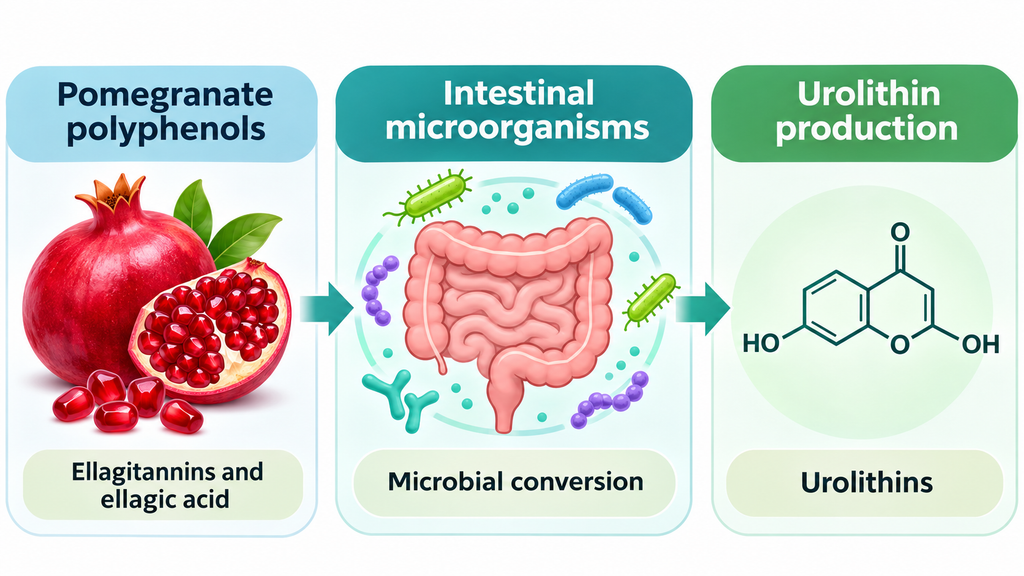
Certain pomegranate polyphenols, particularly ellagitannins, can be transformed during digestion into compounds including ellagic acid.
Specific intestinal microorganisms may further metabolize these compounds into substances called urolithins.
Urolithin A has attracted scientific interest for its potential involvement in mitochondrial function and cellular quality-control processes.
But not everyone produces the same amounts of urolithins.
Why?
Because our gut microbial communities differ.
This illustrates an important principle of nutrition: The nutrients we consume are only part of the story. Digestion, absorption, and microbial metabolism also influence what becomes available to our bodies.
Diagram showing pomegranate polyphenols, intestinal microorganisms, and urolithin production.
Nutritional Benefits of Pomegranate Arils
According to USDA food composition data, approximately one-half cup of raw pomegranate arils, including their seeds, provides:
| Nutrient | Approximate Amount |
|---|---|
| Calories | 72 |
| Carbohydrates | 16.3 g |
| Dietary fiber | 3.5 g |
| Protein | 1.5 g |
| Potassium | 205 mg |
| Vitamin C | 8.9 mg |
| Folate | 33 mcg |
These values illustrate that pomegranates offer more than sweetness and beautiful color. They also contribute fiber and important micronutrients.
Should You Chew the Seeds or Swallow Them Whole?
Here is a practical comparison.
| Method | Nutritional Consideration |
|---|---|
| Chew the entire aril | May help release more seed oil and other nutrients |
| Swallow the hard seed whole | Some seed contents may remain less accessible |
| Eat the juicy portion and discard the seed | Still obtain useful vitamins and polyphenols |
| Drink strained pomegranate juice | Obtain soluble compounds, but substantially less fiber than whole arils |
If you enjoy the crunchy texture and can comfortably chew the seeds, eating the entire aril is a reasonable choice. If the hard seeds are difficult to chew or uncomfortable to digest, you can still enjoy the juicy portion.
There is no need to turn a nutritious food into a source of anxiety.
Five Simple Ways to Include Pomegranates in Your Diet
- Sprinkle fresh arils over oatmeal or another tolerated breakfast grain.
- Add them to a spinach salad with walnuts.
- Combine them with quinoa and fresh herbs for a colorful side dish.
- Enjoy a small serving with plain yogurt, if tolerated.
- Add them to a fruit salad with apples, pears, or berries
Pomegranates can be part of an overall eating pattern that emphasizes a variety of vegetables, fruits, legumes, whole grains, and other minimally processed foods.
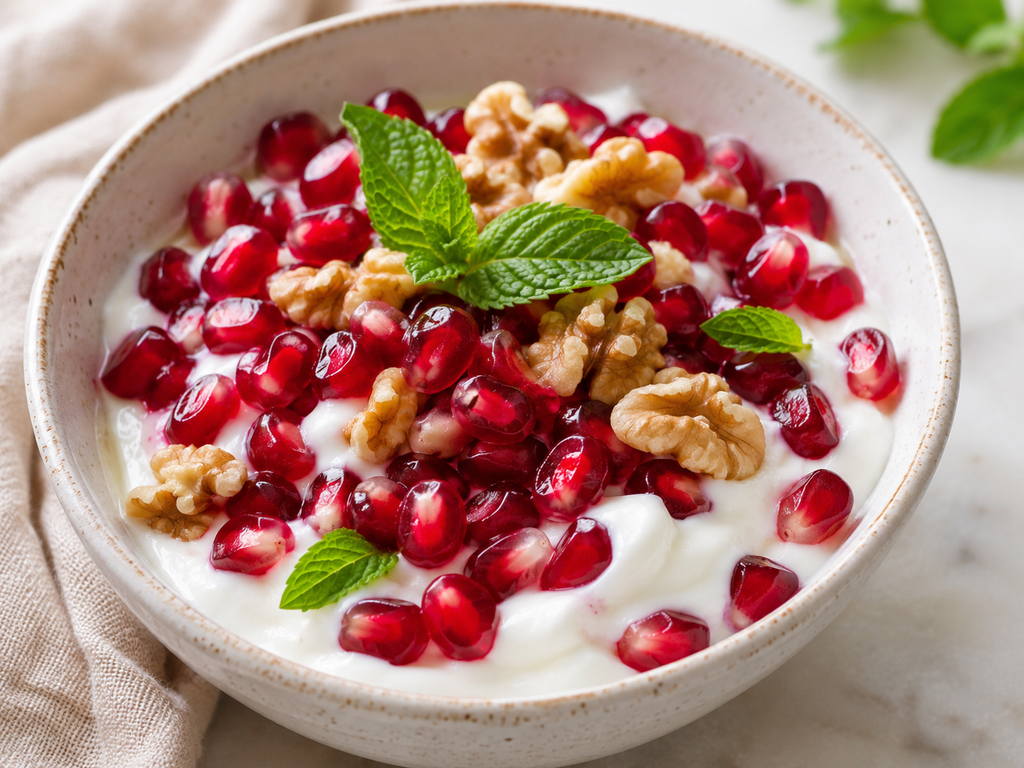
A bowl of pomegranate arils with yogurt, walnuts, and a few fresh mint leaves.
Stephanie Says: Don’t Overlook the Whole Food

Your Seven-Day Whole-Food Detective Challenge
This week, choose one colorful whole food that you haven’t eaten recently. It might be pomegranate, blueberries, beets, purple cabbage, or another favorite.
Notice:
- How you prepared and enjoyed it
- Whether you ate the whole food or a processed version
- How the food fit into your usual meals
- Whether you experienced any digestive discomfort
- Whether it is something you would enjoy eating again
One food does not need to solve every health problem. The goal is to build variety, curiosity, and a sustainable approach to eating.
The Bottom Line
Pomegranate arils contain both a juicy outer covering and an edible hard inner seed. Chewing the seed may make more of its oils and nutrients accessible to digestive enzymes. The fruit also provides polyphenols and fiber, while certain pomegranate compounds can be transformed by gut microorganisms into metabolites being studied for their potential health effects.
Although the science is interesting, more human research is needed to understand the specific health benefits of consuming the hard seeds.
Eat the whole aril if you enjoy it, but remember that eating the juicy portion alone is still a nutritious choice.
Learn More About Your Personal Inflammatory Lifestyle Factors
Would you like to better understand how nutrition, sleep, movement, stress, and other lifestyle factors may influence your health?
Explore my course:
Detecting and Reducing Pro-Inflammatory Lifestyle Factors in 30 Days
I can hand you the flashlight. My course teaches you to be the detective.Visit StephanieLarmour.com to learn more.
Scientific References
- U.S. Department of Agriculture. FoodData Central. Pomegranates, raw. Food composition database. https://fdc.nal.usda.gov/
- Bioaccessibility of pomegranate seed oil using INFOGEST in vitro digestion model. 2025. PubMed: https://pubmed.ncbi.nlm.nih.gov/40790625/
- Crosstalk between dietary pomegranate and gut microbiota: Evidence of health benefits. Critical Reviews in Food Science and Nutrition. 2023. https://pubmed.ncbi.nlm.nih.gov/37335106/
- Prospective Randomized, Double-Blind, Placebo-Controlled Study of a Standardized Oral Pomegranate Extract on the Gut Microbiome and Short-Chain Fatty Acids. 2023. https://pmc.ncbi.nlm.nih.gov/articles/PMC10778484/
- Pomegranate Ellagitannins. NCBI Bookshelf, Herbal Medicine: Biomolecular and Clinical Aspects. https://www.ncbi.nlm.nih.gov/books/NBK92772/
Write Reviews
Leave a Comment
No Comments & Reviews