
2 Oct, 2026 | Stephanie Sanders | No Comments
Lupus and Cutaneous Lupus: When Inflammation Shows Up on the Skin
Stephanie Larmour Sanders, MS, RDN, CDE, FNLP
Clinical Dietitian, Certified Diabetes Educator, and Functional Nutritionist
A rash that keeps returning. A patch of irritated skin that seems worse after being outdoors. Changes in skin color. Hair thinning or hair loss. Perhaps fatigue, joint discomfort, or other symptoms are occurring at the same time. Skin changes can provide important clues—but they do not tell the whole story by themselves.
Lupus is a complex autoimmune disease, and the skin is one of the places it can appear. When lupus specifically affects the skin, it is called cutaneous lupus erythematosus (CLE).
Some people have cutaneous lupus without systemic lupus erythematosus (SLE), while others have skin manifestations as part of systemic disease. This distinction matters because diagnosis, monitoring, and treatment need to be individualized.
In this article, we will look at what cutaneous lupus is, what symptoms may be clues, how it is evaluated, and where nutrition and lifestyle fit into supportive care.
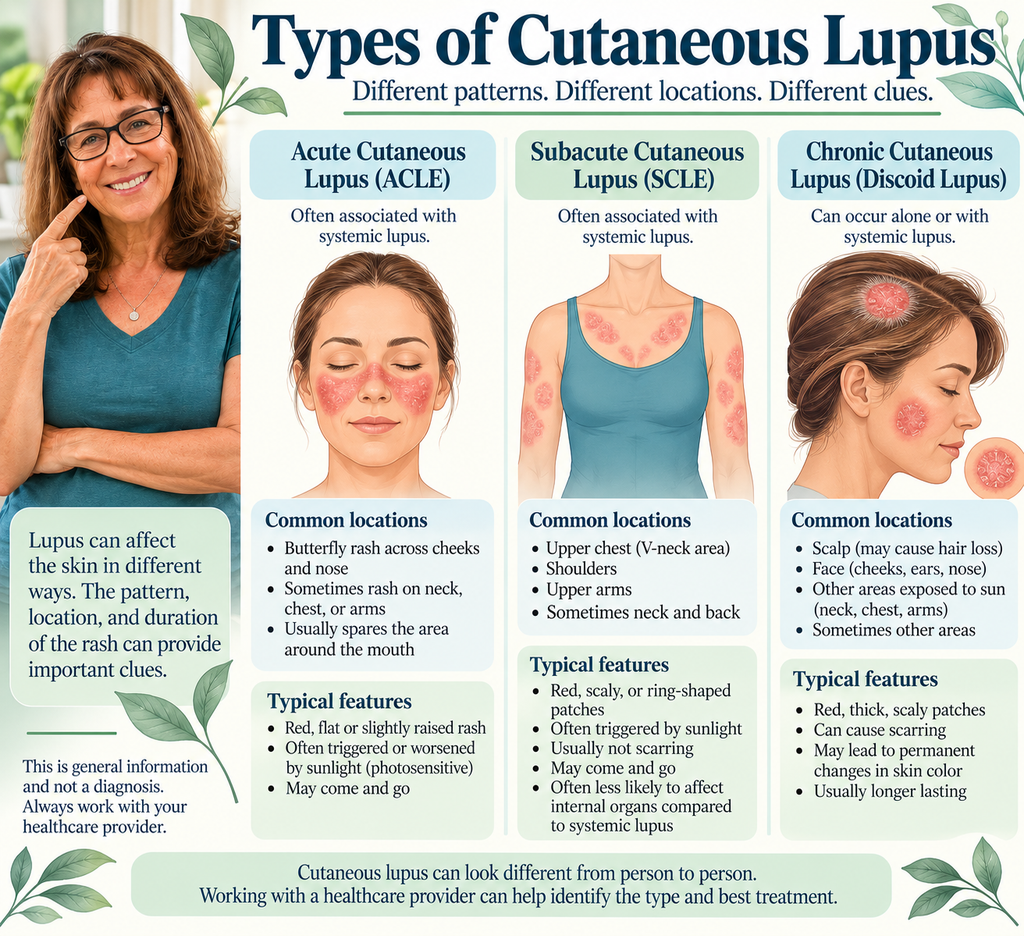
Cutaneous lupus is an autoimmune condition affecting the skin and may occur alone or alongside systemic lupus. Illustration shows areas of the face, scalp, and arms where cutaneous lupus may affect the skin.
What Is Lupus?
Lupus is an autoimmune disease. Normally, the immune system helps recognize and respond to infections and other potential threats.With autoimmune disease, that protective system becomes misdirected and attacks the body’s own tissues.
Systemic lupus erythematosus (SLE) can involve several areas of the body, including the skin, joints, kidneys, blood cells, nervous system, lungs, and heart.
Cutaneous lupus is different because its defining manifestations occur in the skin. Importantly, you can have cutaneous lupus without having systemic lupus. That is one reason a suspicious rash should not be self-diagnosed. A dermatologist—and sometimes a rheumatologist or other specialist—may need to determine what the skin is telling us.
What Is Cutaneous Lupus?
Cutaneous lupus erythematosus describes a spectrum of autoimmune skin disease. It is often grouped into three major categories:
Acute cutaneous lupus
This includes the well-known malar or “butterfly” rash, which may extend across the cheeks and bridge of the nose. Acute cutaneous lupus is often associated with systemic lupus.
Subacute cutaneous lupus
This can produce red, scaly or ring-shaped lesions, frequently on sun-exposed areas such as the arms, upper chest, shoulders, or back.Sun exposure can be an important trigger.
Chronic cutaneous lupus
The most familiar form is discoid lupus erythematosus.
Discoid lesions may be thick, scaly, and disc-shaped. They commonly occur on the face, ears, and scalp.
This form deserves prompt attention because some lesions can cause permanent scarring or changes in skin pigmentation. When the scalp is affected and scarring develops, permanent hair loss can occur.

Diagram comparing acute, subacute, and chronic cutaneous lupus and showing common areas of skin involvement.
What Symptoms May Be Clues?
Cutaneous lupus does not look exactly the same in everyone. Possible clues can include:
- A butterfly-shaped rash across the cheeks and nose
- Red, scaly, or ring-shaped areas
- Thick or disc-shaped patches
- Skin changes that worsen after sunlight or ultraviolet exposure
- Changes in skin pigmentation
- Sores in the mouth or nose
- Hair thinning or hair loss
- Scalp lesions
- Burning, itching, or tenderness in affected areas
The same symptoms can also occur with other dermatologic and medical conditions. That distinction is important.
Symptoms are signals. They deserve attention, but they do not diagnose lupus by themselves. Sunlight Is More Than a Skin-Care Issue
One of the best-established lifestyle considerations in lupus is photoprotection. Ultraviolet (UV) exposure can provoke cutaneous lupus lesions and may contribute to lupus flares in susceptible individuals. For someone with lupus or cutaneous lupus, sun protection may therefore be part of disease management—not simply a cosmetic skin-care recommendation.
Depending on individual medical guidance, protective strategies can include:
- Broad-spectrum sunscreen
- Protective clothing
- Wide-brimmed hats
- Seeking shade
- Reducing direct exposure when UV levels are high
Some people can also be sensitive to certain artificial sources of UV light. This is an area where small, consistent protective habits may make an important difference.
How Is Cutaneous Lupus Diagnosed?
There is no single blood test that can diagnose every form of lupus.
When cutaneous lupus is suspected, evaluation may include:
- A detailed medical history
- Examination of the skin, scalp, hair, and nails
- Questions about sun sensitivity and symptom patterns
- Blood testing
- Review of medications
- A skin biopsy
A dermatologist may remove a small sample of affected skin so it can be examined under a microscope. Additional evaluation may be needed when symptoms suggest possible systemic lupus.
This is another reason not to assume that a recurring rash is “just inflammation”—or, on the other hand, that every unusual rash means lupus.We investigate the clues.

A calm “detective” style diagnostic pathway: Skin changes → Notice patterns → Dermatology evaluation → Possible biopsy/labs → Individualized diagnosis. Use a subtle magnifying-glass motif consistent with Stephanie’s brand. Diagnosing cutaneous lupus requires looking at the whole pattern rather than relying on one symptom or laboratory result.
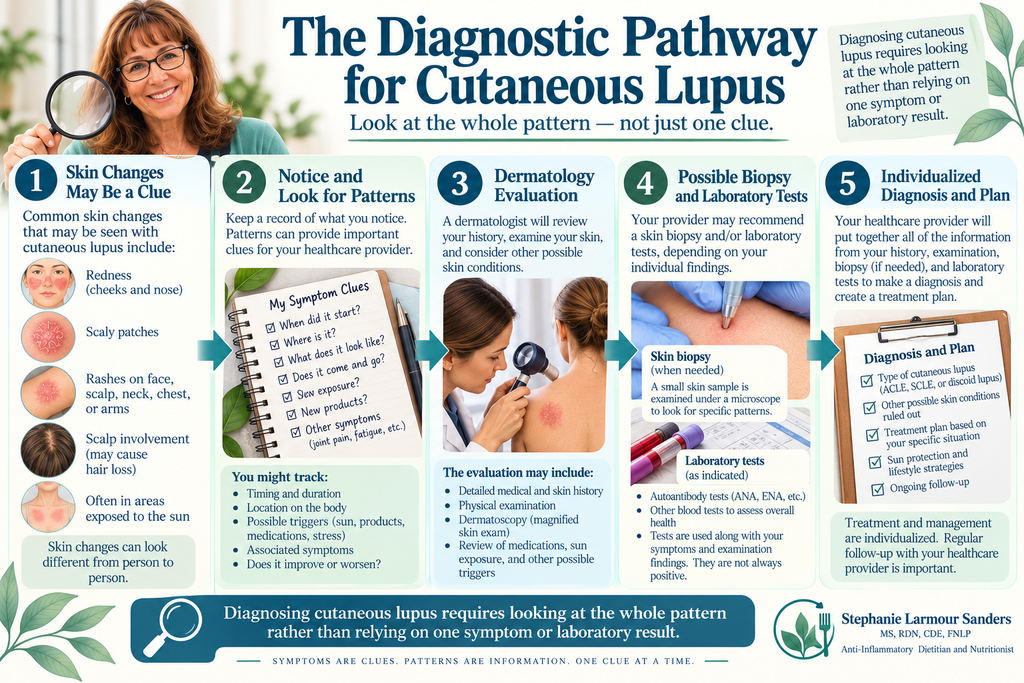
Flowchart showing skin symptoms leading to medical history, examination, laboratory testing, possible skin biopsy, and diagnosis.
Where Does Inflammation Fit?
Lupus is an inflammatory autoimmune disease, but the word inflammation can sometimes become so broad that it loses its meaning. Inflammation is not automatically bad. It is part of the body’s normal immune defense and healing response.
The problem in autoimmune diseases is that immune activity becomes misdirected.
That means our goal should not be to promise that a particular food or supplement can simply “turn off inflammation.”
Instead, medical treatment addresses the disease itself, while nutrition and lifestyle can help support overall health and potentially reduce additional sources of inflammatory burden.
That distinction is especially important in lupus.
Can an Anti-Inflammatory Diet Treat Lupus?
There is currently no single “lupus diet” proven to cure lupus or replace appropriate medical treatment.
However, a healthy, balanced dietary pattern is part of the non-pharmacological care recommended for people with systemic lupus.
Research into specific dietary patterns is still developing.
🔬 Recent research: Reviews of lifestyle interventions in systemic lupus have found that the evidence for diet is considerably more limited than the evidence for areas such as physical activity. Research suggests that Mediterranean-style dietary patterns may be helpful particularly for cardiovascular health, but large intervention trials are still needed.
That evidence boundary matters.
A Mediterranean-style or anti-inflammatory eating pattern can emphasize:
- Colorful vegetables and fruits
- Beans and lentils
- Nuts and seeds
- Whole grains when tolerated
- Fish and other sources of omega-3 fats
- Olive oil and other unsaturated fats
- Adequate protein
- Fiber-rich foods
- Minimally processed foods more often
This is not about creating a restrictive “autoimmune diet.”
It is about supporting nutritional adequacy, metabolic health, cardiovascular health, and overall wellbeing.
Avoid Unnecessary Food Restriction
People living with chronic symptoms can understandably become vulnerable to messages telling them they need to eliminate long lists of foods.
Gluten. Dairy. Nightshades. Grains. Lectins. Soy.
Sometimes an individual food does need to be restricted because of an allergy, celiac disease, intolerance, medication interaction, kidney-related dietary needs, or another medically appropriate reason.
But automatically eliminating multiple food groups because someone has lupus can create its own problems.
Overly restrictive diets can reduce nutrient intake, make eating socially difficult, increase food anxiety, and make an already complicated condition even harder to manage.
The goal is reduction of inflammatory load, not perfection.
What About Supplements?
This is another area where we need to separate promising research from universal recommendations.
Vitamin D
Vitamin D deserves particular attention because people who carefully avoid UV exposure may have less opportunity for skin production of vitamin D.
🔬 Recent research: Vitamin D status and supplementation continue to be studied in systemic lupus. Recent meta-analyses suggest possible benefits in some measures of disease activity, but results across studies and outcomes have not been completely consistent.
Rather than assuming everyone with lupus needs a high-dose supplement, vitamin D status can be evaluated and supplementation individualized with the healthcare team.
Omega-3 fatty acids
Omega-3 fatty acids have also been studied in systemic lupus.
Some research suggests possible benefit, but trials have been relatively small and findings have varied.
Foods such as salmon, sardines, trout, walnuts, chia seeds, and flaxseed can contribute omega-3 fats as part of a balanced eating pattern.
Supplement decisions deserve more caution because dose, medications, medical conditions, and bleeding risk can matter.
Supplements should support an appropriate treatment plan—not become a substitute for one.
Lifestyle Support Beyond Food
Nutrition is only one piece of the picture.
Evidence-informed supportive care for lupus may also include:
Movement
Regular physical activity can support cardiovascular health, muscle, mobility, mood, and quality of life. Research in systemic lupus also supports benefits of appropriately individualized exercise for fatigue and physical functioning.
Movement should be adapted to disease activity, medical conditions, physical ability, and energy levels.
Movement is support, not punishment.
Smoking cessation
Smoking is particularly important to address. Beyond its many other health effects, smoking may interfere with the effectiveness of some medications used for lupus.
Stress and psychological support
Stress does not mean someone caused their autoimmune disease.
But living with an unpredictable chronic illness can itself be stressful.
Psychological support, realistic stress-management practices, social connection, and adequate recovery can be valuable parts of whole-person care.
Sleep and recovery
Sleep deserves attention because it influences energy, appetite regulation, mood, metabolic health, and the ability to cope with chronic illness.
Sleep problems can also have many causes and persistent fatigue should not automatically be attributed to lupus.
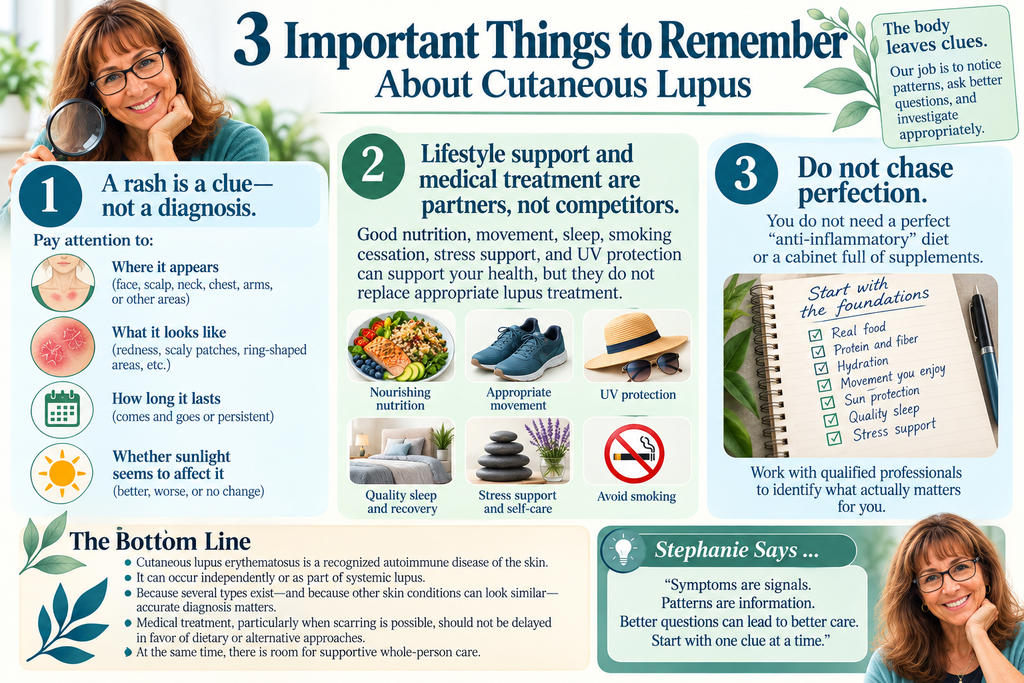
Image suggestion: A positive “supporting the whole person” graphic showing a colorful Mediterranean-style meal, sun-protective hat/sunscreen, walking shoes, sleep, stress support, and medical care arranged around a central person.
Caption: Supportive lupus care may include nutrition, appropriate movement, photoprotection, recovery, smoking cessation, and ongoing medical treatment.
Alt text: Illustration showing balanced meals, sun protection, movement, sleep, stress support, and medical care as complementary health strategies.
When Should You Seek Medical Care?
Talk with a healthcare professional if you develop a new or persistent rash—especially one that:
- Repeatedly appears after sun exposure
- Occurs across the cheeks and nose
- Becomes thick, scaly, or scarred
- Causes areas of hair loss
- Produces persistent changes in skin color
- Occurs with unexplained joint pain, fever, fatigue, mouth sores, swelling, chest symptoms, or other systemic symptoms
People already diagnosed with cutaneous lupus should also report significant changes or new symptoms to their healthcare team.
Prompt diagnosis and treatment can be especially important when lesions have the potential to scar or cause permanent hair loss.
CTA: Have you noticed that symptoms change with sunlight, stress, sleep, food patterns, or other parts of daily life? Tracking patterns can give you useful information to discuss with your healthcare team.
Stephanie Says
References
- American Academy of Dermatology. Lupus and your skin: Overview; Signs and symptoms; Diagnosis and treatment.
- Parodis I, et al. EULAR recommendations for the non-pharmacological management of systemic lupus erythematosus and systemic sclerosis. Annals of the Rheumatic Diseases. 2024;83:720–729.
- Fanouriakis A, et al. EULAR recommendations for the management of systemic lupus erythematosus: 2023 update. Annals of the Rheumatic Diseases. 2024;83:15–29.
- Xiong W, et al. Treatment of Cutaneous Lupus Erythematosus: An Evidence-Based Review. Dermatology. 2026;242(1):86–120.
- Pocovi-Gerardino G, et al. Beneficial effect of Mediterranean diet on disease activity and cardiovascular risk in systemic lupus erythematosus patients. Rheumatology. 2021.
- Ramessar N, Borad A, Schlesinger N. The effect of omega-3 fatty acid supplementation in systemic lupus erythematosus patients: A systematic review. Lupus. 2022;31(3):287–296.
- Effects of vitamin D supplementation on patients with systemic lupus erythematosus: A systematic review and meta-analysis. Autoimmunity Reviews. 2026.
Meta description: Learn how cutaneous lupus affects the skin, how it differs from systemic lupus, and how nutrition, UV protection, and lifestyle can support care.
Excerpt: Cutaneous lupus is an autoimmune disease affecting the skin and may occur alone or with systemic lupus. Learn the important clues, how it is evaluated, and where anti-inflammatory nutrition and lifestyle fit into supportive care.
Secondary categories: Autoimmune Health; Nutrition
Tags: lupus, cutaneous lupus, systemic lupus, autoimmune disease, inflammation, anti-inflammatory nutrition, lupus rash, skin health, photoprotection
Featured image: Image 1 — Lupus and skin overview
Suggested
Write Reviews
Leave a Comment
No Comments & Reviews