
7 Jul, 2026 | Stephanie Sanders | No Comments
Daily Parkinson’s Support Plan Including Hydration, Meals, Gut Support, Movement, Sleep Routine, and Symptom Tracking
Stephanie Larmour Sanders MSRDN, CDE, FNLP
Dedicated to my Friend on the Serving Team at Rocky Peak Church
Hydration Matters
Hydration can affect constipation, blood pressure, energy, medication tolerance, thinking clarity, swallowing comfort, and muscle function.
Hydration Options
“`- Water: The simplest foundation.
- Herbal tea: Warm fluids may be soothing and easier to drink.
- Mineral water: May support hydration and minerals.
- Brothy soups: Helpful for fluids, minerals, and appetite.
- Smoothies: Useful when chewing, appetite, or protein intake is difficult.
- Water-rich foods: Cucumber, melon, oranges, soups, and cooked vegetables.
For people with swallowing difficulties, hydration should be discussed with the medical team or speech-language pathologist.
Watch for Swallowing and Weight Changes
Parkinson’s disease may eventually affect chewing and swallowing.
If these symptoms appear, a physician and speech-language pathologist should be involved.
Signs That Need Attention
“`- Coughing during meals
- Choking episodes
- Food sticking in the throat
- Taking much longer to eat
- Avoiding certain textures
- Unintentional weight loss
- Recurrent pneumonia
- Drooling or difficulty managing saliva
Nutrition can be adjusted with softer foods, moist foods, soups, smoothies, protein-rich purees, smaller meals, or texture modification if recommended.
The goal is safety, nourishment, and dignity.
Exercise and Movement
Exercise is one of the most important lifestyle tools for Parkinson’s disease.
A supportive movement plan may include walking, swimming, cycling, stretching, strength training, balance exercises, tai chi, dance, boxing-style Parkinson’s classes, or physical therapy-guided exercise.
Movement Can Support
“`- Balance: Helps reduce fall risk when practiced safely.
- Strength: Supports independence and daily function.
- Mood: Movement can support emotional well-being.
- Digestion: Gentle movement may help bowel motility.
- Blood sugar: Muscles use glucose during activity.
- Circulation: Movement supports blood flow.
- Confidence: Safe movement can help people feel more connected to their body.
Movement is not punishment.
Movement is support.
Sleep Support
Sleep problems are common in Parkinson’s disease.
Poor sleep can worsen fatigue, mood, inflammation, blood sugar balance, and daily function.
Sleep Support Steps
“`- Consistent bedtime routine: Helps cue the nervous system for rest.
- Morning sunlight: Supports circadian rhythm.
- Limit late caffeine: Especially if sleep is already disrupted.
- Reduce evening screens: Helps the brain wind down.
- Relaxation breathing: Supports the nervous system.
- Medication review: Sleep symptoms should be discussed with the physician.
- Safe sleep environment: Especially if there is movement during sleep.
Sleep is not wasted time.
Sleep is repair time.
Stress and Nervous System Support
A Parkinson’s diagnosis can bring fear, grief, frustration, and uncertainty.
Stress does not cause everything, but chronic stress can add inflammatory load and make symptoms feel harder to manage.
Nervous System Support Options
“`- Prayer or spiritual support: Helps many people feel grounded.
- Breathing exercises: Can calm the nervous system.
- Counseling: Offers emotional support after diagnosis.
- Support groups: Help people feel less alone.
- Time outdoors: Nature can support calm and regulation.
- Music: Can support mood, movement, and connection.
- Caregiver support: The caregiver needs care too.
- Asking for help earlier: Support is not weakness.
The person diagnosed needs support.
The caregiver needs support too.
Reduce Environmental Inflammatory Load
A practical anti-inflammatory lifestyle plan may also include reducing unnecessary environmental stressors.
Environmental Support Steps
“`- Avoid pesticide use at home when possible.
- Wash produce well.
- Choose organic when practical for higher-pesticide produce.
- Filter drinking water if needed.
- Improve indoor air quality.
- Avoid smoking and secondhand smoke.
- Reduce synthetic fragrances if sensitive.
- Use less-toxic cleaning products.
This is not about fear.
It is about lowering the body’s burden where possible.
A Simple Daily Parkinson’s Support Plan
Morning
“`- Take medication as directed.
- Hydrate early.
- Get morning light.
- Eat a balanced breakfast.
- Move gently.
- Notice digestion, stiffness, energy, and mood.
Midday
“`- Build a colorful meal.
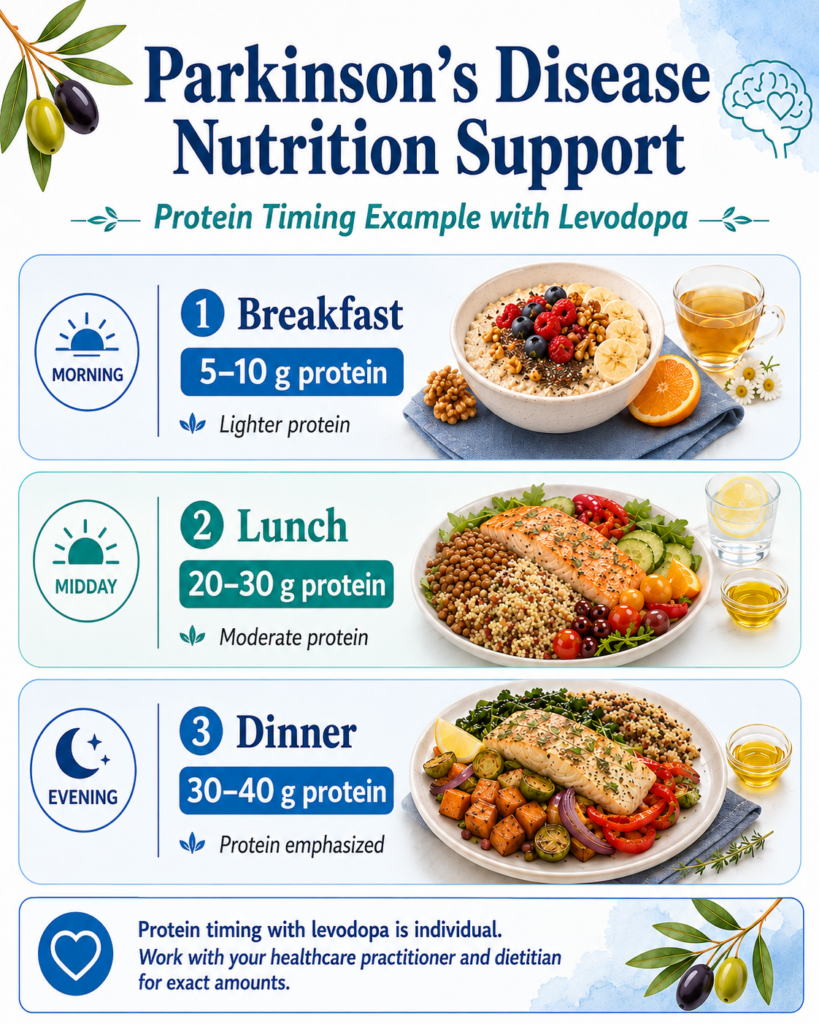
- Include protein, timed appropriately if using levodopa.
- Add fiber-rich foods.
- Walk or stretch.
- Drink fluids.
- Track symptoms if needed.
Evening
“`- Eat a nourishing dinner.
- Support bowel regularity.
- Reduce screen stimulation.
- Prepare for sleep.
- Practice relaxation.
- Note any symptom patterns.
Weekly
“`- Plan meals.
- Include strength and balance work.
- Review constipation patterns.
- Track weight changes.
- Check medication timing.
- Ask for support.
- Follow up with the healthcare team.
What I Would Prioritize First
If someone is newly diagnosed, I would not ask them to change everything at once.
I would begin with these five priorities:
Five Priorities After Diagnosis
“`- Medication and meal timing: Especially if taking levodopa.
- Constipation support: Because gut function affects comfort and quality of life.
- Protein and muscle protection: Because strength matters for independence.
- Movement plan: Especially balance, strength, stretching, and safe aerobic activity.
- Anti-inflammatory plate: Because the body needs nutrients every day.
Final Thoughts
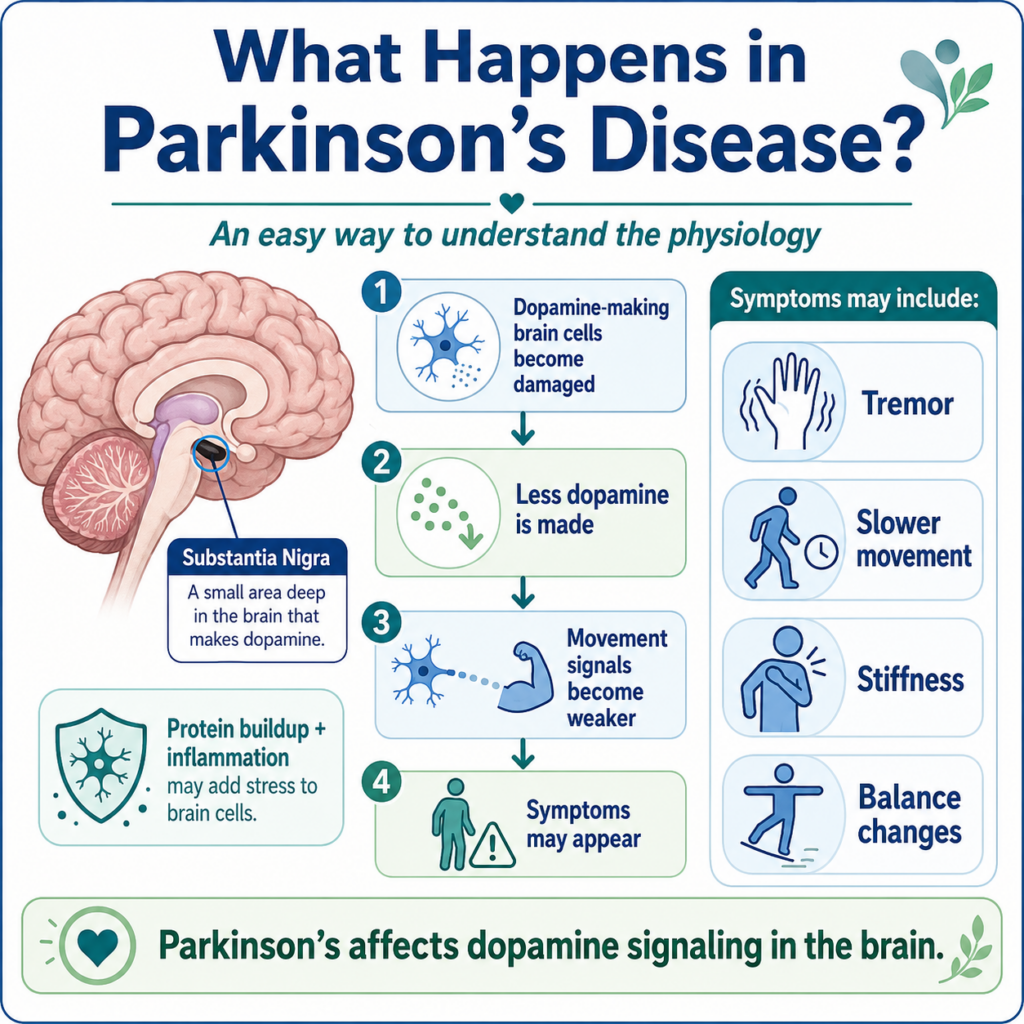
Parkinson’s disease is not just a diagnosis.
It is a whole-person condition that can affect movement, digestion, sleep, mood, energy, swallowing, independence, and family life.
Nutrition and lifestyle cannot replace medical treatment.
But they can support the person living with Parkinson’s disease.
A Strong Support Plan Includes
“`- Neurology care
- Medication management
- Mediterranean / MIND-style nutrition
- Protein timing when needed
- Fiber and hydration
- Constipation support
- Exercise and physical therapy
- Sleep support
- Stress reduction
- Environmental toxin reduction
- Caregiver support
- Symptom tracking
The goal is not perfection.
The goal is support.
One clue at a time.
One meal at a time.
One walk at a time.
One question at a time.
Symptoms are not random. They are signals.
And with the right support, we can begin to follow the clues.
Gentle Next Step
“`If this article helped you think differently about Parkinson’s disease, nutrition, and inflammation, I invite you to begin noticing the clues your body may already be giving you.
My course, Detecting and Reducing Pro-Inflammatory Lifestyle Factors in 30 Days, was created to help people begin connecting the dots between symptoms, food, stress, sleep, environment, and daily habits.
I can hand you the flashlight.
The course teaches you how to become the detective.
Write Reviews
Leave a Comment
No Comments & Reviews