
17 Jul, 2026 | Stephanie Sanders | No Comments
Diabetes and Inflammation: What Is Your Body Trying to Tell You?
Stephanie Larmour Sanders MS, RDN, CDE, FNLP
Clinical Dietitian, Certified Diabetes Educator, and Functional Nutritionist
Anti-Inflammatory Dietitian and Nutritionist
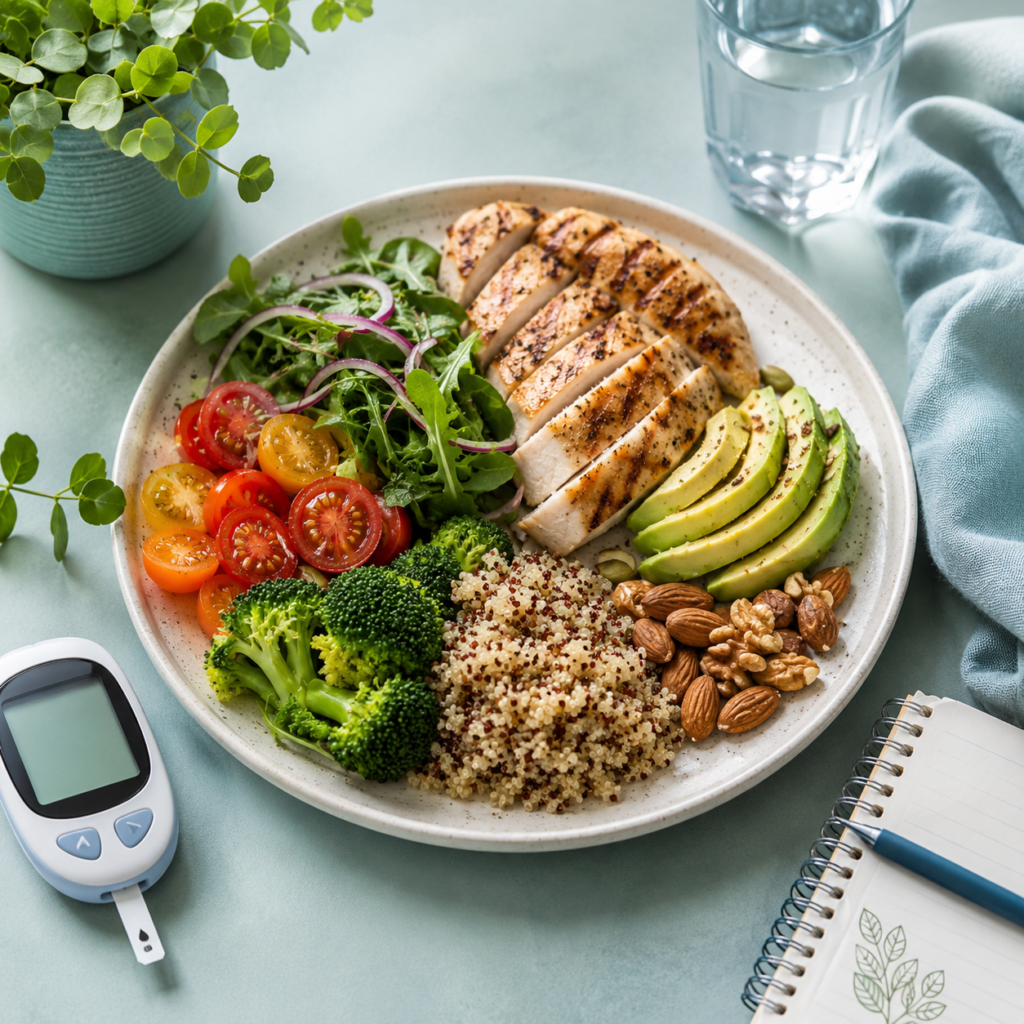
Introduction: Blood Sugar Is a Clue
When people hear the word diabetes, they often think only about sugar. But diabetes is not only about sugar.
It is also about how the body uses insulin, how cells respond to insulin, how blood sugar moves into the cells, and how long-term inflammatory stress may affect the body over time.
The American Diabetes Association explains that in type 2 diabetes, the body does not use insulin properly, a process known as insulin resistance. Over time, the body may need more insulin to help manage blood glucose levels. (American Diabetes Association)
The Center for Disease Control (CDC) also explains that when the body is exposed to too much blood sugar over time, insulin resistance can develop. (CDC)
From my perspective as a Clinical Dietitian, Certified Diabetes Educator, and Functional Nutritionist, this is where we need to become detectives.
Because blood sugar changes do not usually happen in isolation.
They may be connected to:
These symptoms can feel random.
But often, they are clues.
And clues deserve attention
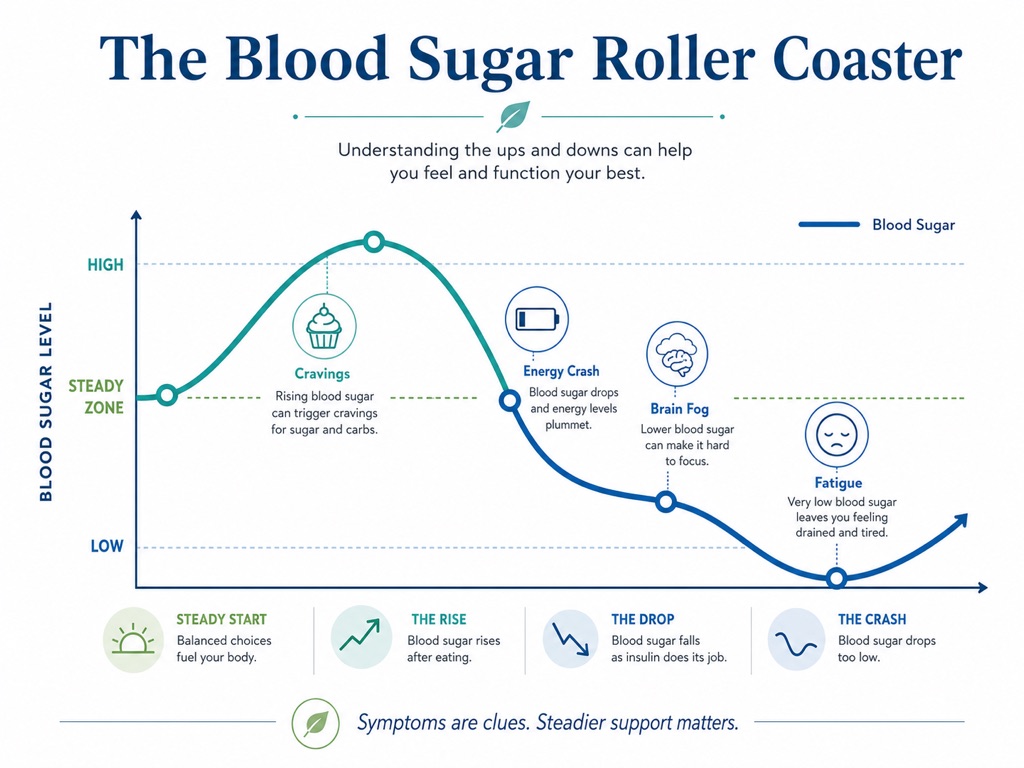
What Is Insulin Resistance?
Insulin is a hormone that helps move glucose, or sugar, from the bloodstream into the cells where it can be used for energy.
When the cells do not respond well to insulin, the body has to work harder to move glucose out of the blood. That is called insulin resistance.
The National Institute of Diabetes and Digestive and Kidney Diseases explains that insulin resistance means the body does not respond to insulin the way it should, and this can lead to higher blood glucose levels. (NIDDK)
At first, the body may produce more insulin to compensate.
But over time, blood sugar may rise.
This is one reason type 2 diabetes can develop slowly, often over years.
That question opens the door to a bigger conversation.
Food matters.
Sleep matters.
Stress matters.
Movement matters.
Muscle matters.
Inflammation matters.
How Inflammation Connects to Diabetes
Inflammation is part of the body’s normal healing process. If you cut your finger or fight an infection, inflammation helps protect and repair the body.But chronic low-grade inflammation is different. That type of inflammation can continue quietly in the background and may contribute to metabolic stress.
Research has linked chronic low-grade inflammation with insulin resistance and type 2 diabetes risk. A review in Type 2 Diabetes Mellitus, Oxidative Stress and Inflammation notes that low-grade inflammation is associated with the risk of developing type 2 diabetes and may contribute to insulin resistance. (PMC)
Another review from the National Institutes of Health describes the connection between obesity, inflammation, and insulin resistance, noting that pro-inflammatory cytokines may interfere with insulin signaling in tissues such as muscle, liver, and fat tissue. (PMC)
This does not mean inflammation is the only cause of diabetes. It means inflammation may be one important part of the larger picture.
This is why I believe we need to look at the whole person.
Not just the number.
Not just the diagnosis.
The whole person.
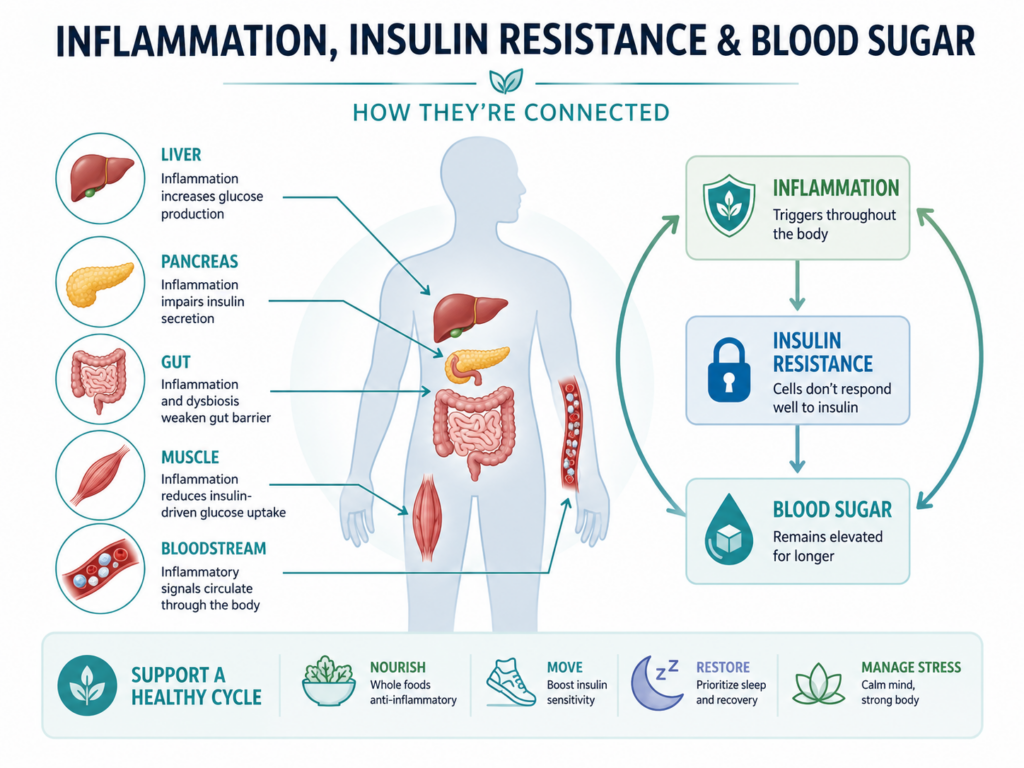
Why Blood Sugar Swings Can Feel So Loud
Blood sugar changes can affect how a person feels during the day.
Some people notice they feel tired, foggy, hungry, shaky, irritable, or anxious when blood sugar is not steady.
That does not mean every symptom is caused by blood sugar.
But it does mean blood sugar can be an important clue.
A health detective does not blame the body.
A health detective asks better questions.
What did I eat?
Did I include protein?
Did I include fiber?
Did I sleep well?
Was I under stress?
Did I skip a meal?
Did I eat mostly refined carbohydrates?
Did I move my body today?
These questions help us begin connecting the dots.
Food Patterns That May Increase Inflammatory Load
Food does not need to be perfect.
But food patterns matter.
Some food patterns may add more stress to blood sugar and inflammatory load, especially when they happen repeatedly over time.
This is not about shame.
This is about awareness.
Because the goal is not to eat as little as possible.
The goal is to nourish the body in a way that supports steadier blood sugar, better energy, and lower inflammatory load.
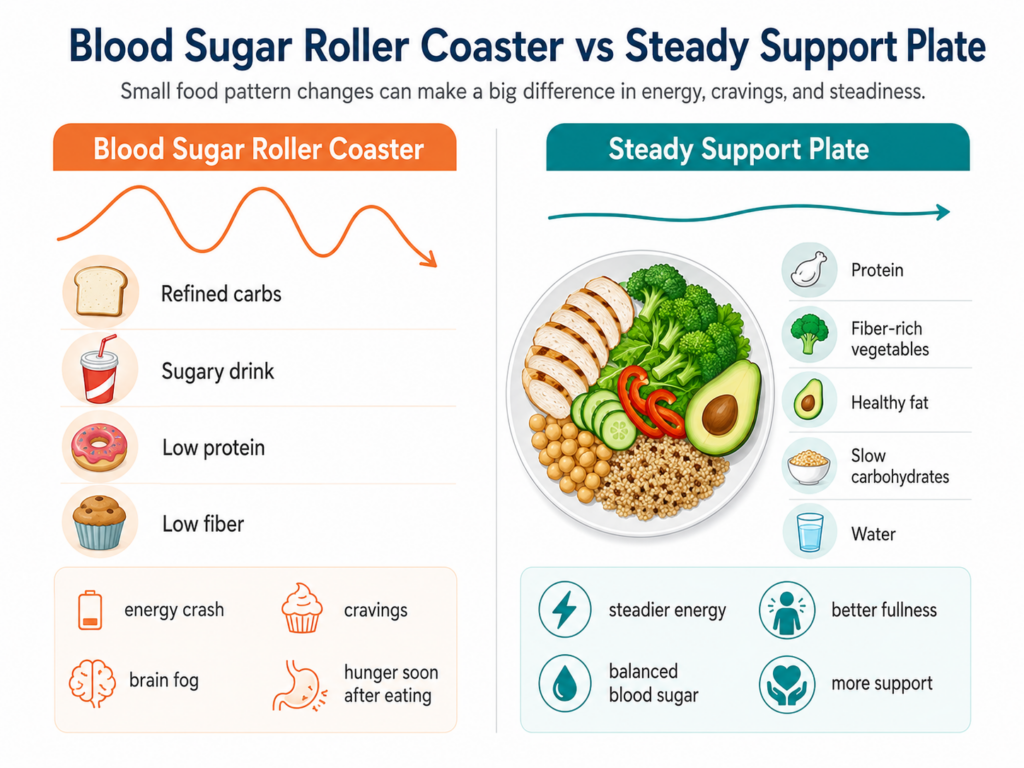
Side-by-side comparison: blood sugar roller coaster meal vs steady support meal.
How to Build a Blood Sugar-Supportive Plate
A blood sugar-supportive plate does not have to be complicated.
Start with the basics. Protein helps with fullness and muscle support. Fiber helps slow digestion and supports gut health. Healthy fats help with satisfaction. Colorful plants provide nutrients and phytonutrients. Slow carbohydrates can provide energy when paired with protein, fiber, and fat.
The goal is not restriction but support
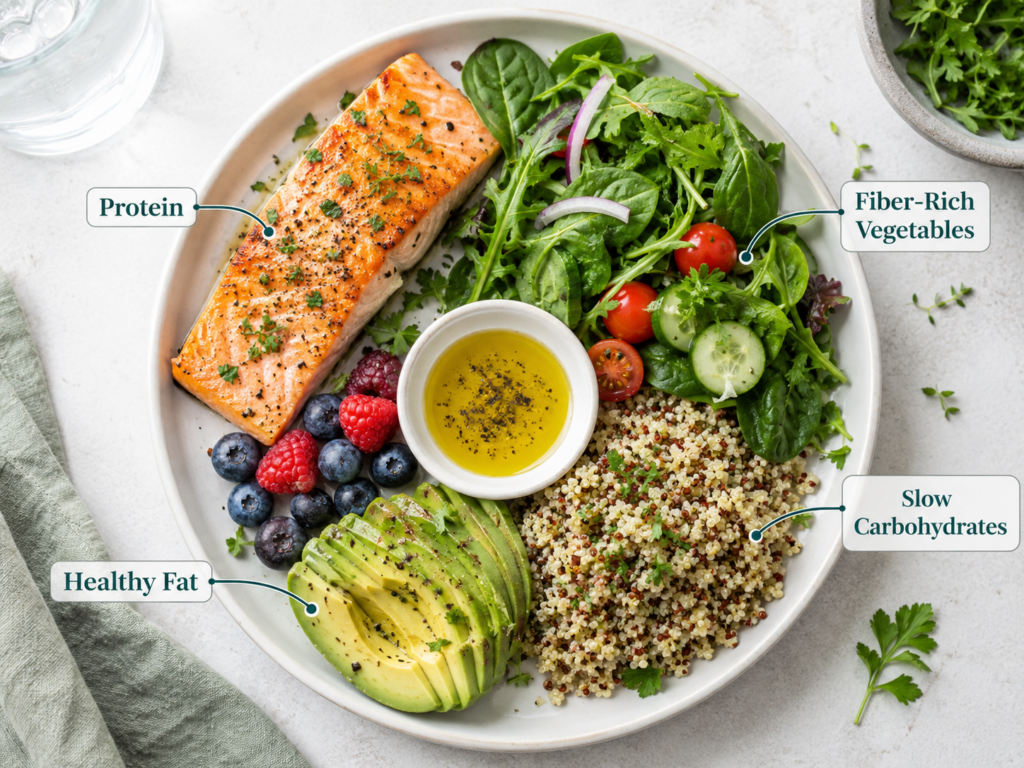
Blood Sugar-Supportive Plate
Lifestyle Factors That Affect Blood Sugar and Inflammation
Blood sugar is not only about food.
-The body is connected.
-Poor sleep can affect cravings and hunger.
-Chronic stress can affect blood sugar regulation.
-Low muscle mass can affect glucose storage and metabolism.
-Inactivity can make insulin resistance worse.
-Hydration and meal timing can also influence how people feel.
-This is why I teach people to look at patterns.
-A single meal matters less than the pattern.
-A single night of poor sleep matters less than the pattern.
-A stressful day matters less than chronic stress without recovery.
Health detectives look for patterns.
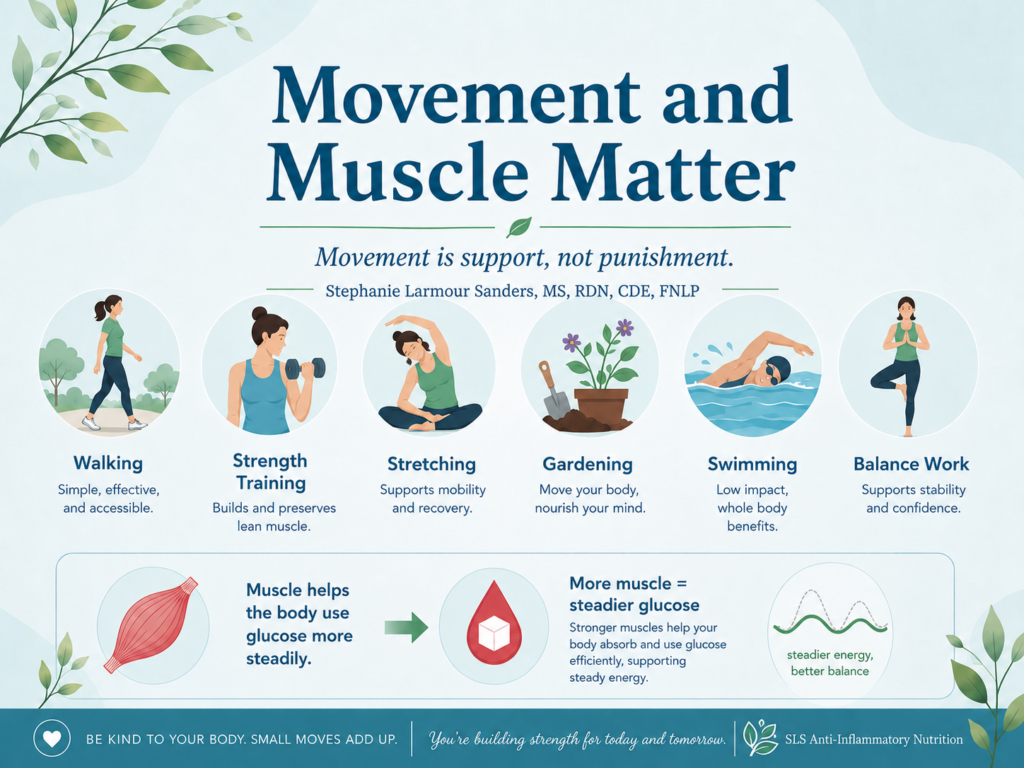
The Role of Muscle in Blood Sugar Support
Muscle is one of the most important places where the body stores and uses glucose. This is why movement and strength training matter. For many adults, especially as we age, preserving muscle becomes an important part of metabolic health. This does not mean someone has to go to a gym for hours. It can begin with walking, gentle strength exercises, swimming, resistance bands, gardening, or working with a qualified professional.
The goal is to keep the body active, supported, and capable. Movement is not punishment. Movement is support.
What I Want You to Remember
If you are living with blood sugar concerns, prediabetes, diabetes, fatigue, cravings, brain fog, or weight changes, I want you to know this:
-You are not broken.
-Your body may be leaving clues.
-Blood sugar is one of those clues.
-Inflammation may be part of the story.
-Food may be part of the story.
-Sleep, stress, movement, muscle, gut health, and environment may also be part of the story.
-The goal is not to blame the body.
-The goal is to understand what the body may be trying to tell you.
My Course
This is exactly why I created my course:
Detecting and Reducing Pro-Inflammatory Lifestyle Factors in 30 Days
Inside the course, I help you begin connecting the dots between symptoms, food, blood sugar, stress, sleep, movement, digestion, environmental exposures, and inflammatory load.
My goal is not simply to give you more information.
My goal is to help you help yourself by learning how to recognize patterns, ask better questions, and understand what your body may be trying to communicate.
I can hand you the flashlight.
The course teaches you how to become the detective.
You can visit StephanieLarmour.com and click Course to learn more.
Final Reflection
1.Blood sugar is not just a number.
2. It is information.
3. Inflammation is not just a word.
4. It is part of the body’s communication system.
5. Symptoms are not random.
6.They are signals.
And when we learn how to listen, we can begin supporting the body with more compassion, more clarity, and better direction.
References
1.American Diabetes Association. Type 2 diabetes and insulin resistance. (American Diabetes Association)
2.Centers for Disease Control and Prevention. About insulin resistance and type 2 diabetes. (CDC)
3.National Institute of Diabetes and Digestive and Kidney Diseases. Insulin resistance and prediabetes. (NIDDK)
4.Oguntibeju OO. Type 2 diabetes mellitus, oxidative stress and inflammation. (PMC)
5.de Luca C, Olefsky JM. Inflammation and insulin resistance. (PMC)
Medical Note
This article is for educational purposes only and is not a substitute for medical care. If you have diabetes, prediabetes, symptoms of high or low blood sugar, or are taking medication, please work with your healthcare provider before making changes to your medication, diet, or lifestyle plan.
Write Reviews
Leave a Comment
No Comments & Reviews