23 Nov, 2026 | Stephanie Sanders | No Comments
Thanksgiving and Autoimmunity: Traditional Holiday Recipes, Two Ways
By Stephanie Larmour Sanders, MS, RDN, CDE, FNLP
Anti-Inflammatory Dietitian and Nutritionist
Thanksgiving is a time for family, gratitude, and familiar foods. Roasted turkey, mashed potatoes, colorful vegetables, cranberry sauce, and seasonal desserts are traditions many of us look forward to. But what happens when someone at the table has an autoimmune condition or is following a special elimination diet?
Do we need to prepare an entirely different Thanksgiving dinner? Not necessarily. I believe we can preserve the foods and traditions we enjoy while making thoughtful adjustments to meet individual nutritional needs.
Inspired by the whole-food philosophy associated with Amy Myers, MD, and The Autoimmune Solution Cookbook, I have developed two approaches to Thanksgiving side dishes.
These are original recipes inspired by autoimmune-focused nutrition principles, not recipes reproduced from her cookbook. Autoimmune Protocol(AIP)
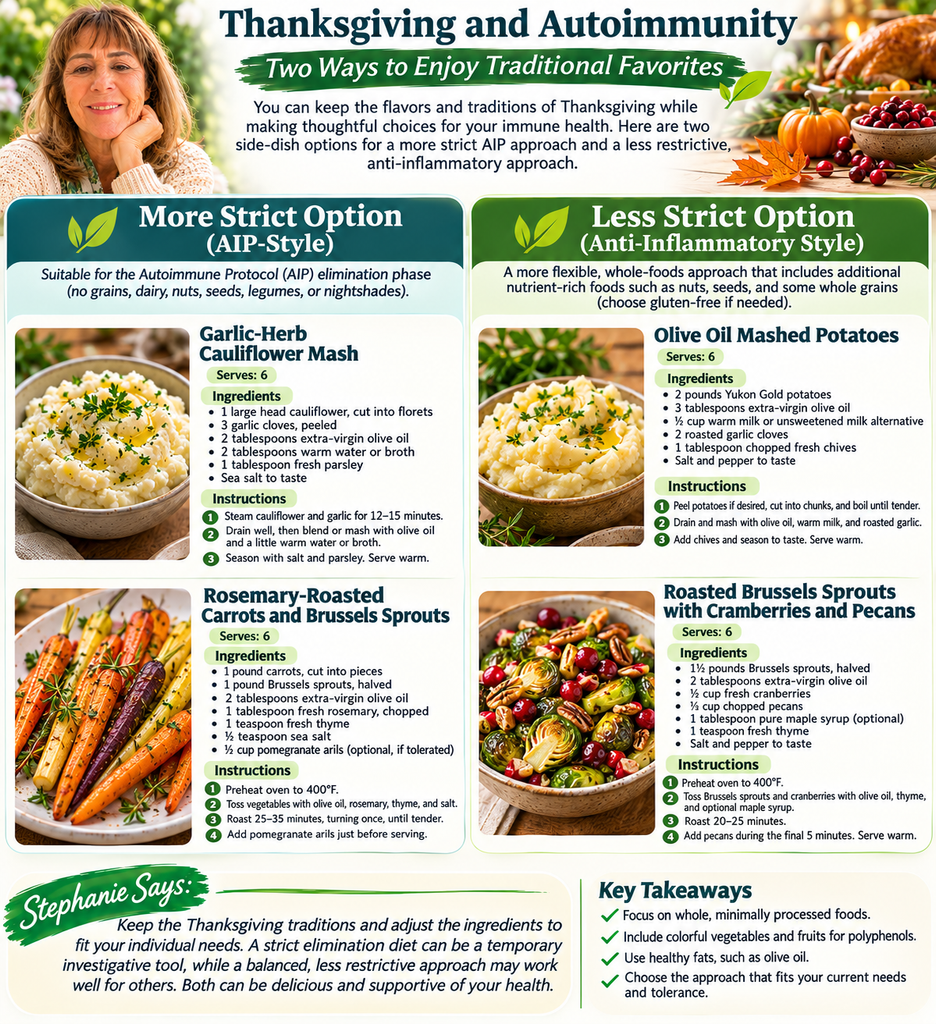
Two Approaches to the Thanksgiving Table
| Stricter AIP Elimination | Less Restrictive Anti-Inflammatory |
|---|---|
| Temporarily excludes grains, dairy, eggs, legumes, nuts, seeds, and nightshades. | Emphasizes whole foods, colorful vegetables, adequate protein, and healthy fats. |
| Uses ingredients such as cauliflower, carrots, Brussels sprouts, olive oil, and fresh herbs. | Can include potatoes, quinoa, nuts, seeds, and other tolerated foods. |
| Intended as a temporary elimination and reintroduction approach. | Offers greater dietary flexibility and variety. |
| Best undertaken with professional guidance to maintain nutritional adequacy. | Can be individualized without automatically excluding major food groups. |
An autoimmune diagnosis alone does not mean everyone needs an AIP diet. Research on AIP is still limited, and responses vary by condition and individual.
Side Dish 1: Two Ways to Make Holiday Mashed Potatoes
| Stricter AIP: Garlic Cauliflower Mash | Less Restrictive: Olive Oil Mashed Potatoes |
|---|---|
| Ingredients | Ingredients |
| 1 large cauliflower, cut into florets | 2 pounds Yukon Gold potatoes |
| 3 garlic cloves | 3 tablespoons extra-virgin olive oil |
| 2 tablespoons extra-virgin olive oil | ½ cup warm milk or tolerated milk alternative |
| 2 tablespoons warm water or suitable broth, as needed | 2 roasted garlic cloves |
| 1 tablespoon fresh parsley | 1 tablespoon fresh chives |
| Sea salt to taste | Salt and pepper to taste |
| Preparation | Preparation |
| Steam cauliflower and garlic for 12–15 minutes until tender. Drain thoroughly. Blend with olive oil and enough liquid to reach a creamy consistency. Add parsley and salt. | Boil potatoes until tender, approximately 15–20 minutes depending on size. Drain and mash with olive oil, warm milk, and roasted garlic. Add chives and seasoning. |
| Nutritional benefits | Nutritional benefits |
| Cauliflower provides vitamin C, fiber, and glucosinolates. | Potatoes provide potassium, vitamin C, and carbohydrates for energy. |
Stephanie Says: White potatoes belong to the nightshade family and are excluded during strict AIP elimination. However, they do not automatically cause inflammation in everyone with an autoimmune condition.
Side Dish 2: Two Ways to Prepare Roasted Holiday Vegetables
| Stricter AIP: Rosemary-Roasted Carrots and Brussels Sprouts | Less Restrictive: Brussels Sprouts with Cranberries and Pecans |
|---|---|
| Ingredients | Ingredients |
| 1 pound carrots, sliced | 1½ pounds Brussels sprouts, halved |
| 1 pound Brussels sprouts, halved | ½ cup fresh cranberries |
| 2 tablespoons olive oil | ⅓ cup chopped pecans |
| 1 tablespoon fresh rosemary | 2 tablespoons olive oil |
| 1 teaspoon fresh thyme | 1 teaspoon fresh thyme |
| Sea salt | 1 tablespoon maple syrup, optional |
| ½ cup pomegranate arils, optional if tolerated | Salt and pepper |
| Preparation | Preparation |
| Toss vegetables with olive oil, herbs, and salt. Roast at 400°F for 25–35 minutes, turning once. Add pomegranate after cooking if desired. | Toss Brussels sprouts and cranberries with olive oil, thyme, and optional maple syrup. Roast at 400°F for 20–25 minutes. Add pecans during the final 5 minutes. |
| Nutritional benefits | Nutritional benefits |
| Carrots provide carotenoids. Brussels sprouts contain fiber and glucosinolates. Pomegranate contributes ellagitannins. | Cranberries provide anthocyanins and proanthocyanidins. Pecans contribute unsaturated fats and plant polyphenols. |
Stephanie Says: Both versions provide colorful plant foods. The less restrictive version includes nuts, which are excluded during strict AIP elimination but may be a nutritious choice for people who tolerate them.
Side Dish 3: Cranberry Relish, Two Ways
| Stricter AIP: Cranberry-Apple Relish | Less Restrictive: Cranberry-Orange Relish with Walnuts |
|---|---|
| Ingredients | Ingredients |
| 12 ounces fresh cranberries | 12 ounces fresh cranberries |
| 2 peeled, diced apples | 1 diced apple |
| ½ cup water | ½ cup fresh orange juice |
| ½ teaspoon ground cinnamon, if permitted by the specific elimination plan | 1 teaspoon orange zest |
| 1–2 tablespoons maple syrup, optional | ⅓ cup chopped walnuts |
| 1–2 tablespoons maple syrup, optional | |
| Preparation | Preparation |
| Simmer cranberries, apples, and water for approximately 10–15 minutes until softened. Add cinnamon if permitted and sweeten lightly if needed. | Simmer cranberries, apple, and orange juice for approximately 10 minutes. Stir in orange zest and optional maple syrup. Cool slightly, then fold in walnuts. |
| Nutritional benefits | Nutritional benefits |
| Cranberries provide polyphenols, and apples provide fiber and flavonoids. | Cranberries, apples, and oranges provide a variety of plant compounds. Walnuts add unsaturated fats. |
Note: Some AIP elimination plans restrict particular spices. Check the requirements of the specific protocol being followed. Maple syrup remains an added sugar in either version.
Side Dish 4: Two Ways to Prepare Holiday Stuffing
| Stricter AIP: Herbed Sweet Potato and Mushroom Stuffing | Less Restrictive: Quinoa, Apple, and Herb Stuffing |
|---|---|
| Ingredients | Ingredients |
| 2 medium sweet potatoes, diced | 1 cup dry quinoa, rinsed |
| 8 ounces mushrooms, chopped | 2 cups water or suitable broth |
| 1 small onion, diced | 1 diced apple |
| 2 celery stalks, diced | 2 celery stalks, diced |
| 2 tablespoons olive oil | 1 small onion, diced |
| 1 teaspoon fresh sage | ⅓ cup chopped pecans |
| 1 teaspoon fresh thyme | 2 tablespoons olive oil |
| Salt to taste | Fresh sage, thyme, salt, and pepper |
| Preparation | Preparation |
| Roast sweet potatoes at 400°F for 20–25 minutes. Sauté onion, celery, and mushrooms in olive oil until tender. Combine with sweet potatoes and herbs. | Cook quinoa in water or broth according to package directions. Sauté onion, celery, and apple in olive oil. Combine with quinoa, herbs, and pecans. |
| Nutritional benefits | Nutritional benefits |
| Sweet potatoes provide beta-carotene and fiber. Mushrooms contribute B vitamins and other nutrients. | Quinoa contributes protein, fiber, and minerals. Apples and pecans add additional plant compounds. |
Both dishes can be served alongside turkey as alternatives to conventional bread stuffing.
For strict AIP, verify that broth and seasoning ingredients comply with the elimination plan.
A Traditional Thanksgiving Turkey for Both Approaches
A simple herb-roasted turkey can serve as the centerpiece for either menu.
Rub the turkey with olive oil, garlic, rosemary, thyme, sage, and salt. Roast according to the bird’s weight and package guidance, using a food thermometer to confirm the thickest portions reach 165°F.
Avoid stuffing the cavity with uncooked stuffing unless you also verify the stuffing reaches 165°F.
Turkey provides high-quality protein, including amino acids needed for normal tissue maintenance and metabolic functions.
Why Add Polyphenol-Rich Foods?
Polyphenols are naturally occurring plant compounds that are being studied for their antioxidant and cell-signaling activities.
Holiday foods can provide several different types:
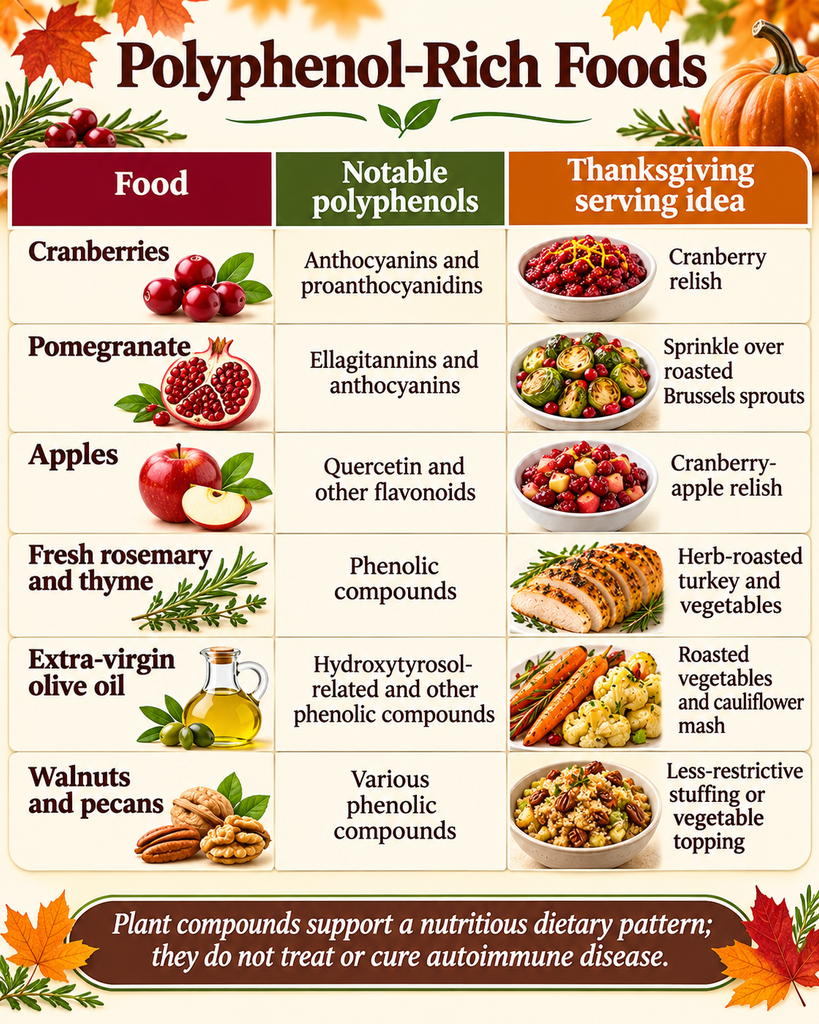
| Food | Notable plant compounds |
|---|---|
| Cranberries | Anthocyanins and proanthocyanidins |
| Pomegranate | Ellagitannins and anthocyanins |
| Apples | Quercetin and other flavonoids |
| Fresh rosemary and thyme | Phenolic compounds |
| Extra-virgin olive oil | Hydroxytyrosol-related and other phenolic compounds |
| Walnuts and pecans | Various phenolic compounds |
Carotenoids in carrots and sweet potatoes and glucosinolates in Brussels sprouts are beneficial plant compounds, but they are not polyphenols. These foods can contribute to a nutritious dietary pattern. They are not treatments or cures for autoimmune diseases.
Stephanie Says: Thanksgiving Does Not Have to Be All or Nothing
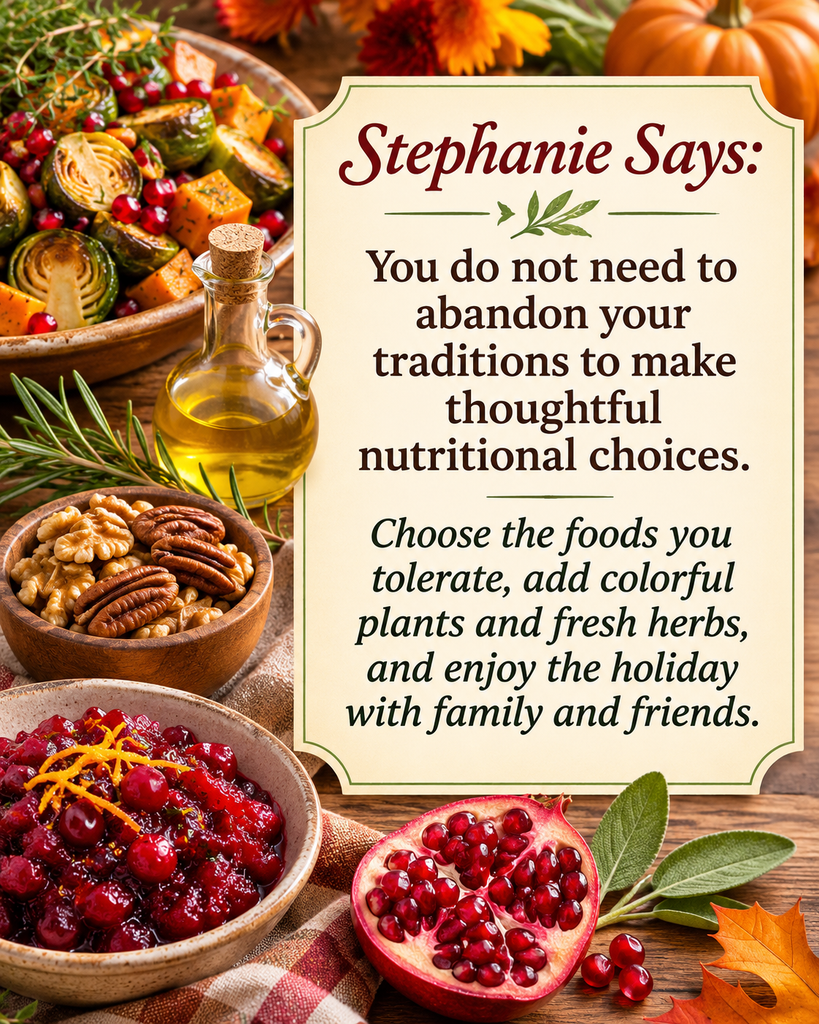
When I teach about anti-inflammatory nutrition, I encourage people to look at the entire eating pattern rather than focusing on one food. Thanksgiving is a wonderful opportunity to practice this.
Perhaps you are following a temporary elimination plan and need to avoid certain ingredients. Or perhaps you simply want to add more colorful vegetables, fresh herbs, and nutritious foods to your holiday meal.
Both situations deserve thoughtful consideration. I don’t want people to become afraid of Thanksgiving dinner. I want them to understand their individual needs and recognize opportunities to nourish themselves.
A bowl of cranberry relish can contribute polyphenols.
A colorful vegetable dish can provide fiber and plant compounds.
Turkey provides protein.
And sharing a meal with family and friends is also part of a meaningful holiday.
You do not need to abandon your traditions to make thoughtful nutritional choices.
The goal is to learn what works for your body, make changes when appropriate, and enjoy the foods you tolerate.
I can hand you the flashlight. My course teaches you to become the detective of your own health.
Learn more: Detecting and Reducing Pro-Inflammatory Lifestyle Factors in 30 Days at StephanieLarmour.com.
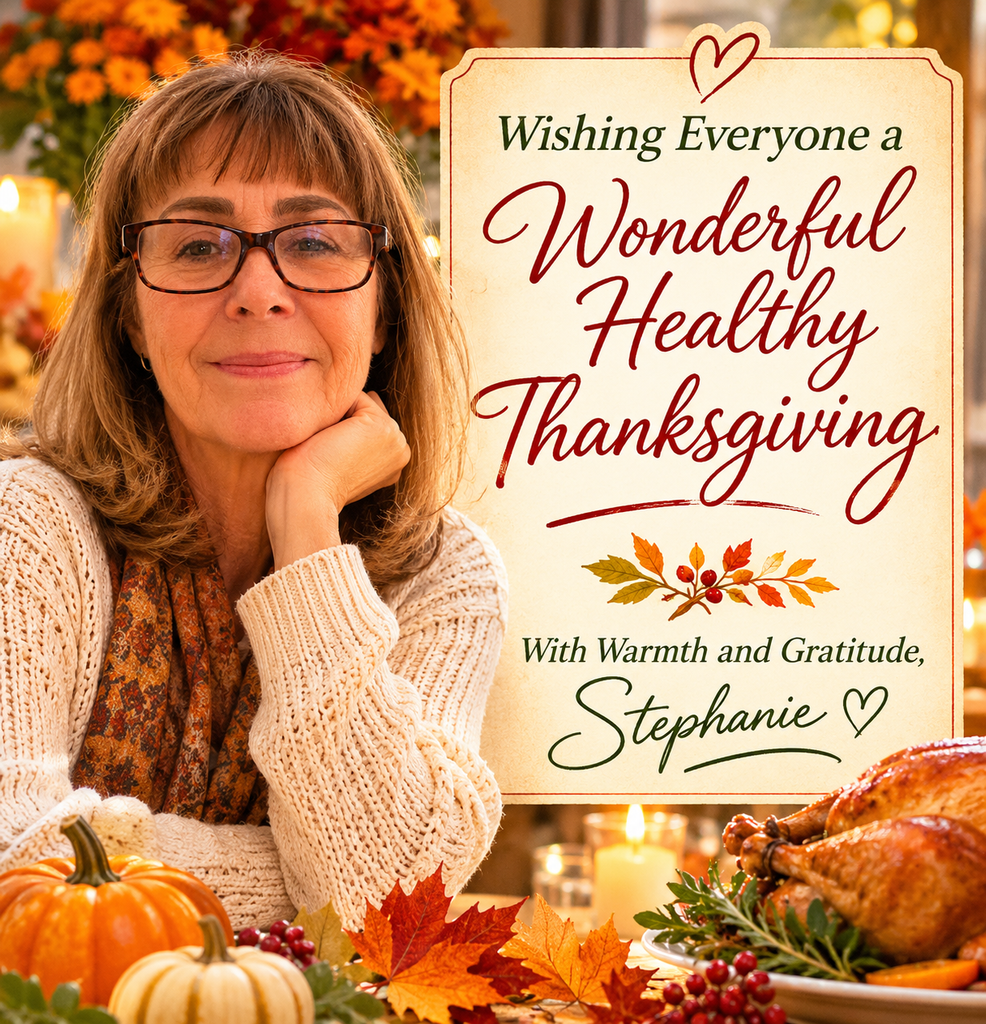
I want to wish everyone a Wonderful Healthy Thanksgiving
Educational disclaimer: This article is for general nutrition education. The AIP elimination phase is restrictive, and evidence of benefit for autoimmune conditions remains limited. It is not a replacement for medical care. Individuals considering elimination diets should work with qualified healthcare professionals to maintain nutritional adequacy and plan appropriate food reintroductions.
Write Reviews
Leave a Comment
No Comments & Reviews