4 Jul, 2026 | Stephanie Sanders | No Comments
Parkinson’s Disease and Inflammation: Could the Body Be Leaving Clues Early?
By Stephanie Larmour Sanders MS, RDN, CDE, FNLP
Anti-Inflammatory Dietitian and Nutritionist
Parkinson’s disease is often thought of as a movement disorder.
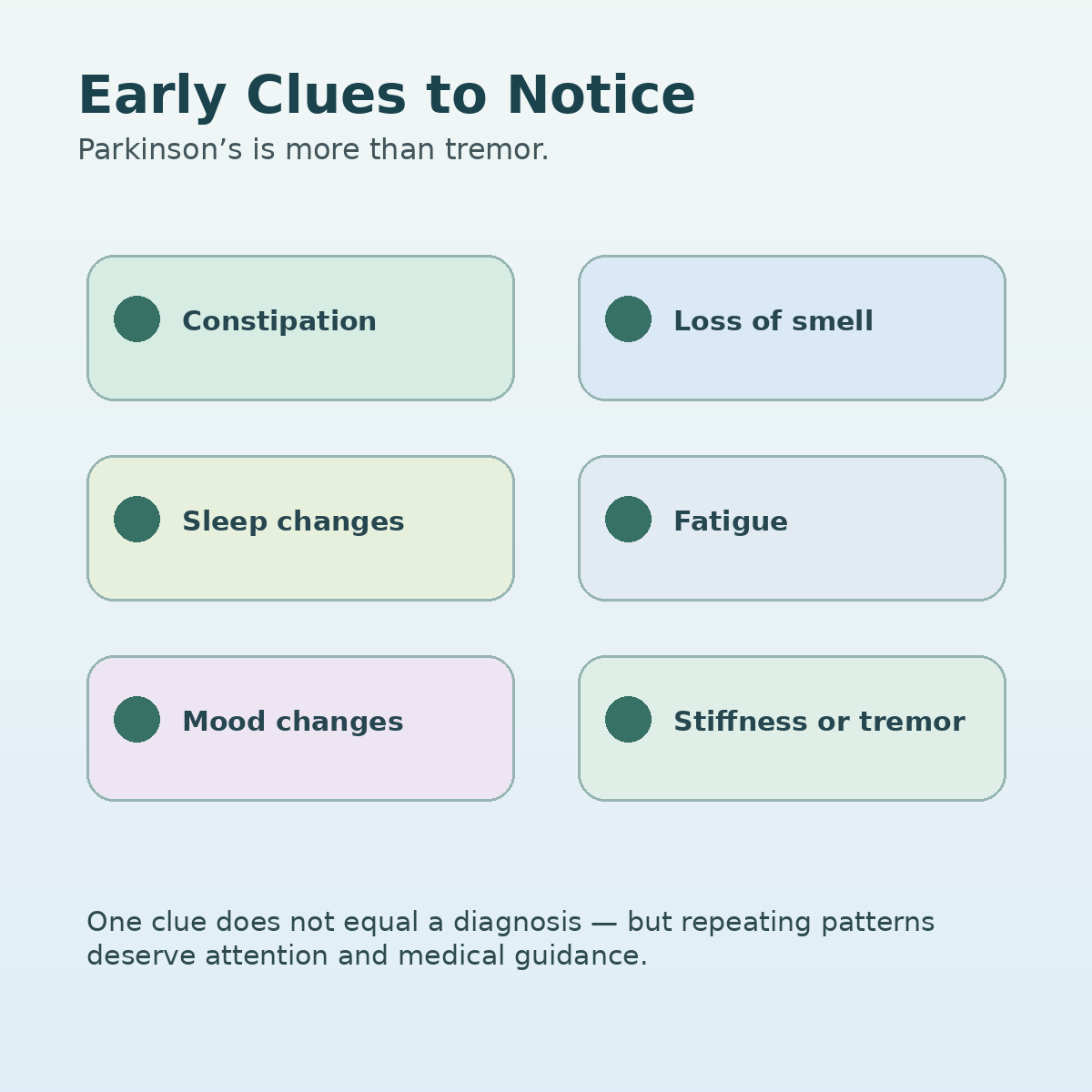
Most people think first of tremors, stiffness, slower movement, smaller steps, or balance changes. But Parkinson’s disease is more than a tremor. It is a progressive nervous system disorder that affects movement and may also involve many non-movement symptoms, including constipation, sleep changes, fatigue, mood changes, loss of smell, and changes in thinking or memory.
Symptoms are not random. They are signals.
With Parkinson’s disease, those signals may come from the brain, gut, immune system, nervous system, mitochondria, and inflammatory pathways of the body.
The goal of this article is not to say that inflammation is the only cause of Parkinson’s disease. Parkinson’s is complex and requires medical evaluation and care. But inflammation may be one part of the larger picture, and understanding that connection can help us pay closer attention to the clues the body may be giving.
Parkinson’s Is More Than a Tremor
A tremor may be the symptom that gets noticed first, but Parkinson’s can affect much more than movement.
Many people may also experience non-movement symptoms. Some of these symptoms can appear years before diagnosis.
Body Clues That May Deserve Attention
“`- Constipation: May be one of the earlier non-movement symptoms and should not be dismissed.
- Loss of smell: A change in smell can sometimes appear before movement symptoms are recognized.
- Sleep disruption: Acting out dreams, restless sleep, or daytime sleepiness may be important clues.
- Fatigue: Ongoing low energy may reflect more than “just getting older.”
- Mood changes: Anxiety, depression, or emotional changes can be part of the whole-body picture.
- Balance changes: Feeling less steady or more cautious while walking may be a sign to investigate.
- Stiffness or tremor: These may be more visible clues, but they are not the only ones.
One symptom does not mean a person has Parkinson’s disease. But repeating symptoms and patterns deserve attention.
Is Inflammation a Possible Precursor?
Researchers are studying the role of inflammation in Parkinson’s disease, especially something called neuroinflammation.
Neuroinflammation means inflammation involving the brain and nervous system.
This does not mean inflammation alone causes Parkinson’s disease. Parkinson’s may involve many factors, including genetics, environmental exposures, mitochondrial dysfunction, oxidative stress, alpha-synuclein changes, gut-brain communication, and aging.
But inflammation may be one part of the process.
What may be adding inflammatory stress to the body over time?
Possible Contributors to Inflammatory Load
“`- Poor diet quality: A diet low in nutrients may reduce the body’s resilience.
- Ultra-processed foods: These may add inflammatory burden when eaten frequently.
- Blood sugar swings: Repeated highs and lows can stress the body.
- Poor sleep: Sleep is when the brain and body repair.
- Chronic stress: Long-term stress can affect immune and inflammatory pathways.
- Constipation: Sluggish elimination may affect gut comfort and inflammatory balance.
- Gut imbalance: The gut and brain are constantly communicating.
- Environmental toxin exposure: Pesticides, smoke, and pollutants may add burden.
- Low antioxidant intake: The brain needs antioxidant protection.
- Lack of movement: Movement supports circulation, balance, digestion, and brain health.
- Chronic immune activation: Ongoing immune stress may increase inflammatory signaling.
- Nutrient insufficiencies: The nervous system needs steady nutritional support.
These factors do not mean a person will develop Parkinson’s disease. But they may increase the body’s total inflammatory load.
The Gut-Brain Connection
One of the most important areas to notice in Parkinson’s disease is the gut.
Constipation can appear years before classic movement symptoms. This is important because the gut is not separate from the brain.
The gut affects many important functions.
Why Gut Health Matters
“`- Nutrient absorption: The body needs nutrients to support the brain, muscles, and immune system.
- Immune activity: Much of the immune system is connected to the gut.
- Inflammatory signaling: Gut imbalance may contribute to inflammatory messages in the body.
- Detoxification pathways: Regular elimination helps the body remove waste.
- Medication absorption: Constipation and slowed digestion may affect how medications work.
- Comfort and appetite: Digestive symptoms can reduce food intake and quality of life.
- Microbiome balance: Gut bacteria help influence immune and metabolic health.
When constipation is ongoing, it should not be brushed aside.
Constipation is not just an inconvenience. It may be a clue.
That does not mean constipation always points to Parkinson’s disease. Many things can cause constipation. But when constipation is persistent, worsening, or appears with other symptoms such as loss of smell, sleep changes, stiffness, tremor, or balance changes, it is worth discussing with a healthcare provider.
Oxidative Stress and Brain Health
The brain uses a tremendous amount of energy.
Because of this, it is vulnerable to oxidative stress. Oxidative stress happens when the body has more free radical activity than antioxidant defense. Over time, oxidative stress may contribute to cellular damage and inflammation.
This is one reason researchers are interested in food patterns that provide antioxidants and anti-inflammatory compounds.
Foods That Support Antioxidant Defense
“`- Blueberries and blackberries: Rich in colorful plant compounds.
- Leafy greens: Provide folate, magnesium, vitamin K, and phytonutrients.
- Broccoli and cruciferous vegetables: Support detoxification and cellular defense pathways.
- Beans and lentils: Provide fiber, minerals, and plant-based protein.
- Nuts and seeds: Provide healthy fats, minerals, and antioxidant compounds.
- Extra virgin olive oil: A key part of Mediterranean-style eating.
- Herbs and spices: Small amounts can provide powerful phytonutrients.
- Fatty fish: Provides omega-3 fats that support inflammatory balance.
Food is not a cure.
But food can support the body.
Environmental Clues
Environmental exposure is another area researchers continue to study.
This is not meant to create fear.
It is meant to create awareness.
Ways to Reduce Environmental Inflammatory Load
“`- Wash produce well: Especially fruits and vegetables eaten with the skin.
- Choose organic when practical: Especially for higher-pesticide produce.
- Avoid unnecessary pesticide use at home: Lawn and garden exposures can add up.
- Filter water if needed: Especially if water quality is a concern.
- Improve indoor air quality: Open windows when safe, change filters, and reduce pollutants.
- Avoid smoking and secondhand smoke: Smoke increases inflammatory burden.
- Reduce synthetic fragrances if sensitive: Fragrances can be irritating for some people.
- Use safer cleaning products: Lowering chemical exposure may reduce total body burden.
The goal is not perfection.
The goal is reducing burden where possible.
The Detective Framework
When we look at Parkinson’s disease through the detective framework, we do not blame the body.
We listen to the body.
A detective asks better questions.
Questions to Ask
“`- What symptoms are showing up?
- When did they begin?
- What has changed?
- What is getting worse?
- What helps?
- What repeats?
- What needs medical attention?
Parkinson’s disease requires medical diagnosis and care. But awareness matters.
The body may leave clues before symptoms become loud.
The goal is to notice those clues early enough to ask better questions.
Final Thoughts
Parkinson’s disease is complex.
Inflammation may be part of the picture, but it is not the whole picture. Parkinson’s may involve brain changes, gut-brain communication, oxidative stress, mitochondrial function, immune activity, environmental exposures, and genetic factors.
The most important message is this:
Symptoms Deserve Attention
“`- Constipation deserves attention.
- Sleep changes deserve attention.
- Loss of smell deserves attention.
- Fatigue deserves attention.
- Mood changes deserve attention.
- Movement changes deserve attention.
Symptoms are not random.
They are signals.
And when we learn to follow the clues with compassion, we can better support the whole person.
Gentle Next Step
“`If this article helped you think differently about symptoms, I invite you to begin noticing the clues your body may already be giving you.
My course, Detecting and Reducing Pro-Inflammatory Lifestyle Factors in 30 Days, was created to help people begin connecting the dots between symptoms, food, stress, sleep, environment, and daily habits.
I can hand you the flashlight.
The course teaches you how to become the detective.
Write Reviews
Leave a Comment
No Comments & Reviews