23 Oct, 2026 | Stephanie Sanders | No Comments
Ultra-Processed Foods and Artificial Food Colors: What Does the Science Say, and Why Are Policies Changing?
Understanding Nutrition, Food Safety, Government Regulation, and the Choices We Make Every Day
By Stephanie Larmour Sanders, MS, RDN, CDE, FNLP
Anti-Inflammatory Dietitian and Nutritionist
Updated October 15, 2026
Have you noticed more conversations about artificial food dyes, ultra-processed foods, and the ingredients in our food supply? You may have heard that certain food colors are being removed, that schools are changing nutrition standards, or that government agencies are examining the safety of ingredients. But what does this really mean for our health? Are all processed foods harmful? Do artificial food colors cause inflammation? And why has food policy become such an important political discussion?
After nearly four decades working in clinical nutrition and diabetes education, I believe these questions deserve thoughtful investigation rather than fear.
Let’s become the detectives and examine the evidence.
1. What Are Ultra-Processed Foods?
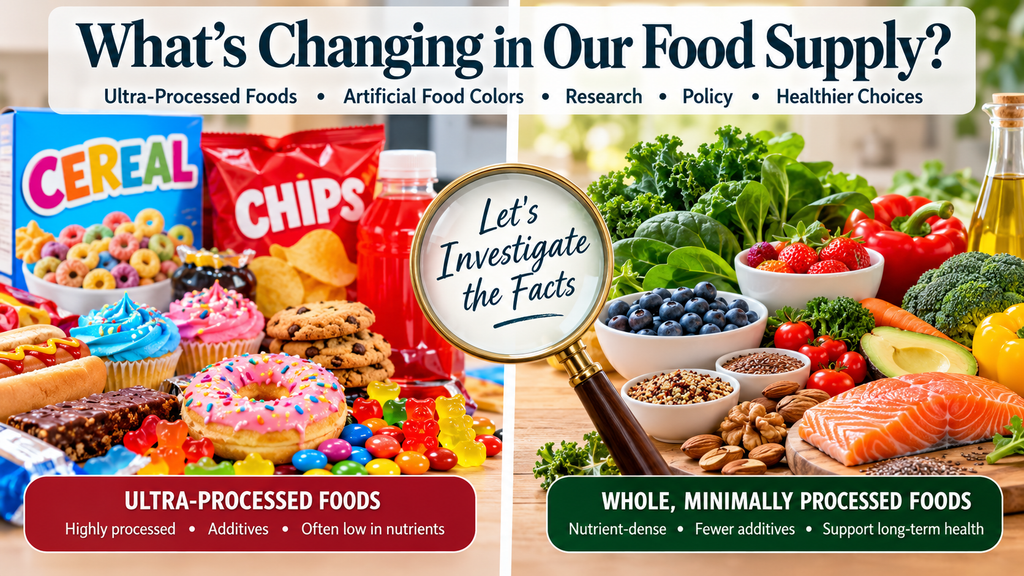
Not all food processing is the same. Washing vegetables, freezing berries, pasteurizing milk, and canning beans are examples of processing that can make foods safer, more convenient, or more accessible. The term ultra-processed food (UPF) is commonly associated with the NOVA classification system.
It generally refers to industrial formulations containing ingredients or additives not typically used in home cooking, often designed for convenience, flavor, texture, appearance, or shelf life.
Examples may include:
- Sugar-sweetened beverages
- Certain packaged snack foods
- Candy and confectionery
- Many commercially produced desserts
- Some ready-to-eat meals
- Certain breakfast cereals
- Some processed meat products
However, the category is nutritionally diverse. A whole-grain packaged bread and a sugar-sweetened soft drink may both meet a processing-based definition, but they do not necessarily have the same nutritional characteristics.
This distinction is important.
We need to investigate both how a food is manufactured and what nutrients it provides.
2. What Does Research Say About Ultra-Processed Foods and Health?
A Major 2024 Scientific Review
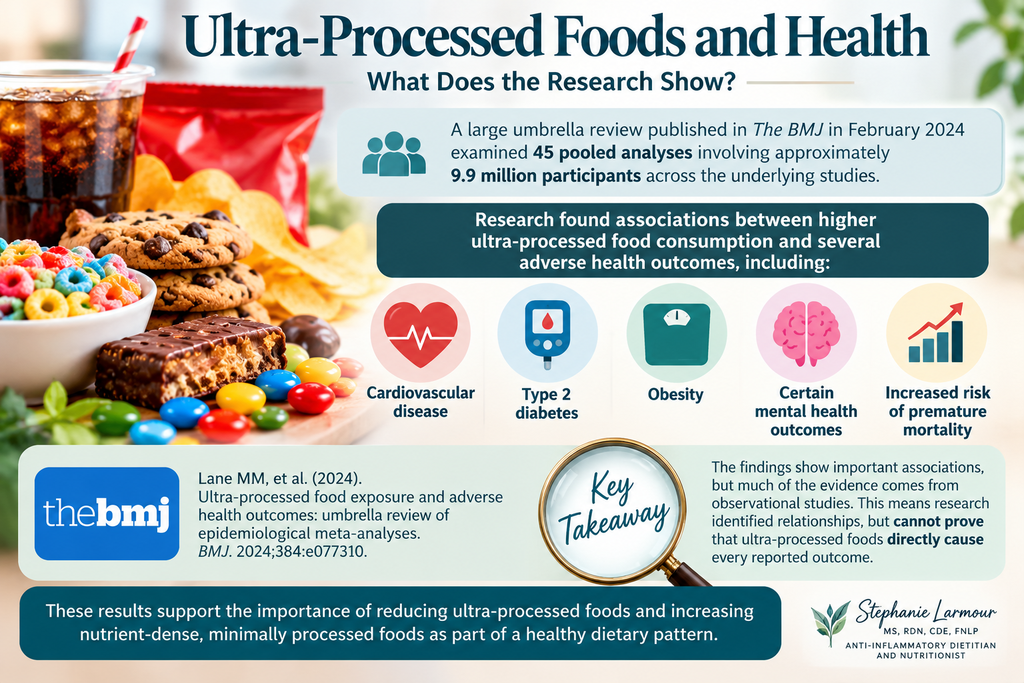
A large umbrella review published in The BMJ in February 2024 examined 45 pooled analyses involving approximately 9.9 million participants across the underlying studies.
Researchers found associations between higher ultra-processed food consumption and several adverse health outcomes.
These included:
- Cardiovascular disease
- Type 2 diabetes
- Obesity
- Certain mental health outcomes
- Increased risk of premature mortality
However, much of the evidence came from observational studies. That means researchers identified relationships, but could not establish that ultra-processing itself caused every reported outcome. The authors also rated much of the evidence as low or very low certainty.
What does this tell us?
The findings justify further investigation and consideration of public-health strategies, but we should avoid claiming that every ultra-processed ingredient directly causes disease.
Research: Lane MM, et al. Ultra-processed food exposure and adverse health outcomes: umbrella review of epidemiological meta-analyses. BMJ. 2024;384.
Read the full BMJ research article
What About Controlled Clinical Research?
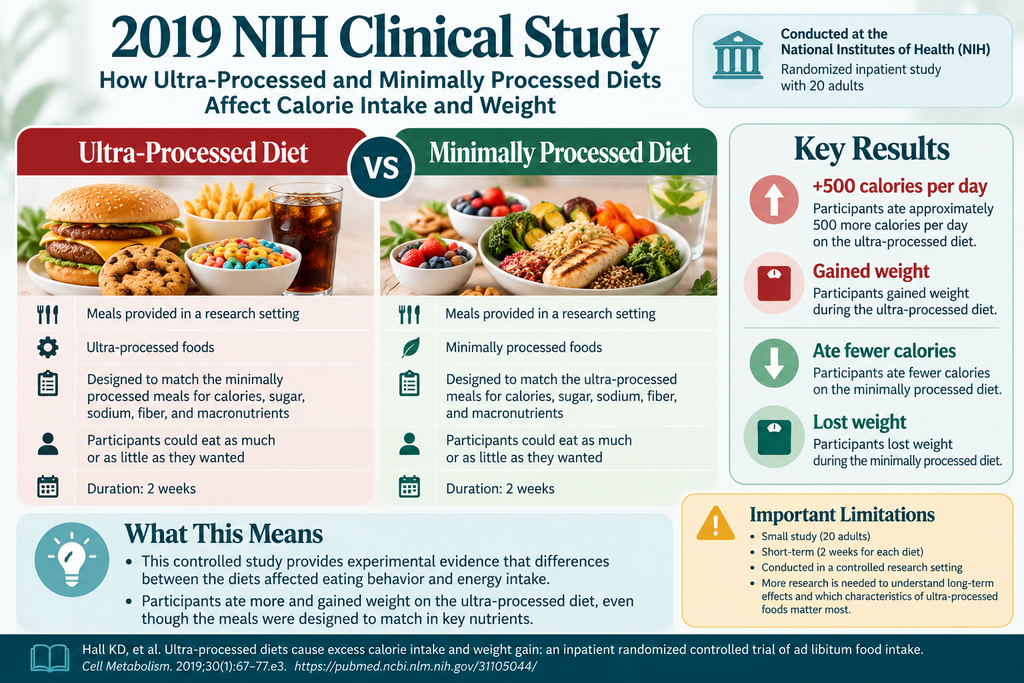
In 2019, researchers at the National Institutes of Health conducted a small randomized inpatient study involving 20 adults. Participants consumed an ultra-processed diet and a minimally processed diet for two weeks each. The meals were designed to be comparable in several nutritional characteristics, including presented calories, sugar, sodium, fiber, and macronutrients. Participants were allowed to eat as much or as little as they wanted. During the ultra-processed diet, participants consumed approximately 500 additional calories per day, on average, and gained weight. During the minimally processed diet, they ate fewer calories and lost weight. This study provided experimental evidence that differences between the diets affected eating behavior and energy intake under the study conditions. However, the study was small and short-term, so additional research is needed to understand long-term effects and which characteristics of ultra-processed foods matter most.
Research: Hall KD, et al. Ultra-processed diets cause excess calorie intake and weight gain: an inpatient randomized controlled trial of ad libitum food intake. Cell Metabolism. 2019;30(1):67–77.e3.
3. What Are Artificial Food Colors?
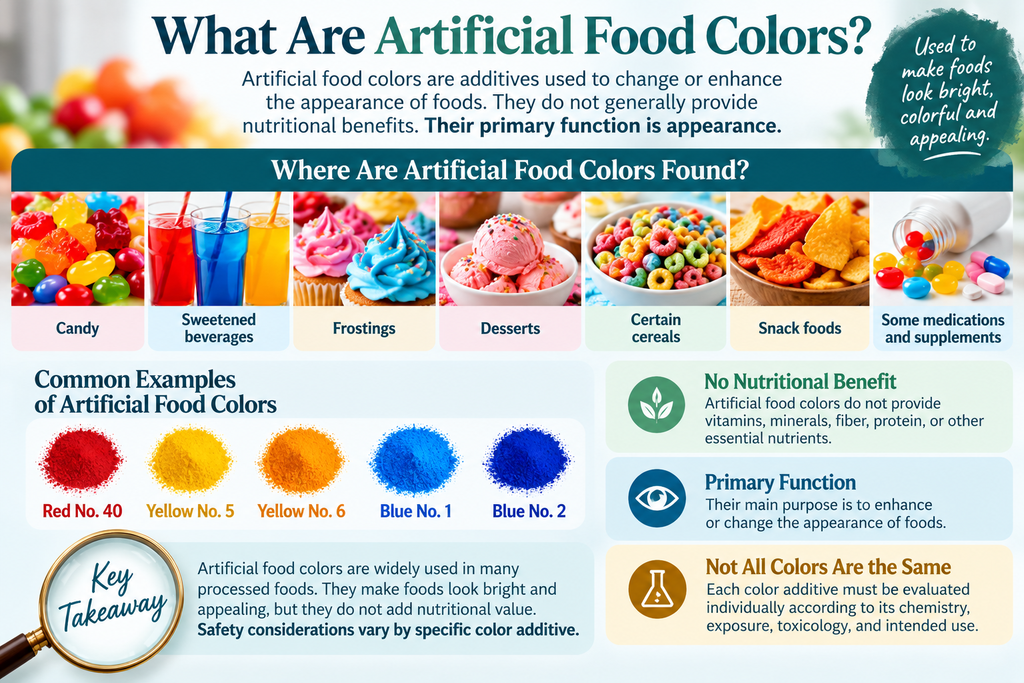
Artificial food colors are additives used to change or enhance the appearance of foods.
They may be found in:
- Candy
- Sweetened beverages
- Frostings
- Desserts
- Certain cereals
- Snack foods
- Some medications and supplements
Examples include:
Red No. 40, Yellow No. 5, Yellow No. 6, Blue No. 1, and Blue No. 2.
Artificial food colors do not generally provide nutritional benefits. Their primary function is appearance.But that does not mean every color additive has identical safety concerns. Each substance must be evaluated according to its chemistry, exposure, toxicology, and intended use.
4. Artificial Food Colors and Children’s Behavior
One of the most discussed concerns involves the possible effects of synthetic food colors on children’s behavior.
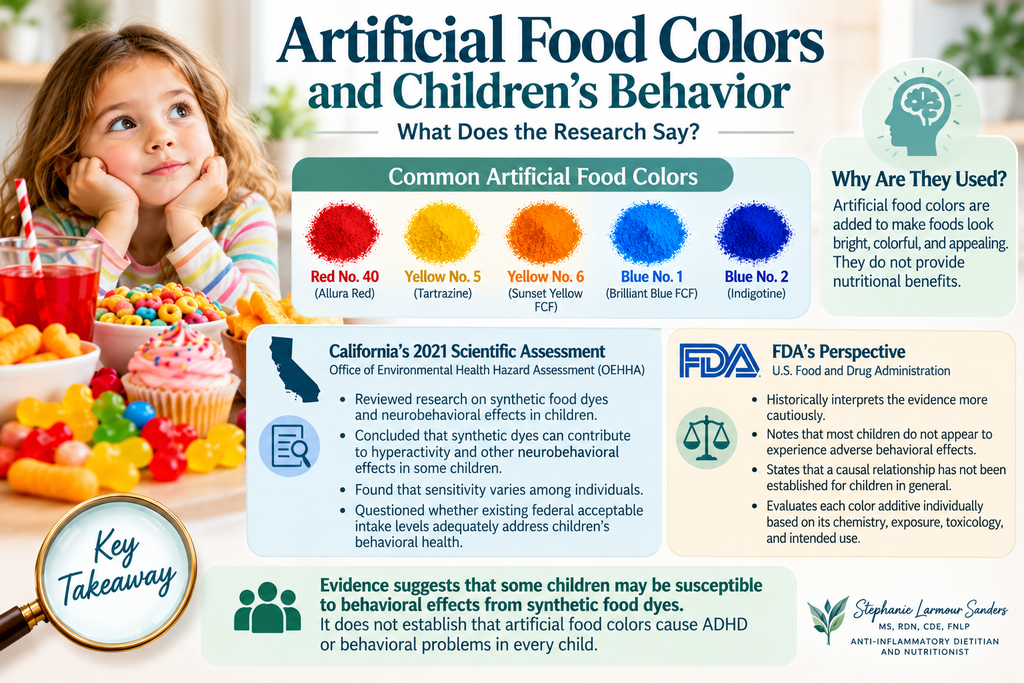
In 2021, California’s Office of Environmental Health Hazard Assessment (OEHHA) published a scientific assessment examining synthetic food dyes and neurobehavioral effects in children. The agency concluded that synthetic dyes can contribute to hyperactivity and other neurobehavioral effects in some children, and that sensitivity varies among individuals. The report also questioned whether existing federal acceptable intake levels adequately addressed children’s behavioral health. However, the FDA has historically interpreted the evidence more cautiously, noting that most children do not appear to experience adverse behavioral effects and that a causal relationship has not been established for children generally.
The important distinction: Evidence suggests that some children may be susceptible. It does not establish that artificial food dyes cause ADHD or behavioral problems in every child.
Read California OEHHA’s scientific assessment
Read FDA information on color additives
5. Why Was Red Dye No. 3 Banned?
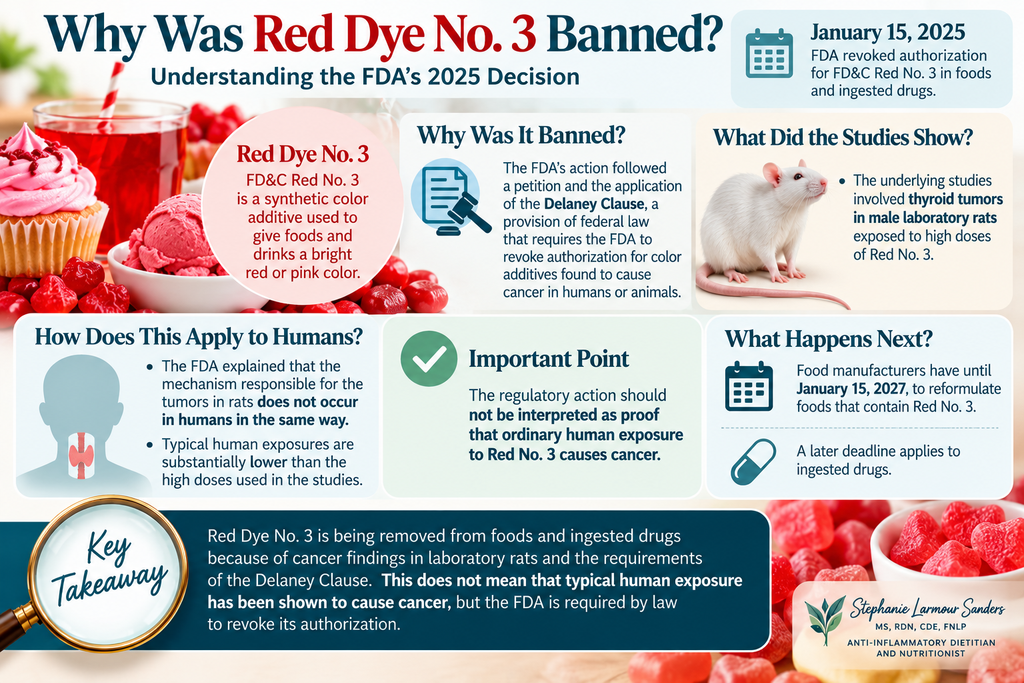
On January 15, 2025, the FDA revoked authorization for FD&C Red No. 3 in foods and ingested drugs. The action followed a petition and the application of the Delaney Clause, a provision of federal law addressing color additives found to cause cancer in humans or animals. The underlying studies involved thyroid tumors in male laboratory rats exposed to high doses. The FDA explained that the mechanism responsible for those findings in rats does not occur in humans in the same way and that typical human exposures are substantially lower. Therefore, the regulatory action should not be interpreted as proof that ordinary human exposure causes cancer.
Food manufacturers have until January 15, 2027, to reformulate foods, with a later deadline for ingested drugs.
Read the FDA’s Red No. 3 regulatory explanation
6. Federal Policy: The Trump Administration and Artificial Food Dyes
In April 2025, the U.S. Department of Health and Human Services and FDA announced an initiative to phase out petroleum-based synthetic food dyes.
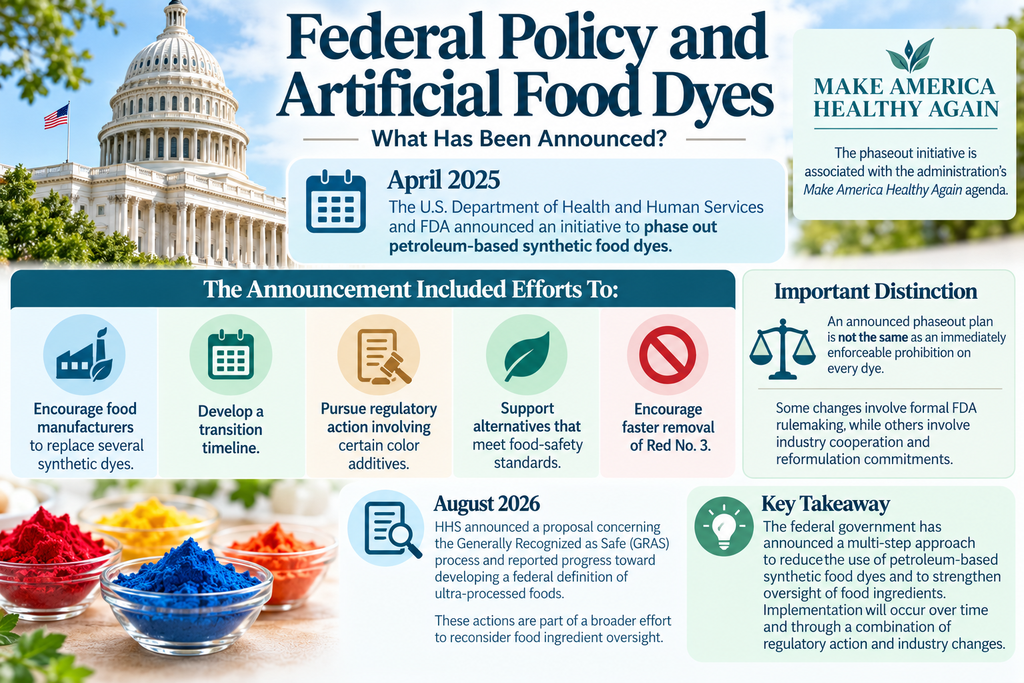
The initiative is associated with the administration’s Make America Healthy Again agenda.
The announcement included efforts to:
- Encourage food manufacturers to replace several synthetic dyes.
- Develop a transition timeline.
- Pursue regulatory action involving certain color additives.
- Support alternatives that meet food-safety standards.
- Encourage faster removal of Red No. 3.
An important policy distinction is that an announced phaseout plan is not the same as an immediately enforceable prohibition on every dye.
Some changes involve formal FDA rulemaking, while others involve industry cooperation and reformulation commitments.
In August 2026, HHS also announced a proposal concerning the Generally Recognized as Safe (GRAS) process and reported progress toward developing a federal definition of ultra-processed foods.
These actions are part of a broader effort to reconsider food ingredient oversight.
Read the April 2025 FDA announcement
Read the August 2026 HHS food-policy announcement
7. California’s Approach to Ultra-Processed Foods
California has also taken legislative action.
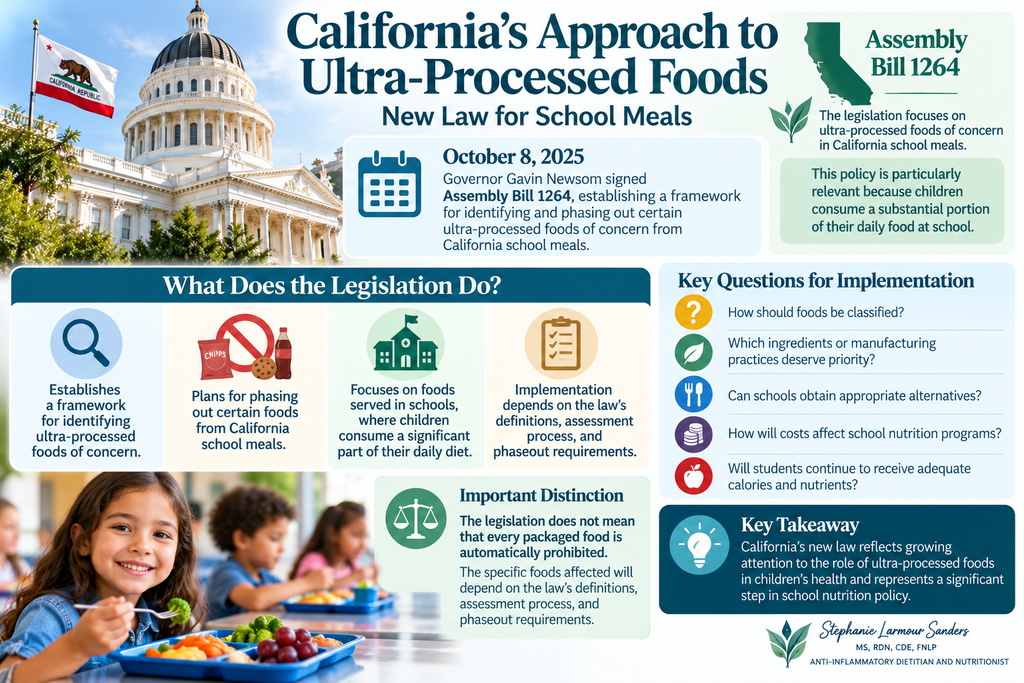
On October 8, 2025, Governor Gavin Newsom signed Assembly Bill 1264.
The legislation establishes a framework for identifying and phasing out certain ultra-processed foods of concern from California school meals. This policy is particularly relevant because children consume a substantial portion of their daily food at school. The legislation does not mean that every packaged food is automatically prohibited. Implementation depends on the law’s definitions, assessment process, and phaseout requirements.
The policy raises several practical questions:
- How should foods be classified?
- Which ingredients or manufacturing practices deserve priority?
- Can schools obtain appropriate alternatives?
- How will costs affect school nutrition programs?
- Will students continue to receive adequate calories and nutrients?
Read California’s announcement of AB 1264
8. Why Has Food Regulation Become Political?
Food policy affects more than the ingredients listed on a package.
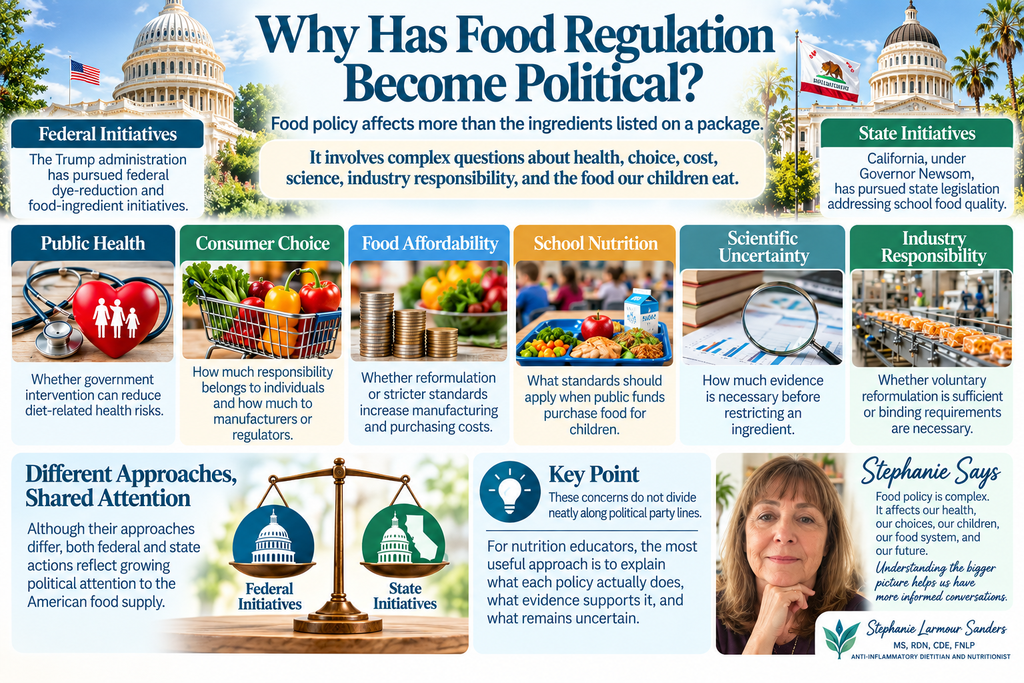
It also involves:
Public health: Whether government intervention can reduce diet-related health risks.
Consumer choice: How much responsibility belongs to individuals and how much to manufacturers or regulators.
Food affordability: Whether reformulation or stricter standards increase manufacturing and purchasing costs.
School nutrition: What standards should apply when public funds purchase food for children.
Scientific uncertainty: How much evidence is necessary before restricting an ingredient.
Industry responsibility: Whether voluntary reformulation is sufficient or binding requirements are necessary.
These concerns do not divide neatly along political party lines. The Trump administration has pursued federal dye-reduction and food-ingredient initiatives. California, under Governor Newsom, has pursued state legislation addressing school food quality. Although their approaches differ, both reflect growing political attention to the American food supply.
For nutrition educators, the most useful approach is to explain what each policy actually does, what evidence supports it, and what remains uncertain.
9. Are Artificial Colors and Ultra-Processed Foods Pro-Inflammatory?
This is an especially important question for anti-inflammatory nutrition.
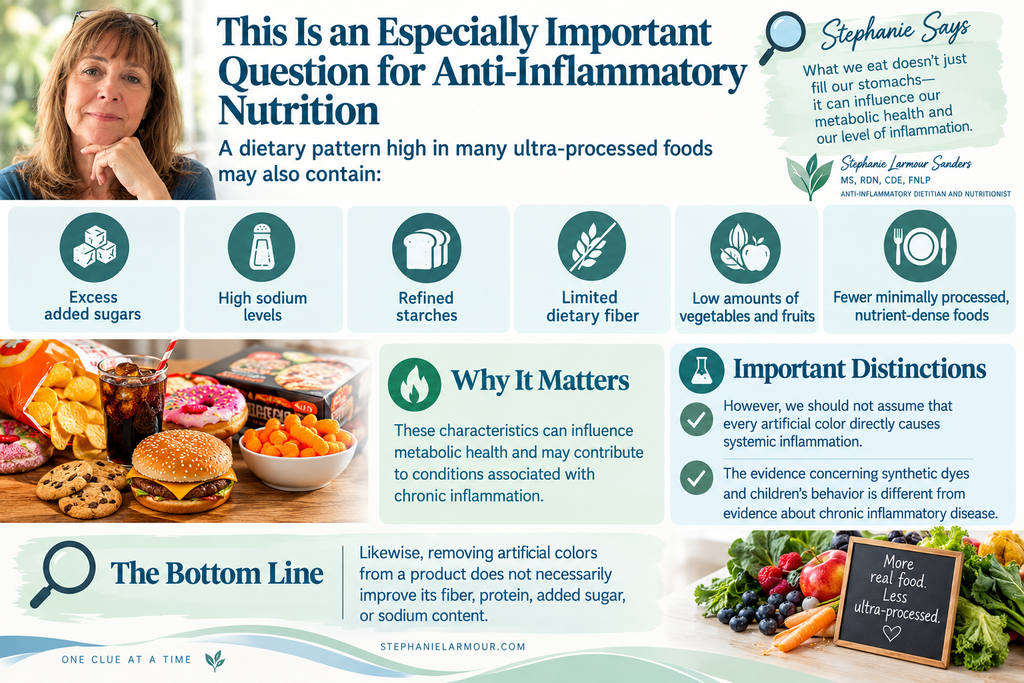
A dietary pattern high in many ultra-processed foods may also contain:
- Excess added sugars
- High sodium levels
- Refined starches
- Limited dietary fiber
- Low amounts of vegetables and fruits
- Fewer minimally processed, nutrient-dense foods
These characteristics can influence metabolic health and may contribute to conditions associated with chronic inflammation. However, we should not assume that every artificial color directly causes systemic inflammation.
The evidence concerning synthetic dyes and children’s behavior is different from evidence about chronic inflammatory disease. Likewise, removing artificial colors from a product does not necessarily improve its fiber, protein, added sugar, or sodium content.
That is why I encourage readers to investigate the entire dietary pattern.
10. Practical Nutrition Strategies for Families
You do not need to eliminate every packaged food to improve your diet.
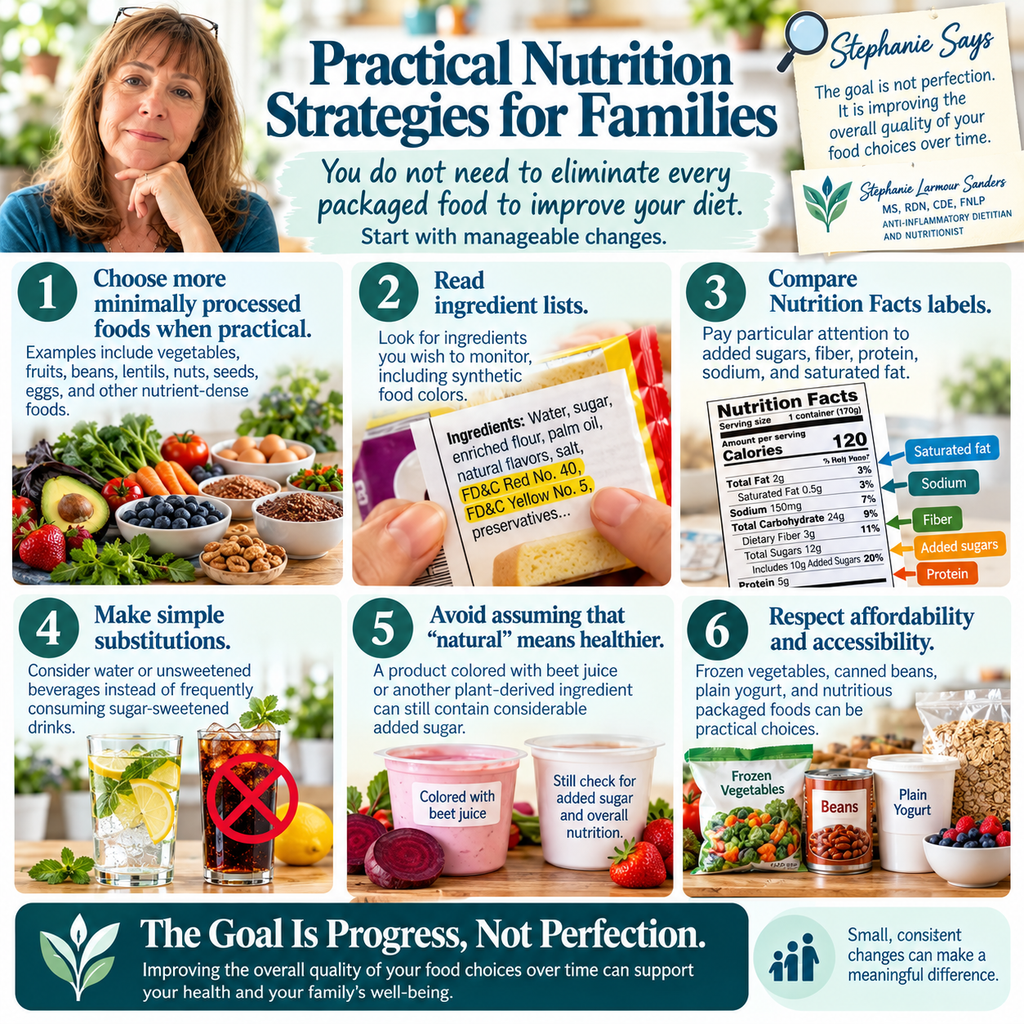
Start with manageable changes.
Choose more minimally processed foods when practical.
Examples include vegetables, fruits, beans, lentils, nuts, seeds, eggs, and other nutrient-dense foods.
Read ingredient lists.
Look for ingredients you wish to monitor, including synthetic food colors.
Compare Nutrition Facts labels.
Pay particular attention to added sugars, fiber, protein, sodium, and saturated fat.
Make simple substitutions.
Consider water or unsweetened beverages instead of frequently consuming sugar-sweetened drinks.
Avoid assuming that “natural” means healthier.
A product colored with beet juice or another plant-derived ingredient can still contain considerable added sugar.
Respect affordability and accessibility.
Frozen vegetables, canned beans, plain yogurt, and nutritious packaged foods can be practical choices.
The goal is not perfection.
It is improving the overall quality of your food choices over time.
Stephanie Says
Become the Detective of Your Food Environment
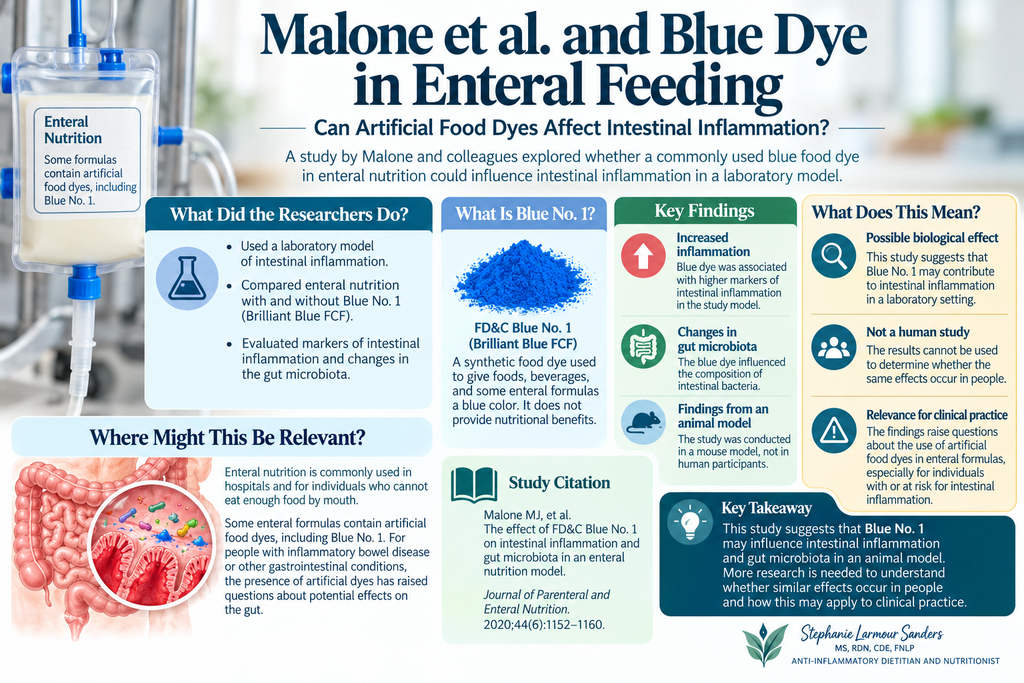
During my years working in clinical nutrition and diabetes education, I have watched our understanding of nutrition continue to evolve. When I was a clinician we looked at the study of Malone et al, and blue dye in Enteral Nutrition feeding and the negative effects in certain patients.
I believe it is important to examine the ingredients in our food supply and ask whether they contribute meaningful benefits or introduce unnecessary exposures. But I do not want families to become frightened every time they read an unfamiliar ingredient.
Instead, I want you to become curious.
Ask yourself:
- What is this ingredient?
- Why is it included?
- What does the research actually show?
- How often am I consuming this food?
- What nutrients does the food provide?
- Is there a practical alternative that fits my budget and lifestyle?
When policymakers discuss removing artificial dyes, I think it is important to examine both the potential health benefits and the evidence supporting the change. When we discuss ultra-processed foods, we also need to consider food quality, convenience, affordability, and accessibility.
A person working long hours or caring for a family may depend on convenient foods. That does not mean they have failed to make healthy choices.
My approach is to begin with one manageable change. Perhaps that means replacing one sugary beverage with water. Perhaps it means adding vegetables to a convenient meal. Or perhaps it means comparing two breakfast cereals and choosing one with more fiber and less added sugar.
Food labels are clues. Research provides evidence. Patterns help us understand the bigger picture.
And remember:
Reducing inflammation is not about fearing every ingredient. It is about building a nourishing dietary pattern, one clue at a time.
Stephanie Larmour Sanders, MS, RDN, CDE, FNLP
Continue Your Detective Journey
If you would like to learn how to identify lifestyle patterns that may contribute to inflammatory burden, explore my course:
Detecting and Reducing Pro-Inflammatory Lifestyle Factors in 30 Days
Visit StephanieLarmour.com and select the course page.
I can hand you the flashlight. My course teaches you how to become the detective.
Scientific and Government References
1. Lane MM, et al. (2024). Ultra-processed food exposure and adverse health outcomes: umbrella review of epidemiological meta-analyses. BMJ, 384, e077310.
https://doi.org/10.1136/bmj-2023-077310
2. Hall KD, et al. (2019). Ultra-processed diets cause excess calorie intake and weight gain: an inpatient randomized controlled trial of ad libitum food intake. Cell Metabolism, 30(1), 67–77.e3.
https://doi.org/10.1016/j.cmet.2019.05.008
3. California Office of Environmental Health Hazard Assessment (2021). Health Effects Assessment: Potential Neurobehavioral Effects of Synthetic Food Dyes in Children.
https://oehha.ca.gov/risk-assessment/report/health-effects-assessment-potential-neurobehavioral-effects-synthetic-food-dyes-children
4. U.S. Food and Drug Administration (2025). FDA to Revoke Authorization for the Use of Red No. 3 in Food and Ingested Drugs.
https://www.fda.gov/food/hfp-constituent-updates/fda-revoke-authorization-use-red-no-3-food-and-ingested-drugs
5. U.S. Food and Drug Administration (2025). HHS, FDA to Phase Out Petroleum-Based Synthetic Dyes in Nation’s Food Supply.
https://www.fda.gov/news-events/press-announcements/hhs-fda-phase-out-petroleum-based-synthetic-dyes-nations-food-supply
6. U.S. Department of Health and Human Services (2026). Secretary Kennedy Announces Food Policy Reforms Addressing Ultra-Processed Foods and GRAS Oversight.
https://www.hhs.gov/press-room/hhs-announces-ultra-processed-foods-gras-reforms.html
7. Office of Governor Gavin Newsom (2025). Governor Newsom Signs Law Addressing Ultra-Processed Foods in California School Meals.
https://www.gov.ca.gov/2025/10/08/governor-newsom-signs-first-in-the-nation-law-to-ban-ultra-processed-foods-from-school-lunches/
8. U.S. Food and Drug Administration. Color Additives: Information for Consumers.
https://www.fda.gov/food/food-ingredients-packaging/color-additives-information-consumers
Medical Disclaimer
This article is intended for nutrition and public-health education. It does not provide medical diagnosis or treatment advice. Scientific findings and regulatory policies may change as new evidence becomes available. Individuals with medical conditions or specific dietary needs should seek appropriate individualized guidance
Write Reviews
Leave a Comment
No Comments & Reviews