13 Aug, 2026 | Stephanie Sanders | No Comments
Menopause, Nutrition, and Inflammatory Health: What Changes and How to Support Your Body
Stephanie Larmour Sanders, MS, RDN, CDE, FNLP
Clinical Dietitian, Certified Diabetes Educator, and Functional Nutritionist
Menopause can bring changes that seem to appear all at once: hot flashes, disrupted sleep, changes in body composition, fatigue, mood changes, brain fog, or a different response to foods and exercise.
It can be tempting to blame every new symptom on hormones.
But menopause is better understood as one part of a larger midlife health picture.
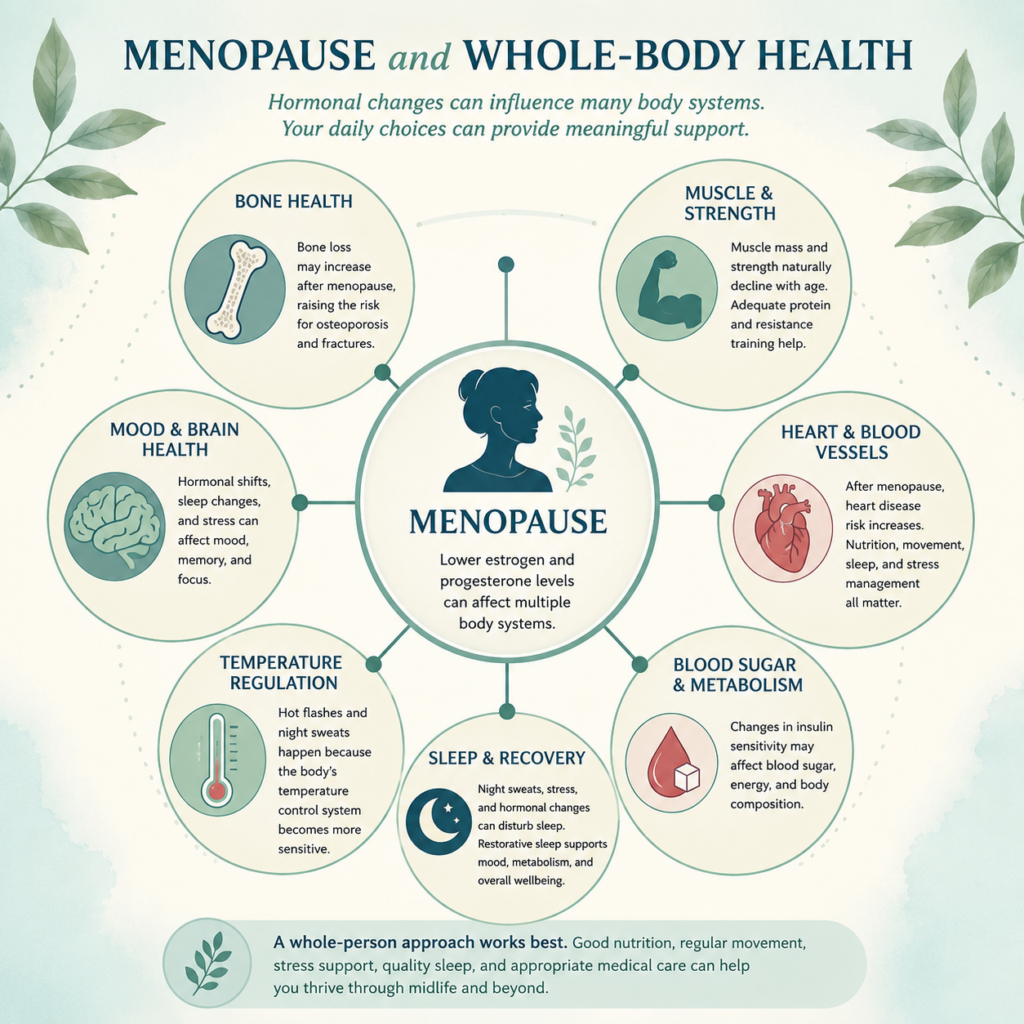
Hormonal changes can influence temperature regulation, bone, cardiovascular health, body composition, sleep, and metabolic health. At the same time, symptoms occurring during midlife may have other causes that deserve attention.
That is why I like to remind women:
Symptoms are signals, not random—but a signal is not the same thing as a diagnosis.
The goal is to notice what is changing, look for patterns, and support the body with good nutrition, movement, sleep, stress support, and appropriate medical care.

What Is Menopause?
Menopause is a normal biological transition.
Clinically, menopause is confirmed after 12 consecutive months without a menstrual period when another cause does not explain the absence of menstruation. Perimenopause is the transition leading up to menopause and extends through the first year after the final menstrual period.
During this transition, ovarian hormone production changes substantially, particularly estrogen and progesterone.
Some women have relatively few symptoms. Others experience symptoms that significantly affect sleep, work, relationships, exercise, or quality of life.
Common symptoms can include:
- Hot flashes and night sweats
- Sleep disruption
- Menstrual changes during perimenopause
- Vaginal dryness or genitourinary symptoms
- Mood changes
- Changes in sexual health
- Changes in body composition
The experience is highly individual.
And importantly, not everything that happens at 45, 50, or 55 is necessarily caused by menopause.
Estrogen Does More Than Regulate Reproduction
Estrogen receptors are found throughout the body. That helps explain why the menopause transition can feel like much more than the end of menstrual periods.
Lower estrogen levels after menopause are associated with important changes in bone and cardiovascular health. Bone loss accelerates, increasing osteoporosis risk, and cardiovascular risk becomes increasingly important as women age.
Metabolic and body-composition changes also deserve attention. Research continues to investigate exactly how menopause itself, aging, lifestyle, sleep, activity, and other factors interact.
This is an important evidence boundary.
We should not assume that declining estrogen directly causes every pound gained, every poor night’s sleep, or every change in blood sugar.
Instead, we can look at the whole pattern.
MENOPAUSE + WHOLE-BODY HEALTH DIAGRAM
What Does Inflammation Have to Do With Menopause?
Inflammation is part of the body’s normal immune response. We need it for healing and protection.
The concern is not inflammation itself. It is persistent or excessive inflammatory activity associated with chronic disease and metabolic dysfunction.
Menopause occurs during a time when several health factors can intersect:
- Hormonal changes
- Aging
- Loss of muscle
- Changes in fat distribution
- Insulin resistance and blood sugar regulation
- Poor sleep
- Psychological and physiological stress
- Dietary patterns
- Physical inactivity
- Existing medical conditions
This is where I find the idea of inflammatory load useful educationally.
Rather than looking for one food or one hormone to blame, we can ask:
What are the different factors adding to the body’s overall load—and which of those factors can we realistically support?
The goal is not to eliminate inflammation or achieve a “perfect” lifestyle.
The goal is reduction of inflammatory load, not perfection. This approach is consistent with Stephanie’s Pro-Inflammatory Reduction Framework™.
Nutrition During Menopause: What Matters Most?
There is no single “menopause diet.”
And you do not need a complicated detox, an extreme elimination diet, or a cupboard full of supplements simply because you have entered menopause.
A better starting point is a nutrient-dense dietary pattern that supports cardiovascular, metabolic, muscle, and bone health.
Research on dietary patterns in menopausal women is encouraging, particularly for Mediterranean-style and other high-quality dietary patterns rich in minimally processed plant foods. However, much of the menopause-specific evidence remains observational, so we should be careful about claiming that one dietary pattern can prevent or treat menopause symptoms.
Here are several practical places to begin.
1. Build Meals Around Protein
Maintaining muscle becomes increasingly important as we age.
Protein provides amino acids needed for maintaining and repairing muscle and other tissues. Resistance exercise provides another important stimulus for maintaining muscle strength.
Practical protein choices include:
- Fish
- Eggs
- Poultry
- Greek yogurt or cottage cheese
- Beans and lentils
- Tofu, tempeh, and edamame
- Nuts and seeds
- Lean meat, if included in your eating pattern
Rather than becoming preoccupied with a perfect number, start by asking:
Do I have a meaningful source of protein at each meal?
For women with kidney disease or other medical conditions affecting protein needs, individualized guidance is important.
2. Don’t Forget Fiber and Plant Diversity
Vegetables, fruits, beans, lentils, nuts, seeds, and whole grains provide much more than fiber.
They also provide vitamins, minerals, and a wide variety of plant compounds.
A Mediterranean-style eating pattern emphasizes many of these foods along with olive oil, nuts, legumes, whole grains, fish, and other minimally processed foods. Evidence supports this dietary pattern for cardiovascular health broadly, and menopause-focused research suggests potential benefits for cardiometabolic health.
You don’t have to suddenly eat perfectly.
Try adding one more plant food to a meal you already enjoy.
3. Support Bone Health
Bone deserves special attention during and after menopause because declining estrogen contributes to accelerated bone loss.
Calcium, vitamin D, adequate protein, and weight-bearing and resistance activity all matter.
The U.S. Office on Women’s Health recommends 1,200 mg of calcium per day for women age 51 and older. Vitamin D recommendations are 600 IU daily from ages 51–70 and 800 IU for women 71 and older, although individual needs can differ.
Food sources of calcium can include:
- Milk
- Yogurt
- Cheese
- Calcium-fortified plant beverages
- Calcium-set tofu
- Canned salmon with bones
- Certain leafy greens
Food first is often a useful starting point. Supplements should fill an identified need rather than automatically being added because a woman reaches menopause.
4. Pay Attention to Blood Sugar—Without Becoming Afraid of Carbohydrates
Blood sugar regulation becomes an important part of the midlife conversation.
That does not mean carbohydrates are automatically bad.
Instead, consider how meals are put together.
A steadier meal might include:
Protein + fiber-rich plants + healthy fat + a quality carbohydrate
For example:
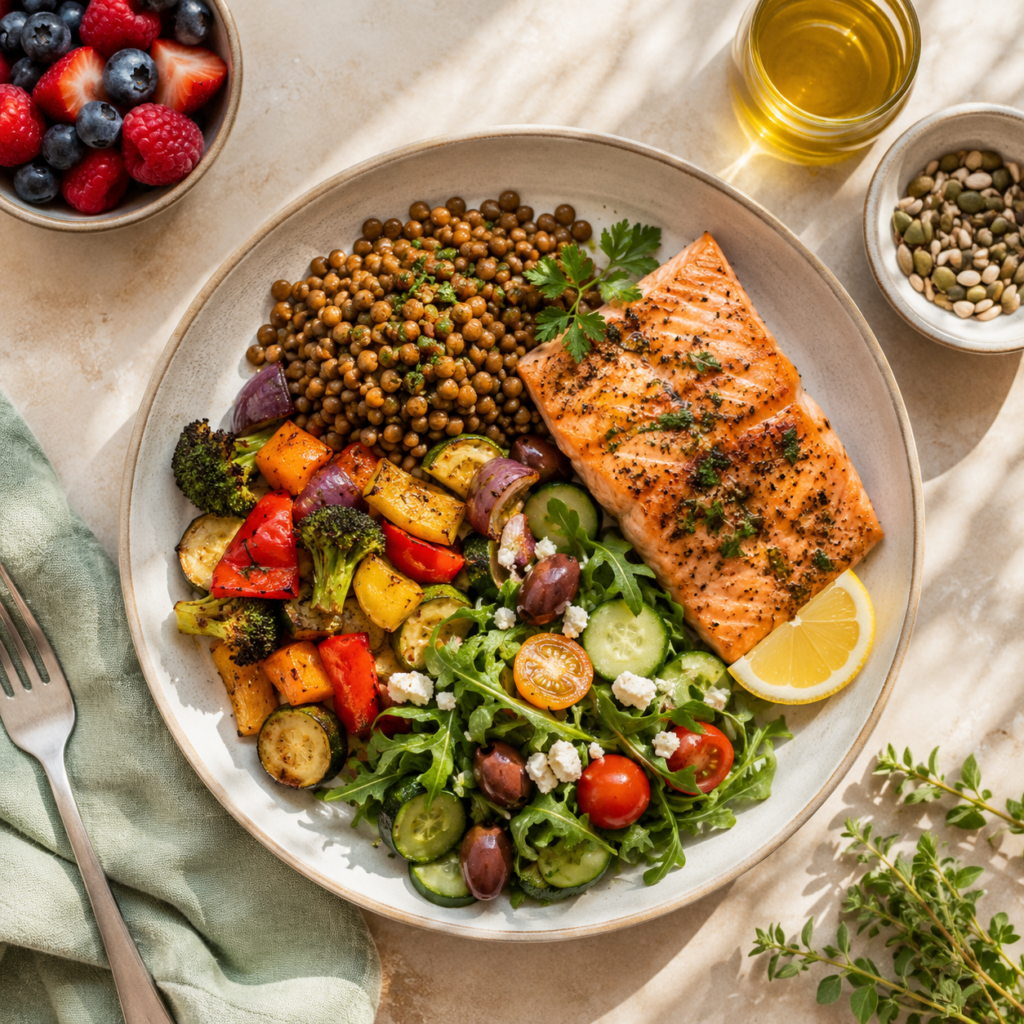
Salmon + roasted vegetables + lentils + olive oil
or
Greek yogurt + berries + walnuts + oats
or
Tofu + mixed vegetables + brown rice + sesame seeds.
The goal is a nourishing meal that supports satisfaction, nutrient intake, and metabolic health—not rigid restriction.
5. Choose Fats That Support Cardiovascular Health
Midlife is an important time to pay attention to cardiovascular risk.
Favor foods such as:
- Extra-virgin olive oil
- Nuts
- Seeds
- Avocado
- Fish
while keeping the overall dietary pattern in mind.
One ingredient rarely determines whether a person’s diet is inflammatory or anti-inflammatory.
Patterns are information.
6. What About Soy?
Soy is especially interesting because soy foods provide protein as well as naturally occurring isoflavones.
The research on soy and menopausal symptoms is mixed. Recent systematic reviews have reached somewhat different conclusions, and a 2025 meta-analysis found some improvement in overall menopausal symptoms but not a significant effect specifically on hot flashes or vasomotor symptoms.
That means soy should not be presented as a guaranteed natural treatment for hot flashes.
Foods such as tofu, tempeh, edamame, and unsweetened soy milk can still be nutritious sources of plant protein.
This is a good example of separating a healthy food from an exaggerated health promise.
A Simple Menopause-Supportive Plate
You don’t need a special menopause meal plan to get started.
Try building a plate with:
Protein: fish, poultry, eggs, beans, lentils, tofu or Greek yogurt
Fiber and color: vegetables and/or fruit
Slow carbohydrate: beans, lentils, oats, quinoa, potatoes, brown rice or other whole grains
Healthy fat: olive oil, avocado, nuts or seeds
Add water or another unsweetened beverage according to your individual needs.
MENOPAUSE-SUPPORTIVE PLATE
This isn’t a prescription.
It is simply a practical framework that can be adapted to culture, budget, appetite, medical needs, and food preferences.
What About Hot Flashes?
Nutrition can support overall health during menopause, but we need to be cautious about claiming that changing the diet will eliminate hot flashes.
Hot flashes and night sweats are called vasomotor symptoms.
Despite many popular recommendations about avoiding caffeine, spicy foods, alcohol, or particular foods, The Menopause Society notes that evidence supporting dietary modifications and trigger avoidance specifically as treatments for hot flashes is limited.
Your individual experience still matters.
If you repeatedly notice that alcohol, a hot beverage, or another factor precedes a hot flash, that pattern may be useful information.
But your experience does not mean that every woman needs the same restriction.
Don’t Forget Movement and Muscle
Nutrition and movement work together.
Physical activity supports bone, cardiovascular health, mood, function, and healthy aging. Current U.S. guidance for women includes at least 150 minutes of moderate aerobic activity per week, or the equivalent, plus muscle-strengthening activity on two days each week.
That does not mean you need to become an athlete.
Walking counts.
Gardening counts.
And strength work can begin at an appropriate level for your ability.
Movement is support, not punishment.
Sleep Is Part of the Picture Too
Night sweats can disrupt sleep, but menopause isn’t the only possible reason for poor sleep.
Stress, sleep apnea, restless legs, alcohol, caffeine, medications, depression, anxiety, pain, blood sugar problems, and other medical issues can also affect sleep.
If sleep problems are persistent or significant, don’t simply accept them as something women have to endure.
Bring them to your healthcare professional.
What About Menopause Supplements?
The menopause marketplace is full of products promising hormone balance, cortisol control, metabolism support, detoxification, or relief from hot flashes.
This is an area where caution matters.
“Natural” does not automatically mean effective or safe.
Evidence for many supplements marketed for hot flashes remains limited or inconsistent. Supplements can also interact with medications or be inappropriate with particular health conditions.
Before purchasing a menopause supplement, ask:
- What exactly is the product supposed to do?
- Is there evidence for this specific ingredient and dose?
- Is the evidence based on women like me?
- Could it interact with my medications?
- Has the product been independently tested?
- Would addressing food, sleep, activity, or an underlying medical issue be more useful?
Sometimes the best next step isn’t another supplement.
It is a better question.
Menopause Treatment Is Not Limited to Nutrition
Nutrition is an important foundation, but it is not a substitute for appropriate treatment of bothersome menopause symptoms.
Hormone therapy remains the most effective treatment for menopausal hot flashes and night sweats and is FDA-approved for these symptoms. Whether it is appropriate depends on a woman’s symptoms, health history, age, time since menopause, risks, and preferences.
Nonhormonal prescription treatments are also available.
This is a conversation to have with a qualified healthcare professional rather than trying to navigate symptoms through diet and supplements alone.
When Should You Seek Medical Care?
Do not automatically attribute a new or persistent symptom to menopause.
Talk with a healthcare professional about symptoms that concern you, particularly:
- Bleeding after menopause
- New or unexplained chest pain
- Significant shortness of breath
- Persistent or severe depression or anxiety
- New or persistent pelvic symptoms
- Unexplained weight loss
- Severe or persistent sleep disturbance
- Symptoms significantly affecting daily life
- Concerns about osteoporosis, cardiovascular risk, diabetes, or other chronic conditions
Postmenopausal bleeding, in particular, deserves medical evaluation rather than being dismissed as hormonal fluctuation.
The Bottom Line
Menopause is a natural transition, but that does not mean women should ignore symptoms or simply “put up with” feeling unwell.
Hormonal changes can affect several body systems. At the same time, midlife health is influenced by nutrition, sleep, muscle, movement, metabolic health, stress, medications, medical conditions, genetics, and many other factors.
Nutrition cannot stop menopause.
And there is no single menopause food, supplement, or anti-inflammatory protocol that every woman needs.
What nutrition can do is provide a strong foundation for bone, muscle, cardiovascular and metabolic health during a period when protecting those systems becomes increasingly important.
Start small.
Add protein to breakfast. Add another vegetable to dinner. Take a walk. Protect your sleep. Ask about bone health. Pay attention to patterns.
You don’t have to solve everything at once.
Symptoms are signals. Patterns are information. Better questions can lead to better care.
References
- American College of Obstetricians and Gynecologists. reVITALize: Gynecology Data Definitions.
- U.S. Office on Women’s Health. Menopause and Your Health.
- The Menopause Society. Hormone Therapy.
- Gonçalves C, Moreira H, Santos R. Systematic review of Mediterranean diet interventions in menopausal women. 2024.
- Barrea L, et al. The Importance of Nutrition in Menopause and Perimenopause—A Review. Nutrients. 2024.
- Dietary patterns and their associations with body composition, cardiometabolic and bone health in postmenopausal women. 2025.
- Gençtürk N, Bilgiç FŞ, Ulaşlı Kaban H. The effect of soy isoflavones given to women in the climacteric period on menopausal symptoms and quality of life. 2024.
- The Menopause Society. Hot Flashes.
Write Reviews
Leave a Comment
No Comments & Reviews