27 Sep, 2026 | Stephanie Sanders | No Comments
Quinoa: A Simple Way to Add More Protein, Fiber, Color, and Variety to Your Plate
By Stephanie Larmour Sanders, MS, RDN, CDE, FNLP
Clinical Dietitian, Certified Diabetes Educator, and Functional Nutritionist

When we want to eat well at home, we do not always need another complicated recipe or an unfamiliar list of rules. Sometimes we simply need one flexible ingredient that can make familiar meals more nourishing.
Quinoa can fill that role. Although it is botanically a seed, it is prepared and eaten like a whole grain. It works in warm side dishes, soups, salads, breakfast bowls, stuffed vegetables—and even desserts.
The nutritional snapshot
One cooked cup of quinoa provides approximately 8 grams of protein and 5 grams of fiber. It also supplies magnesium, phosphorus, manganese, folate, iron, and other nutrients. Quinoa contains all nine essential amino acids, although it should still be viewed as one part of a varied eating pattern—not a replacement for every other protein food.
Why quinoa can be useful
- It adds plant protein. Quinoa offers more protein than many commonly used cooked grains.
- It contributes fiber. Fiber supports digestive health, fullness, and a steadier response to a mixed meal.
- It is naturally gluten-free. Plain quinoa can fit a gluten-free eating pattern. People with celiac disease should choose products labeled gluten-free to reduce cross-contact risk.
- It provides minerals. Quinoa contributes magnesium, iron, phosphorus, and manganese.
- It is flexible. Its mild flavor works with vegetables, herbs, poultry, fish, beans, fruit, and warm spices.
No single food can “turn off” inflammation. Quinoa is better understood as one ingredient that can support a fiber-rich, minimally processed, plant-forward eating pattern.
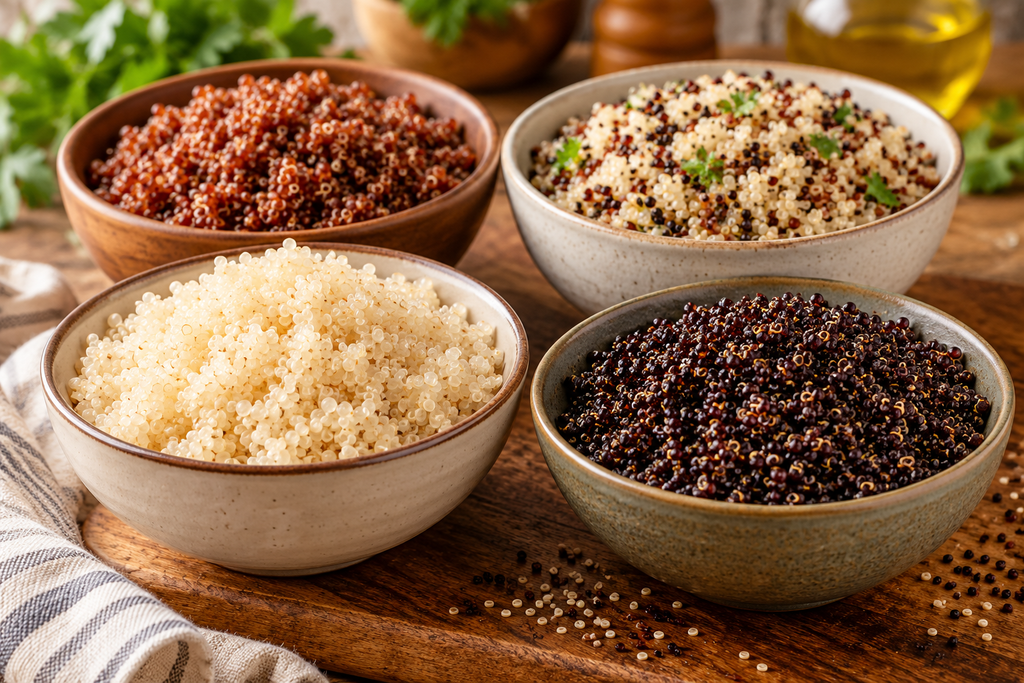
White, red, black, or tri-color: which quinoa should you choose?
The colors do not create entirely different foods. Protein, fiber, and mineral content overlap substantially, and natural variation exists among cultivars. Pigmented quinoa may contain different amounts of phenolic compounds and other plant pigments, but color alone does not guarantee a specific nutritional advantage.
| Type | Flavor | Texture | Useful for |
|---|---|---|---|
| White | Mildest | Soft and fluffy | Rice substitute, breakfast bowls, soups, puddings |
| Red | Earthier and nuttier | Firmer; holds its shape | Warm bowls, pilafs, meal-prep dishes |
| Black | Most earthy | Firmest and slightly crunchy | Color contrast, hearty bowls, vegetable dishes |
| Tri-color | Balanced and nutty | A mixture of soft and firm grains | Everyday side dishes and attractive presentations |
My practical answer: choose the color whose texture you enjoy and that suits the dish. White quinoa is a gentle starting point. Red and black quinoa are helpful when you want the grains to remain more separate and firm.
How does quinoa compare with rice and other grains?
The figures below are approximate amounts per cooked cup. Values vary with the variety, cooking method, water absorption, brand, and exact serving weight. The table is a planning tool—not a ranking of “good” and “bad” foods.
| Cooked food | Protein | Fiber | What stands out |
|---|---|---|---|
| Quinoa | ~8 g | ~5 g | Complete plant protein; naturally gluten-free |
| Brown rice | ~5 g | ~3–4 g | Familiar whole grain; chewy and mild |
| White rice | ~4 g | <1 g | Soft, easy to digest for many people; lower in fiber |
| Oatmeal | ~6 g | ~4 g | Contains soluble beta-glucan fiber |
| Pearled barley | ~3–4 g | ~6 g | High in fiber; contains gluten |
Quinoa generally provides more protein and fiber than white rice and more protein than brown rice. Barley may provide more fiber, while oats contribute a distinctive soluble fiber. Rice remains meaningful in many cultural eating patterns and may be easier to tolerate during certain digestive symptoms. Variety is often more useful than trying to identify one perfect grain.
Quinoa and blood sugar
Quinoa contains carbohydrate and can raise blood glucose. Its protein and fiber may make it more satisfying than a similar portion of refined grain, but portion size and the complete meal still matter. Pair it with non-starchy vegetables, a protein food, and healthy fat—and observe your own response when glucose monitoring is appropriate.

Stephanie Says: Expand what is already easy
I am always looking for realistic ways to expand what I can easily cook at home—without turning every meal into a project. Quinoa gives me another option when I want more protein and fiber than I would get from white rice alone.
I can cook a small pot and use it in more than one way: warm with vegetables and olive oil, stirred into soup, served beneath chicken or fish, or made into a gently sweet breakfast or dessert.
I do not have to change everything on my plate. I can begin by changing or adding one ingredient. That is how variety grows—one practical choice at a time.
The easiest way to cook quinoa
- Place 1 cup dry quinoa in a fine-mesh strainer and rinse it thoroughly.
- Combine it with 2 cups water in a saucepan.
- Bring to a boil, reduce the heat, cover, and simmer for approximately 15 minutes.
- Remove from the heat and let it rest, covered, for 5 minutes.
- Fluff it gently with a fork.
Some red, black, and tri-color products need a few extra minutes. Follow the package instructions when they differ.
Easy quinoa side dish
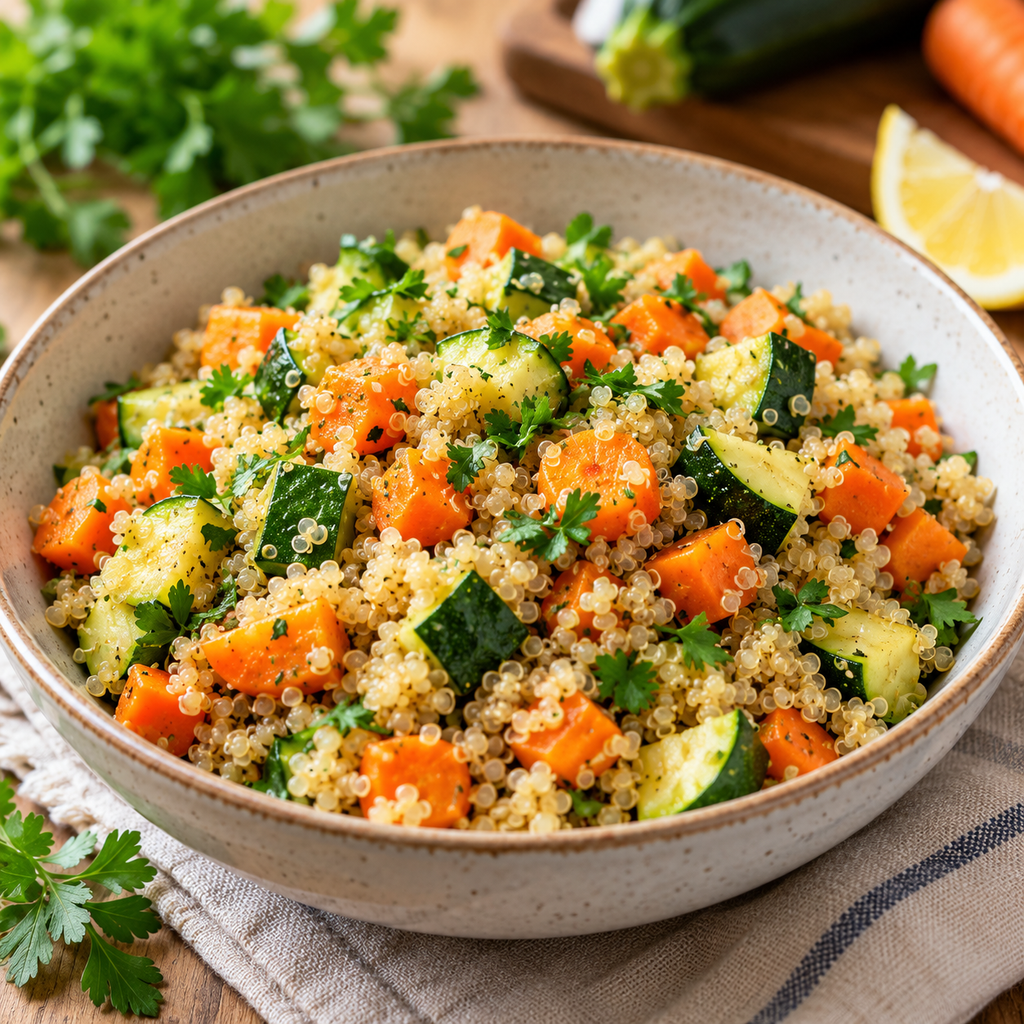
Herbed quinoa with zucchini and carrots
Ingredients: 2 cups cooked quinoa, 1 diced zucchini, 1 shredded carrot, 2 tablespoons extra-virgin olive oil, chopped parsley or basil, ¼ teaspoon turmeric, ¼ teaspoon ground ginger, and salt to taste.
Method: Gently sauté the zucchini and carrot in 1 tablespoon of olive oil. Add the turmeric and ginger, then fold the vegetables into the warm quinoa with the remaining oil and fresh herbs.

Quinoa dessert
Warm apple-and-pear quinoa pudding
Ingredients: 2 cups cooked white quinoa, 1½ cups unsweetened oat milk or another tolerated milk, 1 small diced apple, 1 small diced pear, 1–2 tablespoons pure maple syrup, ½ teaspoon cinnamon, ¼ teaspoon ginger, and a pinch of salt.
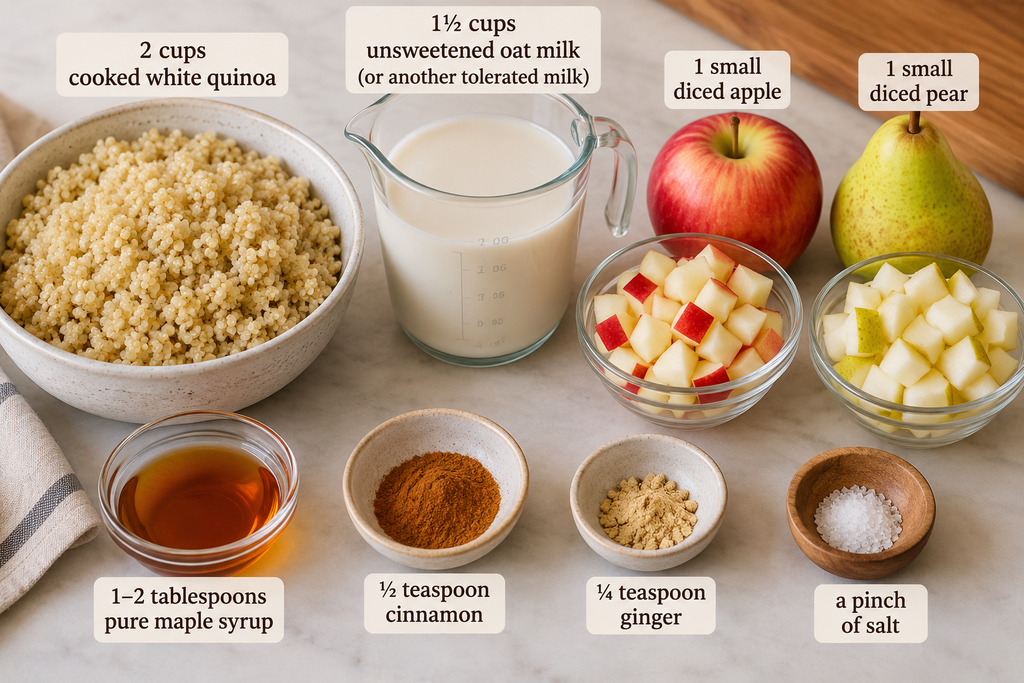
Method: Combine everything in a saucepan. Cook over low heat for 8–10 minutes, stirring frequently, until warm and creamy and the fruit is tender. Add more milk if you prefer a softer pudding.
A note for people using a low-histamine approach
Quinoa is commonly included in lower-histamine meal plans, but tolerance is individual and food lists are not completely consistent. Use ingredients you already tolerate.
Freshness also matters. Eat freshly prepared food promptly. If you cook more quinoa than you need, cool it promptly and freeze individual portions rather than allowing leftovers to remain in the refrigerator for several days.
Your quinoa detective experiment
Choose one familiar meal that normally includes rice or another grain. Replace half—or all—of that grain with quinoa. Then observe:
- Did you enjoy the flavor and texture?
- Did the meal keep you satisfied?
- How did your digestion respond?
- Would white, red, black, or tri-color quinoa work better next time?
Food is not a test you pass or fail. It is information. Try one change, notice the response, and build from there—one clue at a time.
References
- U.S. Department of Agriculture, Agricultural Research Service. FoodData Central.
- Harvard T.H. Chan School of Public Health. Quinoa: The Nutrition Source.
- Nowak V, Du J, Charrondière UR. Assessment of the nutritional composition of quinoa. Food Chemistry. 2016;193:47–54.
- Vilcacundo R, Hernández-Ledesma B. Nutritional and biological value of quinoa: an updated review. Food Science & Nutrition. 2017;5(4):873–879.
- Melini V, Melini F. Functional components and anti-nutritional factors in gluten-free grains: a focus on quinoa seeds. Foods. 2021.
Stephanie Larmour Sanders, MS, RDN, CDE, FNLP
Clinical Dietitian, Certified Diabetes Educator, and Functional Nutritionist
StephanieLarmour.com
Write Reviews
Leave a Comment
No Comments & Reviews