11 Sep, 2026 | Stephanie Sanders | No Comments
Deep Sleep and the Glymphatic System: Does Sleep Really “Detox” the Brain?
Article 2 of 3 in the Sleep Detective Series
Stephanie Larmour Sanders, MS, RDN, CDE, FNLP
Clinical Dietitian, Certified Diabetes Educator, and Functional Nutritionist
Deep Sleep and the Brain’s Cleaning System

Deep NREM sleep is associated with coordinated changes in brain activity, blood flow, and cerebrospinal-fluid movement. Educational illustration of slow brain waves and cerebrospinal-fluid movement during deep sleep.
What Do People Mean by “Brain Detox”?
Sleep is often described as the time when the brain “takes out the trash” or “flushes away toxins.” That description is memorable, but it can make the science sound more settled—and much simpler—than it really is.
The brain does have systems that transport fluid and metabolic by-products. Sleep, particularly non-rapid eye movement or NREM sleep, appears to influence some of these processes.
However, the brain is not being rinsed like a household filter.
Researchers are still investigating:
- How fluid moves through and around human brain tissue
- How sleep changes that movement
- Which metabolic substances are transported
- How much material is removed during sleep
- Whether these processes meaningfully affect the development of neurological disease
The scientific story is promising, but it remains incomplete.

What Is Deep N3 Sleep?
N3 is the deepest stage of NREM sleep.
It is also called:
- Deep sleep
- Slow-wave sleep
- Delta sleep
During N3 sleep, the brain produces large, slow electrical waves. These are different from the faster, less synchronized patterns seen during wakefulness.
Deep N3 sleep is associated with:
- Physical restoration
- Tissue repair
- Growth-hormone secretion
- Immune regulation
- Memory consolidation
- Nervous-system recovery
- Coordinated cerebrospinal-fluid and vascular activity
As discussed in Article 1, deep sleep is usually concentrated in the first several sleep cycles.
This does not mean that N3 occurs during one universal set of clock hours. Deep sleep follows the beginning of a person’s sleep period, although circadian timing, age, sleep deprivation, medications, health conditions, and sleep fragmentation can affect it.
What Is the Glymphatic System?
The glymphatic system is a proposed brain-wide fluid-transport and clearance pathway.
Its name combines the words glial and lymphatic.
Glial cells are support cells in the nervous system. One type of glial cell, the astrocyte, surrounds many of the brain’s blood vessels with structures called endfeet.
Researchers propose that cerebrospinal fluid moves along spaces surrounding cerebral blood vessels, exchanges with fluid around brain cells, and helps transport metabolic by-products toward drainage pathways.
The system involves:
- Cerebrospinal fluid: Clear fluid surrounding the brain and spinal cord
- Interstitial fluid: Fluid surrounding cells within brain tissue
- Perivascular spaces: Fluid-containing spaces around blood vessels
- Astrocytes: Support cells that help regulate the brain’s environment
- Aquaporin-4: Water-channel proteins concentrated near astrocyte endfeet
- Vascular pulsations: Rhythmic changes in blood vessels that may help move fluid
- Lymphatic drainage: Pathways that eventually carry fluid and solutes away from the central nervous system
The glymphatic model was developed largely from animal studies. Human imaging studies support the existence of cerebrospinal-fluid movement and exchange, but studying these processes directly in a living human brain is difficult.
How the Glymphatic System May Work

Cerebrospinal fluid may move along spaces surrounding blood vessels, exchange with fluid around brain cells, and carry metabolic by-products toward drainage pathways. Cross-section of a human brain showing cerebrospinal fluid moving through perivascular spaces around an arteriole, astrocytes, and a venule.
A Simplified Glymphatic Pathway
The proposed process can be described in four basic steps.
Step 1: Cerebrospinal Fluid (CSF)Enters Perivascular Spaces
Cerebrospinal fluid moves along spaces surrounding arteries entering the brain.
Step 2: Fluid Exchanges With Brain-Tissue Fluid
Fluid movement may allow some exchange between cerebrospinal fluid and the interstitial fluid surrounding brain cells. Astrocytes and aquaporin-4 water channels appear to participate in regulating this exchange, although the exact mechanisms continue to be studied.
Step 3: Metabolic By-products Are Transported
Substances produced during normal cellular activity may be carried through fluid-transport pathways.
Researchers have paid particular attention to:
- Amyloid-beta
- Tau
- Lactate
- Other metabolic solutes
Step 4: Fluid Moves Toward Drainage Pathways
Fluid and transported substances may eventually leave through pathways associated with veins, cranial nerves, and meningeal lymphatic vessels before entering lymphatic circulation.
This is a simplified model. The living brain has multiple overlapping transport and drainage mechanisms.
The Simple Pathway

What Changes During NREM Sleep?
Human studies show that NREM sleep is associated with coordinated changes in:
- Electrical brain activity
- Cerebral blood volume
- Blood oxygenation
- Cerebrospinal-fluid movement
- Autonomic nervous-system activity
In a 2019 human study, researchers simultaneously measured brain-wave activity, blood oxygenation, and cerebrospinal-fluid signals during sleep.
They observed large, slow cerebrospinal-fluid waves during NREM sleep. These waves were coupled with changes in electrical brain activity and cerebral blood volume.[1]
This finding demonstrated that human sleep is associated with distinctive brain-fluid dynamics.
It did not, by itself, measure how much amyloid-beta, tau, or other material was removed from the brain.
That distinction is important.
Fluid movement is not automatically the same as proven waste clearance.
How Slow Waves May Influence Fluid Movement
During NREM sleep, large groups of neurons alternate between more active and less active states. This creates the slow electrical waves associated with deep sleep.
Changes in neural activity affect the amount of blood required by brain tissue.
A simplified sequence may look like this:
- Neural activity changes.
- Cerebral blood volume changes.
- Pressure and volume relationships within the skull shift.
- Cerebrospinal fluid moves in response.
Because the skull is a closed space, changes in blood volume may help draw cerebrospinal fluid into and out of certain regions.
Researchers are investigating whether these repeated oscillations create favorable conditions for fluid exchange and metabolic-waste transport.
Slow Waves and CSF

What Role Does Norepinephrine Play?
Norepinephrine is a neurotransmitter involved in:
- Alertness
- Attention
- Stress responses
- Blood-vessel regulation
- Transitions between sleep and wakefulness
Norepinephrine activity generally changes as a person moves through different sleep stages.
A 2025 mouse study found that rhythmic norepinephrine oscillations during NREM sleep were associated with slow changes in cerebral blood-vessel diameter.[2]
These rhythmic vessel movements—called vasomotion—appeared to act like a pump supporting cerebrospinal-fluid movement through the mouse brain.
The researchers also found that zolpidem (Ambien) disrupted some of these norepinephrine oscillations and reduced glymphatic flow in the mice.
This does not prove that zolpidem(Ambien) has the same effect on human brain clearance, nor does it mean that people should stop a prescribed sleep medication.
It does show that sedation and naturally organized sleep may not have identical effects on brain physiology.
Medication decisions should always be discussed with the prescribing healthcare professional.
Does Sleep Definitely Clear More Waste From the Brain?
The honest answer is:
We do not yet have a complete answer—especially in humans.
A highly influential 2013 mouse study reported increased exchange between cerebrospinal fluid and interstitial fluid during sleep. It also found faster removal of amyloid-beta from the sleeping mouse brain than from the awake brain.[3]
This study helped popularize the idea that sleep “cleans” the brain.
However, a 2024 mouse study reached a different conclusion.[4]
Those researchers injected a fluorescent substance directly into brain tissue and measured how quickly it left. They reported reduced clearance during sleep and anesthesia compared with wakefulness.
They suggested that some previous studies may have measured how far a substance entered or spread through brain tissue rather than how quickly it was removed.
These studies used:
- Different experimental methods
- Different tracer substances
- Different injection locations
- Different definitions of movement and clearance
Therefore, the findings should not be simplified into:
“One study proved sleep cleans the brain, and another proved it does not.”
Instead, they demonstrate how strongly scientific conclusions can depend on what is measured and how it is measured.

Research supports sleep-related changes in brain-fluid dynamics. The amount and clinical significance of metabolic-waste removal from the human brain remain under investigation.
Comparison infographic showing evidence supporting NREM-related brain-fluid movement and questions that remain about waste clearance and dementia prevention.
Evidence Versus Certainty When it comes to Brain Health and Sleeping

What About Amyloid-Beta and Tau?
Amyloid-beta and tau are normal proteins that receive significant attention because abnormal accumulation is associated with Alzheimer’s disease.
Amyloid-Beta
Amyloid-beta is produced when a larger protein is processed within the body. Certain forms can accumulate and contribute to plaques found in the brains of people with Alzheimer’s disease.
Tau
Tau normally helps stabilize structures inside neurons. In several neurological diseases, tau can become altered and form abnormal collections.
Animal research suggests that sleep-wake patterns can influence the production, concentration, and transport of amyloid-beta and tau.[3,5,6]
Research has also linked sleep deprivation with changes in amyloid-beta and tau measurements.
However, this relationship is not simple.
Poor sleep may influence:
- Protein production
- Release from brain cells
- Fluid transport
- Clearance
- Inflammation
- Blood-brain barrier function
At the same time, early neurological changes may disrupt sleep.
The relationship may operate in both directions:
Sleep disruption may affect brain biology, and changes in brain biology may disrupt sleep.
Does Poor Sleep Cause Alzheimer’s Disease?
Poor sleep is associated with cognitive decline and an increased risk of several health problems.
But an association does not prove that poor sleep directly causes Alzheimer’s disease in an individual person.
Alzheimer’s disease is influenced by many factors, including:
- Age
- Genetics
- Cardiovascular health
- Metabolic health
- Blood pressure
- Physical activity
- Smoking
- Social and cognitive engagement
- Brain injury
- Sleep health
- Other environmental and biological factors
Healthy sleep is an important part of protecting brain health.
It is not a guarantee against dementia, and poor sleep does not mean that someone will inevitably develop Alzheimer’s disease.
This distinction prevents education from becoming fear-based.
Is N3 the Only Stage That Matters for Brain Clearance?
N3 receives considerable attention because it contains the strongest slow-wave activity.
But researchers are still determining whether one stage can be called the exclusive “clearance stage.”
N2 also contains slow waves and sleep spindles. Some fluid changes occur throughout NREM sleep rather than during N3 alone.
REM sleep has very different neurological and vascular characteristics. It also performs essential functions involving memory, learning, and emotional processing.
The better conclusion is:
NREM sleep—particularly periods rich in slow-wave activity—appears important for distinctive brain-fluid dynamics. The entire night remains necessary for complete sleep architecture.
Is There a 10:00 PM–2:00 AM Brain-Detox Window?
There is no scientifically established universal brain-detox window from 10:00 PM to 2:00 AM.
For someone who falls asleep near 10:00 PM, much of that person’s deep N3 sleep may occur during those hours because N3 is concentrated in the earlier sleep cycles.
But consider two people:
- Person A falls asleep at 9:30 PM.
- Person B regularly falls asleep at midnight.
Their first deep-sleep-rich cycles will not occur at identical clock times.
Deep sleep follows sleep onset and is influenced by both:
- Sleep pressure: The biological need for sleep that builds during wakefulness
- Circadian rhythm: The internal timing system that helps regulate sleep and alertness
A consistent schedule and reasonable circadian alignment matter.
But telling everyone that the brain only cleans itself between 10:00 PM and 2:00 AM is inaccurate.
No Magical Clock Time

Can You Increase Glymphatic Clearance?
At this time, there is no validated consumer program, supplement, beverage, position, or device proven to “optimize brain detoxification” and prevent neurological disease.
Some factors associated with healthy sleep and brain health include:
- Obtaining adequate sleep
- Keeping a reasonably consistent sleep schedule
- Treating obstructive sleep apnea
- Investigating persistent insomnia
- Addressing restless legs or limb movements
- Engaging in regular physical activity
- Supporting cardiovascular and metabolic health
- Avoiding smoking
- Limiting alcohol
- Managing blood pressure
- Discussing persistent sleep symptoms with a healthcare professional
These steps support overall health.
They should not be advertised as guaranteed glymphatic-system treatments.
What About Sleeping Position?
Some animal studies suggest that body position may affect glymphatic transport.
The evidence is not strong enough to prescribe one sleeping position for all humans specifically to improve brain clearance.
Sleeping position may need to account for:
- Sleep apnea
- Reflux
- Pain
- Pregnancy
- Shoulder or hip problems
- Breathing comfort
- Individual medical recommendations
Comfortable, continuous sleep may be more useful than forcing an uncomfortable position based on preliminary research.
What About Sleep Medications?
Different medications affect the brain in different ways.
A medication that increases total sleep time does not necessarily recreate every feature of natural sleep architecture. However, untreated insomnia also has important consequences.
The 2025 mouse study involving zolpidem(Ambien) should not be interpreted as a recommendation for people to stop prescribed medication.[2]
Medication decisions require an individualized discussion of:
- Why the medication is being used
- How well it works
- Potential adverse effects
- Other health conditions
- Alternative treatments
- The risks of leaving the sleep problem untreated
Never stop a prescription sleep medication abruptly without appropriate medical guidance.
What the Evidence Does—and Does Not—Show
The Evidence Supports
- Sleep is an active biological state.
- NREM sleep changes human cerebrospinal-fluid dynamics.
- Slow neural activity, cerebral blood-volume changes, and CSF waves are coordinated.
- Animal studies provide evidence connecting sleep with glymphatic transport.
- Sleep health is associated with cognitive and neurological health.
The Evidence Does Not Yet Prove
- That N3 completely flushes toxins from the human brain
- That everyone has a 10:00 PM–2:00 AM detox window
- That increasing one tracker-measured sleep stage prevents dementia
- That one supplement, medication, position, or device optimizes glymphatic function
- That poor sleep means a person will develop Alzheimer’s disease
Questions for the Brain-Sleep Detective
Instead of asking:
“How do I detox my brain?”
Consider asking:
- Am I allowing enough time for a full night of sleep?
- Is my sleep repeatedly interrupted?
- Do I snore, gasp, or awaken with headaches?
- Do uncomfortable legs prevent continuous sleep?
- Are pain, reflux, or night sweats waking me?
- Am I relying too heavily on a consumer sleep-stage score?
- Do I feel restored when I awaken?
- Is a persistent sleep problem worth discussing with a healthcare professional?
The goal is not to control every fluid movement inside the brain.
The goal is to identify the sleep patterns and health factors that can realistically be addressed.
Stephanie Says

What we do not yet know is exactly how much waste is removed from the human brain during each sleep stage—or whether manipulating this process can prevent dementia.
Do not panic because you missed a supposed 10:00 PM bedtime.
Do not assume that one low deep-sleep score means your brain failed to clean itself.
Brain-fluid movement is real. “Brain detox” is an oversimplification.
Step back.
Look for patterns.
Ask better questions.
Symptoms are clues. Patterns are information. One clue at a time.
Continue the Sleep Detective Series
In Article 3, we will investigate why someone can spend eight hours in bed and still awaken tired.
We will examine:
- Fragmented sleep
- Obstructive sleep apnea
- Restless legs and periodic limb movements
- Pain, reflux, night sweats, and frequent urination
- Caffeine, alcohol, stress, and medications
- Age-related sleep changes
- What sleep trackers can and cannot tell us
- When sleep symptoms deserve medical evaluation
References
- Fultz NE, Bonmassar G, Setsompop K, et al. Coupled electrophysiological, hemodynamic, and cerebrospinal fluid oscillations in human sleep. Science. 2019;366(6465):628–631.
https://www.science.org/doi/10.1126/science.aax5440 - Hauglund NL, Kusk P, Kornum BR, et al. Norepinephrine-mediated slow vasomotion drives glymphatic clearance during sleep. Cell. 2025;188(3):606–622.e17.
https://www.cell.com/cell/fulltext/S0092-8674%2824%2901343-6 - Xie L, Kang H, Xu Q, et al. Sleep drives metabolite clearance from the adult brain. Science. 2013;342(6156):373–377.
https://www.science.org/doi/10.1126/science.1241224 - Miao A, Luo Y, Remaud J, et al. Brain clearance is reduced during sleep and anesthesia. Nature Neuroscience. 2024;27:1046–1050.
https://www.nature.com/articles/s41593-024-01638-y - Iliff JJ, Wang M, Liao Y, et al. A paravascular pathway facilitates CSF flow through the brain parenchyma and the clearance of interstitial solutes, including amyloid beta. Science Translational Medicine. 2012;4(147):147ra111.
https://www.science.org/doi/10.1126/scitranslmed.3003748 - Holth JK, Fritschi SK, Wang C, et al. The sleep-wake cycle regulates brain interstitial fluid tau in mice and CSF tau in humans. Science. 2019;363(6429):880–884.
https://www.science.org/doi/10.1126/science.aav2546 - Nedergaard M, Goldman SA. Glymphatic failure as a final common pathway to dementia. Science. 2020;370(6512):50–56.
https://www.science.org/doi/10.1126/science.abb8739
This article is intended for general education and is not a substitute for individualized medical evaluation, diagnosis, or treatment. Persistent or concerning sleep symptoms should be discussed with a qualified healthcare professional.
2 Sep, 2026 | Stephanie | No Comments
Sleep Architecture: What Your Brain and Body Do Throughout the Night
Article 1 of 3 in the Sleep Detective Series
Stephanie Larmour Sanders, MS, RDN, CDE, FNLP
Clinical Dietitian, Certified Diabetes Educator, and Functional Nutritionist
Sleep and Overnight Restoration

Sleep is not an inactive state. Throughout the night, the brain and body move through a carefully organized series of restorative stages. Educational illustration of the brain during sleep, read on.
Sleep Is Not Empty Time
We often talk about sleep as though the brain and body simply switch off for the night. But sleep is not an inactive state.
While we sleep, the brain moves through a carefully organized series of stages. Each stage supports different aspects of physical restoration, memory, learning, emotional regulation, immune function, metabolism, and brain health.
This nightly pattern is called sleep architecture. Understanding sleep architecture can help explain why:
- Seven or eight hours in bed may not always feel restorative.
- Repeated awakenings can leave someone tired the next day.
- Cutting the night short affects more than total sleep time.
- Deep sleep and REM sleep are both important.
- One poor sleep score does not tell the entire story.
The body leaves clues during the day and during the night. Learning how normal sleep is organized gives us a foundation for recognizing when that pattern may be interrupted.
What Is Sleep Architecture?
Sleep architecture describes the structure and organization of sleep throughout the night.
Sleep is divided into two major categories:
- NREM sleep: Non-rapid eye movement sleep
- REM sleep: Rapid eye movement sleep
NREM sleep is divided into three stages:
- N1: The transition from wakefulness into sleep
- N2: Stable, light-to-moderate sleep
- N3: Deep or slow-wave sleep
A typical sleep cycle progresses approximately like this:
Wake → N1 → N2 → N3 → N2 → REM → Repeat
The pattern is not perfectly identical during every cycle. The amount of time spent in each stage changes as the night progresses.
One complete sleep cycle generally lasts approximately 90–110 minutes, although timing varies from person to person and from one cycle to another.[1–3]
Most adults complete approximately four to six sleep cycles during a full night of sleep.
How Sleep Architecture Changes Through the Night
“What Is Sleep Architecture?”
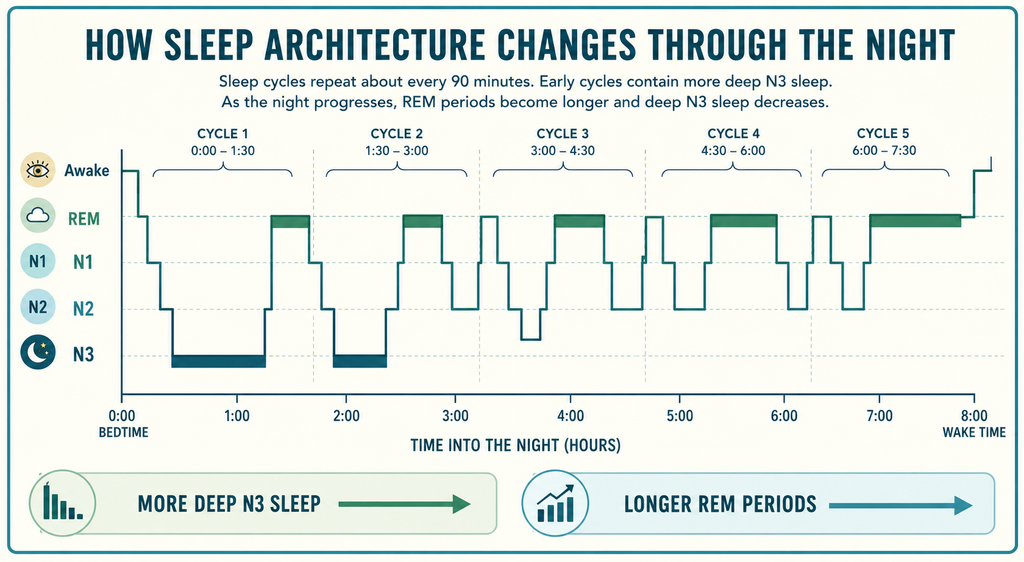
Deep N3 sleep is more abundant in the earlier sleep cycles. REM periods become progressively longer during the later cycles.
Sleep-architecture chart showing repeated N1, N2, N3, and REM cycles, with more deep sleep early and longer REM periods later.
Sleep Does Not Follow the Same Pattern All Night
Sleep architecture changes as the night progresses.
During the first third to first half of the sleep period, the brain generally spends more time in deep N3 sleep.
During the second half of the sleep period, deep sleep decreases and REM periods become longer.[1,2]
A useful way to think about the night is:
Earlier sleep cycles → More deep N3 sleep
Later sleep cycles → Longer REM periods
Both parts of the night matter.
Obtaining several hours of sleep early in the night may provide some deep sleep, but cutting the night short can disproportionately remove the later REM-rich cycles.
The goal is not to obtain only one kind of sleep.
The goal is to give the brain enough time to move through the entire sequence.
The Four Main Stages of Sleep
N1: Entering Sleep
N1 is the lightest stage of sleep.
It is the brief transition between being awake and being asleep.
During N1:
- Muscles begin to relax.
- Eye movements slow.
- Awareness of the environment decreases.
- Brain-wave activity begins to change.
- A person can be awakened easily.
- Sudden muscle movements may occur.
- Some people experience a sensation of falling.
N1 normally represents only a small portion of total sleep time.
If sleep is repeatedly interrupted, however, a person may return to N1 more frequently and spend less continuous time in the deeper stages.
N1 is the doorway into sleep—but the brain is not meant to remain at the doorway all night.
N2: Stable Sleep
N2 is generally the most abundant sleep stage in healthy adults.[2,3]
During N2:
- Heart rate slows.
- Breathing becomes more regular.
- Body temperature decreases.
- Eye movements stop.
- Awareness of the environment continues to fade.
- Muscle activity decreases.
- The brain produces sleep spindles and K-complexes.
What Are Sleep Spindles?
Sleep spindles are brief bursts of rapid electrical activity in the brain.
They are thought to contribute to:
- Sleep stability
- Memory processing
- Learning
- Protection from unnecessary awakening
What Are K-Complexes?
K-complexes are large electrical-wave patterns that occur during N2 sleep.
They may help the sleeping brain evaluate environmental information without fully awakening.
For example, the brain may respond differently to an insignificant background sound than it would to a potentially meaningful sound. N2 is sometimes called light sleep, but “light” does not mean unimportant. It occupies a large portion of the night and helps maintain sleep while supporting memory and sensory processing.
N3: Deep, Slow-Wave Sleep
N3 is the deepest stage of NREM sleep.
It is also called:
- Deep sleep
- Slow-wave sleep
- Delta sleep
During N3, the brain produces large, slow electrical waves called delta waves. It is generally more difficult to awaken someone from this stage.
If a person is awakened suddenly from deep sleep, they may briefly feel confused or disoriented. This is sometimes called sleep inertia.
N3 sleep is associated with:
- Physical restoration
- Tissue repair
- Growth-hormone secretion
- Immune regulation
- Energy conservation
- Memory consolidation
- Nervous-system recovery
- Distinctive cerebrospinal-fluid and vascular activity
Deep sleep is normally concentrated during the first several sleep cycles.[1–3]. This does not mean that deep sleep always occurs between the same clock hours for everyone. A person who falls asleep at 9:30 PM will begin their first cycles at a different clock time from someone who falls asleep at midnight.
The timing of deep sleep is related to:
- When sleep begins
- How long the person was awake beforehand
- Circadian timing
- Age
- Sleep deprivation
- Health conditions
- Medications and substances
- Whether sleep is repeatedly interrupted
Deep sleep is important, but it is only one part of healthy sleep architecture.
REM: The Active-Brain Stage
REM stands for rapid eye movement sleep.
During REM sleep:
- Brain activity becomes more similar to wakefulness.
- Rapid eye movements occur.
- Vivid dreaming is common.
- Heart rate and breathing may become more variable.
- Most skeletal muscles become temporarily inactive.
This temporary muscle inactivity helps prevent the body from acting out most dreams.
REM sleep supports:
- Emotional processing
- Learning
- Memory integration
- Adaptation to stressful experiences
- Creativity and problem-solving
The first REM period is usually relatively brief.
As the night progresses, REM periods become longer. This means that the final hours of sleep can contain a significant portion of the night’s REM sleep.[1,2]
Cutting sleep short may therefore affect emotional regulation, concentration, and memory—even if the person obtained some deep sleep earlier.
Which Stage Is the Most Restorative?
It is tempting to ask which sleep stage is the “best.”
The answer depends on what we mean by restorative.
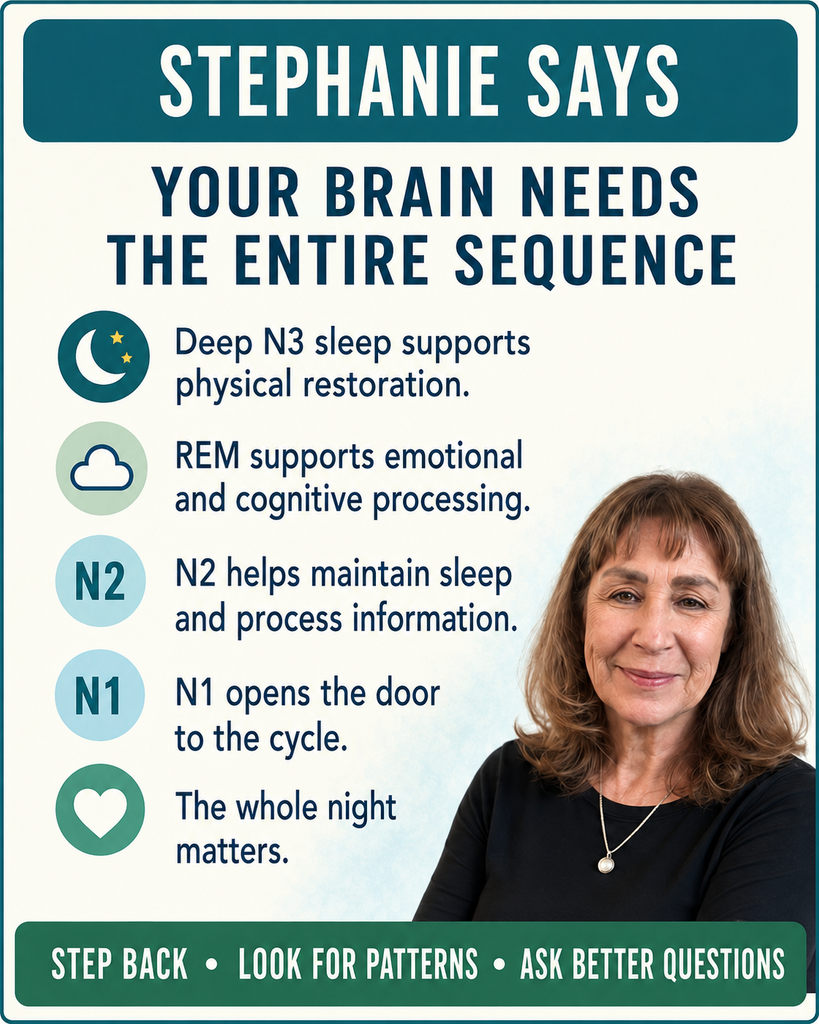
N3 Supports Physical Restoration
Deep N3 sleep is strongly associated with:
- Physical recovery
- Immune regulation
- Tissue repair
- Growth-hormone secretion
- Slow-wave brain activity
REM Supports Emotional and Cognitive Processing
REM sleep contributes to:
- Emotional regulation
- Memory integration
- Learning
- Adaptation
- Creative processing
N2 Supports Sleep Stability and Memory
N2 helps:
- Maintain sleep
- Process sensory information
- Support learning
- Consolidate certain memories
N1 Allows the Transition Into Sleep
N1 creates the transition from wakefulness into the more stable stages of sleep.
Rather than searching for one perfect stage, think of the night as a team of specialized workers.
Each stage has a different job.
Healthy sleep depends on the sequence—not just one stage.
Is There a Universal 10:00 PM–2:00 AM Restorative Window?
Not exactly. For someone who falls asleep around 10:00 PM, a significant portion of that person’s deep sleep may occur between approximately 10:00 PM and 2:00 AM. But those clock hours are not a universal restorative or “detox” window. Deep sleep is generally concentrated in the first several sleep cycles—whenever those cycles begin.
Circadian timing still matters. Consistently sleeping at a time that conflicts with the body’s biological rhythm may affect sleep quality and architecture.
But the more useful questions are:
- When do I usually fall asleep?
- Is my schedule reasonably consistent?
- Am I allowing enough time for a full night?
- Do I wake repeatedly?
- Am I cutting off my later REM-rich sleep?
- Do I feel restored when I awaken?
The detective looks beyond one clock time.
The detective looks for the pattern.
Why the Whole Night Matters
The early and later portions of sleep are not interchangeable. The first part of the sleep period is usually richer in deep N3 sleep. The later portion contains longer REM periods. If someone sleeps only four or five hours, they may obtain some early deep sleep but lose much of the later REM-rich portion. This is why sleep duration matters in addition to sleep depth. Most healthy adults are advised to obtain at least seven hours of sleep regularly, with many adults needing approximately seven to nine hours.[4] Individual needs vary, but repeatedly cutting sleep short may interfere with the brain’s opportunity to complete its normal architecture.
The question is not only:
“Did I get deep sleep?”
It is also:
“Did I give my brain enough time to complete the entire night’s work?”
Brief Awakenings Can Be Normal
Most people do not move through the night without any awakenings.
Brief awakenings may occur:
- Between sleep cycles
- After a sound
- When changing position
- In response to temperature
- Near the end of a REM period
Many brief awakenings are not remembered the next morning.
The concern is not necessarily whether a person awakens at all.
More important questions include:
- How often am I awakening?
- How long am I awake?
- Can I return to sleep?
- Is there a repeating physical trigger?
- Do the awakenings leave me tired during the day?
Repeated or prolonged awakenings may prevent the brain from progressing normally through its sleep stages.
We will investigate fragmented sleep more closely in Article 3 of this series.
How Sleep Architecture Changes With Age
Sleep patterns change across the lifespan.
Children and adolescents generally obtain more deep sleep than older adults.
As adults age, they may experience:
- Less N3 deep sleep
- More time in lighter sleep
- More nighttime awakenings
- Earlier sleep and waking times
- Reduced sleep efficiency
- Greater sensitivity to noise, discomfort, and temperature
These changes do not mean that every sleep problem should be dismissed as normal aging.
Persistent snoring, gasping, restless legs, pain, night sweats, excessive daytime sleepiness, or frequent awakenings may indicate that something is interfering with sleep architecture.
Aging changes the clues. It does not eliminate the need to investigate them.
What Your Sleep Tracker Can—and Cannot—Tell You
Consumer watches and rings can estimate sleep stages by analyzing signals such as:
- Movement
- Heart rate
- Heart-rate variability
- Breathing patterns
- Skin temperature
Most consumer trackers do not directly measure electrical brain-wave activity.
Their estimates of N1, N2, N3, and REM may differ from measurements obtained through clinical polysomnography.
A sleep tracker may still help identify trends, including:
- Changes in total sleep time
- Repeated nighttime awakenings
- Differences after alcohol
- Differences after late caffeine
- Changes associated with stress or pain
- Consistently low sleep efficiency
Do not allow one night’s sleep score to create panic.
The device offers estimates—not a diagnosis. Use the information as a clue and look for patterns over time.
A Simple Sleep-Architecture Detective Check
Consider these questions for one week:
Sleep Timing
- What time did I go to bed?
- Approximately what time did I fall asleep?
- What time did I awaken?
- Was my schedule different from the previous night?
Sleep Continuity
- How many awakenings do I remember?
- Was I able to return to sleep?
- Did pain, temperature, noise, urination, or leg discomfort awaken me?
Evening Clues
- Did I consume caffeine late in the day?
- Did I drink alcohol?
- Was I working or using bright screens close to bedtime?
- Was I especially worried or mentally stimulated?
Morning Clues
- Did I awaken feeling restored?
- Did I have a morning headache?
- Was my mouth unusually dry?
- Did I feel sleepy or mentally foggy during the day?
You do not need to monitor every detail forever. The purpose is to notice whether a pattern begins to emerge.
“How many hours was I in bed?”
Ask:
- Did I give myself enough time to complete several sleep cycles?
- Did I wake repeatedly?
- Am I cutting my sleep short?
- Do I feel restored in the morning?
- What patterns am I beginning to notice?
Do not panic over every sleep score.
Step back.
Look for patterns.
Ask better questions.
Symptoms are clues. Patterns are information. One clue at a time.
Continue the Sleep Detective Series
In Article 2, we will look more closely at deep N3 sleep and the brain’s glymphatic system.
We will investigate:
- How cerebrospinal fluid moves around the brain
- What researchers mean by metabolic-waste clearance
- Whether sleep truly “detoxes” the brain
- What the evidence shows about amyloid-beta and tau
- Why there is no universal 10:00 PM–2:00 AM detox window
References
- National Heart, Lung, and Blood Institute. Sleep phases and stages. National Institutes of Health. Updated March 24, 2022.
https://www.nhlbi.nih.gov/health/sleep/stages-of-sleep - Patel AK, Reddy V, Shumway KR, Araujo JF. Physiology, Sleep Stages. StatPearls. StatPearls Publishing; updated 2024.
https://www.ncbi.nlm.nih.gov/books/NBK526132/ - Shrivastava D, Jung S, Saadat M, Sirohi R, Crewson K. How to interpret the results of a sleep study. Journal of Community Hospital Internal Medicine Perspectives. 2014;4(5):24983.
https://pmc.ncbi.nlm.nih.gov/articles/PMC4246141/ - Watson NF, Badr MS, Belenky G, et al. Recommended amount of sleep for a healthy adult: A joint consensus recommendation of the American Academy of Sleep Medicine and Sleep Research Society. Sleep. 2015;38(6):843–844.
https://doi.org/10.5665/sleep.4716
This article is intended for general education and is not a substitute for individualized medical evaluation, diagnosis, or treatment. Persistent or concerning sleep symptoms should be discussed with a qualified healthcare professional.
A Simple Guide to Feeding Your San Fernando Valley Garden Without Loving It to Death
Stephanie Larmour Sanders, MS, RDN, CDE, FNLP
Clinical Dietitian, Certified Diabetes Educator, and Functional Nutritionist
Gardening has a funny way of making us want to do something.
The tomato looks a little tired? Fertilize it.
The zucchini isn’t growing fast enough? Fertilize it.
The basil looks fabulous?
Maybe fertilize it anyway—just in case.
But plants don’t necessarily work that way.
More fertilizer doesn’t automatically mean more vegetables.
In fact, one of the most useful things I’ve learned about gardening is that feeding plants is a little like feeding people: we want to provide what is needed, in an appropriate amount, rather than assuming more is always better.
And here in the San Fernando Valley, there’s another consideration in August:
Heat.
So let’s make fertilizer a little less mysterious.
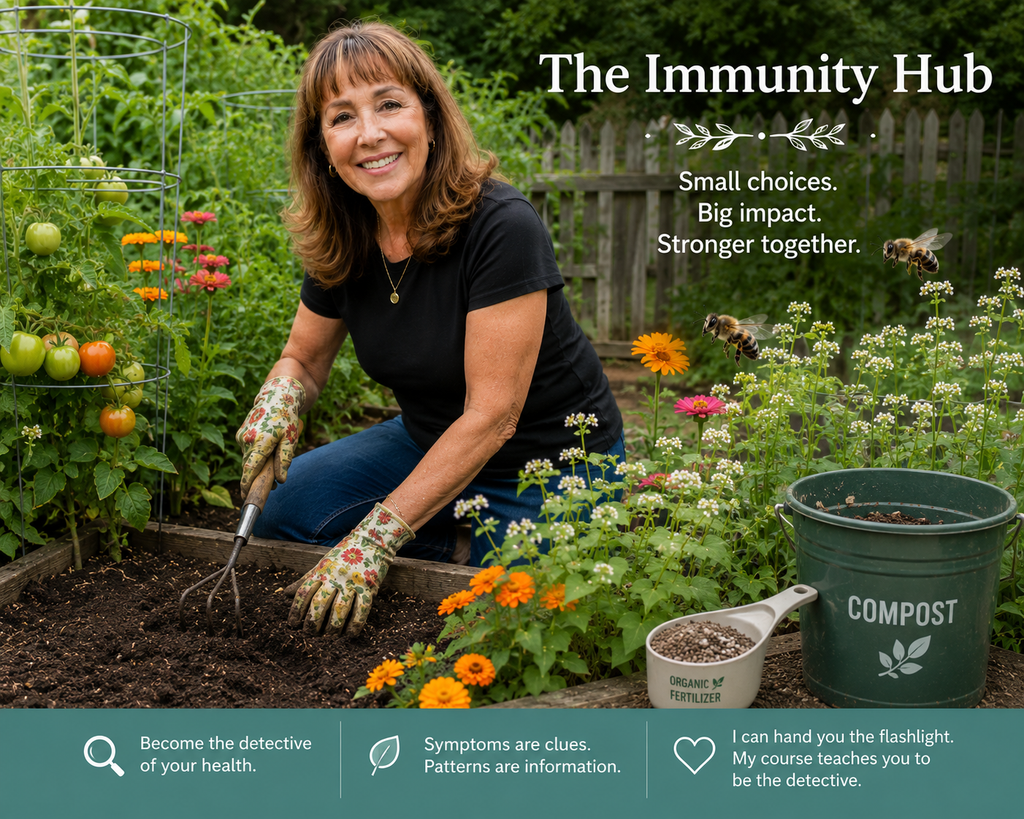
Stephanie tending vegetables in her backyard garden in the San Fernando Valley.Before reaching for fertilizer, look at the plant, the soil, the weather and what you’ve already added to the garden.
Sometimes our plants need nutrients. Sometimes they need water, cooler soil or simply a little patience. The trick is learning the difference.
Note : If you want to join my Membership page “The Immunity Hub”, comment on my website, under comments, or in my Email: StephanieLarmourSanders@Gmail.com
🌱 First: What Is Fertilizer Actually Doing?
Plants need a variety of nutrients to grow.
On most fertilizer packages you’ll see three numbers, perhaps:
5-5-5
10-10-10
5-10-10
These numbers are commonly referred to as N-P-K and represent the percentages of nitrogen, phosphate and potash in the product.
For the home gardener, here’s the simple version:
N — Nitrogen: particularly important for leafy, green growth.
P — Phosphorus: plays important roles in plant growth, including roots, flowering and reproduction.
K — Potassium: contributes to numerous plant functions, including water regulation and overall plant function.
UC Master Gardener guidance notes that many California soils particularly need additional nitrogen, while the need for phosphorus and potassium varies with the soil.
And that leads us to an important point:
You don’t necessarily need a fertilizer containing lots of everything.
A soil test can help determine what your garden already has and what it may actually need.
🌿 Compost and Fertilizer Aren’t Quite the Same Thing
I love compost in a vegetable garden.
Finished compost contributes organic matter and nutrients and can improve the soil environment.
But compost and fertilizer aren’t interchangeable terms.
Think of compost as part of building and maintaining the garden’s soil. A fertilizer is generally a more concentrated source of specific plant nutrients. Sometimes your garden may benefit from both.
Sometimes it may not need additional fertilizer at all.
This is why I prefer:
Feed thoughtfully rather than fertilize automatically.
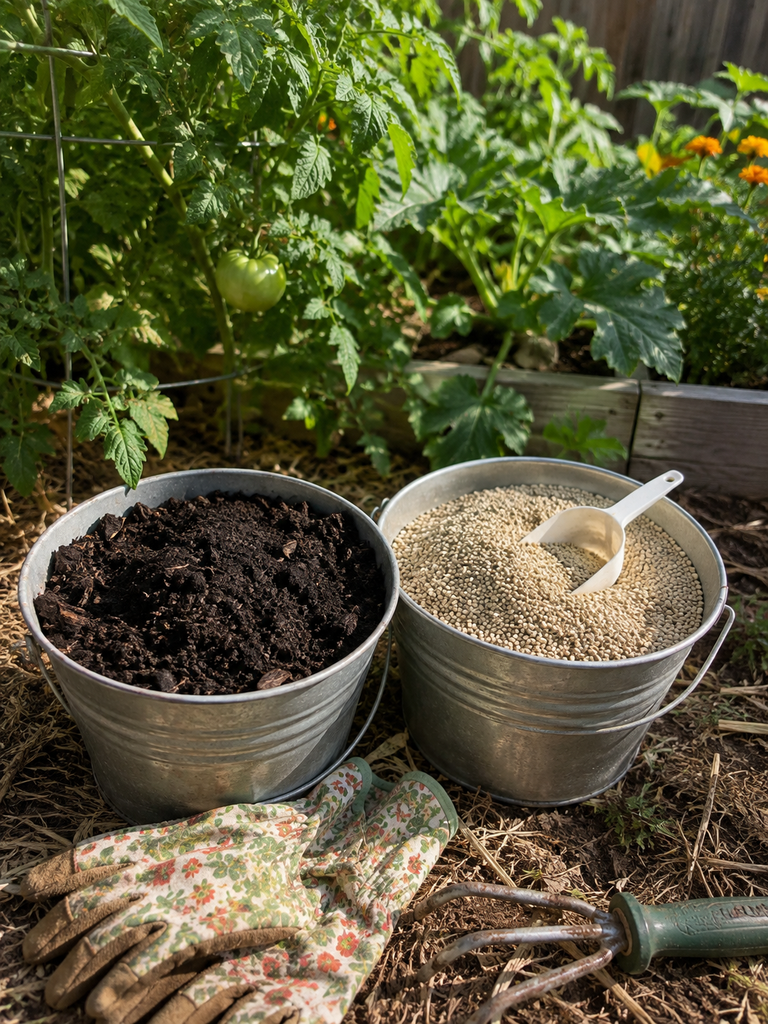
Finished compost and measured vegetable fertilizer . Compost helps build healthy garden soil, while fertilizers provide more concentrated amounts of particular nutrients. Healthy gardening isn’t about pouring more products onto plants. Start with the soil and add nutrients thoughtfully.
🗓️ So When Should I Fertilize?
Here’s where I want to get away from the idea that every vegetable needs fertilizer every Tuesday.
It doesn’t.
1. Before planting
This is a logical time to prepare your soil.
UC guidance notes that vegetables in many California soils benefit from fertilizer before planting, particularly nitrogen, although specific needs depend upon the soil.
This is also an appropriate time to incorporate finished compost when needed.
2. During active growth—when the particular crop needs it
Some vegetables benefit from additional nutrients during the growing season.
But how much and when depend on the crop, soil and fertilizer you’re using.
That’s why the fertilizer label matters.
A granular product intended to be applied every several weeks should not suddenly become a weekly treatment because the gardener is feeling enthusiastic.
Follow the application rate and frequency on the label.
3. Containers need their own strategy
Containers are different.
Every time we water, nutrients can leach out of the potting mix. UC Master Gardeners therefore recommend lighter, more frequent fertilization for many container-grown vegetables.
🔬 Recent 2026 UC Master Gardener guidance describes beginning a dilute water-soluble fertilizer approximately two to four weeks after planting for container vegetables. Another approach is a slow-release fertilizer incorporated into the potting mix.
Check your potting mix first, however. Some mixes already contain fertilizer.
We don’t want to feed the plant twice simply because we didn’t read the bag.
🍅 Tomatoes, Peppers and Eggplant
Here’s where gardeners sometimes get into trouble with nitrogen.
A tomato plant can look magnificent after generous nitrogen fertilization:
Green! Lush! Enormous!
And you stand there waiting for tomatoes.
Excess nitrogen can encourage vegetative growth rather than giving us the balance we’re looking for in a fruiting plant. UC agricultural guidance also cautions that nitrogen and phosphorus applications beyond crop requirements can be detrimental to both crops and the environment.
For established fruiting vegetables, don’t automatically keep adding a high-nitrogen fertilizer.
Consider what’s already been applied and follow recommendations for the particular crop and product.
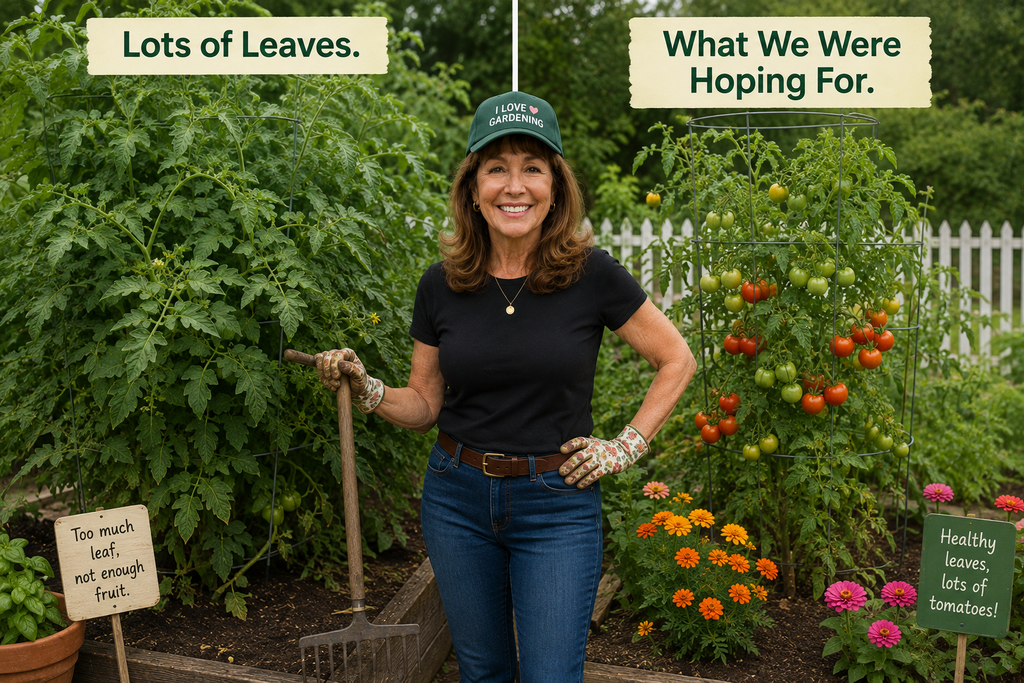
I have had this problem before “Lots of Leaves, less tomatoes”. After research I found my fertilizer was not balanced, it was too high in Nitrogen. Of course “What I wanted was a balance of tomatoes and leaves. I was happy when I solved this problem. Gardening can be fun, as long as you stay flexible, open minded and use your resources to follow up on your challenge.
More nitrogen doesn’t necessarily mean more tomatoes. A gorgeous jungle of tomato leaves isn’t quite the same thing as a basket of tomatoes.
🥬 What About Kale and Other Leafy Greens?
Now the story changes.
If we’re growing something for its leaves, nitrogen becomes especially relevant because nitrogen supports leafy vegetative growth.
That doesn’t mean:
“Dump nitrogen on the kale.”
It means that leafy vegetables and fruiting vegetables don’t necessarily have identical nutrient needs. This is one reason I don’t love the idea of one fertilizer schedule for the entire backyard.
Your kale doesn’t know what your tomato is doing.
🥕 Carrots, Beets and Root Vegetables
Root vegetables give us another reason to be cautious about automatically applying lots of nitrogen.
We want healthy foliage—but we’re ultimately interested in what’s developing underground.
Before adding fertilizer, consider the fertility of the bed and what’s already been added.
And remember that problems such as poor germination during a San Fernando Valley August may have more to do with heat and moisture than fertilizer.
A seed sitting in hot, dry soil isn’t asking for a vitamin.
It’s asking for water.
☀️ Should I Fertilize During a Heat Wave?
This is especially important for our San Fernando Valley garden.
If a plant is wilted and severely heat- or water-stressed, my first response would not be fertilizer.
Check the soil moisture.
Check irrigation. Consider whether the roots are overheating. Look for pests or disease.Make sure the plant isn’t simply reacting to an exceptionally hot afternoon.Then address nutrition if there’s reason to believe nutrition is the problem.Fertilizer cannot compensate for inadequate water or unsuitable growing conditions.
For container plants, UC guidance recommends moist soil before fertilization, and California container guidance emphasizes the additional challenges created by heat, rapid drying and salt accumulation.
🪴 Containers: The Exception to “Less Often”
Remember those patio tomatoes, peppers and herbs?
Containers are their own little ecosystems. Their roots can’t wander through the surrounding soil looking for nutrients, and frequent watering can wash nutrients from the potting mix.
That means containers may need light feeding more frequently than vegetables growing in the ground.
One UC Master Gardener recommendation for container vegetables is to begin a water-soluble fertilizer at one-quarter strength two to four weeks after planting, potentially applying it with watering during active growth. Other guidance suggests slow-release fertilizer as an alternative.
The exact schedule still depends on your fertilizer.
So read the label.
That’s not the glamorous gardening advice anyone puts on a T-shirt.
But it’s good advice.
☕ And What About Those Coffee Grounds?
Ah, coffee grounds.
Somehow our morning coffee has acquired an impressive second career on social media as a fertilizer, soil acidifier and general garden miracle.
Let’s separate fact from folklore.
🔬 Recent 2026 UC Master Gardener guidance specifically addressed the claim that used coffee grounds acidify soil.
They generally do not.
The acids in coffee are largely water-soluble and end up in the beverage. Used grounds are much closer to neutral, so scattering them around an acid-loving plant isn’t a reliable way to lower soil pH.
Used grounds can, however, go into the compost pile.
UC guidance also cautions that grounds spread directly onto soil can create issues, including becoming water-repellent when they dry.
My simplest recommendation?
Let the compost pile have your coffee grounds.
Mix them with the other materials rather than repeatedly dumping thick layers around individual plants.

Compost pail can contain coffee grounds, dry leaves and vegetable scraps. Coffee grounds aren’t a reliable way to acidify garden soil. Coffee for the gardener. Grounds for the compost pile. Everybody gets something.
🧂 Can You Overfertilize?
Absolutely.
Fertilizers contain soluble salts. Excess fertilizer can injure plant roots and contribute to salt accumulation, particularly in containers. Too much fertilizer can also contribute to nutrient movement into waterways and groundwater.
So if the label says one amount:
Doubling it isn’t twice as loving. Measure.
Follow directions. And don’t keep adding fertilizer because you’re impatient for a tomato to turn red. The tomato has not read your schedule.
🌱 Stephanie’s Simple Fertilizer Checklist
Before I fertilize, I want to ask:
- What am I growing—leaves, roots or fruit?
- Is it in the ground, a raised bed or a container?
- What fertilizer or compost has already been added?
- Does my potting mix already contain fertilizer?
- Is the plant actively growing, or is it stressed from extreme heat or lack of water?
- Have I followed the fertilizer label?
- Would a soil test give me a better answer than guessing?
If I can’t answer those questions, I probably shouldn’t be reaching for another scoop quite yet.

My homegrown cucumbers, green beans and one small pepper.
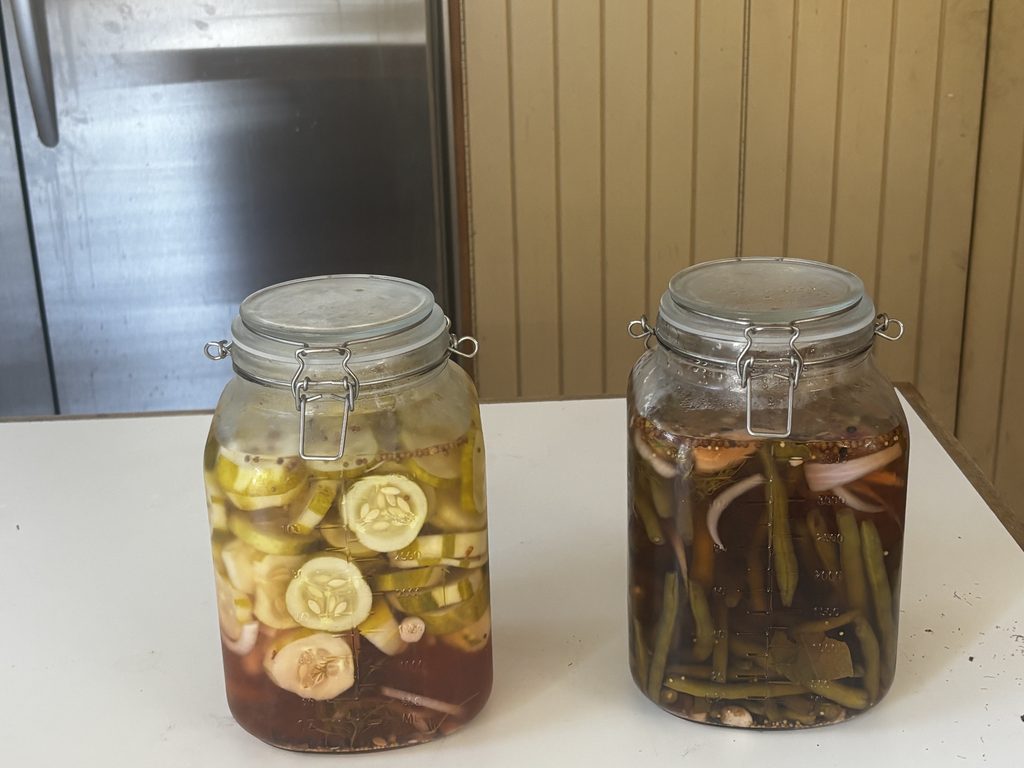
I pickled both my homegrown cucumbers and green beans I harvested in July.
The goal is healthy soil, healthy plants and food we can actually enjoy harvesting.
This is the part of gardening I love—the moment something we’ve tended makes its way from the garden to the table. I was also able to share with my family and friends. They loved these. Now that makes me happy, and all worthwhile
🌻 Stephanie Says
Feed the soil first. Feed the plant when it needs it. and don’t assume more fertilizer means more food.
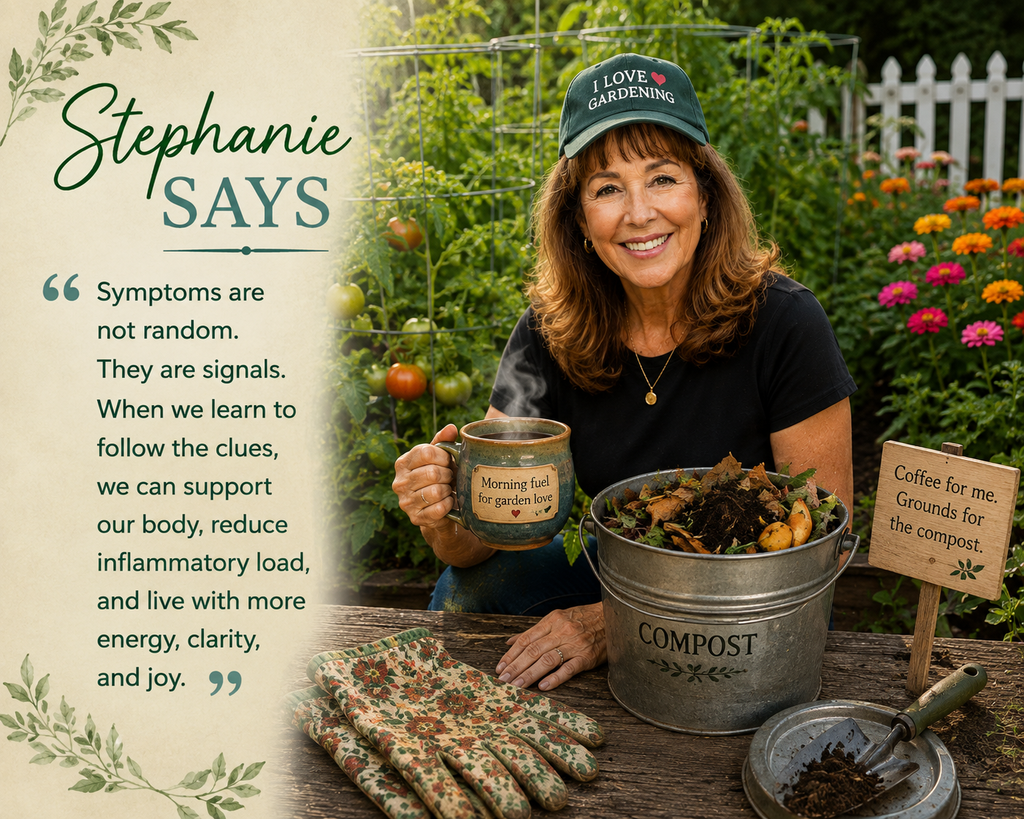
I like keeping this simple. Start with good soil. Add compost when appropriate.Learn what you’re growing. Use fertilizer thoughtfully. Measure instead of guessing. Pay particular attention to container plants because frequent watering can carry nutrients away. And during one of our scorching San Fernando Valley afternoons, remember:
A wilted plant may be asking for water and relief from the heat—not dinner.
Gardening is observation. Sometimes the most helpful thing we can do is add something. And sometimes the smartest thing we can do is leave the fertilizer bag in the shed.
CTA: What’s one gardening question you’ve always wanted answered? Send it my way—it may become the next garden article.
References
- University of California Agriculture and Natural Resources, UC Master Gardener Program. Soil Improvements and Preparation.
- UC Master Gardener Program of Alameda County. Adding Fertilizer to the Soil.
- UC Master Gardeners of Santa Clara County. Container Gardening Basics.
- UC Master Gardener Program of Contra Costa County. Growing Vegetables in Containers. April 25, 2026.
- University of California Statewide Integrated Pest Management Program. Tomato: Fertilization.
- UC Master Gardener Program of Sonoma County. Debunking a Few Common Garden Remedy Myths. June 13, 2026.
- UC Master Gardeners of Placer County. Using Coffee Grounds in the Garden. November 30, 2025.
Stephanie’s Review
I intentionally avoided prescribing one universal fertilizer product, N-P-K ratio or schedule for all vegetables. Fertilizer requirements vary by crop, soil, container medium and product formulation.
27 Aug, 2026 | Stephanie Sanders | No Comments
🐝 Don’t Forget the Pollinators: Plant a Little Something for Them, Too
Stephanie Larmour Sanders MSRDN,CDE, FNLP
Amateur Gardener, and Anti-inflammatory Dietitian and Nutritionist
A vegetable garden isn’t only about vegetables.
Look closely on a summer morning and you may discover an entire neighborhood at work—bees moving between flowers, butterflies stopping for nectar and other beneficial insects quietly visiting the garden.
Many of the foods we grow depend on or benefit from insect pollination, including squash, cucumbers and melons.
So while we’re deciding what vegetables to grow, let’s save a little garden space for the pollinators, too.
🌸 What Can I Plant in a Hot San Fernando Valley Garden?
Consider a mixture of flowering plants such as:
- Zinnias — colorful, heat-loving flowers that can attract butterflies and bees.
- Cosmos — cheerful flowers that provide nectar and pollen and fit beautifully into an informal vegetable garden.
- Sunflowers — dramatic, useful and attractive to numerous pollinating insects.
- Salvias — especially valuable when choosing varieties suited to Southern California conditions.
- California buckwheats — native options that can provide valuable resources for many insects.
- Yarrow — clusters of small flowers create convenient landing and feeding areas for beneficial insects.
- Marigolds — easy to tuck around vegetable beds and useful for increasing floral diversity.
- Flowering herbs — don’t be too quick to remove every basil flower! Allowing some basil and other herbs to bloom can provide additional food for visiting pollinators.
You don’t need every flower on this list.
A few thoughtfully chosen plants are enough to begin.
Even better, choose different flower shapes and plants that bloom at different times. That can provide a more continuous source of nectar and pollen rather than one enormous floral buffet that disappears two weeks later.

San Fernando Valley vegetable garden with tomatoes, cucumbers and squash surrounded by zinnias, cosmos, and flowering basil. Flowers mixed into the vegetable garden can provide nectar and pollen for bees, butterflies and other beneficial insects.
Plant something for yourself—and something for the pollinators. A little flower diversity can bring color, movement and life into the vegetable garden.
🐝 One More Pollinator-Friendly Tip
Try not to make the garden too tidy.
A perfectly manicured landscape isn’t necessarily the most useful habitat.
Allow some herbs to flower. Include different plant heights. Consider native flowering plants. And before reaching automatically for an insecticide, identify the insect and decide whether intervention is actually necessary.
Remember: if we’re inviting beneficial insects to dinner, we need to be thoughtful about what we’re spraying around their table.
🌻 Stephanie Says
I love the idea that when I plant my vegetable garden, I’m not gardening alone.
The bees, butterflies and other beneficial insects are part of this little ecosystem, too.
You don’t need to transform your entire yard into a pollinator sanctuary overnight.
Plant a few flowers.
Let some basil bloom.
Notice who arrives.
Grow food for your table—and leave a little something blooming for your garden visitors. 🐝🌻
19 Aug, 2026 | Stephanie Sanders | No Comments
What to Plant in August in a Zone 9 San Fernando Valley, California Garden
When the Tomatoes Are Thriving, the Lettuce Is Complaining, and Fall Is Waiting in the Wings
Stephanie Larmour Sanders, MS, RDN, CDE, FNLP
**Clinical Dietitian, Certified Diabetes Educator, and Functional Nutritionist **
August in a San Fernando Valley garden has a personality.
It is hot.
The tomatoes may be sprawling across their cages as if they own the place. The peppers are perfectly content. The basil may be trying to become a small shrub.
And somewhere, a hopeful gardener is standing in the blazing afternoon sun holding a packet of lettuce seeds and wondering:
“Can I plant this now?”
The answer is: maybe—but August gardening in our part of Southern California requires a little strategy.
This is the month when we can continue enjoying the summer garden while quietly preparing for fall. The trick is knowing which plants appreciate the heat, which ones can begin their fall journey now, and which ones would prefer that we wait until Mother Nature turns down the thermostat

Southern California backyard vegetable garden with yummy Concord grapes in late summer with tomatoes, peppers, basil and other herbs.
August in the San Fernando Valley garden: enjoy the summer harvest while beginning to prepare for fall.
One foot in summer, one foot in fall. August is a transition month in the Southern California vegetable garden.
First, What Does “Zone 9” Actually Tell Us?
The USDA Plant Hardiness Zone system is helpful, but it doesn’t tell us everything we need to know about growing vegetables.
Hardiness zones are primarily based on a location’s average annual extreme minimum winter temperature. They are particularly useful when we’re trying to determine whether perennial plants are likely to survive winter.
But an August vegetable garden in the San Fernando Valley has another concern:
Heat.
A Zone 9 garden in one part of the country may have very different summer conditions from a Zone 9 garden in Southern California.
Even two gardens in the San Fernando Valley can behave differently. One may receive intense afternoon sun reflected from a wall, while another has afternoon shade. Raised beds and containers can also dry much faster than garden soil.
That’s why California planting guidance—and your actual garden conditions—matter in addition to the number on the USDA zone map.
The University of California Master Gardener Program notes that warm-season vegetables generally grow best when average temperatures are approximately 65°F–95°F, while cool-season vegetables generally prefer approximately 55°F–75°F. [1]
That gives us a much better August question than simply:
“What grows in Zone 9?”
Instead ask:
“What makes sense to plant in my Zone 9 garden while August is still hot?”
🌱 The August Garden Has Two Jobs
Think of August as the garden standing with one foot in summer and the other stretching toward fall.
Job #1: Keep the summer garden producing
Don’t be too quick to evict a healthy tomato plant simply because you’ve seen your first packet of fall seeds.
Established warm-season crops such as:
- Tomatoes
- Peppers
- Eggplant
- Beans
- Basil
- Some squash and cucumbers
may continue producing during warm Southern California weather when they’re healthy and adequately watered.
Keep harvesting. Regular harvesting can encourage continued production in several summer vegetables. [2]
Job #2: Begin preparing for fall
This is where August gets interesting.
California planting recommendations include August planting windows for several vegetables, including snap beans, beets, carrots, cabbage, cauliflower, kale, lettuce and spinach, depending on the California climate region. [1]
But planting dates are guides—not commands.
In a hot San Fernando Valley garden, we need to look at the calendar and the thermometer.
🫘 Snap Beans: “It’s Hot? I’m Fine.”
If you have space for another warm-season crop, snap beans may be worth considering.
UC planting guidance includes August within the planting period for snap beans in several California climate regions, including the South Coast and Interior Valleys. [1]
Bush beans can be particularly convenient in a smaller garden because they don’t require the same vertical support as pole beans.
Give them adequate sun, consistent moisture and suitable soil, and you may be able to enjoy another crop while warm weather continues.
Garden personality:
“Still summer? Excellent. Carry on.”
🥕 Carrots and Beets: Fall Is Beginning to Whisper
Carrots and beets signal that our garden is beginning its transition.
UC California planting calendars include August within planting windows for these crops in several regions. [1]
The challenge in August isn’t simply getting the seed into the soil.
It’s keeping that tiny seed alive while the surface of the garden is trying to impersonate the Mojave Desert.
Seeds need consistent moisture while germinating. Hot, dry conditions can make that more difficult, so pay particular attention to the surface of the seedbed.
This is one of those times when small, frequent observation beats gardening by a rigid schedule.
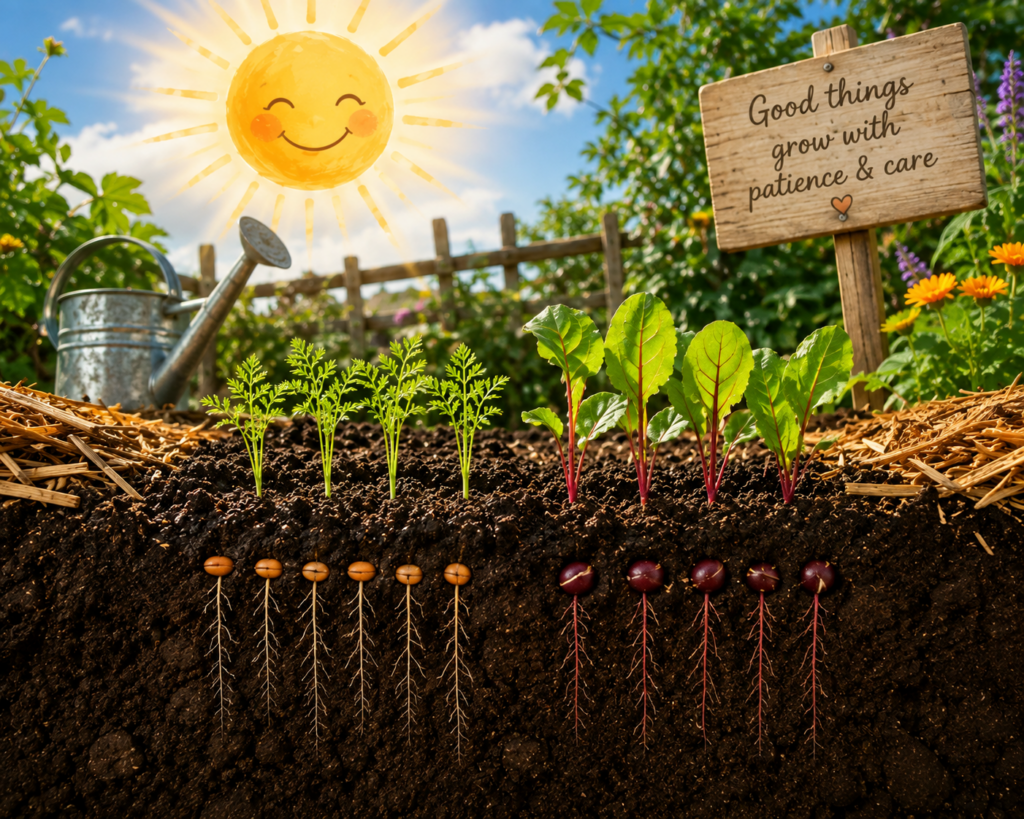
Here is an animated close-up garden illustration showing carrot and beet seeds beneath moist soil, with a small amount of mulch nearby .Avoid showing heavy mulch directly over newly germinating seeds.
Carrots and beets can begin the transition toward fall, but August seedbeds need careful attention to moisture.
Tiny seeds have tiny reserves. In August heat, successful fall planting begins with protecting moisture while seeds germinate. Note planting tiny seeds creates food for bugs. May want to wait till a bit more established, or purchase older plants. I love Green Thumb in the Canoga Park area. They have good prices(relatively speaking), and experts to answer your questions.
🥬 Kale Is Waiting in the Wings
Kale is one of the cool-season vegetables we can begin thinking about now.
California planting guidance lists August within the planting period for kale in the South Coast and Interior Valley regions. [3]
But there’s an important distinction between:
“August is within the planting window”
and
“Put a tender kale transplant into scorching soil at 2:00 p.m. during a 105°F heat wave.”
Those are not the same recommendation.
🔬 Recent research/guidance: A 2026 UC Master Gardener August vegetable guide specifically cautions gardeners to consider extreme late-summer temperatures when transplanting brassicas(as known as cruciferous vegetables or cole crops) and suggests protecting young plants from severe afternoon heat. [2]
Starting seeds in a protected location and transplanting when conditions become more favorable can be a sensible strategy.
Sometimes the best gardening decision is simply:
Wait three days.
🥬 Lettuce and Spinach May Have Something to Say About This
Lettuce and spinach are cool-season crops.
California planting calendars begin including them during August in some regions. [1]
But your San Fernando Valley lettuce doesn’t read planting calendars.
It experiences the temperature in your backyard.
Imagine lettuce stepping outside at noon, looking around and saying:
“Absolutely not.”
During sustained high temperatures, I wouldn’t make a huge bed of directly seeded lettuce the centerpiece of my August garden.
Instead, consider starting small amounts in a cooler or protected location, experimenting with afternoon shade, or simply waiting until temperatures become more favorable.
There’s no gardening prize for planting something three weeks before it wants to grow.
🥦 Broccoli, Cabbage and Cauliflower: Prepare Rather Than Panic
These vegetables are another sign that fall is approaching.
Cabbage and cauliflower appear in August planting windows for some California regions, while timing for broccoli and other cool-season vegetables varies according to location. [1]
One practical strategy is to start fall seedlings in a protected location rather than immediately filling a blazing-hot garden bed with vulnerable young transplants.
UC Master Gardener guidance also identifies August as a time when gardeners can start several cool-season vegetables from seed for later transplanting. [4]
That lets you work with the season rather than against it.
🍅 Don’t Forget the Plants Already Feeding You
It’s easy to become so excited about the fall garden that we overlook what’s already producing.
Your August garden may still be giving you:
- Tomatoes
- Peppers
- Eggplant
- Beans
- Herbs
- Cucumbers
- Squash
Harvest regularly and pay attention to plant stress.
UC Master Gardener August guidance emphasizes continued irrigation and harvesting of summer vegetables during hot weather. [2]
In other words:
Don’t become so excited about your future carrots that you forget the tomato plant currently handing you dinner.
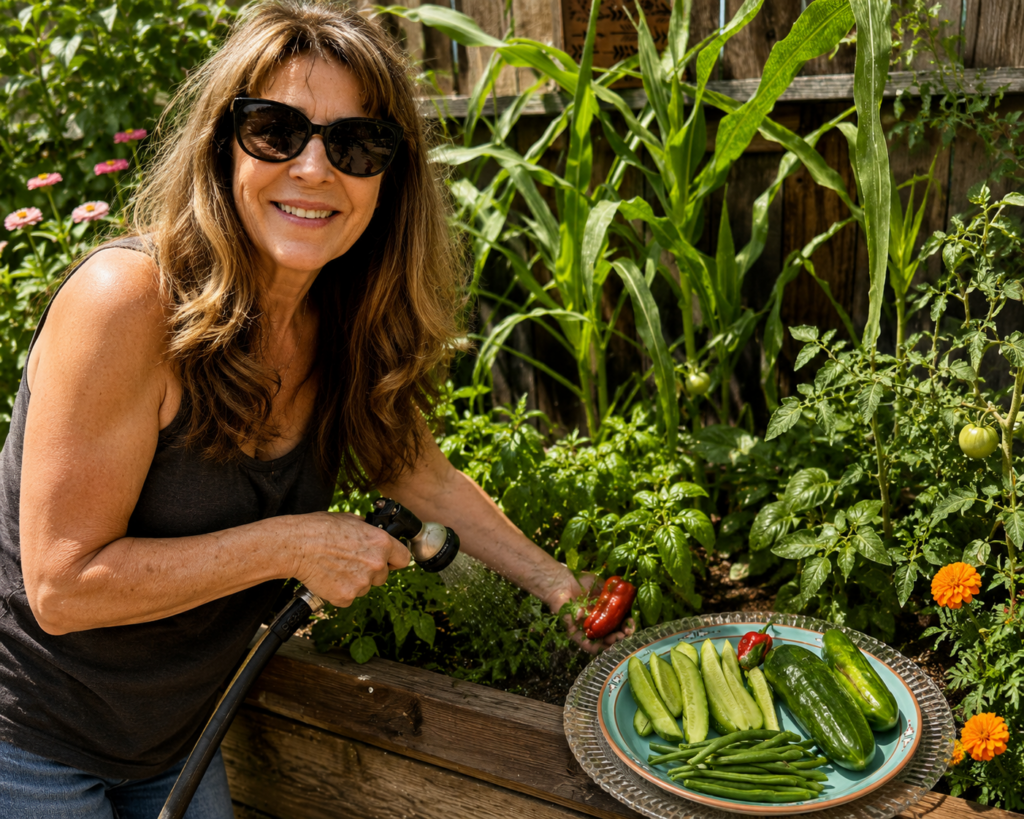
August bridges two gardening seasons: harvest summer while preparing for fall.
Before you plant the next garden, take a moment to enjoy the one that’s already feeding you.
💧 In August, Water Is Part of the Planting Plan
We can’t talk about August gardening in the San Fernando Valley without talking about water.
During hot weather, plants can lose water rapidly. Newly planted seeds and young transplants are particularly vulnerable because their root systems are limited.
UC Master Gardener guidance recommends monitoring irrigation carefully during August and using mulch as one strategy for conserving soil moisture. [5]
Mulch can help reduce evaporation and moderate conditions around plant roots.
But don’t simply water everything according to the same calendar.
A tomato growing in a large mulched garden bed and basil growing in a little dark-colored pot against a west-facing wall may technically be experiencing the same weather.
They are not experiencing the same Tuesday.
Check the soil.
Observe the plant.
Consider the container.
Look at the weather.
That’s gardening.
🌿 What About Fertilizer?
Healthy plants need nutrients, but more fertilizer does not automatically mean more vegetables.
Different crops have different nutrient requirements, and what your garden needs depends partly on what’s already in the soil.
A productive tomato, a young kale plant and a row of carrots don’t necessarily need the same fertilizer—or the same amount.
And when plants are severely stressed by heat or lack of water, fertilizer isn’t a substitute for addressing those conditions.
Rather than turning this into a fertilizer article inside a planting article, we’re going to give fertilizer the attention it deserves separately.
Coming Next: Article 2 — How to Fertilize a Southern California Vegetable Garden
In Article 2, we’ll dig into:
- What the three numbers on a fertilizer bag actually mean
- Compost versus fertilizer
- How often vegetables may need fertilizing
- Why tomatoes and leafy greens have different needs
- Fertilizing raised beds versus containers
- Why more nitrogen isn’t always better
- When not to fertilize
- Whether organic fertilizer is automatically better
- How soil testing can help take some of the guesswork out of feeding your garden
We’ll also tackle a question I hear frequently:
Should you put your used coffee grounds around your plants?
Spoiler: Your compost pile may appreciate them more than your blueberry bush does.
☀️ Your Simple August San Fernando Valley Garden Plan
If all of this sounds like a lot, simplify it.
KEEP
Healthy, productive summer vegetables such as tomatoes, peppers, eggplant and other crops that are still giving you a harvest.
CONSIDER PLANTING
Snap beans, carrots and beets, depending on your garden conditions and the forecast.
BEGIN PREPARING
Kale, cabbage, cauliflower and other fall vegetables.
PROCEED CAUTIOUSLY
Lettuce, spinach and tender cool-season transplants when temperatures remain extremely high.
PROTECT
New seeds, young transplants and your soil from excessive drying.
OBSERVE
Your own microclimate.
UC specifically cautions that planting dates are approximate because conditions vary within California regions. [1]
That’s an important gardening lesson:
The planting calendar gives you directions. Your garden tells you what’s actually happening.
Caption: August is a transition month: continue harvesting summer crops while gradually preparing the fall garden.
Suggested social caption: You don’t have to choose between summer and fall in August. Harvest one while gently preparing for the other.
🌻 Stephanie Says

I love gardening because it reminds us to observe before we act. Funny, in this case my zucchini got away from me. However I was able to add to soups, use in my air fryer, and cut up and freeze for zucchini bread.
The calendar may say August, but your garden might be telling you something more specific.
What’s still producing?
Which part of the yard is brutally hot at 4:00 in the afternoon?
Where does the soil stay moist longer?
Which plants are thriving?
Which ones look like they’re begging you to wait until September?
You don’t have to rip everything out and start over because the season is changing.
Harvest what’s working. Plant what makes sense. Protect your soil. Prepare for what’s coming next.
And when the San Fernando Valley thermometer is flirting with triple digits?
Don’t argue with the thermometer.
The garden isn’t asking us for perfection.
It’s asking us to pay attention.
References
- University of California Agriculture and Natural Resources, UC Master Gardener Program. Time of Planting. California vegetable planting recommendations.
- Smith P. UC Master Gardeners of Napa County. August Vegetable Guide. July 26, 2026.
- University of California Agriculture and Natural Resources, UC Master Gardener Program. How Much and What to Plant? California planting recommendations.
- UC Master Gardeners of Santa Clara County. August Tips: Cool Season Vegetables.
- UC Master Gardener Program Statewide Blog. August Garden Tips—Keeping Our Summer Gardens Going.
Stephanie’s Review
Planting dates vary within Southern California because the San Fernando Valley contains different microclimates and August temperatures can fluctuate considerably. The recommendations are therefore intentionally presented as flexible planting guidance rather than guarantees.
13 Aug, 2026 | Stephanie Sanders | No Comments
Postmenopause and Healthy Aging: Nutrition, Muscle, Bone, Brain Health, and the Foundations of Longevity
Stephanie Larmour Sanders, MS, RDN, CDE, FNLP
Clinical Dietitian, Certified Diabetes Educator, and Functional Nutritionist
Menopause is often discussed as though it ends when the hot flashes settle down. But menopause is actually a transition into another important stage of life.
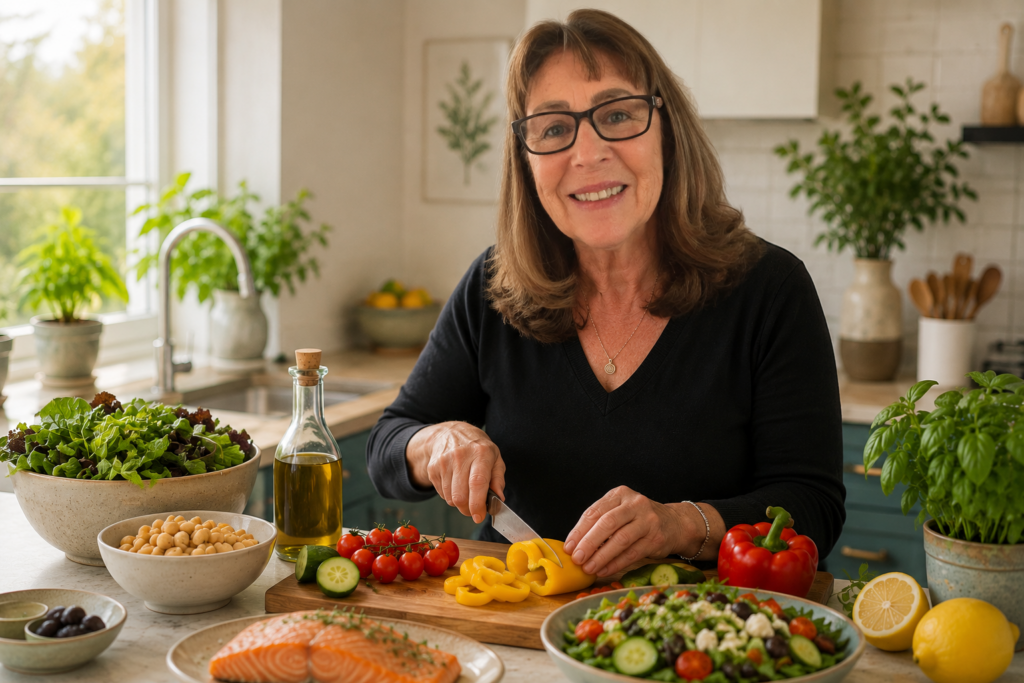
Postmenopause begins after a woman has gone 12 consecutive months without a menstrual period. From that point forward, lower estrogen levels become part of the body’s new hormonal environment.
For many women, this stage may last 30 years or more. That makes postmenopause much more than a conversation about managing menopausal symptoms. It is an opportunity to think about how we want to age.
How can we protect our bones? Maintain muscle and independence? Support our brains and hearts? Meet changing nutrient needs? And perhaps most importantly, how can we build habits that support not simply a longer life, but more years of strength, mobility, clarity, and vitality?
There is no single “longevity food,” supplement, or perfect anti-aging routine. Healthy aging is built from many interconnected pieces.
The goal is not perfection. It is to identify the areas that matter and strengthen them one realistic step at a time.
What Changes After Menopause?
Menopause is a normal biological transition, not a disease. However, declining estrogen can affect several tissues and metabolic processes.
During and after the menopause transition, women may experience changes in:
- Bone remodeling and bone mineral density
- Muscle mass and body composition
- Where body fat tends to accumulate
- Cholesterol and cardiovascular risk
- Insulin sensitivity and blood sugar regulation
- Sleep
- Temperature regulation
- Vaginal and urinary tissues
- Mood and cognitive symptoms
At the same time, chronological aging continues.
That distinction matters. We should not blame every change that occurs in our 50s, 60s, and 70s on menopause. Hormones, aging, nutrition, physical activity, sleep, medications, medical conditions, genetics, stress, and other lifestyle factors can overlap.
Symptoms are signals, not a diagnosis.
The most useful question may not be, “Is this menopause or aging?”
It may be, “What does my body need now to remain as strong and healthy as possible?”
Bone Health Becomes a Priority
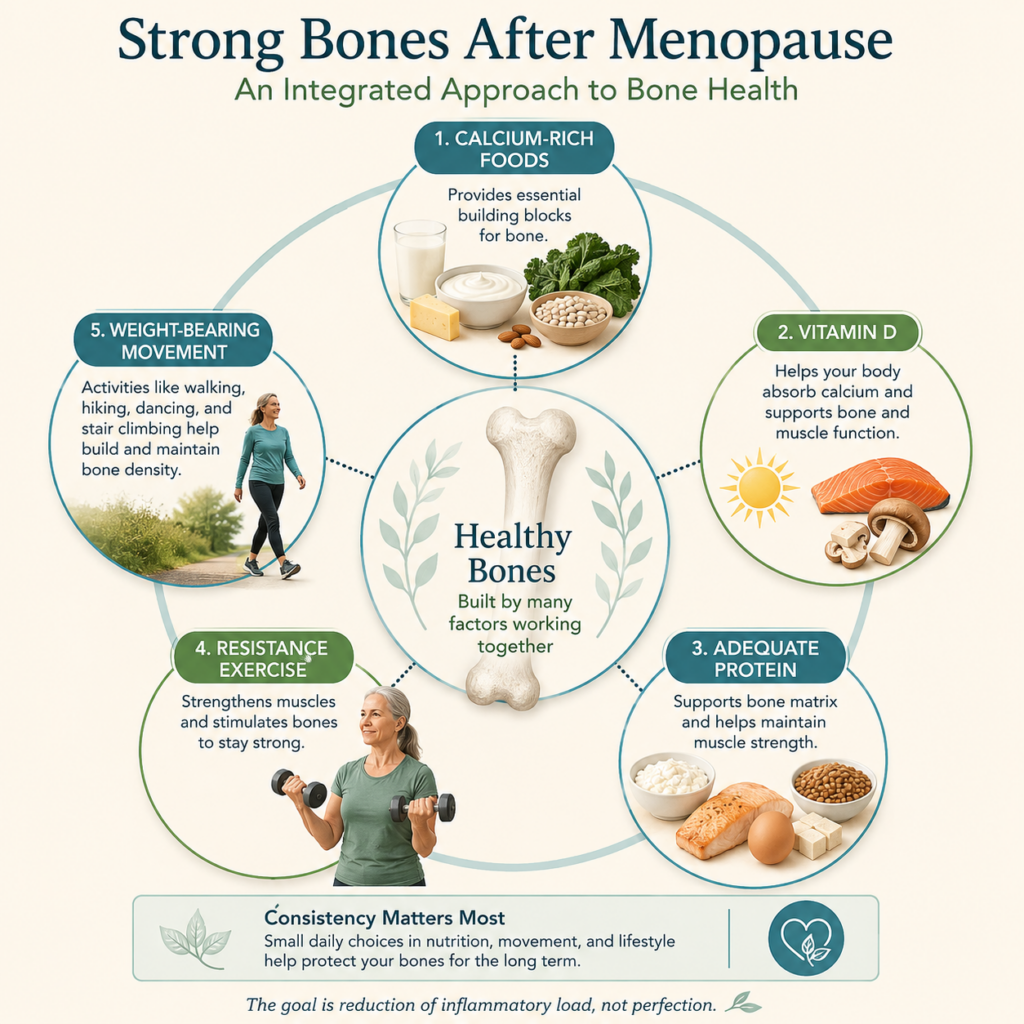
Bone is living tissue. Throughout life, old bone is continually broken down and replaced with new bone.
Estrogen helps regulate this remodeling process. As estrogen declines around menopause, bone breakdown can temporarily outpace bone formation, contributing to accelerated bone loss. Over time, this can increase the risk of osteoporosis and fractures.
This is one reason bone health deserves attention before a fracture occurs.
Calcium
Calcium provides important structural material for bone, but it also participates in muscle contraction, nerve signaling and other functions.
For women ages 51–70, the recommended dietary allowance for calcium is 1,200 mg per day. Adults 71 and older also have a recommended intake of 1,200 mg per day.
Food sources include:
- Milk, yogurt and cheese
- Calcium-fortified plant beverages
- Calcium-set tofu
- Sardines and canned salmon with edible bones
- Some leafy greens
- Other calcium-fortified foods
Food-first approaches can help provide calcium along with protein and other nutrients. Supplements may be appropriate in some situations, but more is not necessarily better and supplementation should consider total dietary intake and individual health needs.
Vitamin D
Vitamin D helps the body absorb calcium and contributes to normal bone and muscle function.
The recommended dietary allowance is 600 IU (15 mcg) daily through age 70 and 800 IU (20 mcg) beginning at age 71.
Vitamin D status can vary considerably because of sun exposure, skin pigmentation, geographic location, diet, absorption and other factors. A clinician can help determine whether testing or supplementation is appropriate.
Bone needs more than calcium
One common mistake is reducing “bone nutrition” to calcium alone.
Bone health is also supported by adequate:
- Protein
- Vitamin D
- Magnesium
- Phosphorus
- Vitamin K
- Overall energy and nutrient intake
And nutrition is only part of the picture.
Resistance and weight-bearing activity provide the mechanical stimulus bone needs. Walking is valuable for health, but strength and resistance exercise add another important layer for both bone and muscle.
Women age 65 and older should be screened for osteoporosis. Postmenopausal women younger than 65 who have additional risk factors may also need earlier fracture-risk assessment and bone-density screening.
Muscle May Be One of Our Most Important Longevity Assets
Many women have spent decades thinking primarily about body weight.
With aging, I would encourage us to expand the question:
How much functional muscle are we protecting?

Muscle is not just about appearance.
We need muscle to:
- Get out of a chair
- Climb stairs
- Carry groceries
- Maintain balance
- Recover from illness
- Support glucose metabolism
- Protect physical independence
- Continue doing the activities we value
Muscle mass and strength tend to decline with age, and changes in lean mass can become particularly important through and after the menopause transition.
This makes adequate protein plus resistance exercise an important healthy-aging partnership.
Protein needs deserve more attention with age
The standard adult protein RDA is 0.8 grams per kilogram of body weight per day. However, expert groups studying healthy aging have suggested that many healthy older adults may benefit from approximately 1.0–1.2 grams per kilogram per day to help maintain lean body mass and function.
Needs can be higher during illness, recovery or other circumstances and should be individualized, particularly for people with kidney disease or other medical conditions affecting protein recommendations.
Rather than saving most protein for dinner, consider distributing protein-containing foods throughout the day.
Examples include:
- Eggs
- Greek yogurt or cottage cheese
- Fish and seafood
- Poultry
- Lean meats
- Beans and lentils
- Soy foods such as tofu, tempeh and edamame
- Nuts and seeds
- Dairy or fortified alternatives
The bigger message is simple:
Do not let healthy aging become an exercise in eating less and less.
We need enough nourishment to maintain the tissues that allow us to remain strong.
Brain Health Is Whole-Body Health
Many women become concerned about memory or “brain fog” during and after menopause.
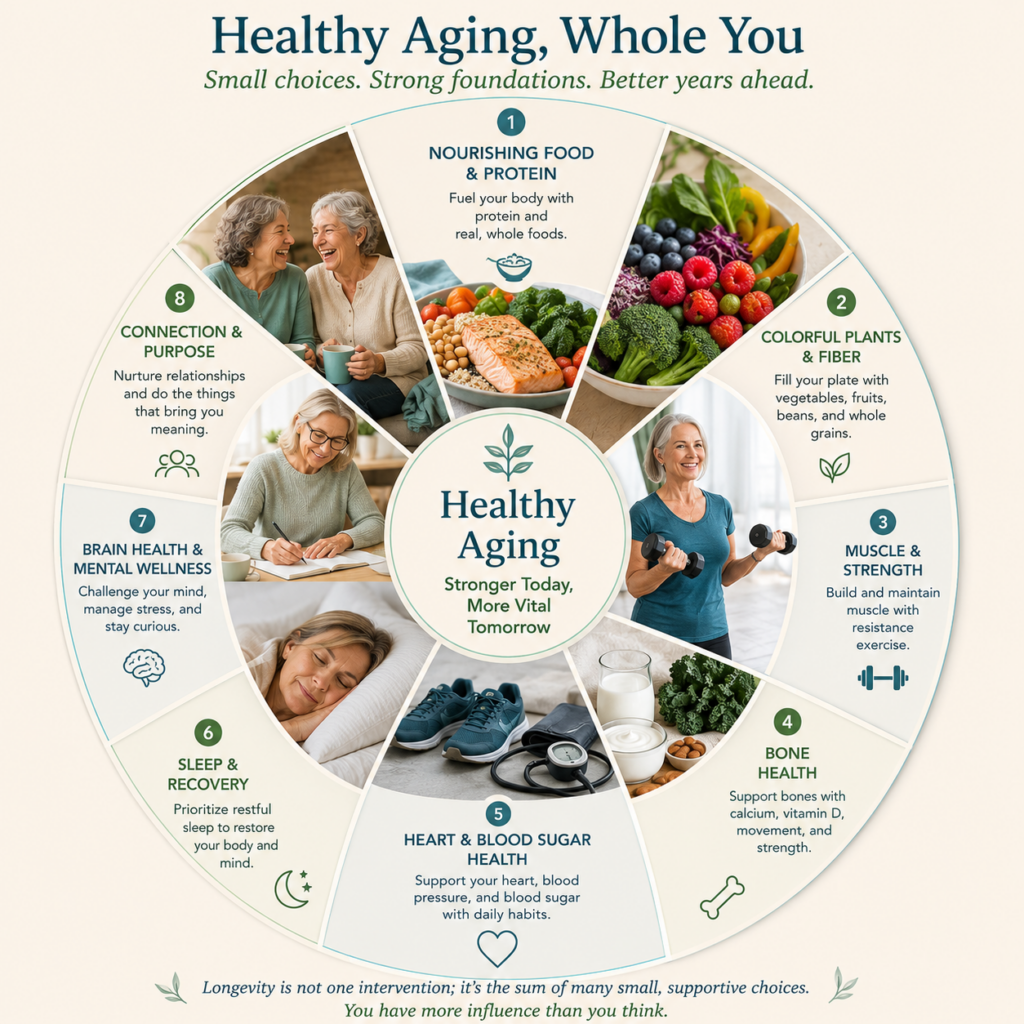
Occasionally forgetting a name or walking into a room and forgetting why you went there can happen to healthy people. But persistent or worsening cognitive changes deserve medical evaluation rather than being automatically attributed to menopause or normal aging.
Brain health is influenced by far more than one nutrient.
Evidence increasingly supports viewing brain health across the lifespan through a combination of physical, psychological, social and environmental factors.
That includes:
- Cardiovascular health
- Blood pressure
- Blood sugar regulation
- Physical activity
- Sleep
- Smoking and alcohol exposure
- Mental health and chronic stress
- Social connection
- Hearing and sensory health
- Nutritional adequacy
This is another example of why the body’s systems cannot be separated neatly into individual boxes.
What supports the heart often supports the brain.
What strengthens muscle may improve metabolic health.
What improves sleep can influence cognition, appetite and recovery.
Longevity is interconnected.
B Vitamins: Important, but More Is Not Always Better
B vitamins participate in energy metabolism, nervous-system function, red blood cell production and many other biological processes.
A varied diet generally supplies multiple B vitamins through foods such as:
- Whole grains
- Beans and lentils
- Leafy vegetables
- Eggs
- Dairy foods
- Fish
- Meat and poultry
- Nuts and seeds
- Fortified foods
One B vitamin deserves particular attention with aging: vitamin B12.
Vitamin B12 is necessary for healthy red blood cells, DNA synthesis and nervous-system function. Some people become less able to absorb naturally occurring food-bound B12 as they age.
For this reason, adults over age 50 are often advised to obtain much of their recommended B12 from fortified foods or supplements, where the vitamin is already in a free form.
B12 deficiency can contribute to anemia and neurological problems. Risk may also be influenced by gastrointestinal disorders, bariatric surgery, vegan dietary patterns and certain medications.
But this does not mean everyone needs high-dose B-complex supplements.
The better approach is to consider dietary intake, medications, symptoms, health history and appropriate laboratory evaluation.
What About Iron and Anemia After Menopause?
This is an important distinction.
Once menstrual blood loss stops, women’s iron requirements generally decrease, not increase.
The recommended iron intake for adults age 51 and older is 8 mg per day, compared with 18 mg per day for women ages 19–50.
Therefore, routine high-dose iron supplementation is not automatically appropriate after menopause.
If a postmenopausal woman develops iron-deficiency anemia, the question should not simply be, “How much iron should I take?”
The more important question is:
Why is iron low?
Potential explanations can include inadequate intake, impaired absorption or gastrointestinal blood loss, among other causes.
Persistent fatigue, weakness, shortness of breath, dizziness, pallor or abnormal blood counts deserve appropriate medical evaluation.
Iron supplementation can be helpful when iron deficiency is established, but iron deficiency in a postmenopausal woman deserves investigation rather than being assumed to be a normal part of aging.
Heart and Metabolic Health Matter More, Too
Cardiovascular disease remains a major health concern for women, and the menopause transition is associated with changes in several cardiovascular risk factors.
Changes may include increases in LDL cholesterol, abdominal visceral fat and metabolic risk, along with changes in lean body mass.
This makes postmenopause an important time to know your numbers rather than waiting for symptoms.
Discuss appropriate monitoring of:
- Blood pressure
- Cholesterol and other lipids
- Blood glucose or A1C when indicated
- Weight and body-composition changes in context
- Family history and other cardiovascular risk factors
Nutrition patterns resembling Mediterranean- and DASH-style eating patterns have substantial evidence supporting cardiovascular health.
These patterns emphasize vegetables, fruits, beans and legumes, whole grains, nuts and seeds, healthy protein sources and unsaturated fats while limiting excessive sodium, added sugars and highly processed foods.
There is no single miracle food.
The pattern matters.
Fiber and the Gut Still Matter After Menopause
Plant foods contribute much more than vitamins and minerals.
Vegetables, fruits, legumes, whole grains, nuts and seeds provide fiber and a wide range of phytochemicals.
Fiber can support:
- Bowel regularity
- Gastrointestinal health
- Cholesterol management
- Blood sugar regulation
- Satiety
- A diverse food pattern that supports the gut microbiome
Rather than searching for a perfect “anti-inflammatory superfood,” consider how many different plant foods appear across your week.
Variety often gives us something a supplement bottle cannot: a complex mixture of fibers, nutrients and bioactive compounds within whole foods.
Healthy Fats and Omega-3s
Fat should not be feared simply because we are getting older.
The type and overall dietary pattern matter.
Foods supplying predominantly unsaturated fats include:
- Extra-virgin olive oil
- Nuts
- Seeds
- Avocado
- Fish
Fatty fish such as salmon, sardines, trout and mackerel also provide the long-chain omega-3 fatty acids EPA and DHA.
These foods can fit naturally into Mediterranean-style and other heart-supportive dietary patterns.
Supplements should not automatically replace food. Individual needs, medications and health conditions matter when deciding whether a supplement is appropriate.
Sleep Is Not Optional Maintenance
Sleep disruption is common around menopause, but persistent sleep problems should not simply be accepted as something women must tolerate forever.
Sleep affects far more than fatigue.
Adequate sleep supports mood, cognition, immune function, metabolic health and physical recovery.
Night sweats may disrupt sleep, but other conditions—including sleep apnea—can also occur in midlife and older adulthood.
If sleep remains poor, ask why.
Look at:
- Temperature and night sweats
- Alcohol
- Caffeine timing
- Stress
- Medication effects
- Pain
- Restless legs
- Snoring or possible sleep apnea
- Sleep routines and environment
Again, symptoms are clues.
The Longevity Conversation Is Really a Function Conversation
Living longer is valuable, but lifespan is only one measure.
Healthspan refers to the years of life spent in relatively good health and function.
That shifts our focus from simply asking, “How do I live longer?” to questions such as:
Can I get off the floor independently?
Can I carry my groceries?
Can I walk comfortably?
Can I maintain my balance?
Can I prepare nourishing meals?
Can I stay connected with people?
Can I continue learning?
Can I recover from an illness or injury?
Can I keep doing the things that give my life meaning?
Those are powerful nutrition and lifestyle goals.
A Practical Postmenopause Longevity Foundation
You do not need 25 new supplements or an elaborate anti-aging protocol.
Start with the foundations.
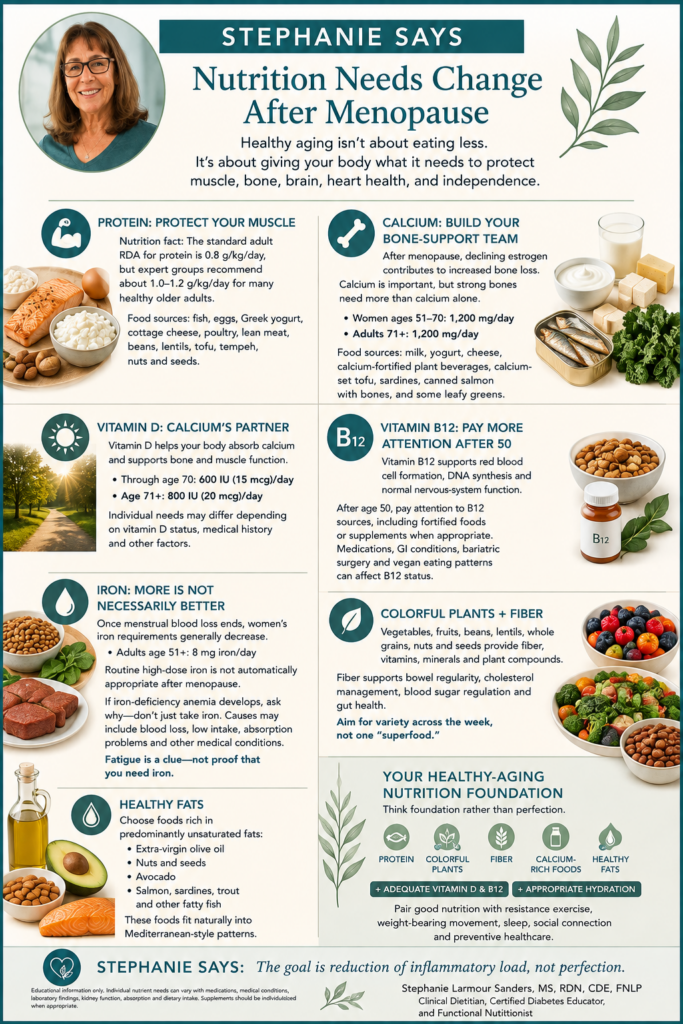
1. Nourish your muscle
Include a meaningful protein source at meals and combine adequate nutrition with regular resistance exercise.
2. Protect your bones
Meet calcium and vitamin D needs, include adequate protein and participate in appropriate weight-bearing and resistance activity. Discuss bone-density screening based on your age and risk.
3. Eat plants in variety
Build meals around vegetables, fruits, legumes, whole grains, nuts, seeds and other minimally processed plant foods you enjoy and tolerate.
4. Support your heart and blood sugar
Know your blood pressure, lipids and glucose status and use an overall dietary pattern that supports cardiovascular and metabolic health.
5. Don’t overlook B12
Especially after age 50, consider whether fortified foods, supplements, medications or absorption issues need to be discussed with your healthcare professional.
6. Don’t automatically take iron
Iron needs generally decline after menopause. Confirm deficiency and investigate its cause rather than assuming fatigue means you need an iron supplement.
7. Build strength deliberately
Walking is wonderful, but include strength, balance and mobility work appropriate to your abilities.
Movement is support, not punishment.
8. Protect sleep and recovery
Persistent poor sleep is health information. Investigate patterns rather than simply pushing through exhaustion.
9. Stay socially and mentally engaged
Healthy aging is not purely nutritional. Relationships, purpose, learning, meaningful activity and connection are part of whole-person health.
10. Reduce inflammatory load without chasing perfection
Smoking, physical inactivity, chronically inadequate sleep, poorly controlled blood pressure or glucose, low-quality dietary patterns and other health factors can accumulate.
You do not have to correct everything at once.
Identify. Reduce. Replace. Sustain.
What About Supplements?
Supplements can be useful, but “postmenopausal” is not a diagnosis of nutrient deficiency.
Calcium, vitamin D, B12, iron, omega-3 fats, magnesium and other nutrients are frequently marketed to women as they age. Whether any individual supplement is needed depends on food intake, laboratory findings when appropriate, medications, absorption, medical history and other factors.
Some nutrients can also be harmful in excessive amounts or interact with medications.
A food-first approach, combined with targeted supplementation when there is a reason for it, is generally more useful than accumulating a large collection of “longevity” supplements.
When Should You Seek Medical Evaluation?
Talk with your healthcare professional if you experience unexplained or persistent:
- Fatigue or weakness
- Shortness of breath
- Significant loss of strength
- Unintentional weight loss
- Recurrent falls
- Bone fractures after minor trauma
- New or worsening memory or cognitive problems
- Gastrointestinal bleeding or black stools
- Significant changes in bowel habits
- Persistent sleep problems
- New neurological symptoms
Women age 65 and older should also discuss osteoporosis screening, and younger postmenopausal women may need screening based on fracture risk.
Preventive care matters even when you feel well.
The Bottom Line
Postmenopause is not the end of the health conversation. In many ways, it is the beginning of a new one.
Your nutritional priorities may shift. Protecting muscle becomes increasingly important. Bone deserves deliberate attention. B12 absorption may become less reliable. Iron needs usually decline. Heart, metabolic and brain health become increasingly interconnected with the way we eat, move, sleep and live.
And longevity is not built by finding one perfect supplement.
It is built through repeated patterns.
Eat enough protein and nourishing food. Use your muscles. Challenge your bones safely. Eat plants in variety. Protect your sleep. Know your health numbers. Stay connected. Investigate important symptoms instead of dismissing them as “just aging.”
Most importantly, do not let healthy aging become another impossible standard to meet.
The goal is reduction of inflammatory load, not perfection.
Your body continues to leave clues throughout life. Notice the patterns, ask better questions and choose the next realistic action that helps you remain strong, capable and engaged in the life you want to live.
References
- National Institutes of Health, Office of Dietary Supplements. Calcium: Fact Sheet for Health Professionals.
- National Institutes of Health, Office of Dietary Supplements. Vitamin D: Fact Sheet for Health Professionals.
- National Institutes of Health, Office of Dietary Supplements. Iron: Fact Sheet for Consumers.
- U.S. Preventive Services Task Force. Osteoporosis to Prevent Fractures: Screening. 2025.
- El Khoudary SR, et al. Menopause Transition and Cardiovascular Disease Risk: Implications for Timing of Early Prevention. Circulation. 2020.
- Bauer JM, et al. Protein and Older Persons. Clin Geriatr Med. 2015.
- Deutz NEP, et al. Protein Intake and Exercise for Optimal Muscle Function With Aging: Recommendations From the ESPEN Expert Group. Clinical Nutrition. 2014.
- American Heart Association. Brain Health Across the Life Span: A Framework for Future Studies. Stroke. 2026.
- Lichtenstein AH, et al. 2026 Dietary Guidance to Improve Cardiovascular Health: A Scientific Statement From the American Heart Association. Circulation. 2026.
13 Aug, 2026 | Stephanie Sanders | No Comments
Restless Legs Syndrome: What Your Legs May Be Trying to Tell You
Stephanie Larmour Sanders, MS, RDN, CDE, FNLP
Clinical Dietitian, Certified Diabetes Educator, and Functional Nutritionist
Restless Legs Syndrome (RLS), also called Willis-Ekbom disease, is much more than simply having restless legs at bedtime.
It is a neurological sensorimotor disorder that produces an uncomfortable urge to move the legs. Symptoms typically appear or become worse while sitting or lying down, improve temporarily with movement, and are usually strongest during the evening or at night.
People describe the sensation in many different ways:
- Crawling
- Tingling
- Pulling
- Aching
- Throbbing
- Electrical sensations
- An uncomfortable feeling deep inside the legs
- An almost irresistible need to move
Because RLS frequently interferes with falling asleep or staying asleep, it can also contribute to daytime fatigue, difficulty concentrating, irritability, and reduced quality of life.
But why does it happen?
The answer takes us into an interesting relationship between brain iron, dopamine, the nervous system, sleep, and nutrition.
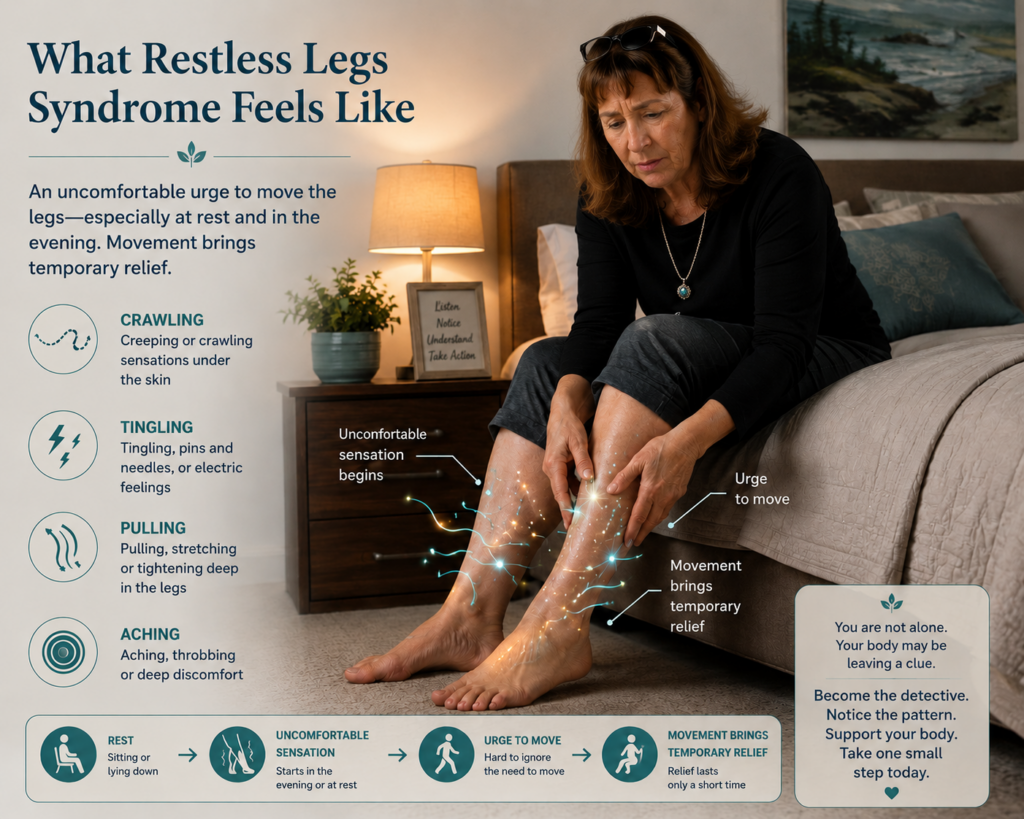
What Is Happening Physiologically?
RLS was once thought of primarily as a dopamine disorder.
We now know the physiology is considerably more complex.
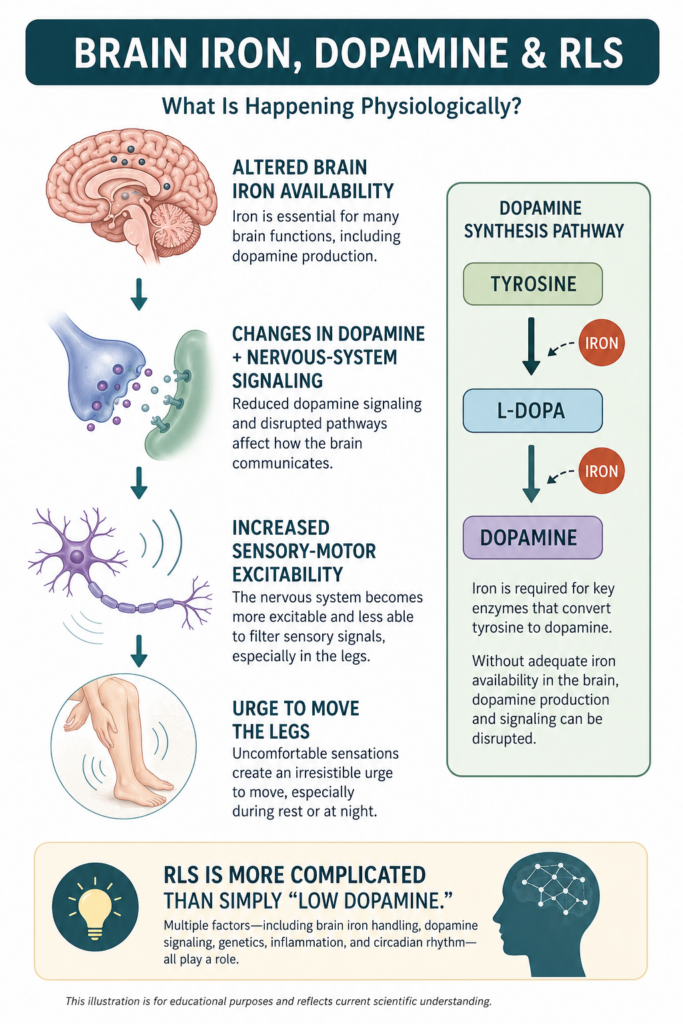
One of the most important biological abnormalities associated with RLS is altered iron availability within the brain.
Iron is required for numerous neurological processes and is a cofactor for tyrosine hydroxylase, an enzyme involved in producing dopamine.
A simplified pathway looks like this:
Tyrosine → L-DOPA → Dopamine
Dopamine helps regulate movement and sensory-motor signaling.
When brain iron metabolism and dopamine signaling become disrupted, the nervous system may become more excitable.
Research also points toward changes in other signaling systems, including adenosine and glutamate.
This helps explain the classic RLS pattern:
Rest → uncomfortable sensations → urge to move → movement → temporary relief
There is also a strong circadian component. Symptoms are generally much more pronounced in the evening and nighttime hours.
Iron: The Most Important Nutrient to Investigate
If I were looking at RLS through a nutrition detective lens, iron would be one of my first clues.
Importantly, someone can have a normal hemoglobin and still have iron status that is not optimal for RLS.
That means a CBC alone is not enough.
Current RLS guidance recommends evaluating an early-morning iron panel, including:
- Serum ferritin
- Serum iron
- Total iron-binding capacity (TIBC)
- Transferrin saturation (TSAT)
This is an important distinction because the iron thresholds used in RLS management are different from the thresholds generally used simply to diagnose iron-deficiency anemia.
Current Iron Guidance
Recent RLS guidelines recommend considering iron therapy based on both symptoms and iron studies.
Oral iron is generally most relevant when ferritin is low. Current guidance particularly considers iron supplementation when ferritin is below approximately 75 ng/mL, with transferrin saturation helping interpret iron availability.
People with persistent RLS and higher ferritin levels may sometimes be candidates for intravenous rather than oral iron. This decision belongs with a physician because iron overload can be harmful.
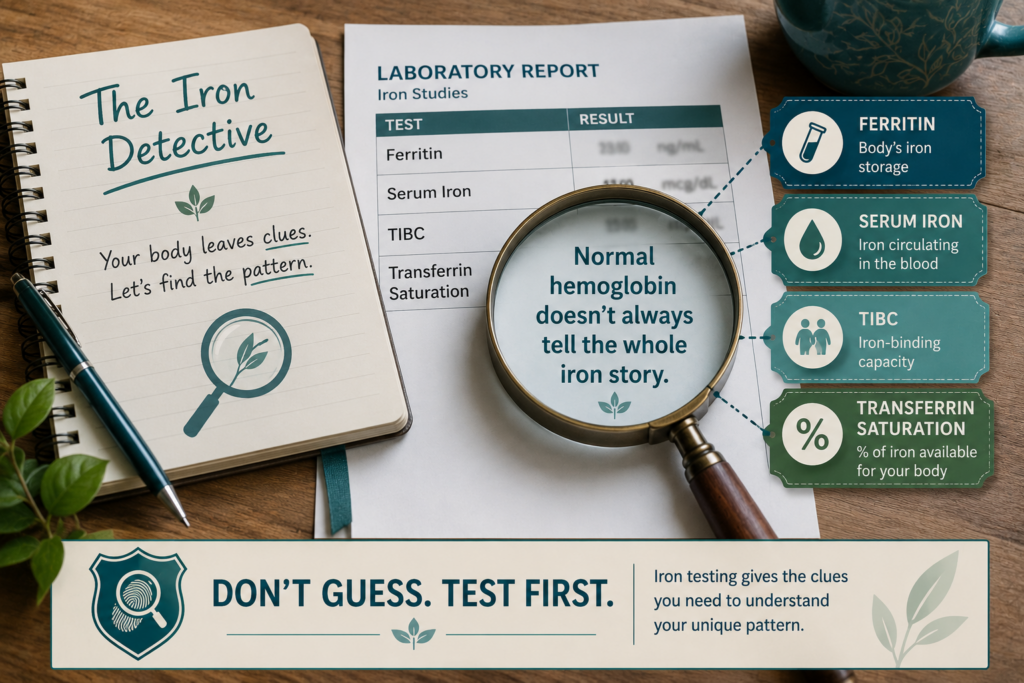
Which Oral Iron?
Ferrous sulfate has the strongest guideline support for oral treatment of RLS.
A commonly studied dose provides approximately:
65 mg elemental iron
This is approximately the amount supplied by 325 mg ferrous sulfate, although the label should always be checked for the actual elemental iron content.
Older RLS algorithms commonly paired this with approximately:
100–200 mg vitamin C
taken every one or two days to assist absorption.
Iron should not simply be added because someone has restless legs. Iron studies should be obtained first and supplementation should be medically monitored.
What About Iron Bisglycinate?
Iron bisglycinate is often marketed as a gentler form of iron and may produce fewer gastrointestinal complaints for some individuals.
However, this distinction is important:
Ferrous sulfate is the oral iron specifically supported in current RLS clinical guidelines.
There is not comparable RLS-specific evidence showing that iron bisglycinate treats RLS better than ferrous sulfate.
Therefore, I would not call bisglycinate the “best iron for RLS.” It may be a tolerability alternative that can be discussed with a healthcare professional when standard oral iron causes constipation, nausea, or gastrointestinal discomfort.
Food Sources of Iron
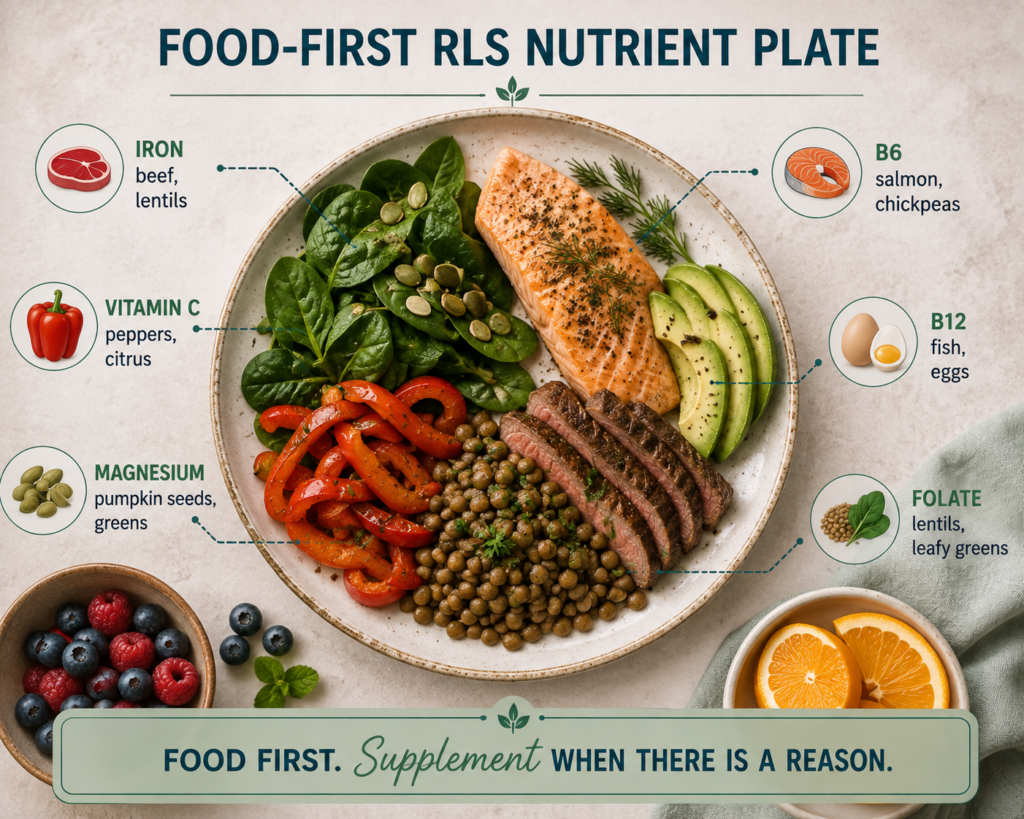
Nutrition should support iron status as well.
Heme iron
Heme iron is generally absorbed more efficiently and is found in:
- Beef
- Lamb
- Dark poultry
- Sardines
- Clams and other shellfish
- Other meats and seafood
Non-heme iron
Plant sources include:
- Lentils
- Beans
- Tofu
- Tempeh
- Pumpkin seeds
- Sesame/tahini
- Spinach and leafy greens
- Iron-fortified whole grains and cereals
Pairing plant iron with a vitamin-C-rich food can increase absorption.
For example:
Lentils + bell peppers
Beans + tomatoes
Spinach + citrus
Tea and coffee can decrease non-heme iron absorption when consumed with an iron-rich meal, so spacing them away from the meal may be helpful when improving iron status is a priority.
Magnesium: Promising, But Not Yet an Established RLS Treatment
Magnesium is frequently recommended online for restless legs.
The science is much less definitive than it is for iron.
Magnesium participates in:
- Neuromuscular signaling
- Muscle function
- Nerve transmission
- Energy metabolism
- Sleep physiology
A small randomized clinical trial studied:
250 mg/day magnesium oxide
for approximately two months and reported improvements in RLS severity and sleep quality.
However, this is not enough evidence to establish magnesium as a standard treatment for RLS.
Which magnesium would I choose nutritionally?
The clinical trial used magnesium oxide, so we should not claim that another form was the one demonstrated to improve RLS.
For general magnesium supplementation, however, magnesium glycinate is often better tolerated gastrointestinally than magnesium oxide and is a reasonable form when the goal is correcting inadequate magnesium intake rather than claiming to treat RLS.
A conservative supplemental range often used for general nutritional support is approximately:
100–200 mg elemental magnesium in the evening
depending upon dietary intake and medical history.
Magnesium supplements require caution in significant kidney disease.
Food first
Excellent magnesium sources include:
- Pumpkin seeds
- Almonds
- Cashews
- Beans
- Lentils
- Spinach
- Avocado
- Whole grains
- Dark chocolate
A food-first approach can easily provide substantial magnesium without immediately turning to a supplement.
Vitamin B6: Food First
Vitamin B6 is involved in neurotransmitter metabolism, including pathways related to dopamine, serotonin and GABA.
One randomized trial of RLS studied:
40 mg vitamin B6 daily
for two months and reported improvement in RLS symptoms and sleep quality.
But I would not recommend 40 mg of supplemental B6 routinely simply because someone has RLS.
High-dose supplemental B6 taken chronically can itself cause peripheral neuropathy—exactly the type of neurological complication we do not want when investigating uncomfortable leg sensations.
Instead, I prefer a food-first B6 strategy.
Good sources include:
- Salmon
- Tuna
- Chicken
- Turkey
- Chickpeas
- Potatoes
- Bananas
- Avocado
- Pistachios
- Fortified whole grains
The adult requirement is only approximately 1.3–1.7 mg/day, depending upon age and sex.
That is very different from the 40 mg experimental dose used in the RLS trial.
Research dose does not automatically equal recommended daily dose.
Vitamin B12: Check Before Supplementing
Vitamin B12 is essential for:
- Myelin formation
- Normal nerve function
- Red blood cell production
- DNA synthesis
Some observational research has found lower B12 concentrations among people with RLS.
However, we do not yet have strong evidence showing that giving B12 to someone with adequate B12 status treats RLS.
Therefore, the better approach is:
Test → identify deficiency → correct deficiency.
Food sources include:
- Clams
- Sardines
- Salmon
- Trout
- Eggs
- Milk
- Yogurt
- Meat
- Nutritional yeast or other B12-fortified foods
Adults generally require approximately:
2.4 mcg B12 per day
People taking metformin or long-term acid-suppressing medications, older adults, vegans, and people with gastrointestinal malabsorption may deserve particular attention to B12 status.
Folate: Another Food-First B Vitamin
Folate participates in:
- DNA synthesis
- Red blood cell production
- Methylation
- Homocysteine metabolism
- Nervous-system function
The relationship between folate and RLS is not strong enough to recommend high-dose folic acid as an RLS treatment.
Recent research suggests that low folate may be particularly relevant to RLS during pregnancy, but evidence in the general RLS population remains limited.
My preference would therefore be food first, unless laboratory findings or another medical indication suggests supplementation.
Excellent folate sources include:
- Lentils
- Black beans
- Chickpeas
- Asparagus
- Spinach
- Romaine lettuce
- Avocado
- Broccoli
- Brussels sprouts
- Oranges
The usual adult recommendation is:
400 mcg dietary folate equivalents (DFE) per day
rather than automatically taking a high-dose folic acid supplement.
Vitamin D: Correct Deficiency Rather Than Treat RLS Blindly
Vitamin D has attracted increasing interest in RLS research.
Studies have found that vitamin D deficiency appears relatively common among people with RLS.
But association does not prove that vitamin D deficiency causes RLS.
Clinical trials investigating supplementation have produced mixed results.
Therefore, rather than telling everyone with restless legs to take high-dose vitamin D, I would recommend checking:
25-hydroxyvitamin D [25(OH)D]
and correcting an identified deficiency with the individual’s healthcare professional.
Food sources include:
- Salmon
- Sardines
- Trout
- Egg yolks
- Fortified milk
- Fortified plant milks
- UV-exposed mushrooms
Vitamin C
Vitamin C deserves attention for two reasons.
First, it can increase absorption of non-heme iron.
Food sources include:
- Bell peppers
- Citrus
- Kiwi
- Strawberries
- Broccoli
- Tomatoes
- Brussels sprouts
Second, vitamin C has been studied directly in RLS.
A clinical trial in people receiving hemodialysis used:
200 mg vitamin C daily
and found improvement in RLS symptoms.
However, this was a very specific population—people undergoing hemodialysis—so we should not assume the same treatment effect applies to everyone with RLS.
For most people, vitamin C’s clearest role is helping support iron absorption.
Vitamin E
The same hemodialysis trial also investigated:
400 mg vitamin E daily
and reported improvement.
Again, this does not mean I would recommend 400 mg of vitamin E to everyone with RLS.
High-dose vitamin E supplementation can increase bleeding risk and interact with medications.
Instead, food sources provide vitamin E safely:
- Almonds
- Sunflower seeds
- Avocado
- Olive oil
- Wheat germ
- Hazelnuts
A Food-First RLS Plate
Instead of creating a long supplement list, think about building meals that naturally provide the nutrients involved in neurological function.
For example:
Protein
Salmon, chicken, eggs, tofu, beans or lentils
Iron
Lean beef, lentils, beans, tofu or shellfish
Vitamin C
Bell peppers, tomatoes, broccoli, berries or citrus
Magnesium
Pumpkin seeds, greens, beans, nuts and whole grains
B vitamins
Fish, eggs, legumes, leafy vegetables and whole grains
Healthy fats
Olive oil, nuts, seeds and avocado
One meal can supply several of these nutrients simultaneously.
The RLS Nutrition Detective Checklist
Before buying multiple supplements, ask:
Have my iron stores actually been evaluated?
Do I know my ferritin AND transferrin saturation?
Could inflammation be affecting the interpretation of my ferritin?
Have B12, folate or vitamin D deficiencies been considered?
Am I eating enough iron, magnesium, protein and B-vitamin-rich foods?
Do caffeine or alcohol make my symptoms worse?
Am I taking an antihistamine or another medication that can aggravate RLS?
Do my symptoms truly meet the criteria for RLS, or could this be neuropathy, leg cramps or another condition?
That is where becoming the detective becomes valuable.
Nutrient Evidence at a Glance
| Nutrient | Research/clinical amount | Form studied or recommended | Strength of RLS evidence |
|---|---|---|---|
| Iron | ~65 mg elemental iron when medically indicated | Ferrous sulfate | Strongest nutritional evidence |
| Vitamin C with iron | Historically 100–200 mg with oral iron | Ascorbic acid or food | Supports iron absorption |
| Magnesium | 250 mg/day in one RCT | Magnesium oxide | Promising, limited |
| Vitamin B6 | 40 mg/day in one RCT | Pyridoxine | Promising but insufficient for routine high-dose use |
| Vitamin B12 | No established RLS treatment dose | Prefer food/correct deficiency | Association; treatment evidence insufficient |
| Folate | No established RLS treatment dose | Prefer food/correct deficiency | Limited; possibly more relevant in pregnancy |
| Vitamin D | No established universal RLS dose | Dose according to blood level | Deficiency associated with RLS; treatment results mixed |
| Vitamin C | 200 mg/day in one hemodialysis RCT | Vitamin C | Limited to special population |
| Vitamin E | 400 mg/day in one hemodialysis RCT | Vitamin E | Limited to special population |
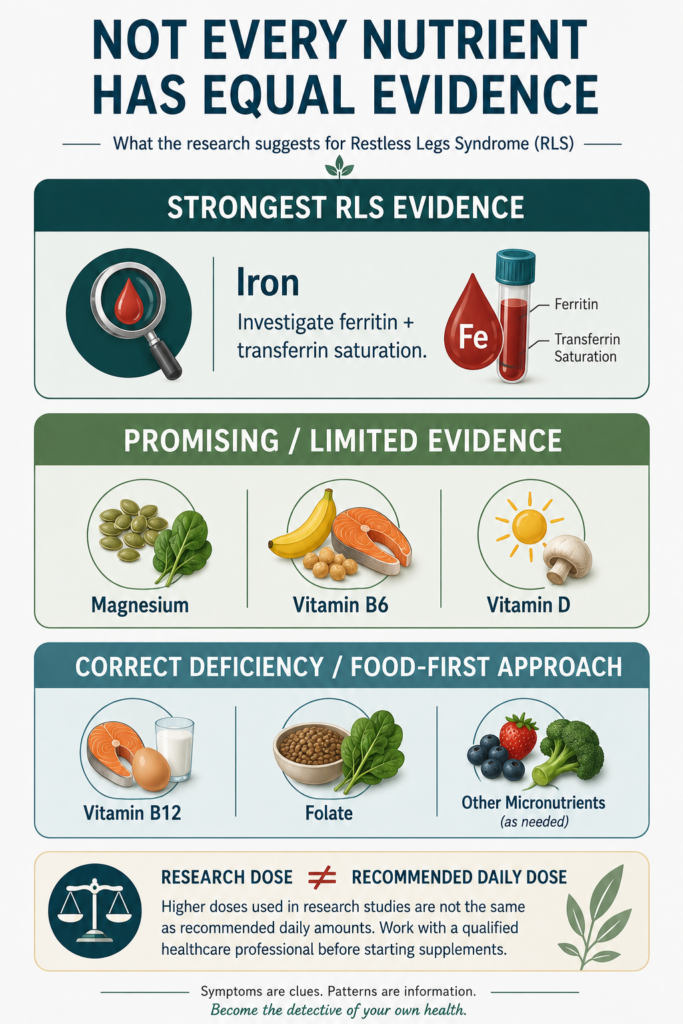
When Nutrition Is Not Enough
RLS is a neurological disorder, and nutrition is only one part of treatment.
Current medical management may include:
- Correcting iron deficiency
- Reviewing medications that aggravate RLS
- Addressing sleep apnea
- Reducing alcohol or caffeine when they trigger symptoms
- Gabapentin or pregabalin for persistent RLS
- Intravenous iron in appropriately selected patients
- Other specialized therapies for severe or refractory disease
Current guidelines have moved away from routinely using dopamine agonists such as ropinirole and pramipexole as first-line long-term therapy because they can eventually cause augmentation—RLS symptoms beginning earlier, becoming stronger, or spreading to additional parts of the body.
Stephanie Says
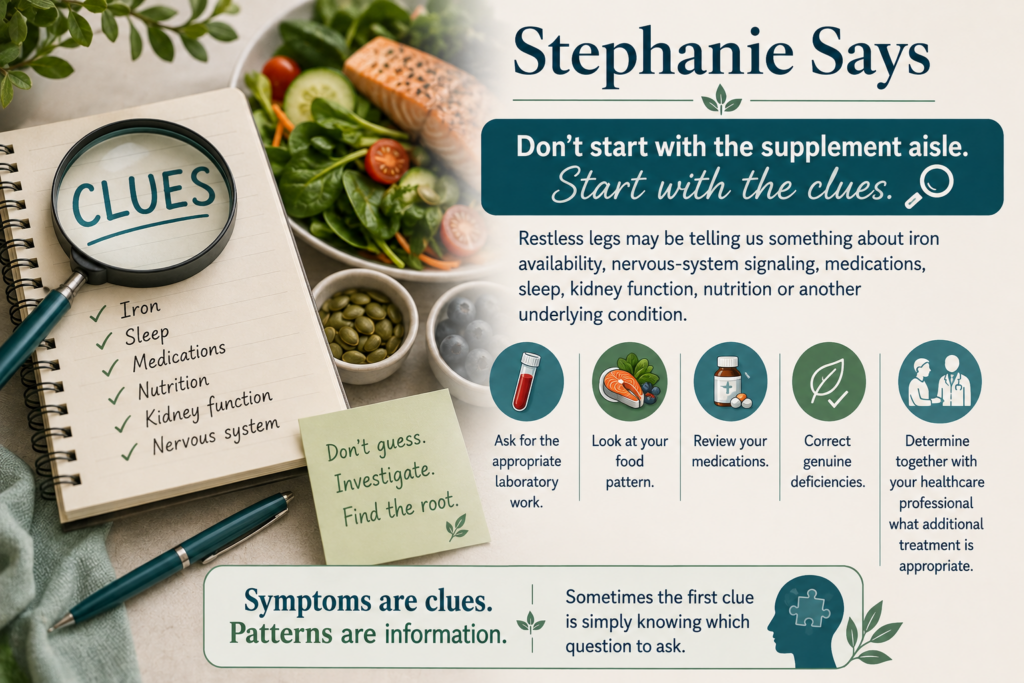
Don’t start with the supplement aisle. Start with the clues.
Restless legs may be telling us something about iron availability, nervous-system signaling, medications, sleep, kidney function, nutrition or another underlying condition.
The most important nutritional clue is iron—but even iron needs to be investigated rather than guessed.
Ask for the appropriate laboratory work.
Look at your food pattern.
Review your medications.
Correct genuine deficiencies.
Then determine, together with your healthcare professional, what additional treatment is appropriate.
Symptoms are clues. Patterns are information.
Sometimes the first clue is simply knowing which question to ask.
Important Safety Note
Iron should not be supplemented at therapeutic doses without checking iron status. Excess iron can cause toxicity and organ damage. High-dose vitamin B6 can cause neuropathy, magnesium requires caution with significant kidney impairment, and vitamin E may increase bleeding risk. Pregnancy, kidney disease, anemia, gastrointestinal disease, medications and other medical conditions can substantially change nutrient recommendations.
References
- Silber MH, et al. An Updated Algorithm for the Management of Restless Legs Syndrome. Mayo Clinic Proceedings. 2026.
- Winkelman JW, et al. Treatment of Restless Legs Syndrome and Periodic Limb Movement Disorder: An American Academy of Sleep Medicine Clinical Practice Guideline. Journal of Clinical Sleep Medicine. 2025.
- González-Parejo P, et al. Effects of Dietary Supplementation in Patients with Restless Legs Syndrome: A Systematic Review. 2024.
- Xu XM, et al. Role of Vitamins in the Pathogenesis and Treatment of Restless Legs Syndrome: A Systematic Review and Meta-analysis. 2025.
- Jadidi A, et al. Therapeutic Effects of Magnesium and Vitamin B6 in Alleviating the Symptoms of Restless Legs Syndrome: A Randomized Controlled Clinical Trial. 2022.
- Sagheb MM, et al. Efficacy of Vitamins C, E, and Their Combination for Treatment of Restless Legs Syndrome in Hemodialysis Patients: A Randomized, Double-Blind, Placebo-Controlled Trial. Sleep Medicine. 2012.
- Cederberg KLJ, et al. Vitamin D and Restless Legs Syndrome: A Review of Current Literature. 2023.
- National Institutes of Health, Office of Dietary Supplements. Iron Fact Sheet for Health Professionals.
13 Aug, 2026 | Stephanie Sanders | No Comments
Menopause, Nutrition, and Inflammatory Health: What Changes and How to Support Your Body
Stephanie Larmour Sanders, MS, RDN, CDE, FNLP
Clinical Dietitian, Certified Diabetes Educator, and Functional Nutritionist
Menopause can bring changes that seem to appear all at once: hot flashes, disrupted sleep, changes in body composition, fatigue, mood changes, brain fog, or a different response to foods and exercise.
It can be tempting to blame every new symptom on hormones.
But menopause is better understood as one part of a larger midlife health picture.
Hormonal changes can influence temperature regulation, bone, cardiovascular health, body composition, sleep, and metabolic health. At the same time, symptoms occurring during midlife may have other causes that deserve attention.
That is why I like to remind women:
Symptoms are signals, not random—but a signal is not the same thing as a diagnosis.
The goal is to notice what is changing, look for patterns, and support the body with good nutrition, movement, sleep, stress support, and appropriate medical care.

What Is Menopause?
Menopause is a normal biological transition.
Clinically, menopause is confirmed after 12 consecutive months without a menstrual period when another cause does not explain the absence of menstruation. Perimenopause is the transition leading up to menopause and extends through the first year after the final menstrual period.
During this transition, ovarian hormone production changes substantially, particularly estrogen and progesterone.
Some women have relatively few symptoms. Others experience symptoms that significantly affect sleep, work, relationships, exercise, or quality of life.
Common symptoms can include:
- Hot flashes and night sweats
- Sleep disruption
- Menstrual changes during perimenopause
- Vaginal dryness or genitourinary symptoms
- Mood changes
- Changes in sexual health
- Changes in body composition
The experience is highly individual.
And importantly, not everything that happens at 45, 50, or 55 is necessarily caused by menopause.
Estrogen Does More Than Regulate Reproduction
Estrogen receptors are found throughout the body. That helps explain why the menopause transition can feel like much more than the end of menstrual periods.
Lower estrogen levels after menopause are associated with important changes in bone and cardiovascular health. Bone loss accelerates, increasing osteoporosis risk, and cardiovascular risk becomes increasingly important as women age.
Metabolic and body-composition changes also deserve attention. Research continues to investigate exactly how menopause itself, aging, lifestyle, sleep, activity, and other factors interact.
This is an important evidence boundary.
We should not assume that declining estrogen directly causes every pound gained, every poor night’s sleep, or every change in blood sugar.
Instead, we can look at the whole pattern.
MENOPAUSE + WHOLE-BODY HEALTH DIAGRAM
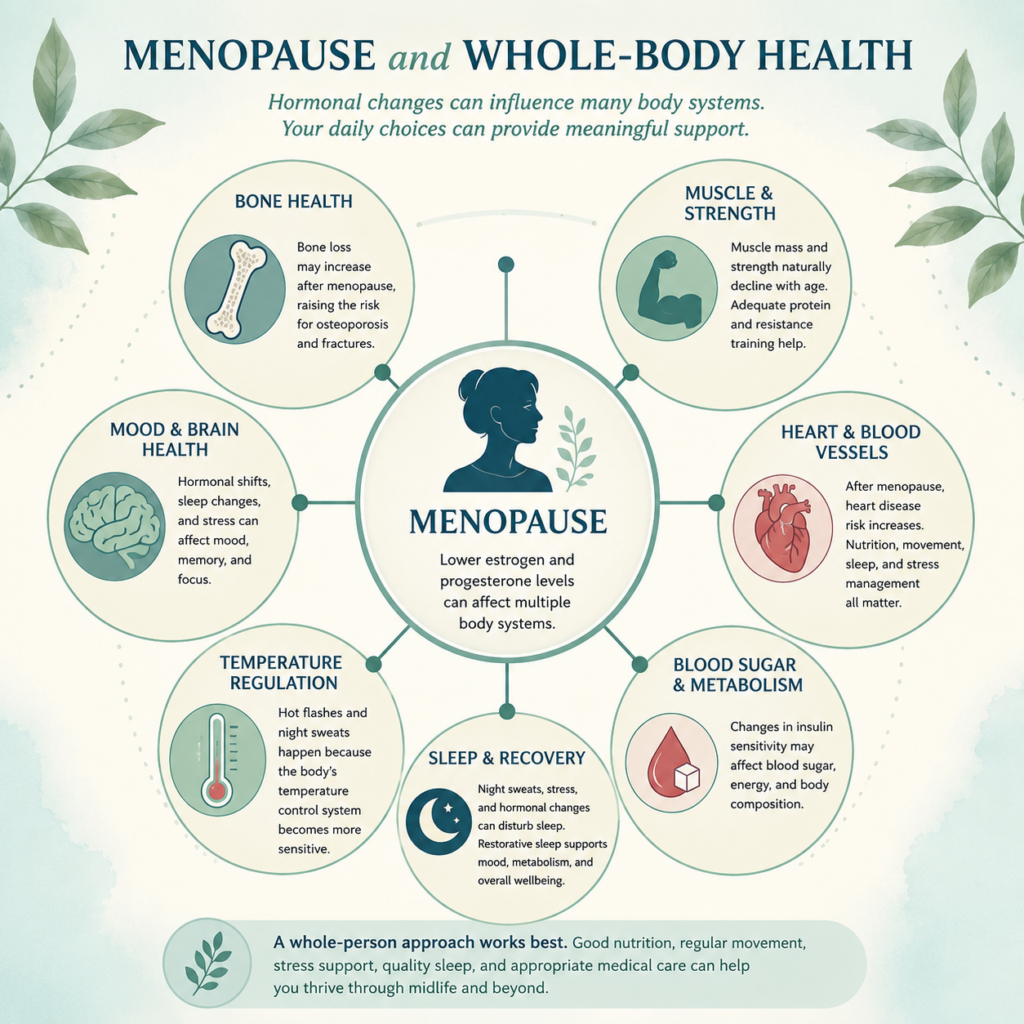
What Does Inflammation Have to Do With Menopause?
Inflammation is part of the body’s normal immune response. We need it for healing and protection.
The concern is not inflammation itself. It is persistent or excessive inflammatory activity associated with chronic disease and metabolic dysfunction.
Menopause occurs during a time when several health factors can intersect:
- Hormonal changes
- Aging
- Loss of muscle
- Changes in fat distribution
- Insulin resistance and blood sugar regulation
- Poor sleep
- Psychological and physiological stress
- Dietary patterns
- Physical inactivity
- Existing medical conditions
This is where I find the idea of inflammatory load useful educationally.
Rather than looking for one food or one hormone to blame, we can ask:
What are the different factors adding to the body’s overall load—and which of those factors can we realistically support?
The goal is not to eliminate inflammation or achieve a “perfect” lifestyle.
The goal is reduction of inflammatory load, not perfection. This approach is consistent with Stephanie’s Pro-Inflammatory Reduction Framework™.
Nutrition During Menopause: What Matters Most?
There is no single “menopause diet.”
And you do not need a complicated detox, an extreme elimination diet, or a cupboard full of supplements simply because you have entered menopause.
A better starting point is a nutrient-dense dietary pattern that supports cardiovascular, metabolic, muscle, and bone health.
Research on dietary patterns in menopausal women is encouraging, particularly for Mediterranean-style and other high-quality dietary patterns rich in minimally processed plant foods. However, much of the menopause-specific evidence remains observational, so we should be careful about claiming that one dietary pattern can prevent or treat menopause symptoms.
Here are several practical places to begin.
1. Build Meals Around Protein
Maintaining muscle becomes increasingly important as we age.
Protein provides amino acids needed for maintaining and repairing muscle and other tissues. Resistance exercise provides another important stimulus for maintaining muscle strength.
Practical protein choices include:
- Fish
- Eggs
- Poultry
- Greek yogurt or cottage cheese
- Beans and lentils
- Tofu, tempeh, and edamame
- Nuts and seeds
- Lean meat, if included in your eating pattern
Rather than becoming preoccupied with a perfect number, start by asking:
Do I have a meaningful source of protein at each meal?
For women with kidney disease or other medical conditions affecting protein needs, individualized guidance is important.
2. Don’t Forget Fiber and Plant Diversity
Vegetables, fruits, beans, lentils, nuts, seeds, and whole grains provide much more than fiber.
They also provide vitamins, minerals, and a wide variety of plant compounds.
A Mediterranean-style eating pattern emphasizes many of these foods along with olive oil, nuts, legumes, whole grains, fish, and other minimally processed foods. Evidence supports this dietary pattern for cardiovascular health broadly, and menopause-focused research suggests potential benefits for cardiometabolic health.
You don’t have to suddenly eat perfectly.
Try adding one more plant food to a meal you already enjoy.
3. Support Bone Health
Bone deserves special attention during and after menopause because declining estrogen contributes to accelerated bone loss.
Calcium, vitamin D, adequate protein, and weight-bearing and resistance activity all matter.
The U.S. Office on Women’s Health recommends 1,200 mg of calcium per day for women age 51 and older. Vitamin D recommendations are 600 IU daily from ages 51–70 and 800 IU for women 71 and older, although individual needs can differ.
Food sources of calcium can include:
- Milk
- Yogurt
- Cheese
- Calcium-fortified plant beverages
- Calcium-set tofu
- Canned salmon with bones
- Certain leafy greens
Food first is often a useful starting point. Supplements should fill an identified need rather than automatically being added because a woman reaches menopause.
4. Pay Attention to Blood Sugar—Without Becoming Afraid of Carbohydrates
Blood sugar regulation becomes an important part of the midlife conversation.
That does not mean carbohydrates are automatically bad.
Instead, consider how meals are put together.
A steadier meal might include:
Protein + fiber-rich plants + healthy fat + a quality carbohydrate
For example:
Salmon + roasted vegetables + lentils + olive oil
or
Greek yogurt + berries + walnuts + oats
or
Tofu + mixed vegetables + brown rice + sesame seeds.
The goal is a nourishing meal that supports satisfaction, nutrient intake, and metabolic health—not rigid restriction.
5. Choose Fats That Support Cardiovascular Health
Midlife is an important time to pay attention to cardiovascular risk.
Favor foods such as:
- Extra-virgin olive oil
- Nuts
- Seeds
- Avocado
- Fish
while keeping the overall dietary pattern in mind.
One ingredient rarely determines whether a person’s diet is inflammatory or anti-inflammatory.
Patterns are information.
6. What About Soy?
Soy is especially interesting because soy foods provide protein as well as naturally occurring isoflavones.
The research on soy and menopausal symptoms is mixed. Recent systematic reviews have reached somewhat different conclusions, and a 2025 meta-analysis found some improvement in overall menopausal symptoms but not a significant effect specifically on hot flashes or vasomotor symptoms.
That means soy should not be presented as a guaranteed natural treatment for hot flashes.
Foods such as tofu, tempeh, edamame, and unsweetened soy milk can still be nutritious sources of plant protein.
This is a good example of separating a healthy food from an exaggerated health promise.
A Simple Menopause-Supportive Plate
You don’t need a special menopause meal plan to get started.
Try building a plate with:
Protein: fish, poultry, eggs, beans, lentils, tofu or Greek yogurt
Fiber and color: vegetables and/or fruit
Slow carbohydrate: beans, lentils, oats, quinoa, potatoes, brown rice or other whole grains
Healthy fat: olive oil, avocado, nuts or seeds
Add water or another unsweetened beverage according to your individual needs.
MENOPAUSE-SUPPORTIVE PLATE
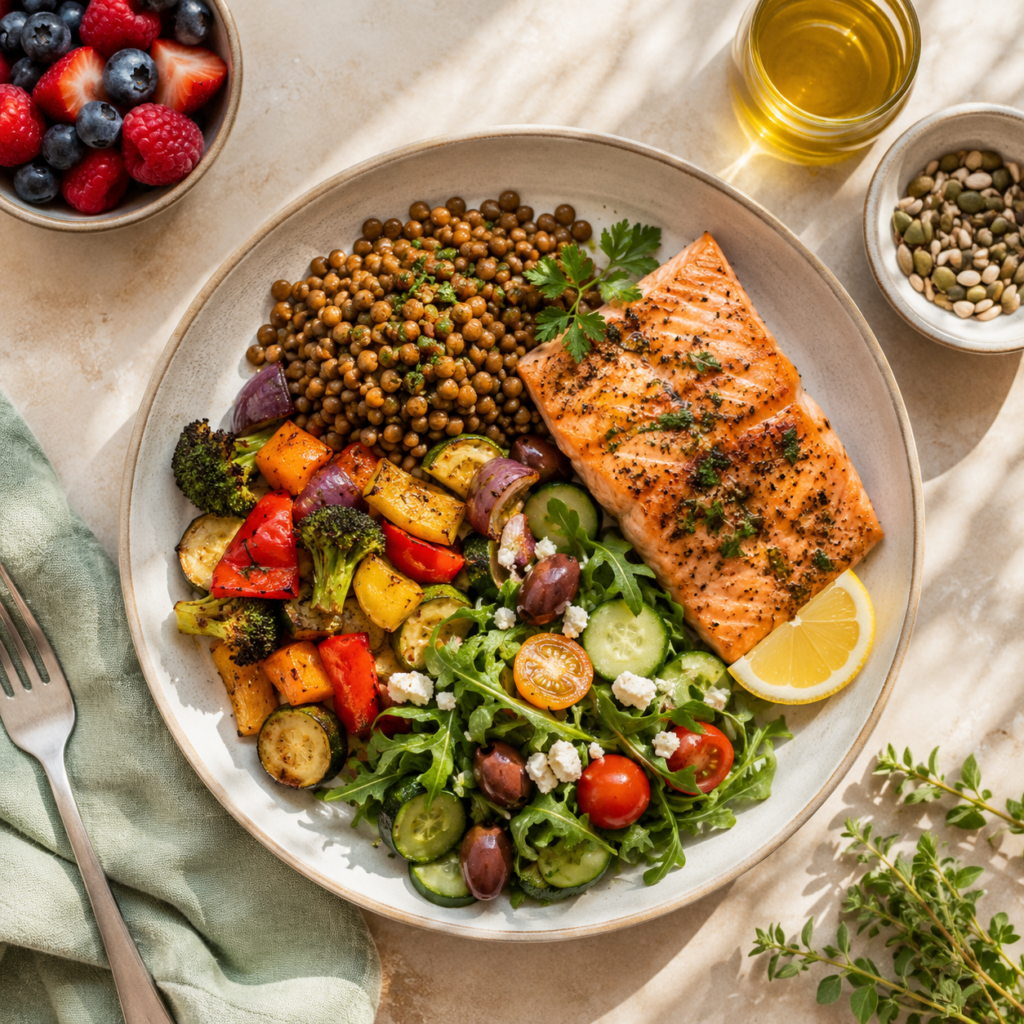
This isn’t a prescription.
It is simply a practical framework that can be adapted to culture, budget, appetite, medical needs, and food preferences.
What About Hot Flashes?
Nutrition can support overall health during menopause, but we need to be cautious about claiming that changing the diet will eliminate hot flashes.
Hot flashes and night sweats are called vasomotor symptoms.
Despite many popular recommendations about avoiding caffeine, spicy foods, alcohol, or particular foods, The Menopause Society notes that evidence supporting dietary modifications and trigger avoidance specifically as treatments for hot flashes is limited.
Your individual experience still matters.
If you repeatedly notice that alcohol, a hot beverage, or another factor precedes a hot flash, that pattern may be useful information.
But your experience does not mean that every woman needs the same restriction.
Don’t Forget Movement and Muscle
Nutrition and movement work together.
Physical activity supports bone, cardiovascular health, mood, function, and healthy aging. Current U.S. guidance for women includes at least 150 minutes of moderate aerobic activity per week, or the equivalent, plus muscle-strengthening activity on two days each week.
That does not mean you need to become an athlete.
Walking counts.
Gardening counts.
And strength work can begin at an appropriate level for your ability.
Movement is support, not punishment.
Sleep Is Part of the Picture Too
Night sweats can disrupt sleep, but menopause isn’t the only possible reason for poor sleep.
Stress, sleep apnea, restless legs, alcohol, caffeine, medications, depression, anxiety, pain, blood sugar problems, and other medical issues can also affect sleep.
If sleep problems are persistent or significant, don’t simply accept them as something women have to endure.
Bring them to your healthcare professional.
What About Menopause Supplements?
The menopause marketplace is full of products promising hormone balance, cortisol control, metabolism support, detoxification, or relief from hot flashes.
This is an area where caution matters.
“Natural” does not automatically mean effective or safe.
Evidence for many supplements marketed for hot flashes remains limited or inconsistent. Supplements can also interact with medications or be inappropriate with particular health conditions.
Before purchasing a menopause supplement, ask:
- What exactly is the product supposed to do?
- Is there evidence for this specific ingredient and dose?
- Is the evidence based on women like me?
- Could it interact with my medications?
- Has the product been independently tested?
- Would addressing food, sleep, activity, or an underlying medical issue be more useful?
Sometimes the best next step isn’t another supplement.
It is a better question.
Menopause Treatment Is Not Limited to Nutrition
Nutrition is an important foundation, but it is not a substitute for appropriate treatment of bothersome menopause symptoms.
Hormone therapy remains the most effective treatment for menopausal hot flashes and night sweats and is FDA-approved for these symptoms. Whether it is appropriate depends on a woman’s symptoms, health history, age, time since menopause, risks, and preferences.
Nonhormonal prescription treatments are also available.
This is a conversation to have with a qualified healthcare professional rather than trying to navigate symptoms through diet and supplements alone.
When Should You Seek Medical Care?
Do not automatically attribute a new or persistent symptom to menopause.
Talk with a healthcare professional about symptoms that concern you, particularly:
- Bleeding after menopause
- New or unexplained chest pain
- Significant shortness of breath
- Persistent or severe depression or anxiety
- New or persistent pelvic symptoms
- Unexplained weight loss
- Severe or persistent sleep disturbance
- Symptoms significantly affecting daily life
- Concerns about osteoporosis, cardiovascular risk, diabetes, or other chronic conditions
Postmenopausal bleeding, in particular, deserves medical evaluation rather than being dismissed as hormonal fluctuation.
The Bottom Line
Menopause is a natural transition, but that does not mean women should ignore symptoms or simply “put up with” feeling unwell.
Hormonal changes can affect several body systems. At the same time, midlife health is influenced by nutrition, sleep, muscle, movement, metabolic health, stress, medications, medical conditions, genetics, and many other factors.
Nutrition cannot stop menopause.
And there is no single menopause food, supplement, or anti-inflammatory protocol that every woman needs.
What nutrition can do is provide a strong foundation for bone, muscle, cardiovascular and metabolic health during a period when protecting those systems becomes increasingly important.
Start small.
Add protein to breakfast. Add another vegetable to dinner. Take a walk. Protect your sleep. Ask about bone health. Pay attention to patterns.
You don’t have to solve everything at once.
Symptoms are signals. Patterns are information. Better questions can lead to better care.
References
- American College of Obstetricians and Gynecologists. reVITALize: Gynecology Data Definitions.
- U.S. Office on Women’s Health. Menopause and Your Health.
- The Menopause Society. Hormone Therapy.
- Gonçalves C, Moreira H, Santos R. Systematic review of Mediterranean diet interventions in menopausal women. 2024.
- Barrea L, et al. The Importance of Nutrition in Menopause and Perimenopause—A Review. Nutrients. 2024.
- Dietary patterns and their associations with body composition, cardiometabolic and bone health in postmenopausal women. 2025.
- Gençtürk N, Bilgiç FŞ, Ulaşlı Kaban H. The effect of soy isoflavones given to women in the climacteric period on menopausal symptoms and quality of life. 2024.
- The Menopause Society. Hot Flashes.
12 Aug, 2026 | Stephanie Sanders | No Comments
Supporting Your Body Through Perimenopause: A Practical Anti-Inflammatory Approach(Article 3 of 3)
Hormones, Perimenopause, and Midlife Health
Stephanie Larmour Sanders, MS, RDN, CDE, FNLP
Clinical Dietitian, Certified Diabetes Educator, and Functional Nutritionist
In Articles 1 and 2, we looked at what happens to hormones during the menopause transition and why changes in sleep, body composition, blood sugar, mood, temperature regulation, and other symptoms may appear.
Now let’s make it practical.
You cannot control every hormonal fluctuation during perimenopause. And you do not need a perfect “hormone-balancing” diet.
What you can do is strengthen the foundations that support your body during this transition: nourishing food, muscle, movement, sleep, recovery, and appropriate medical care.
WHOLE-PERSON PERIMENOPAUSE SUPPORT
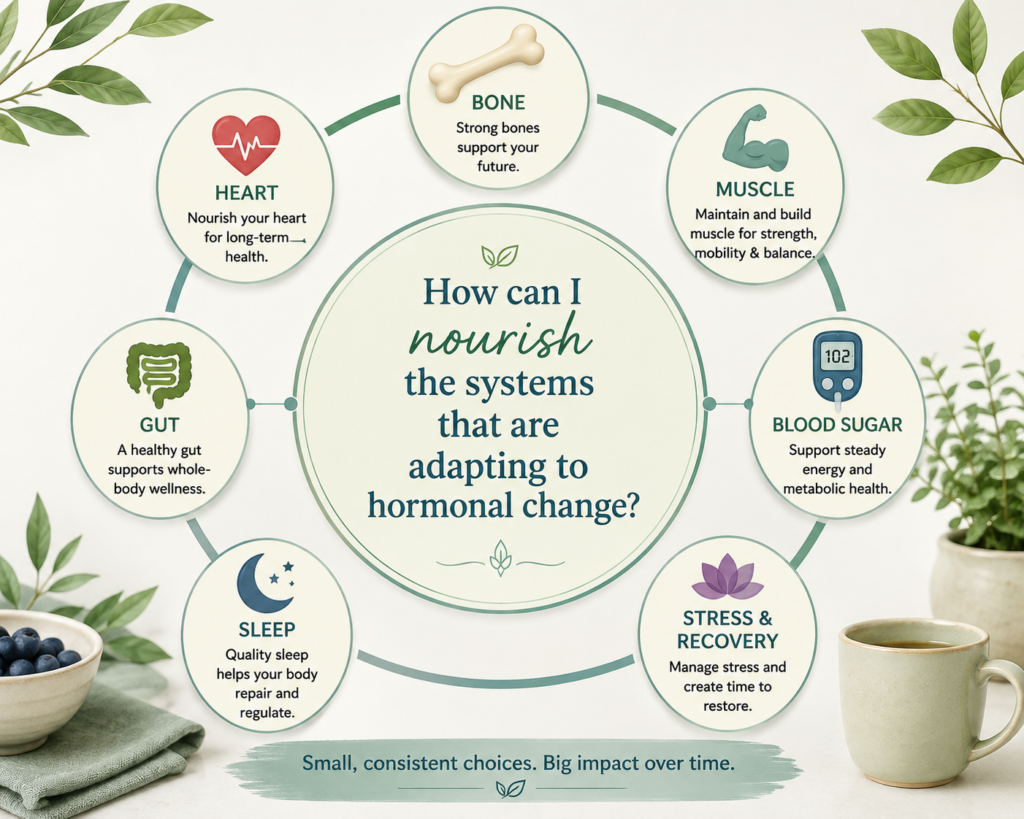
Estrogen, Estradiol, and Progesterone: A Quick Refresher
One point is worth clarifying before we talk about food.
Estrogen is not one hormone. It is the name for a family of related hormones.
- Estradiol (E2) is the predominant estrogen during the reproductive years and is the estrogen we are often discussing when we talk about ovarian estrogen changes during perimenopause.
- Estrone (E1) becomes the predominant circulating estrogen after menopause.
- Estriol (E3) is present in smaller amounts outside pregnancy.
- Progesterone also changes as ovulation becomes less predictable during perimenopause.
The important takeaway is simple:
Perimenopause is not usually a smooth, predictable decline in one hormone. Hormonal patterns fluctuate.
That is one reason symptoms can change from month to month.
And remember that insulin is a hormone too. Blood sugar regulation, muscle, food, sleep, movement, and metabolic health remain important parts of the midlife picture.
HORMONES DURING PERIMENOPAUSE
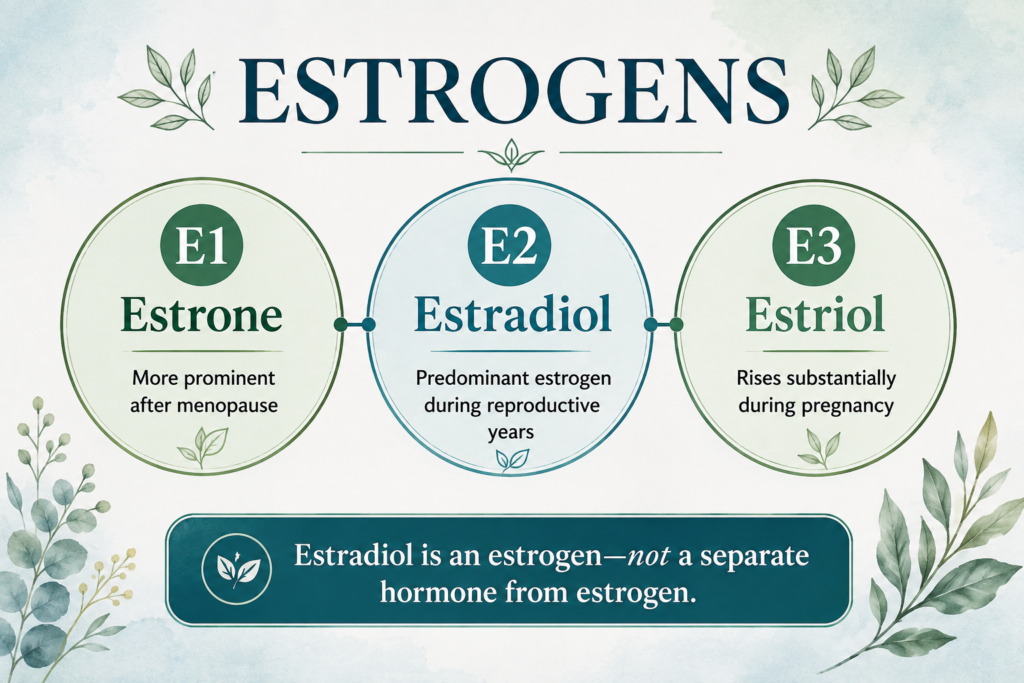
Can Food Support Hormonal Health?
Yes—but food should not be presented as a replacement for estrogen or medical treatment.
Instead, think about food as providing the building materials your body needs during a period of change.
Include Protein Regularly
Protein becomes especially important as we think about maintaining muscle, strength, function, and metabolic health.
Practical choices include:
- fish
- eggs
- poultry
- Greek yogurt or cottage cheese
- beans and lentils
- tofu and tempeh
- edamame
- nuts and seeds
Rather than obsessing over a perfect number, start by asking:
Do I have a meaningful source of protein at each meal?
What About Foods That Contain Phytoestrogens?
This is where there can be a lot of confusion.
Phytoestrogens are plant compounds. They are not human estrogen.
Soy foods contain compounds called isoflavones, while flaxseed contains lignans. These compounds can interact with estrogen receptors, but eating soy or flax is not the same as replacing estradiol.
Useful foods include:
- tofu
- tempeh
- edamame
- soybeans
- unsweetened soy milk
- ground flaxseed
These foods can fit naturally into an overall nutritious eating pattern.
I would not think of them as foods that “balance your hormones.”
Think of them as nutritious plant foods that may provide useful compounds while also contributing protein, fiber, healthy fats, vitamins, or minerals.
Fill Your Plate With Color and Fiber
You don’t need an exotic menopause diet.
Look for familiar foods such as:
- leafy greens
- broccoli and other cruciferous vegetables
- peppers
- tomatoes
- berries
- apples and pears
- beans and lentils
- oats and barley
- nuts and seeds
- whole grains
Fiber supports digestive health and can contribute to meal satisfaction. Plant foods also provide a wide range of vitamins, minerals, and phytochemicals.
If you currently eat very little fiber, increase it gradually.
Choose Supportive Fats
Include foods such as:
- extra-virgin olive oil
- avocado
- walnuts
- almonds
- chia and flaxseed
- salmon
- sardines
- trout
These foods provide unsaturated fats and, in some cases, omega-3 fatty acids.
Keep Carbohydrates—Choose Them Thoughtfully
Carbohydrates do not need to disappear during perimenopause.
Instead, consider their quality and what you eat with them.
Examples include:
- beans
- lentils
- oats
- barley
- quinoa
- sweet potatoes
- intact whole grains
- fruit
Pairing these foods with protein, fiber, and healthy fat can help create a more satisfying meal.
THE MIDLIFE SUPPORT PLATE
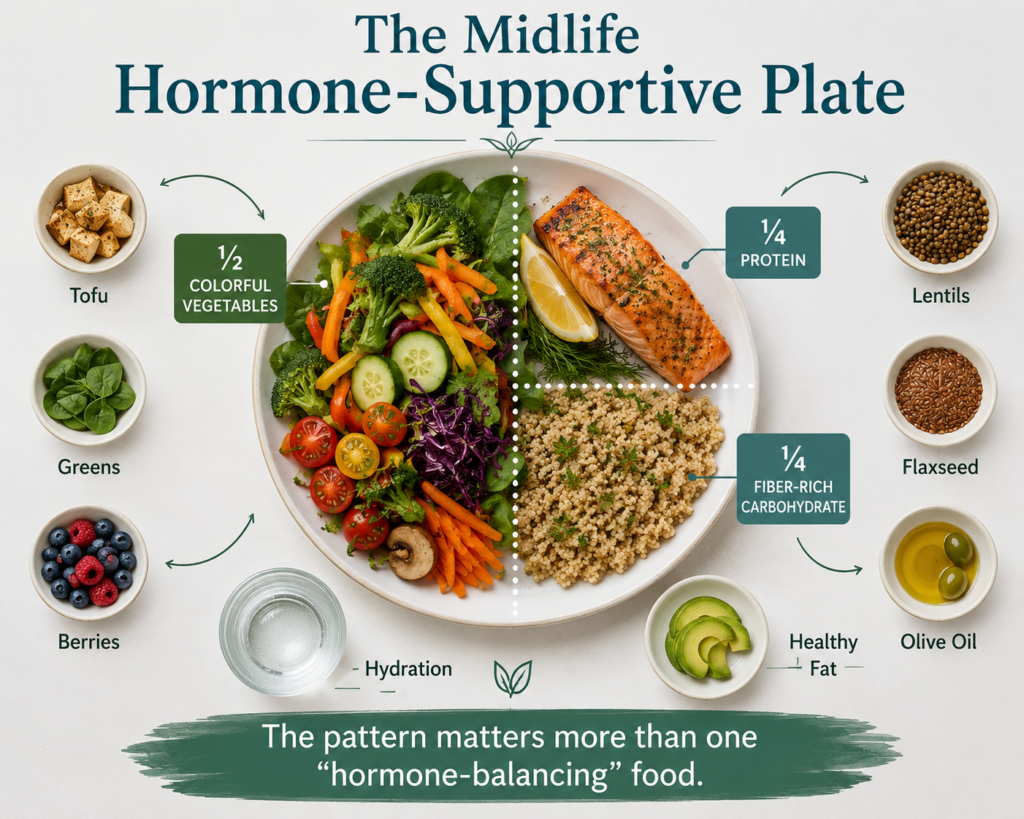
Protect Muscle and Bone
This is one of the most important parts of the midlife conversation.
I don’t want women thinking only about becoming smaller.
I want us thinking about becoming stronger.
Muscle supports strength, mobility, independence, and glucose metabolism.
Resistance exercise might include weights, resistance bands, machines, body-weight exercises, gardening, carrying, or other activities appropriate for your ability.
Bone health also deserves attention as estrogen declines. Calcium, vitamin D, protein, weight-bearing activity, and resistance exercise all belong in the conversation.
Food sources of calcium can include dairy foods, calcium-fortified soy milk, calcium-set tofu, and canned fish with edible bones.
Individual needs vary, particularly if you have osteoporosis, osteopenia, kidney disease, digestive conditions, or a history of fractures.
Movement is support, not punishment.
Sleep and Recovery Matter Too
A perfect plate cannot compensate for everything happening outside the kitchen.
Hot flashes and night sweats may interfere with sleep. Stress, caffeine, alcohol, pain, medications, and sleep disorders can also contribute.
Start simply:
- keep your bedroom comfortably cool
- notice whether alcohol affects your sleep or hot flashes
- consider the timing of caffeine
- move regularly during the day
- create a realistic wind-down routine
- seek evaluation when sleep problems persist
You don’t need to fix everything at once.
What About Supplements?
Be cautious with products promising to “balance hormones,” “detox estrogen,” or fix menopause naturally.
Supplements marketed for perimenopause may contain herbs, concentrated phytoestrogens, vitamins, or minerals. Evidence varies, and supplements can interact with medications or be inappropriate for certain medical conditions.
A simple approach is:
Food first when food can meet the need. Targeted supplementation when there is a clear reason. Medical treatment when medical treatment is appropriate.
And What About Hormone Therapy?
Nutrition and hormone therapy do not have to compete.
For some women, menopausal hormone therapy may be an appropriate and effective treatment for symptoms such as hot flashes and night sweats. Other hormonal and nonhormonal treatments are also available depending on the symptoms.
Food cannot replace estradiol when medical treatment is indicated.
Treatment decisions should consider your symptoms, age, stage of the menopause transition, medical and family history, risks, and personal preferences.
This is an individualized conversation to have with a qualified healthcare professional.
Your Practical Perimenopause Foundations
Instead of trying to remember everything in this series, remember these six foundations:
1. Nourish
Build meals around protein, colorful plants, fiber, healthy fats, and quality carbohydrates.
2. Strengthen
Protect muscle and bone with adequate nourishment and appropriate resistance exercise.
3. Move
Walk, garden, swim, stretch, lift, or choose movement you can realistically continue.
4. Sleep and recover
Pay attention to sleep quality, stress, and the signals telling you that your body needs recovery.
5. Look for patterns
Notice changes in symptoms, menstrual cycles, sleep, meals, energy, stress, and movement without judging yourself.
6. Get appropriate medical care
Persistent or disruptive symptoms deserve evaluation—not another restrictive diet or supplement protocol.
SIX MIDLIFE SUPPORT FOUNDATIONS
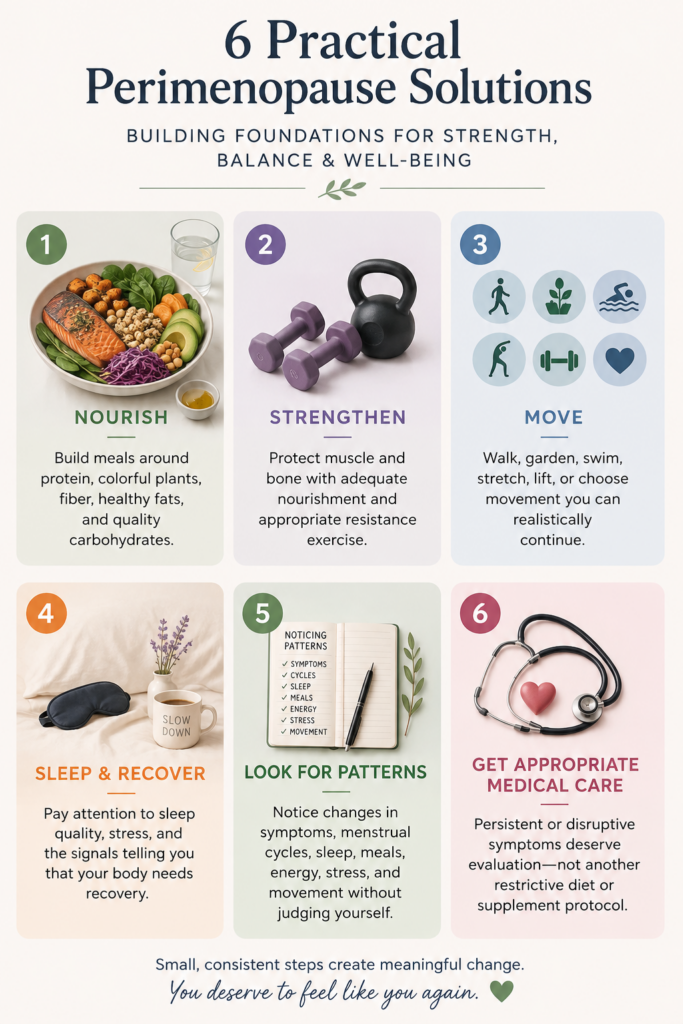
When Should You Seek Medical Care?
Talk with your healthcare professional about significant changes such as very heavy or unusual bleeding, bleeding after menopause, persistent or severe mood symptoms, unexplained fatigue, significant sleep problems, or symptoms that interfere with daily life.
Evaluation may also be important when symptoms could reflect another condition, such as anemia, thyroid disease, diabetes, or sleep apnea.
Seek urgent medical attention for severe chest pain, significant shortness of breath, fainting, signs of stroke, or thoughts of self-harm.
The Bottom Line
Perimenopause does not require you to overhaul your entire life.
Start with one foundation.
Add protein to breakfast.
Try tofu or edamame.
Sprinkle ground flaxseed on oatmeal.
Add another colorful vegetable to dinner.
Take a walk.
Lift something appropriately challenging.
Protect your sleep.
Or make the healthcare appointment you’ve been postponing.
Small actions may not stop hormonal change—but they can help support the body moving through it.
The goal is not perfection. It is learning what your body needs and taking the next useful step.
Symptoms are signals. Patterns are information.
References
- American College of Obstetricians and Gynecologists (ACOG). The Menopause Years.
- American College of Obstetricians and Gynecologists (ACOG). Hormone Therapy for Menopause.
- The Menopause Society. Menopause education and treatment resources.
- National Institute on Aging. What Is Menopause?
- U.S. Department of Health and Human Services and U.S. Department of Agriculture. Dietary Guidelines for Americans.
12 Aug, 2026 | Stephanie Sanders | No Comments
Perimenopause, Inflammation, and Metabolic Health: Why Hormones Are Only Part of the Story(article 2 of 3)
Stephanie Larmour Sanders, MS, RDN, CDE, FNLP
Clinical Dietitian, Certified Diabetes Educator, and Functional Nutritionist
If you read Article 1, you learned that perimenopause is a natural hormonal transition—and that estrogen and progesterone do not simply decline in a predictable straight line.
They fluctuate.
That can help explain why one month may feel very different from the next.
But hormones are only one part of what is happening during midlife.
Sleep may change. Stress may increase. Muscle mass and body composition can shift. Blood sugar regulation and cardiovascular risk become increasingly important. And some women begin noticing fatigue, cravings, brain fog, mood changes, or changes in where their bodies store fat.
It is tempting to put all of these experiences into one bucket and call them “hormonal.”
I think we can ask a better question:
What is changing—and what patterns might those changes reveal?
Perimenopause happens within a whole person. Hormones interact with metabolism, sleep, stress, nutrition, physical activity, muscle, medical conditions, and the immune system.
That is where an anti-inflammatory approach can be helpful—not as a way to “cure” perimenopause, but as a framework for identifying modifiable factors that may support health during this transition.
THE MIDLIFE CONNECTION
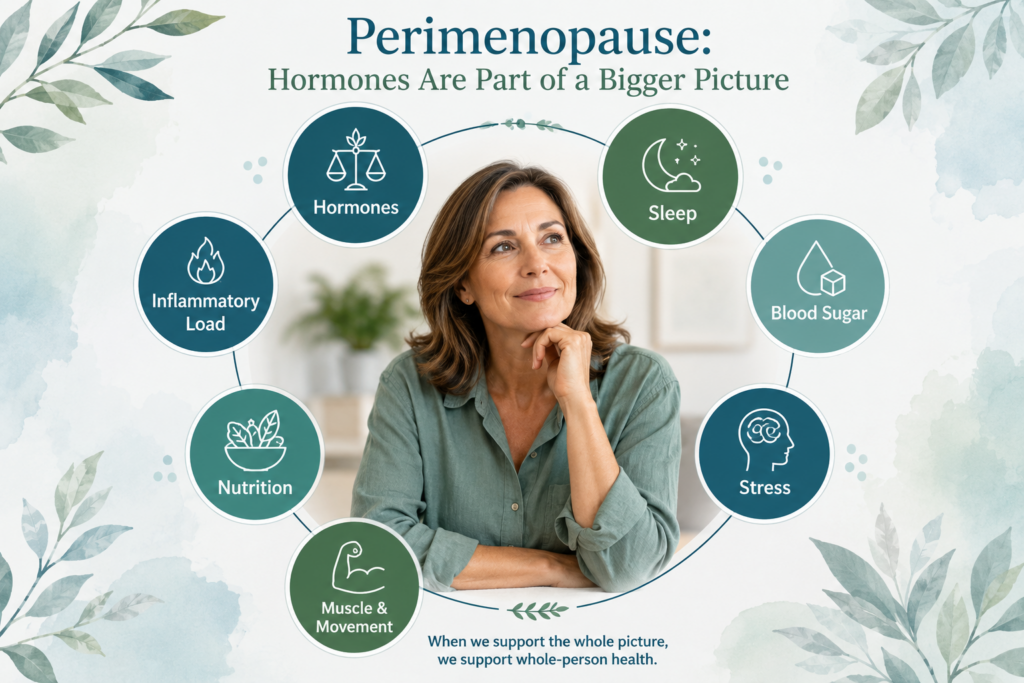
Perimenopause: Hormones Are Part of a Bigger Picture
Hormonal changes during perimenopause interact with many other aspects of health.
Hormones Are Changing—But They Are Not Acting Alone
During perimenopause, ovarian function becomes less predictable.
Estrogen may rise and fall considerably, while ovulation becomes less consistent and progesterone production changes.
These changes can contribute to recognized perimenopausal symptoms such as:
🟢 Changes in menstrual cycles
🔵 Hot flashes and night sweats
🟢 Sleep disruption
🔵 Vaginal and urinary symptoms
🟢 Mood changes
But symptoms such as fatigue, poor concentration, weight changes, sleep problems, anxiety, or low energy are more complicated.
Why?
Because many things can produce similar symptoms.
Iron deficiency, thyroid disease, diabetes or prediabetes, sleep apnea, depression, anxiety, medication effects, inadequate nutrition, chronic stress, and other medical conditions can overlap with perimenopause.
That is why I don’t want women to hear:
“You’re in your 40s. It’s just your hormones.”
Your symptoms deserve more curiosity than that.
🌿 STEPHANIE SAYS
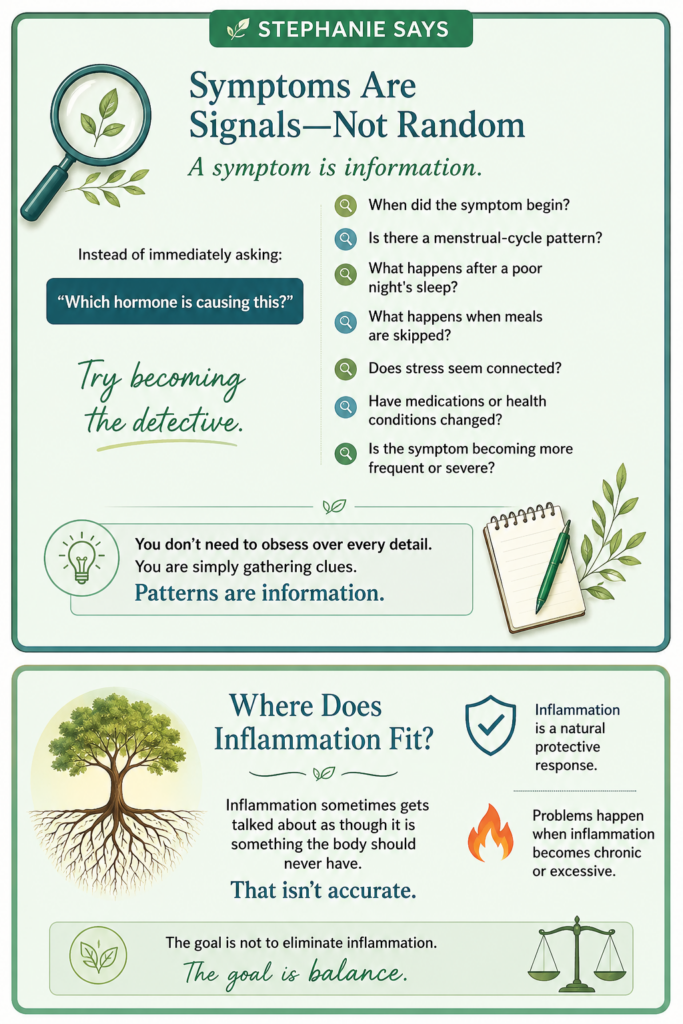
A symptom is information.
Instead of immediately asking:
“Which hormone is causing this?”
You are simply gathering clues.
Patterns are information.
Where Does Inflammation Fit?
Inflammation sometimes gets talked about as though it is something the body should never have.
That isn’t accurate.
Inflammation is an essential part of immune defense, tissue repair, and healing.
The concern is persistent, poorly regulated, low-grade inflammatory activity, particularly when it occurs alongside conditions such as metabolic disease or other chronic health problems.
Estrogen interacts with immune and inflammatory pathways, and researchers continue to investigate how the menopause transition may influence inflammatory markers and cardiometabolic health.
However, we need an important evidence boundary here:
Perimenopause should not simply be described as an inflammatory disease.
And an inflammatory marker cannot tell us why a woman is experiencing every symptom.
Instead, I find it more helpful to think about inflammatory load.
Several factors may accumulate:
🔵 Poor or inadequate sleep
🟢 Smoking
🔵 Low physical activity
🟢 Metabolic disease
🔵 Chronic psychological stress
🟢 Poor overall diet quality
🔵 Excess visceral adiposity
🟢 Certain medical conditions
Hormonal changes occur within that environment.
The goal is not to eliminate all inflammation.
The goal is to identify and reduce avoidable inflammatory load while supporting overall health.
THE INFLAMMATION TREE: MIDLIFE EDITION
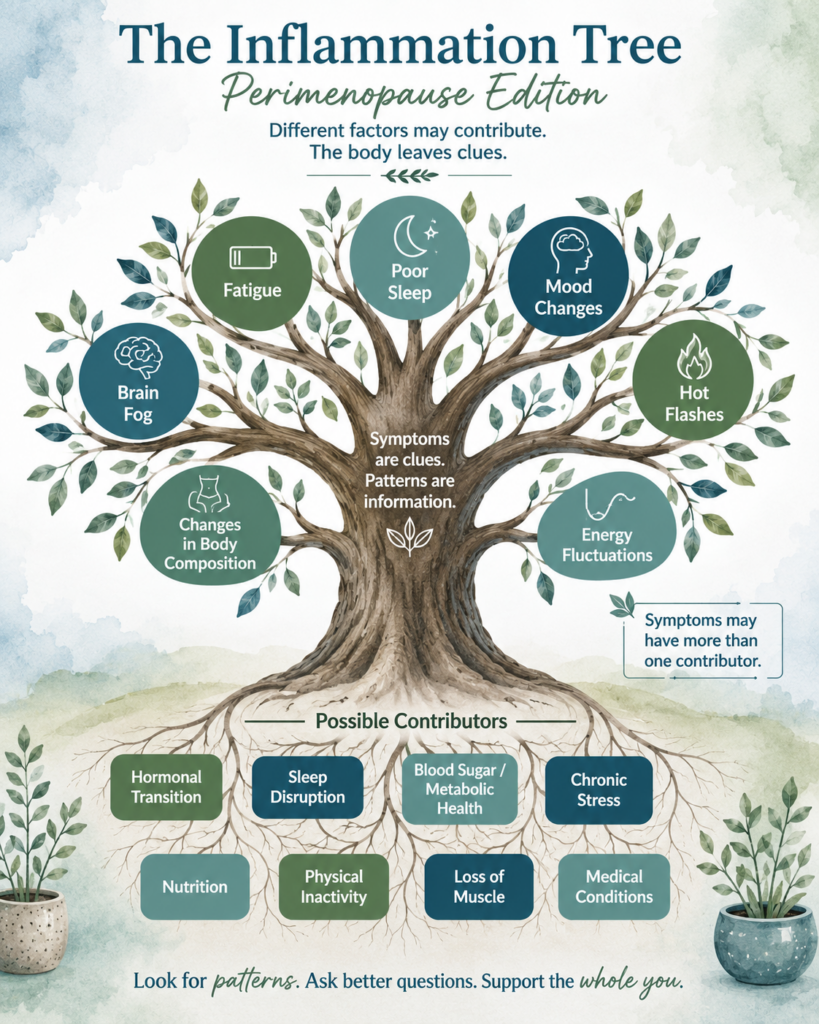
ROOTS — possible contributors
- Hormonal transition
- Sleep disruption
- Blood sugar/metabolic health
- Chronic stress
- Nutrition
- Physical inactivity
- Loss of muscle
- Medical conditions
BRANCHES — possible clues
- Fatigue
- Poor sleep
- Mood changes
- Brain fog
- Hot flashes
- Changes in body composition
- Energy fluctuations
- Hormonal changes may be one contributor within a larger pattern of metabolic, lifestyle, and health influences.
Insulin Is a Hormone Too
When we talk about hormones during perimenopause, estrogen tends to receive most of the attention.
But there is another hormone I don’t want you to forget:
Insulin.
Insulin helps glucose move from the bloodstream into cells, where it can be used for energy or stored.
Blood sugar regulation is affected by much more than carbohydrate alone.
It may be influenced by:
🟢 Food
The amount and type of carbohydrate matter, but so do protein, fiber, fat, meal composition, and meal timing.
🔵 Muscle
Skeletal muscle is an important site for glucose disposal. Maintaining and building muscle therefore becomes particularly valuable as we age.
🟢 Movement
Physical activity can support insulin sensitivity and metabolic health.
🔵 Sleep
Insufficient or disrupted sleep can influence appetite, glucose regulation, mood, and energy.
🟢 Stress
The stress response affects energy regulation and can also change sleep, eating behavior, and physical activity.
These factors do not operate independently. They interact.
The Blood Sugar Roller Coaster
Imagine you have been awake several times overnight because of hot flashes.
Morning arrives and you’re exhausted.
Breakfast is coffee and a pastry because you’re rushing.
A few hours later, you’re hungry again.
By mid-afternoon you feel tired and foggy, and something sweet sounds wonderful.
By evening, you may be wondering:
“Why don’t I have more willpower?”
But I don’t think willpower is the most useful question.
Instead ask:
🔎 Did I sleep?
🔎 Was breakfast satisfying?
🔎 Did my meal contain protein and fiber?
🔎 Did I go too long without eating?
🔎 How stressed was I?
🔎 Did I move today?
That changes the conversation from blame to investigation.
The body leaves clues.
THE MIDLIFE BLOOD SUGAR ROLLER COASTER
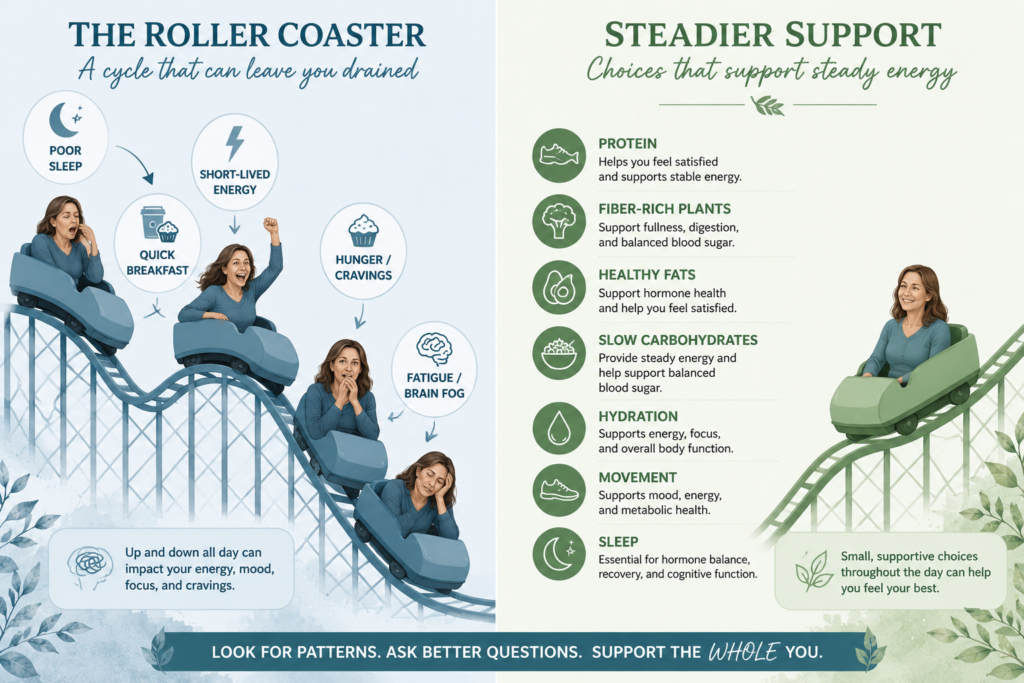
LEFT — THE ROLLER COASTER
Poor sleep → quick breakfast → short-lived energy → hunger/cravings → fatigue/brain fog
RIGHT — STEADIER SUPPORT
Show:
🟢 Protein
🟢 Fiber-rich plants
🟢 Healthy fats
🟢 Slow carbohydrates
🟢 Hydration
🟢 Movement
🟢 Sleep
Look for patterns—not perfection.
Food, sleep, stress, muscle, and movement can all influence energy and blood sugar patterns.
Blood sugar roller-coaster graphic comparing rapid energy fluctuations with steadier support from balanced meals, hydration, movement, and sleep.
Sleep Is Part of the Picture
Sleep disruption is common during the menopause transition.
For some women, the connection is obvious.
You wake drenched from a night sweat, throw off the covers, cool down—and then struggle to fall asleep again.
But hormones aren’t the only possible contributor to poor sleep.
Sleep may also be affected by:
🔵 Stress and anxiety
🟢 Alcohol
🔵 Caffeine
🟢 Chronic pain
🔵 Medications
🟢 Restless legs
🔵 Sleep apnea
🟢 Depression or other health conditions
That is why chronic exhaustion shouldn’t automatically be dismissed as menopause.
Persistent snoring, gasping during sleep, significant daytime sleepiness, morning headaches, or sleep problems that substantially interfere with daily life deserve medical evaluation.
Sleep is not a luxury.
It is part of metabolic, cognitive, emotional, and overall health.
Cortisol Is Not the Enemy
Cortisol has developed a bad reputation in wellness culture.
But cortisol isn’t a toxin.
It is an essential hormone involved in the body’s stress response, metabolism, blood pressure regulation, immune activity, and energy availability.
The goal isn’t to eliminate cortisol.
A better question is:
Does your body have enough opportunity to recover from repeated stress?
Midlife may include careers, caregiving, aging parents, financial pressures, relationship changes, children leaving home, health concerns—and hormonal changes—all at the same time.
Telling a woman to simply “lower her cortisol” misses that complexity.
Instead, look for opportunities to reduce unnecessary load and create realistic recovery.
That might be five quiet minutes.
A walk.
Turning off work earlier.
Asking for help.
Going to bed rather than finishing one more task.
Rest is a health practice—not something you have to earn.
Why Muscle Deserves More Attention
Many women enter perimenopause focused almost entirely on weight.
I would like to broaden that conversation.
Muscle matters.
Muscle supports:
🟢 Strength
🔵 Mobility
🟢 Glucose metabolism
🔵 Balance
🟢 Physical function
🔵 Independence as we age
Resistance exercise becomes especially valuable in midlife.
That does not mean everyone needs to join a gym or lift heavy weights.
Depending on your health and ability, strength-supportive movement might include resistance bands, weights, body-weight exercises, gardening, carrying groceries, climbing stairs, or professionally guided exercise.
The important message is:
Movement is support, not punishment.
Exercise is not something you owe your body because you ate.
It is something you can offer your body because you want it to remain strong.
What About Body Composition?
Changes in body composition and fat distribution may occur across the menopause transition.
Some women notice more abdominal fat even when the number on the scale has not changed dramatically.
But body composition is influenced by more than estrogen alone.
Age, genetics, muscle mass, sleep, physical activity, dietary patterns, medications, metabolic health, and other factors can contribute.
This is another place where blame is unhelpful.
Instead of asking only:
“How do I stop gaining weight?”
Consider broadening the goal:
How can I support muscle, metabolic health, cardiovascular health, nourishment, sleep, and physical function during this stage of life?
That is a much richer health conversation than a number on the scale.
🔬 RESEARCH SNAPSHOT
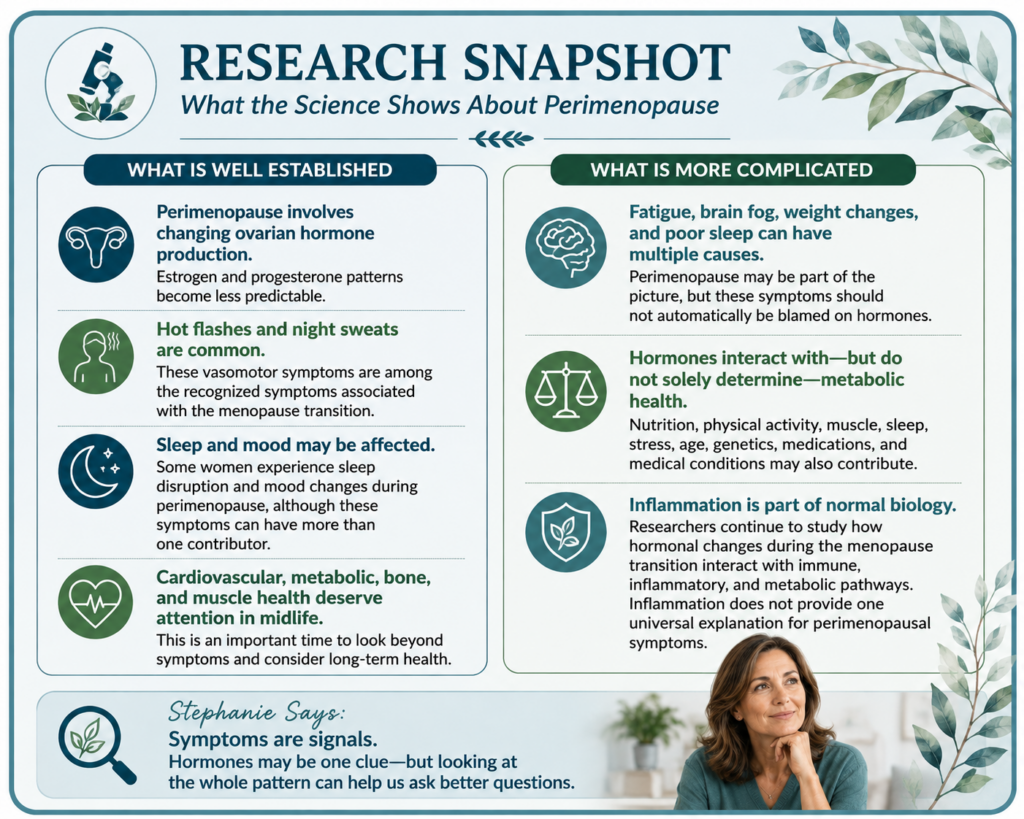
What is well established?
🔵 Perimenopause involves changing ovarian hormone production.
🟢 Vasomotor symptoms such as hot flashes and night sweats are common.
🔵 Sleep and mood may be affected during the menopause transition.
🟢 Cardiovascular, metabolic, bone, and muscle health deserve attention in midlife.
What is more complicated?
🔵 Fatigue, brain fog, weight changes, and poor sleep can have multiple causes.
🟢 Hormones interact with—but do not solely determine—metabolic health.
🔵 Inflammation is involved in many biological processes, but it does not provide one universal explanation for perimenopausal symptoms.
What should make you cautious?
Be skeptical of claims that:
❌ One hormone test identifies the cause of every symptom.
❌ One supplement “balances” everyone’s hormones.
❌ A detox removes the cause of menopause symptoms.
❌ One restrictive diet is necessary for every woman.
More testing and more supplements do not automatically mean better care.
Supporting the Whole Person
An anti-inflammatory lifestyle is not about trying to reverse perimenopause.
Perimenopause is a normal life transition.
Instead, we can support the systems affected by—and interacting with—that transition.
Start with foundations.
MIDLIFE SUPPORT FOUNDATIONS
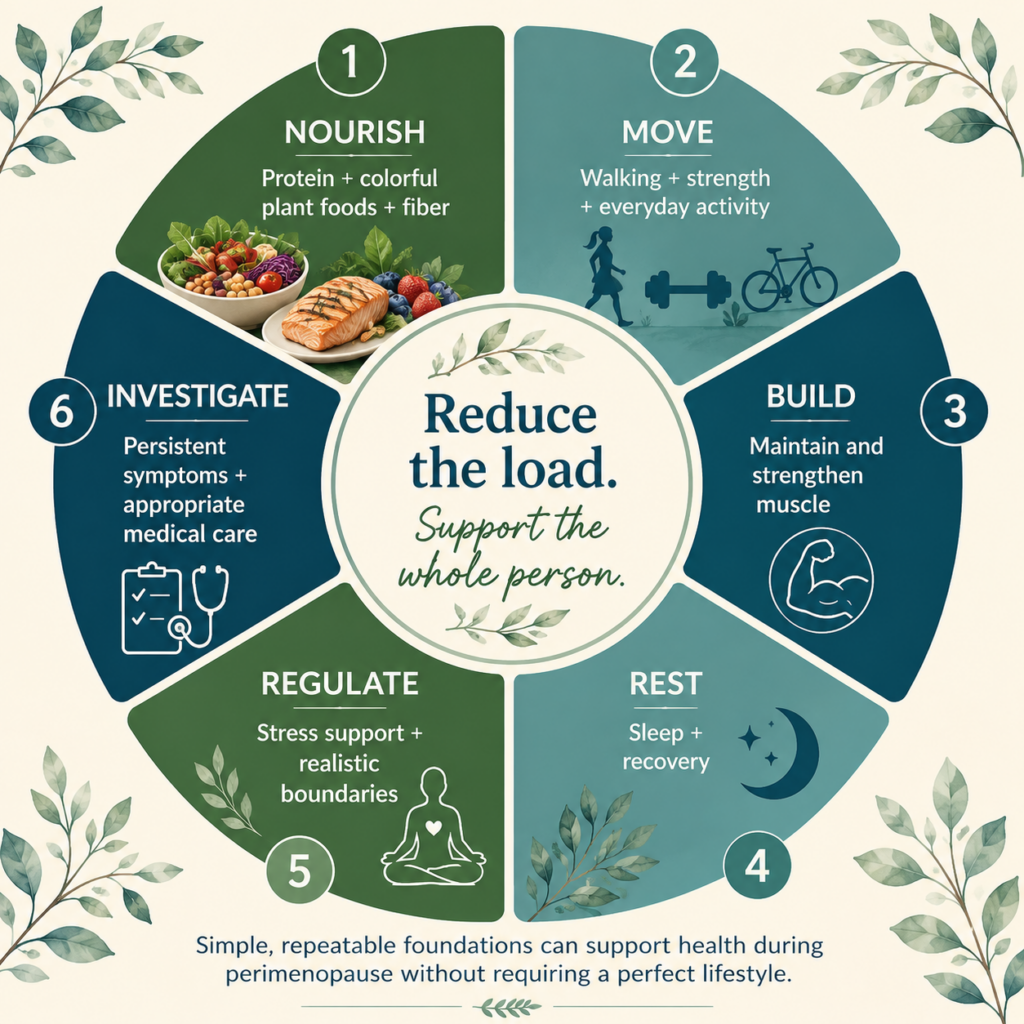
Simple, repeatable foundations can support health during perimenopause without requiring a perfect lifestyle.
Six-part midlife health graphic showing nourishing food, movement, muscle, sleep, stress support, and appropriate medical evaluation.
Start With One Meal
You do not need a “menopause diet.”
Begin by strengthening one meal you already eat.
Try combining:
🟢 Protein: fish, eggs, poultry, Greek yogurt, cottage cheese, tofu, tempeh, beans, or lentils.
🔵 Fiber-rich plants: vegetables, fruit, beans, lentils, whole grains, nuts, or seeds as appropriate for you.
🟢 Healthy fats: olive oil, avocado, nuts, seeds, or oily fish.
🔵 Slow carbohydrates: beans, lentils, oats, barley, quinoa, brown rice, sweet potato, or other minimally processed carbohydrate foods.
No food has to perform magic.
The value comes from the overall pattern.
What Should You Track?
You don’t need an elaborate spreadsheet.
For one week, simply notice:
🟢 Symptoms — hot flashes, headaches, mood changes, fatigue, cravings, brain fog, digestive changes.
🔵 Menstrual patterns — timing, duration, and unusual bleeding.
🟢 Sleep — approximate duration and awakenings.
🔵 Meals — meal timing and whether meals contained protein and fiber.
🟢 Energy — when do you feel strongest and when do you crash?
🔵 Stress — what was happening on particularly difficult days?
The purpose is not to achieve a perfect score.
It is to identify patterns you can discuss with your healthcare professional or use to choose a realistic next step.
When Should You Seek Medical Care?
Perimenopause is normal.
That doesn’t mean every symptom should simply be tolerated.
Talk with your healthcare professional about:
🔵 Very heavy menstrual bleeding
🟢 Bleeding or spotting between periods
🔵 Bleeding after sex
🟢 Menstrual bleeding that has changed substantially from your usual pattern
🔵 Persistent or severe mood symptoms
🟢 Significant or unexplained fatigue
🔵 Symptoms that substantially interfere with sleep, work, relationships, or daily life
🟢 Possible signs of thyroid disease, diabetes, anemia, sleep apnea, or another medical condition
🔵 Menopause-type symptoms occurring unexpectedly early
Seek urgent medical care for severe chest pain, significant shortness of breath, fainting, stroke symptoms, or thoughts of self-harm.
The Bottom Line
Perimenopause is hormonal.
But you are more than your hormones.
Sleep matters.
Blood sugar and metabolic health matter.
Muscle matters.
Nutrition matters.
Movement matters.
Stress and recovery matter.
And medical history matters.
An anti-inflammatory approach does not promise to “fix your hormones.”
It helps us look at the larger picture and ask:
Where can we reduce unnecessary inflammatory load and strengthen the foundations that support health?
You don’t have to change everything.
Choose one place to begin.
Strengthen breakfast.
Take a walk.
Protect your sleep.
Build some muscle.
Track a symptom.
Or make the medical appointment you’ve been postponing.
Small actions give us information.
And information helps us decide what comes next.
Symptoms are signals. Patterns are information. Better questions can lead to better care.
Coming Next — Article 3
Supporting Your Body Through Perimenopause: A Practical Anti-Inflammatory Approach
Article 1 helped you understand the hormonal transition.
Article 2 connected those hormonal changes with the bigger picture—blood sugar, sleep, stress, muscle, metabolic health, and inflammatory load.
In Article 3, we’ll turn that understanding into a practical plan.
We’ll explore:
🟢 How to build an anti-inflammatory plate
🔵 Protein needs and muscle support
🟢 Fiber and colorful plant foods
🔵 Healthy fats
🟢 Strength and everyday movement
🔵 Sleep and recovery
🟢 Supplements—what deserves caution
🔵 Medical treatment and when to discuss options with your healthcare professional
Previous article:
Perimenopause: Understanding the Hormonal Transition
[ ARTICLE 1 Stephanielarmour.com]
Next article:
Supporting Your Body Through Perimenopause: A Practical Anti-Inflammatory Approach
[ ARTICLE 3 Stephanielarmour.com]
Evidence Boundaries
ESTABLISHED
Perimenopause involves changing ovarian hormone production and may cause menstrual changes, vasomotor symptoms, and other recognized menopausal symptoms.
MULTIFACTORIAL
Sleep, mood, metabolic health, body composition, physical activity, nutrition, muscle, stress, age, genetics, medications, and medical conditions may all influence a woman’s midlife health experience.
EMERGING
Research continues into the relationships among menopause, inflammatory biomarkers, the microbiome, metabolic pathways, and long-term health outcomes.
NOT ESTABLISHED
There is no single hormone test, inflammation marker, supplement, detox, commercial test, or diet that can identify and correct the cause of every perimenopausal symptom.
Lifestyle strategies can support health, but they should not replace appropriate medical evaluation or evidence-based treatment.
References
- American College of Obstetricians and Gynecologists (ACOG). The Menopause Years.
- American College of Obstetricians and Gynecologists (ACOG). Hormone Therapy for Menopause.
- The Menopause Society. Patient and clinician resources on perimenopause, menopause symptoms, and treatment.
- National Institute on Aging. What Is Menopause?
- U.S. Department of Health and Human Services, Office on Women’s Health. Menopause.
- World Health Organization. Menopause.