
8 Aug, 2026 | Stephanie Sanders | No Comments
Perimenopause: Understanding the Hormonal Transition(1 of 3 articles)
What Every Woman Should Know About This Natural Life Stage
Stephanie Larmour Sanders, MS, RDN, CDE, FNLP
Clinical Dietitian • Certified Diabetes Educator • Functional Nutritionist
Womens Reproductive Journey

Perimenopause is a natural transition. Understanding what’s happening can help you navigate it with confidence.
🌿 Stephanie Says
Symptoms are signals—not random.
Your body is constantly communicating with you. Rather than fearing new symptoms or assuming they’re “just hormones,” think of them as clues. Looking for patterns can help you ask better questions and make informed decisions about your health.
Many women enter their forties expecting a few changes to their menstrual cycle.
Instead, they may find themselves struggling with interrupted sleep, hot flushes, mood changes, brain fog, fatigue, or weight changes that seem to appear almost overnight.
For some women, these changes are mild. For others, they can significantly affect quality of life. “My symptoms of hot flashes and sweats would occur any time. During my work meetings, I would have to keep my hands off the table or I would leave a puddle.”
It is understandable to wonder:
“Is this normal?”
“Is something wrong?”
“Could this really be perimenopause?”
The answer is often yes—but hormones are rarely the whole story.
One of the biggest myths surrounding perimenopause is that every symptom is caused by falling estrogen levels. In reality, many body systems are changing at the same time.
Hormones influence the brain, muscles, bones, cardiovascular system, metabolism, immune system, digestive system, and nervous system. They interact continuously with sleep, stress, nutrition, physical activity, and overall health.
That is why no two women experience perimenopause in exactly the same way.
🔬 Research Snapshot
Research shows that perimenopause is characterised by fluctuating ovarian hormone production rather than a smooth, gradual decline. These hormonal changes can influence multiple body systems, contributing to the wide variety of symptoms women experience.
Perimenopause literally means “around menopause.”
It is the natural transition leading to menopause, when the ovaries gradually become less responsive and hormone production begins to change.
Unlike menopause, which is defined retrospectively after twelve consecutive months without a menstrual period, perimenopause can last several years.
During this time, hormone levels fluctuate considerably from one menstrual cycle to the next.
Some months you may ovulate normally.
Other months you may not ovulate at all.
This explains why menstrual cycles often become unpredictable and why symptoms may come and go.
Understanding Hormone Patterns
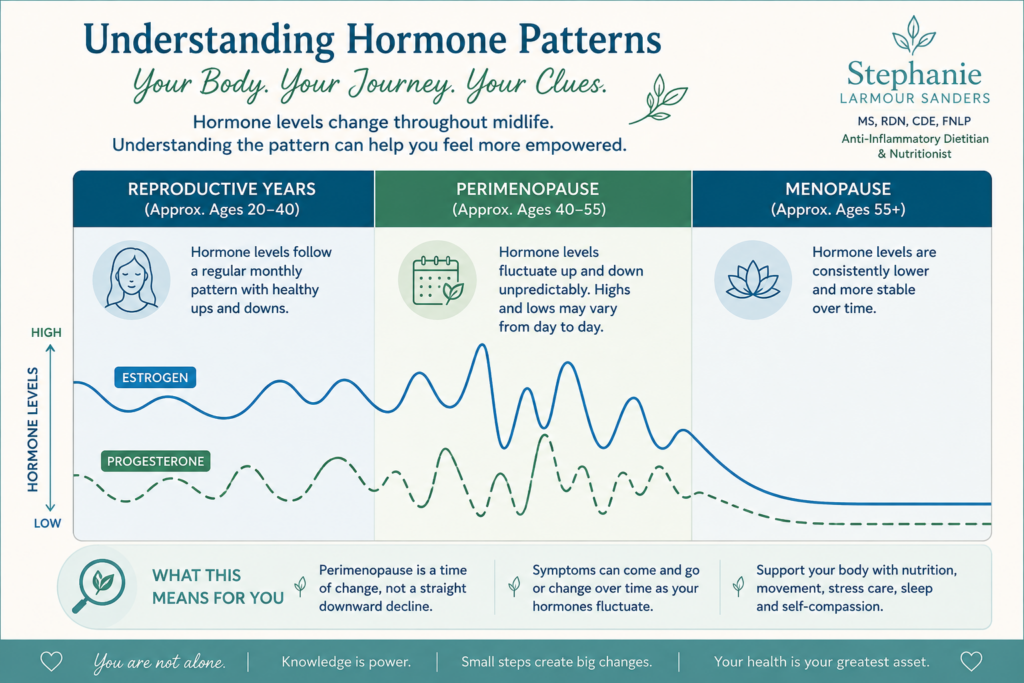
Hormones fluctuate during perimenopause rather than declining steadily.
✅ Key Takeaways
✔ Perimenopause is a normal life transition.
✔ Hormones fluctuate—they don’t simply decline.
✔ Every woman’s experience is different.
✔ Symptoms are clues—not a diagnosis.
✔ Looking for patterns is more helpful than making assumptions.
Read Articles on Perimenopause 2, 3 for continued conversation.
2 Aug, 2026 | Stephanie Sanders | No Comments
Alzheimer’s Disease: What Your Heart, Blood Sugar, Liver, Hormones, and Lifestyle May Be Telling You
“Symptoms are signals. Patterns are information. Better questions can lead to better care.“
By Stephanie Larmour Sanders, MS, RDN, CDE, FNLP
Clinical Dietitian, Certified Diabetes Educator, and Functional Nutritionist
Alzheimer’s disease is becoming more common, but it rarely appears overnight. The changes that affect the brain often begin years-sometimes decades-before memory loss or confusion show up.
The good news is that many of these changes are influenced by the daily choices we make. Research now shows that the brain does not function in isolation. It depends on healthy blood sugar, adequate oxygen, balanced hormones, quality sleep, and a body with lower inflammation.
This article explores how heart health, insulin resistance, diabetes, liver disease, hormones, and lifestyle factors may influence Alzheimer’s risk-and what you can do now to protect your brain for the future.
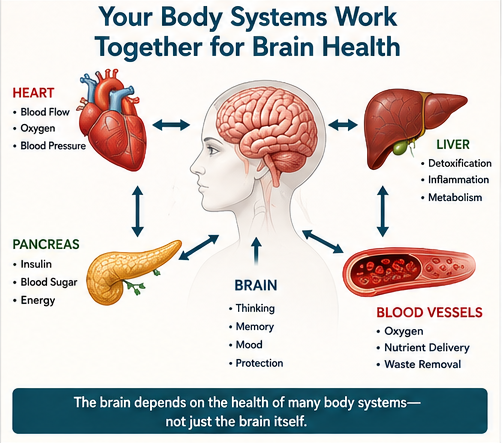
What is Alzheimer’s Disease?
Alzheimer’s disease is the most common cause of dementia, a term used to describe a decline in memory, thinking, and daily functioning that interfers with life.
Inside the brain, Alzheimer’s is characteirzed by the buildup of amyloid plaques between nerve cells and Tau tangles inside nerve cells. These changes can trigger neuroinflammation, damage connections (synapses), and lead to brain cell loss and shrinkage-especially in areas involved in memory and learning.
It is important to know that Alzheimer’s is a disease process, while dementia is a clinical syndrome with many possible causes. Many people have a mix of Alzheimer’s pathology and vascular chances in the brain.
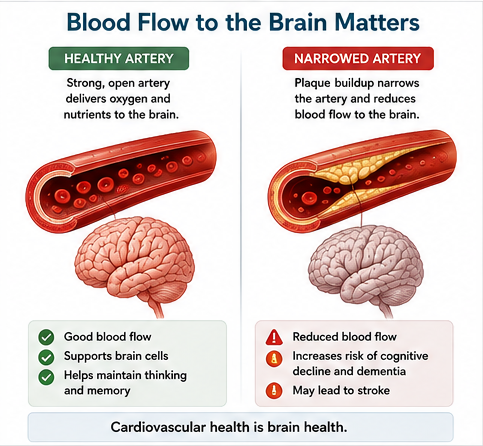
Is Alzheimer’s “Type 3 Diabetes”?
You may have heard Alzheimer’s called “Type 3 Diabetes.”
This is not an official medical diagnosis. Instead, researchers use the term because Alzheimer’s disease shares some features with type 2 diabetes, including insulin resistance, impaired glucose metabolism, and chronic inflammation in the brain.
The idea is still being studied. While there is strong evidence of impaired insulin signaling in Alzheimer’s, more research is needed to fully understand cause, effect, and the best ways to intervene.
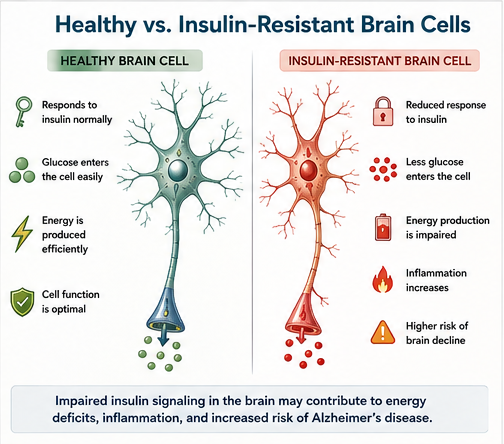
Diabetes and Alzheimer’s Disease
Type 2 diabetes roughly doubles the risk of developing Alzheimer’s disease.
Higher blood sugar (high HbA1c), insulin resistance, and spikes in glucose can lead to inflammation, oxidative stress, and the formation of advanced glycation end products (AGEs). These can damage blood vessels and brain cells.
Good blood sugar management, a nutrient-dense diet, regular movement, and adequate sleep may help lower the risk.
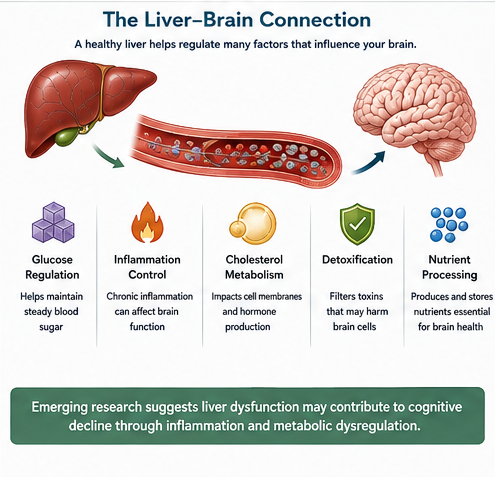
Why Are Women More Likely to Develop Alzheimer’s?
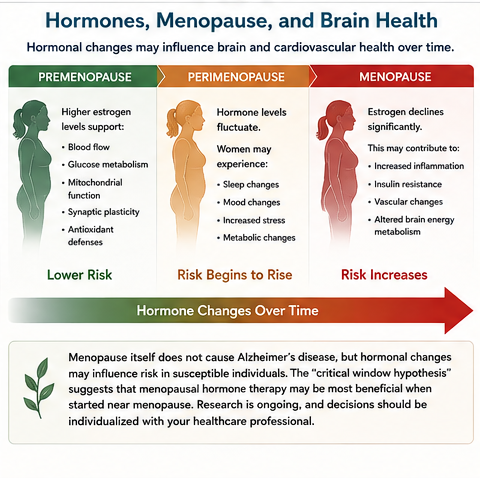
Women make up nearly two-thirds of Alzheimer’s cases.
There are several likely reasons:
- Longer life: Women live longer on average, and age is the greatest risk factor.
- Estrogen: Estrogen supports blood flow, glucose metabolism, mitochondrial function, synaptic plasticity, and antioxidant defenses. During menopause. estrogen drops, which may increase inflammation, insulin resistance, and vascular risk in the brain.
- Critical window: The “critical window hypothesis” suggests that menopausal hormone therapy may be most beneficial when started near menopause.
Research is ongoing, and decisions should be individualized with a healthcare professional.
Other Factors That Influence Alzheimer’s Risk
- Physical inactivity
- Poor Sleep
- Sleep apnea
- Smoking
- Ultra-processed diets
- Social isolation
- Hearing loss
- Depression
- High blood pressure
- Obesity
- High LDL cholesterol
- Air pollution
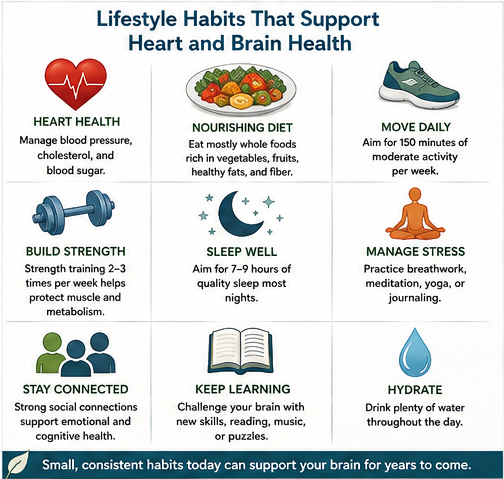
Healthy Lifestyle Habits That Support Heart and Brain Health
Small, consistent habits can make a big difference. Focus on what you can do today.
31 Jul, 2026 | Stephanie Sanders | One Comment
Leaky Gut: What It Means, What the Science Shows, and How to Support Your Gut Barrier
Stephanie Larmour Sanders, MS, RDN, CDE, FNLP
Clinical Dietitian, Certified Diabetes Educator, and Functional Nutritionist
| WordPress Excerpt “Leaky gut” is a popular term for increased intestinal permeability. Learn what this means, which claims are supported by evidence, what symptoms may be clues, and practical ways to support a healthy intestinal barrier. |
Many people hear the term “leaky gut” and wonder whether it could explain bloating, fatigue, brain fog, food reactions, or joint discomfort. The intestinal barrier is real, and changes in intestinal permeability can be measured. However, the term “leaky gut syndrome” is often used too broadly and is not a well-defined stand-alone medical diagnosis.
The most helpful approach is not to assume that every symptom comes from one cause. Instead, we can treat symptoms as clues, look for patterns, and investigate recognized medical conditions that may affect the gut lining.
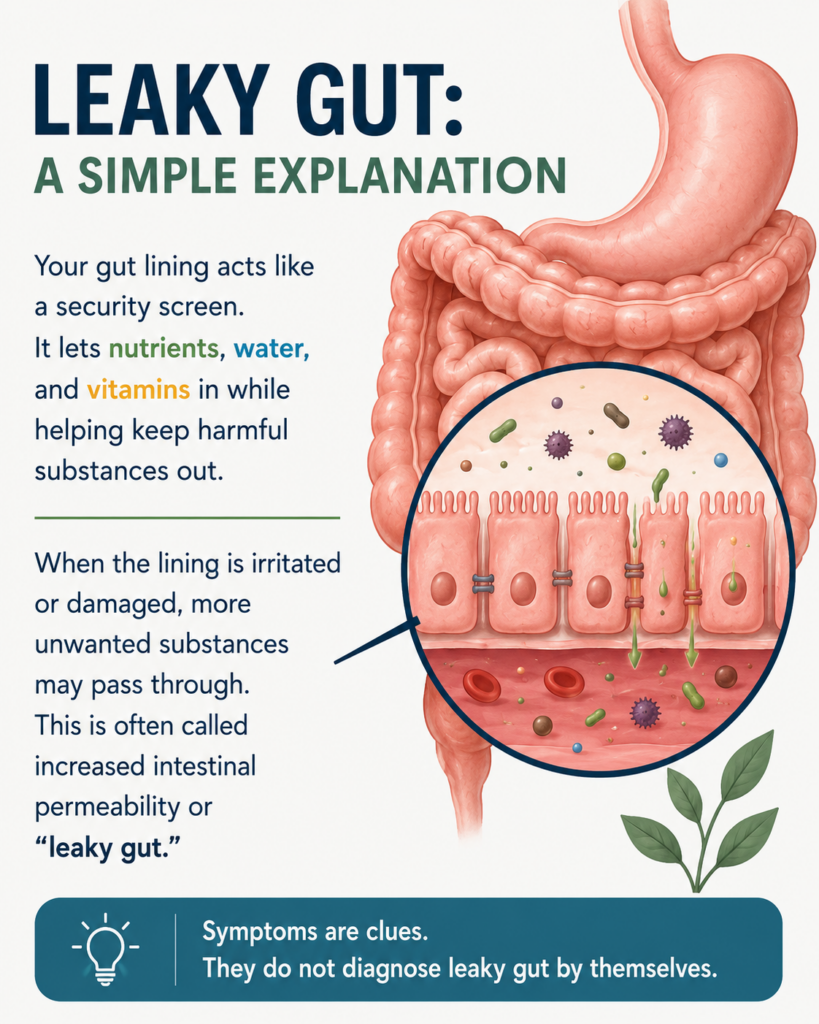
Image 1. A simple explanation of the intestinal barrier and increased permeability.
Illustration explaining how the intestinal lining controls what passes into the bloodstream and how increased intestinal permeability may allow more substances through.
What Does “Leaky Gut” Mean?
The medical term is increased intestinal permeability. Your intestinal lining is made of a single layer of cells covered by mucus and supported by immune cells, blood vessels, nerves, and the gut microbiome. The spaces between these cells are regulated by structures called tight junctions.
A healthy intestinal barrier helps:
- Absorb nutrients, water, and minerals.
- Keep most bacteria and potentially harmful substances inside the intestinal tract.
- Coordinate communication between the digestive system and the immune system.
- Maintain a balanced response to food, microbes, and other substances encountered in the gut.
When the barrier is inflamed, injured, or otherwise disrupted, more material may cross it than normally would. This is what people commonly call “leaky gut.”
| A Simple Picture Think of the intestinal lining as a carefully controlled security screen. A healthy screen allows selected nutrients and water through. A weakened screen may become less selective. |
Is Leaky Gut Real?
Increased intestinal permeability is real and scientifically recognized. Researchers have documented barrier changes in conditions such as celiac disease, inflammatory bowel disease, certain gastrointestinal infections, and some cases of irritable bowel syndrome.
What remains uncertain is whether “leaky gut syndrome” should be treated as a separate diagnosis that explains a long list of unrelated symptoms. Current reviews emphasize that the causal direction is often unclear: disease may damage the barrier, barrier dysfunction may contribute to inflammation, or both processes may occur together.
| Important Distinction The barrier problem is real. The catch-all diagnosis and many commercial claims surrounding “leaky gut syndrome” are not firmly established. |
What Can Affect the Intestinal Barrier?
Several factors may influence intestinal barrier function. Their effects vary by person, dose, duration, health status, and the presence of underlying disease.
- Celiac disease and inflammatory bowel disease.
- Gastrointestinal infections and significant intestinal inflammation.
- Frequent or high-dose use of nonsteroidal anti-inflammatory drugs, such as ibuprofen or naproxen.
- Heavy or chronic alcohol intake.
- Changes in the gut microbiome, sometimes called dysbiosis.
- Low-fiber dietary patterns dominated by highly processed foods.
- Poorly controlled metabolic disease and chronic systemic inflammation.
- Severe physical stress, critical illness, or major injury.
- Poor sleep and psychological stress, although the exact clinical significance varies and cause-and-effect relationships remain under study.
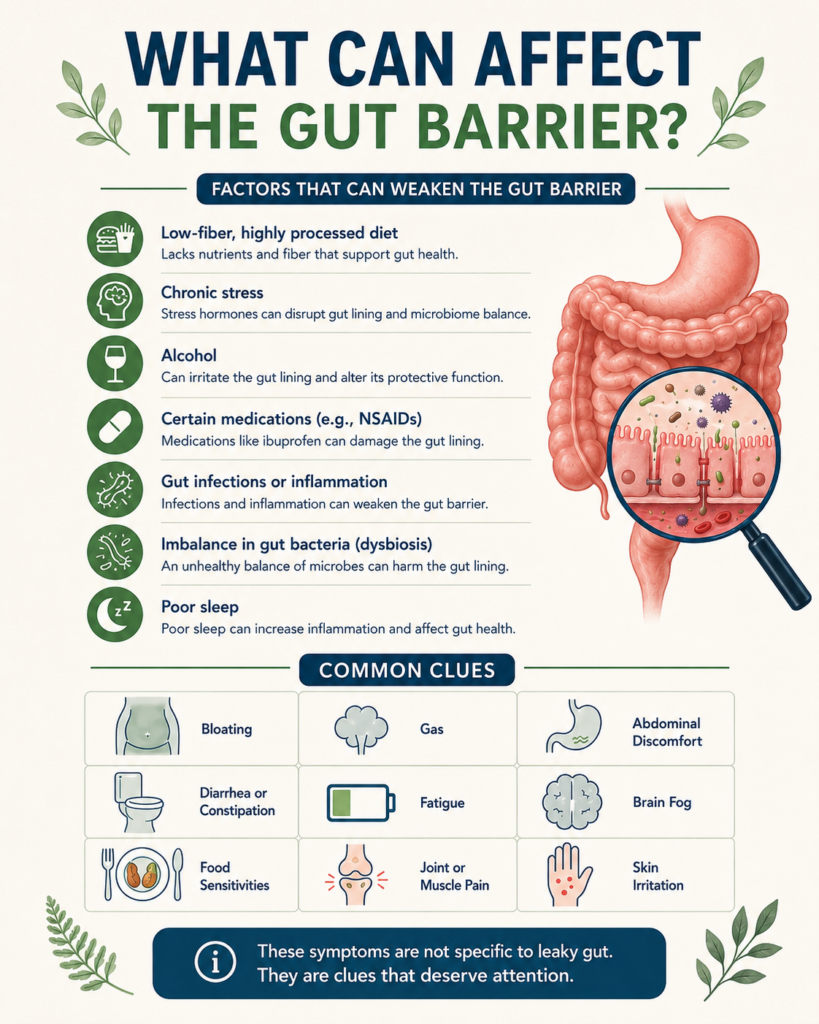
Image 2. Factors that may affect the gut barrier and common symptoms that may be clues.
Infographic listing diet, stress, alcohol, medications, infection, microbiome imbalance, and sleep as possible influences on the gut barrier, with common digestive and whole-body symptoms.
What Symptoms May Be Clues?
Symptoms often attributed to “leaky gut” include:
- Bloating, gas, or abdominal discomfort.
- Diarrhea or constipation.
- Nausea or uncomfortable fullness after meals.
- Fatigue or brain fog.
- Food-related symptoms.
- Skin irritation.
- Joint or muscle discomfort.
These symptoms do not diagnose increased intestinal permeability. They can also occur with irritable bowel syndrome, celiac disease, inflammatory bowel disease, small intestinal bacterial overgrowth, food intolerances, thyroid disorders, medication effects, pancreatic or liver disorders, and many other conditions.
| Detective Question Instead of asking only, “Do I have leaky gut?” ask, “When do my symptoms occur, what patterns repeat, and what recognized conditions should be ruled out?” |
Can Leaky Gut Be Diagnosed With a Routine Test?
There is currently no single routine blood, stool, or urine test that can confirm a broad “leaky gut syndrome.” Research studies may use special sugar-permeability tests, but these tests have technical limitations and are not standard screening tools for every person with digestive symptoms.
Commercial zonulin testing also requires caution. Some commercial assays do not reliably measure the protein they claim to measure, and an isolated zonulin result should not be treated as definitive proof of intestinal permeability.
A clinician may instead evaluate for recognized causes of symptoms, including:
- Celiac disease.
- Inflammatory bowel disease.
- Infection.
- Irritable bowel syndrome or other disorders of gut-brain interaction.
- Small intestinal bacterial overgrowth when clinically appropriate.
- Medication-related irritation or injury.
- Malabsorption, anemia, or nutrient deficiencies.
- Thyroid, liver, pancreatic, or other medical conditions.
How Can You Support a Healthy Gut Barrier?
There is no one-size-fits-all “gut healing” protocol. The most responsible plan is to identify and treat the underlying condition while supporting overall digestive, metabolic, and immune health.
1. Build Fiber Gradually
Vegetables, fruits, beans, lentils, nuts, seeds, and intact whole grains provide fermentable fibers and other compounds that support the gut microbiome. Some gut bacteria convert fiber into short-chain fatty acids, including butyrate, which helps nourish cells lining the colon.
People with significant bloating, strictures, active inflammatory bowel disease, recent gastrointestinal surgery, or other complex conditions may need individualized guidance before increasing fiber.
2. Eat a Varied, Minimally Processed Diet
A varied dietary pattern rich in colorful plant foods provides fiber, polyphenols, vitamins, and minerals. A Mediterranean-style pattern is a practical example for many people, although it should be adapted to medical needs, tolerances, culture, and food access.
3. Include Adequate Protein
Protein supplies amino acids needed for tissue maintenance, immune function, and repair. Useful options may include fish, poultry, eggs, yogurt or kefir when tolerated, tofu, tempeh, beans, and lentils.
4. Reduce Known Irritants
Depending on the individual, this may include excess alcohol, smoking, frequent unnecessary NSAID use, and foods that repeatedly and clearly trigger symptoms. Medication changes should always be discussed with the prescribing clinician.
5. Support Sleep, Movement, and Stress Regulation
The digestive system communicates with the brain, immune system, hormones, and microbiome. Regular movement, sufficient sleep, and practical stress-reduction strategies support overall digestive and metabolic health, even though they are not cures for intestinal disease.
6. Use Probiotics Selectively
Probiotic benefits are strain-specific and condition-specific. A product studied for antibiotic-associated diarrhea may not help IBS, inflammatory bowel disease, or another condition. Probiotics are not a universal treatment for intestinal permeability.
7. Avoid Unnecessary Restriction
Automatically removing gluten, dairy, grains, legumes, or many other foods can create nutrient gaps and make eating unnecessarily difficult. Gluten must be strictly avoided in diagnosed celiac disease, but a gluten-free diet is not automatically appropriate for everyone with bloating or suspected permeability changes.
Important: Celiac testing should generally be completed before starting a gluten-free diet, because removing gluten can make blood tests and biopsies less reliable.

Image 3. Practical ways to support a healthy intestinal barrier.
Infographic showing fiber-rich whole foods, protein, hydration, limiting excess alcohol and smoking, stress management, sleep, movement, and selective probiotic use.
What About Glutamine, Zinc, Probiotics, and Other Supplements?
Glutamine, zinc, vitamin D, omega-3 fats, probiotics, prebiotics, and polyphenols are being studied for effects on intestinal barrier function. Some may be useful for particular diagnoses, deficiencies, or clinical circumstances. That does not establish a universal supplement protocol for everyone with digestive symptoms.
Supplements can interact with medications and may be inappropriate in kidney, liver, cancer, immune, or gastrointestinal conditions. A food-first plan and evaluation of the underlying problem are usually the safest starting points.
When Should You Seek Medical Care?
Contact a qualified healthcare professional promptly for:
- Blood in the stool or black, tar-like stool.
- Unexplained weight loss.
- Persistent vomiting or inability to keep fluids down.
- Fever with significant gastrointestinal symptoms.
- Severe or worsening abdominal pain.
- Anemia or unexplained nutrient deficiencies.
- Persistent or nighttime diarrhea.
- Difficulty swallowing.
- New, persistent digestive symptoms later in life.
- A strong family history of celiac disease, inflammatory bowel disease, or gastrointestinal cancer.
The Bottom Line
| Symptoms Are Clues, Not Conclusions “Leaky gut” is a popular name for increased intestinal permeability. Barrier dysfunction is scientifically recognized, but it should not be used as a catch-all explanation for every digestive, immune, or inflammatory symptom. |
A practical detective approach is to:
- Notice the symptoms without blaming or panicking.
- Look for repeating patterns involving food, sleep, stress, medications, and illness.
- Rule out recognized medical conditions.
- Support the intestinal barrier with a varied, nutrient-dense eating pattern and realistic lifestyle habits.
- Treat the underlying cause rather than relying on an expensive universal “gut healing” package.
Symptoms are signals. Patterns are information. Better questions can lead to better care.
References
1. Lacy BE, Cangemi DJ, Wise JL. Leaky Gut Syndrome: Myths and Management. Gastroenterology & Hepatology. 2024. View source
2. Di Vincenzo F, et al. Gut microbiota, intestinal permeability, and systemic inflammation. Internal and Emergency Medicine. 2024;19:275-293. View source
3. Macura B, et al. Intestinal permeability disturbances: causes, diseases and therapy. Archivum Immunologiae et Therapiae Experimentalis. 2024. View source
4. Dmytriv TR, et al. Intestinal barrier permeability: the influence of gut microbiota, nutrition, and exercise. Frontiers in Physiology. 2024. View source
5. Massier L, et al. How shortcomings of zonulin as a biomarker mislead the field of intestinal permeability. Gut. 2021. View source
6. Haskey N, et al. Biomarkers of Intestinal Permeability Are Influenced by Diet in Adults with Ulcerative Colitis. Nutrients. 2024. View source
28 Jul, 2026 | Stephanie Sanders | No Comments
One Clue at a Time: A Simple Way to Move Your Health Forward
Stephanie Larmour Sanders MS, RDN, CDE, FNLP
Anti-Inflammatory Dietitian and Nutritionist

I grow my own organic fruits and vegetables. This allows me to share with family and friends.
One Clue at a Time: A Simple Way to Move Your Health Forward
Many people want to improve their health, but they do not know where to begin.
They may be dealing with fatigue, brain fog, joint pain, digestive discomfort, poor sleep, cravings, blood sugar swings, burning skin, or low energy.
The symptoms may feel scattered.
One day it is fatigue.
Another day it is bloating.
Another day it is joint pain.
Another day it is brain fog.
It can feel overwhelming. But what if you did not have to solve everything at once?
What if you started with just one clue?
That is the heart of the detective approach. Your body may be trying to communicate with you.
A symptom may be a clue. A repeated pattern may be information. And one small change may help you begin moving your health forward.
Symptoms Are Not Random
Many people dismiss symptoms because they are common.
They say:
“I’m just getting older.”
“I’m just tired.”
“It is probably stress.”
“My body is just changing.”
“I will deal with it later.”
But common does not always mean something should be ignored.
Fatigue may be a clue.
Brain fog may be a clue.
Joint pain may be a clue.
Digestive discomfort may be a clue.
Skin changes may be a clue.
Poor sleep may be a clue.
Cravings may be a clue.
That does not mean every symptom means something serious.
But it does mean your body deserves your attention.
The Problem With Trying to Fix Everything at Once
When people decide they want to get healthier, they often try to change too much at one time. They try to change their food, sleep, exercise, supplements, stress, hydration, schedule, and mindset all at once.
That can feel exhausting!
And when the plan feels too big, many people stop before they really begin. “In the beginning of my healing journey, I felt overwhelmed. I found my sucess by taking my health seriously and one change at a time.”
This is why I like the phrase:
One clue at a time.
A detective does not solve the whole mystery in one moment. A detective follows one clue. Then another. Then another.
Health progress can work the same way. You do not need to understand everything today. You only need to begin noticing what your body may be telling you.
Start With One Clue
Choose one symptom or pattern to observe this week.
It might be:
- Fatigue
- Brain fog
- Joint pain
- Digestive discomfort
- Poor sleep
- Cravings
- Low energy after meals
- Afternoon crashes
- Skin changes
- Mood changes
- Blood sugar swings
Do not choose everything. Choose one.
Then ask:
When does this happen?
Does it happen:
- After meals?
- After poor sleep?
- During stressful weeks?
- After eating certain foods?
- When you skip breakfast?
- When you do not drink enough water?
- When you go too long without protein?
- After exposure to strong smells or chemicals?
- After several busy days without recovery?
This is where progress begins. Not with blame. Not with fear. Yes, with curiosity.
A Simple Detective Exercise
For the next 3 days, write down one clue.
You can keep it very simple.
Use this format:
My clue:
What symptom or pattern did I notice?
When did it happen?
Morning, afternoon, evening, after meals, after stress, after poor sleep?
What happened before it?
Food, sleep, stress, movement, hydration, environment, emotions?
What might my body need?
Protein, water, rest, movement, fiber, a calmer evening, a steadier meal?
This is not about judging yourself. This is about gathering information.
Your journal is not busywork. It is evidence.
One Small Change Can Be a Starting Point
Once you notice one clue, choose one support step.
For example:
If your clue is fatigue after meals, you might add more protein and fiber to breakfast.
If your clue is afternoon cravings, you might check whether you ate enough earlier in the day.
If your clue is brain fog, you might look at sleep, hydration, blood sugar, or food reactions.
If your clue is joint pain, you might look at inflammatory load, movement, food patterns and simple sugar load, stress, or recovery.
If your clue is digestive discomfort, you might slow down while eating, notice food triggers, increase hydration, or look at fiber.
Progress does not always begin with a dramatic change. Sometimes it begins with one honest question:
What is my body trying to tell me?
Health Progress Is Not Perfection
Many people think they have to do everything perfectly to improve their health.
But perfection is not the goal. Awareness is the first goal. Consistency is the next goal.
Small changes matter.
One glass of water matters.
One balanced meal matters.
One walk matters.
One earlier bedtime matters.
One moment of noticing matters.
One clue matters.
When you begin with one clue, health feels less overwhelming. You stop chasing every symptom. You begin looking for patterns. That is where understanding begins.
You Are Not Broken
If you have symptoms that have not been clearly explained, I want you to hear this:
You are not broken. You are not lazy. You are not failing. Your body may simply be asking for support. The goal is not to panic over every symptom. The goal is to pause, notice, and ask better questions. A health detective does not blame the body.
A health detective listens.
A health detective gathers clues.
A health detective looks for patterns.
A health detective learns one step at a time.
Closing Reflection
This week, choose one clue.
Not ten. Not everything. Just one.
Ask yourself:
What keeps showing up?
When does it happen?
What happened before it?
What might my body need?
What is one small support step I can take?
Your body may already be leaving clues. And you can begin making progress one clue at a time.
Bridge to Health

This is exactly why I created my course:
Detecting and Reducing Pro-Inflammatory Lifestyle Factors in 30 Days
Inside the course, I help you begin connecting the dots between symptoms, food, blood sugar, sleep, stress, movement, digestion, environment, and lifestyle patterns.
My goal is not simply to give you more information.
My goal is to help you recognize the clues your body may already be giving you.
I can hand you the flashlight.
The course teaches you how to become the detective.

17 Jul, 2026 | Stephanie Sanders | No Comments
Diabetes and Inflammation: What Is Your Body Trying to Tell You?
Stephanie Larmour Sanders MS, RDN, CDE, FNLP
Clinical Dietitian, Certified Diabetes Educator, and Functional Nutritionist
Anti-Inflammatory Dietitian and Nutritionist
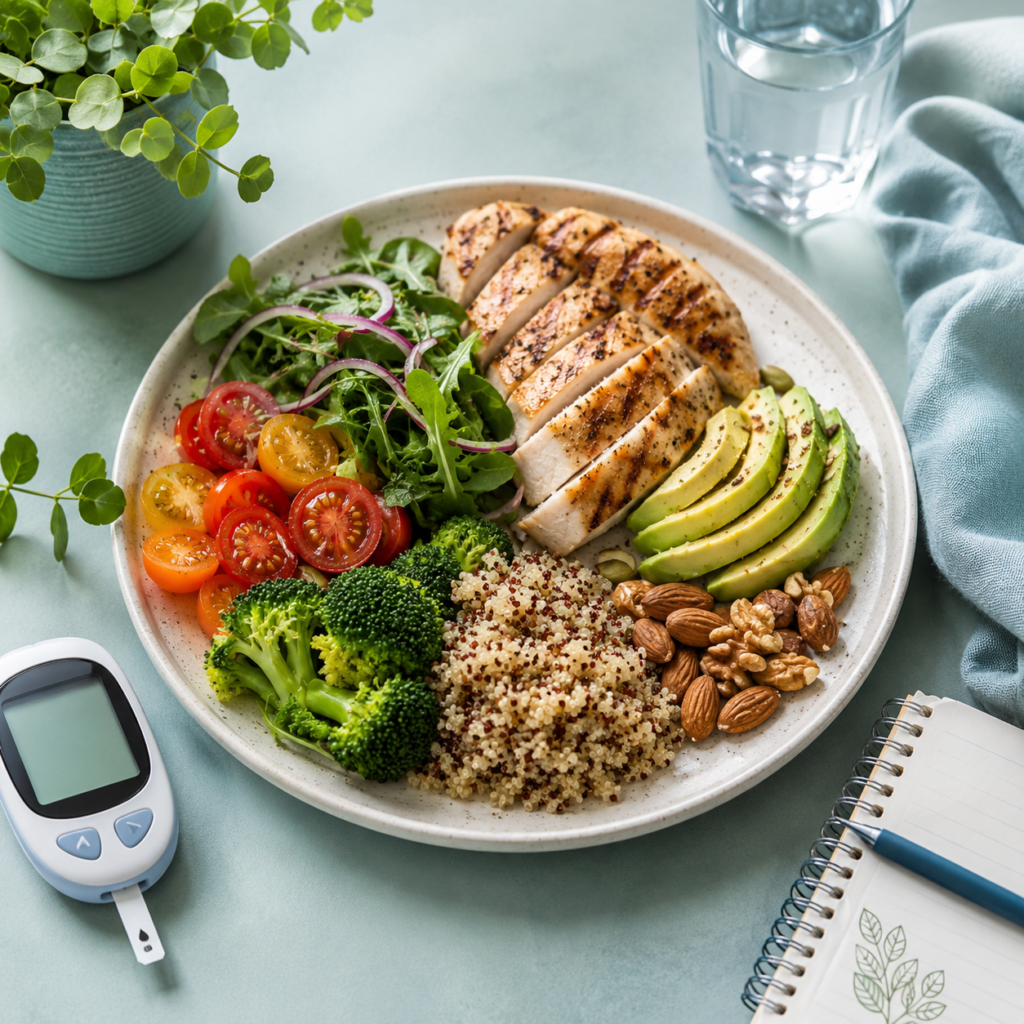
Introduction: Blood Sugar Is a Clue
When people hear the word diabetes, they often think only about sugar. But diabetes is not only about sugar.
It is also about how the body uses insulin, how cells respond to insulin, how blood sugar moves into the cells, and how long-term inflammatory stress may affect the body over time.
The American Diabetes Association explains that in type 2 diabetes, the body does not use insulin properly, a process known as insulin resistance. Over time, the body may need more insulin to help manage blood glucose levels. (American Diabetes Association)
The Center for Disease Control (CDC) also explains that when the body is exposed to too much blood sugar over time, insulin resistance can develop. (CDC)
From my perspective as a Clinical Dietitian, Certified Diabetes Educator, and Functional Nutritionist, this is where we need to become detectives.
Because blood sugar changes do not usually happen in isolation.
They may be connected to:
These symptoms can feel random.
But often, they are clues.
And clues deserve attention
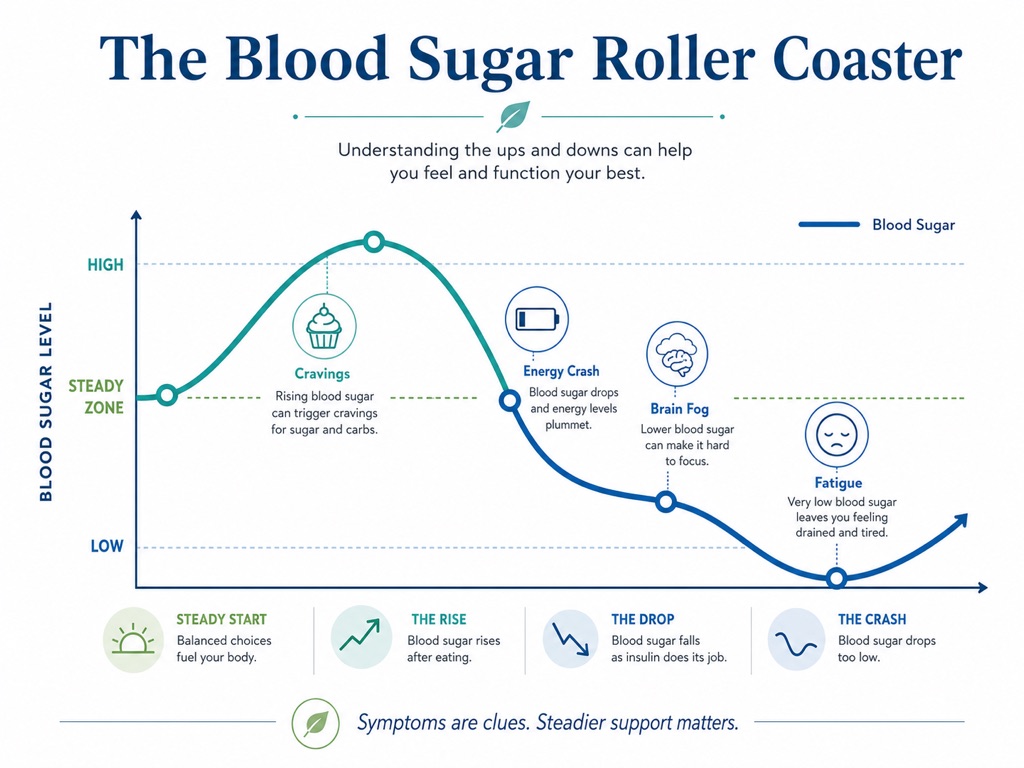
What Is Insulin Resistance?
Insulin is a hormone that helps move glucose, or sugar, from the bloodstream into the cells where it can be used for energy.
When the cells do not respond well to insulin, the body has to work harder to move glucose out of the blood. That is called insulin resistance.
The National Institute of Diabetes and Digestive and Kidney Diseases explains that insulin resistance means the body does not respond to insulin the way it should, and this can lead to higher blood glucose levels. (NIDDK)
At first, the body may produce more insulin to compensate.
But over time, blood sugar may rise.
This is one reason type 2 diabetes can develop slowly, often over years.
That question opens the door to a bigger conversation.
Food matters.
Sleep matters.
Stress matters.
Movement matters.
Muscle matters.
Inflammation matters.
How Inflammation Connects to Diabetes
Inflammation is part of the body’s normal healing process. If you cut your finger or fight an infection, inflammation helps protect and repair the body.But chronic low-grade inflammation is different. That type of inflammation can continue quietly in the background and may contribute to metabolic stress.
Research has linked chronic low-grade inflammation with insulin resistance and type 2 diabetes risk. A review in Type 2 Diabetes Mellitus, Oxidative Stress and Inflammation notes that low-grade inflammation is associated with the risk of developing type 2 diabetes and may contribute to insulin resistance. (PMC)
Another review from the National Institutes of Health describes the connection between obesity, inflammation, and insulin resistance, noting that pro-inflammatory cytokines may interfere with insulin signaling in tissues such as muscle, liver, and fat tissue. (PMC)
This does not mean inflammation is the only cause of diabetes. It means inflammation may be one important part of the larger picture.
This is why I believe we need to look at the whole person.
Not just the number.
Not just the diagnosis.
The whole person.
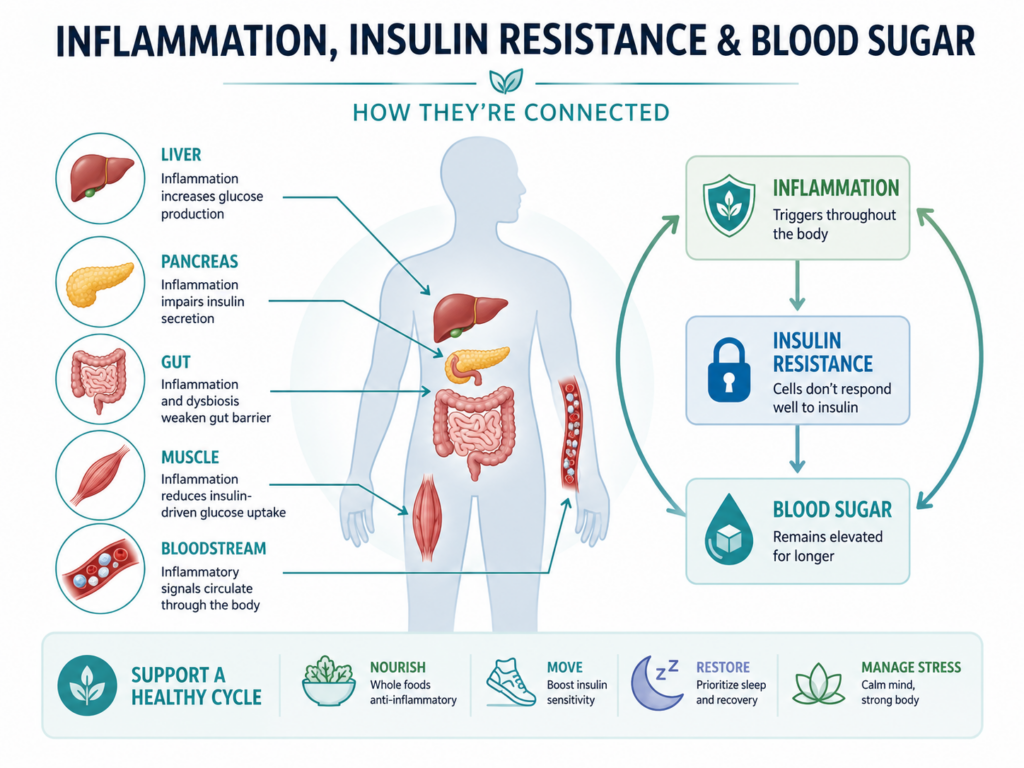
Why Blood Sugar Swings Can Feel So Loud
Blood sugar changes can affect how a person feels during the day.
Some people notice they feel tired, foggy, hungry, shaky, irritable, or anxious when blood sugar is not steady.
That does not mean every symptom is caused by blood sugar.
But it does mean blood sugar can be an important clue.
A health detective does not blame the body.
A health detective asks better questions.
What did I eat?
Did I include protein?
Did I include fiber?
Did I sleep well?
Was I under stress?
Did I skip a meal?
Did I eat mostly refined carbohydrates?
Did I move my body today?
These questions help us begin connecting the dots.
Food Patterns That May Increase Inflammatory Load
Food does not need to be perfect.
But food patterns matter.
Some food patterns may add more stress to blood sugar and inflammatory load, especially when they happen repeatedly over time.
This is not about shame.
This is about awareness.
Because the goal is not to eat as little as possible.
The goal is to nourish the body in a way that supports steadier blood sugar, better energy, and lower inflammatory load.
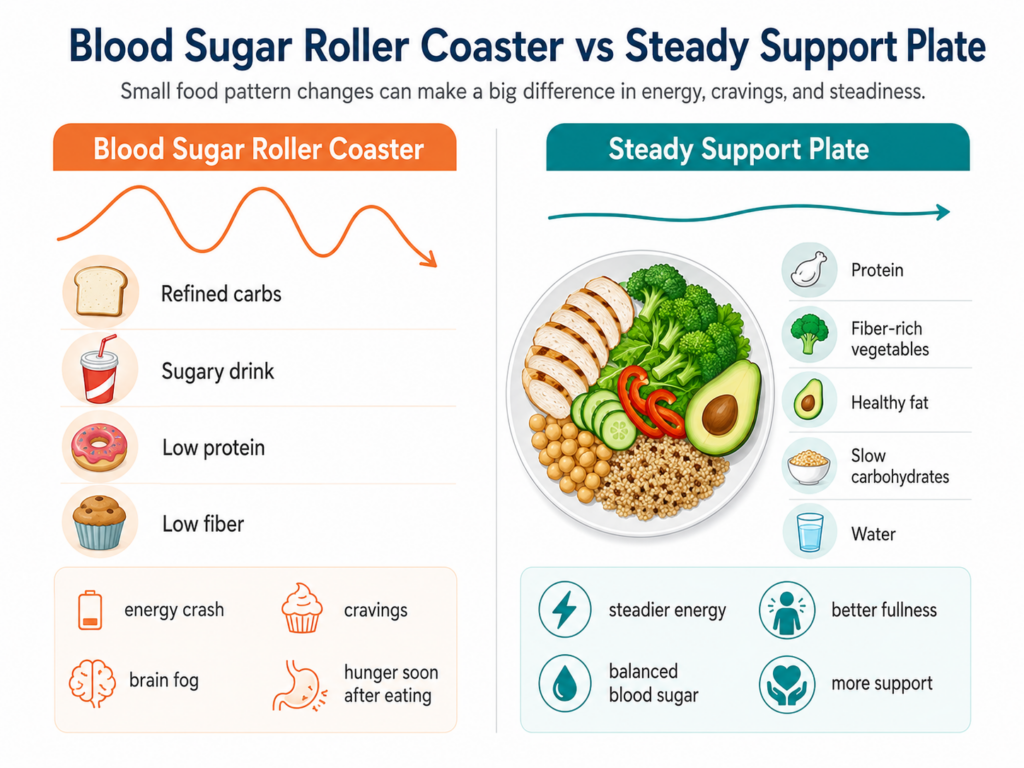
Side-by-side comparison: blood sugar roller coaster meal vs steady support meal.
How to Build a Blood Sugar-Supportive Plate
A blood sugar-supportive plate does not have to be complicated.
Start with the basics. Protein helps with fullness and muscle support. Fiber helps slow digestion and supports gut health. Healthy fats help with satisfaction. Colorful plants provide nutrients and phytonutrients. Slow carbohydrates can provide energy when paired with protein, fiber, and fat.
The goal is not restriction but support
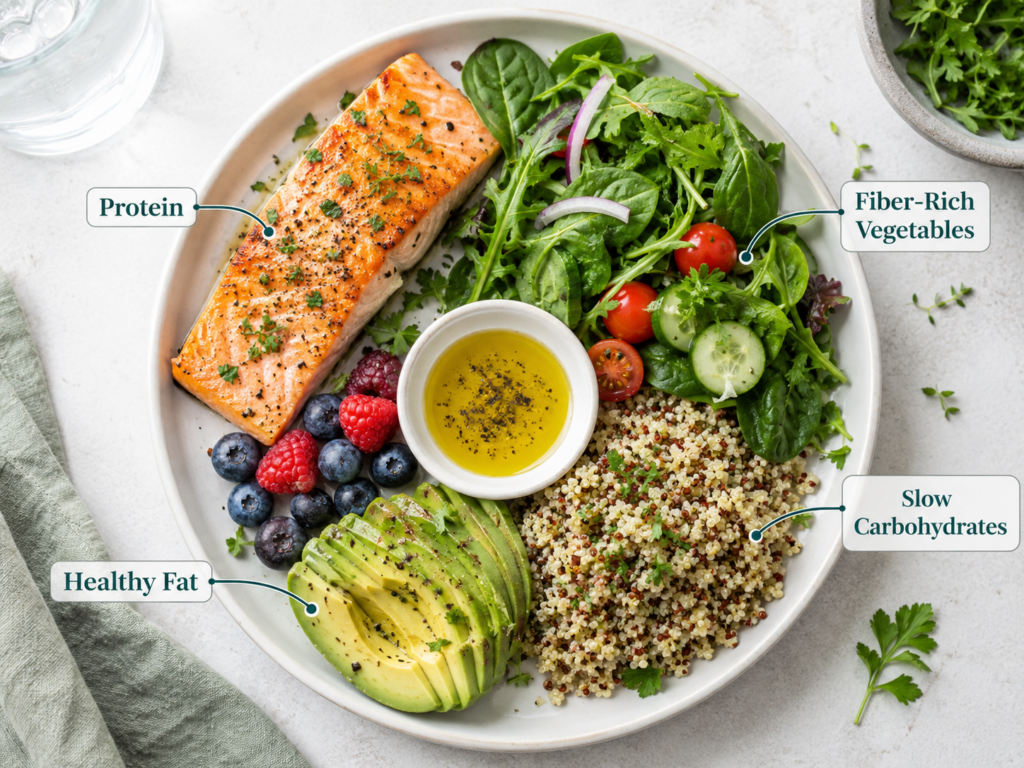
Blood Sugar-Supportive Plate
Lifestyle Factors That Affect Blood Sugar and Inflammation
Blood sugar is not only about food.
-The body is connected.
-Poor sleep can affect cravings and hunger.
-Chronic stress can affect blood sugar regulation.
-Low muscle mass can affect glucose storage and metabolism.
-Inactivity can make insulin resistance worse.
-Hydration and meal timing can also influence how people feel.
-This is why I teach people to look at patterns.
-A single meal matters less than the pattern.
-A single night of poor sleep matters less than the pattern.
-A stressful day matters less than chronic stress without recovery.
Health detectives look for patterns.
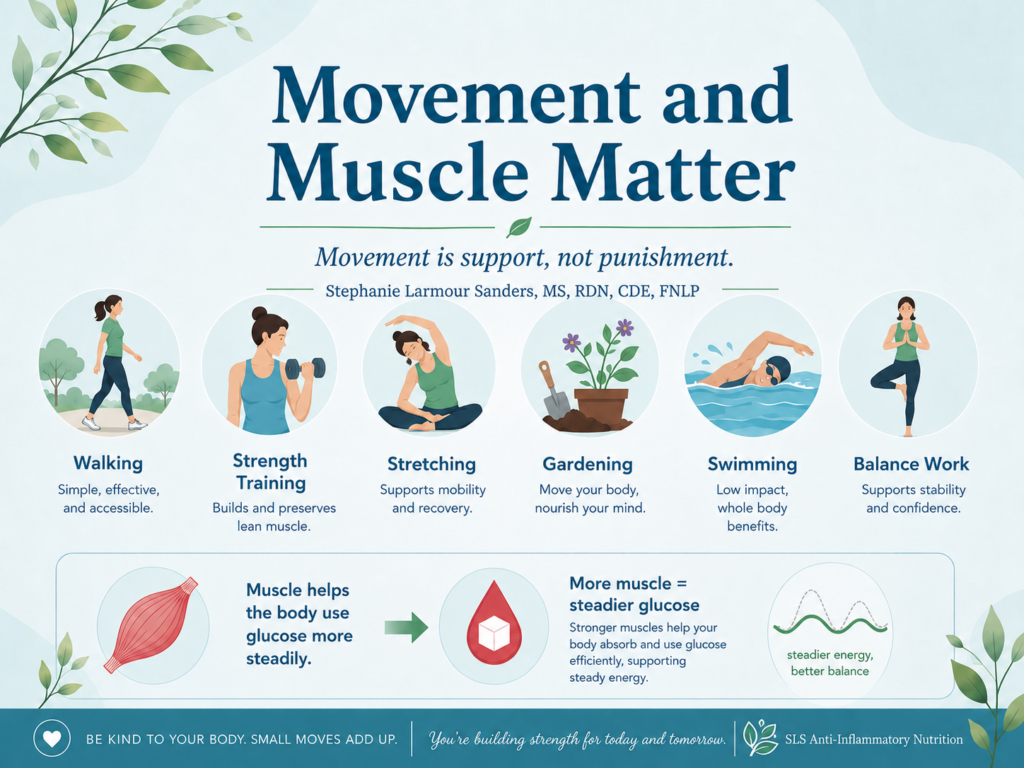
The Role of Muscle in Blood Sugar Support
Muscle is one of the most important places where the body stores and uses glucose. This is why movement and strength training matter. For many adults, especially as we age, preserving muscle becomes an important part of metabolic health. This does not mean someone has to go to a gym for hours. It can begin with walking, gentle strength exercises, swimming, resistance bands, gardening, or working with a qualified professional.
The goal is to keep the body active, supported, and capable. Movement is not punishment. Movement is support.
What I Want You to Remember
If you are living with blood sugar concerns, prediabetes, diabetes, fatigue, cravings, brain fog, or weight changes, I want you to know this:
-You are not broken.
-Your body may be leaving clues.
-Blood sugar is one of those clues.
-Inflammation may be part of the story.
-Food may be part of the story.
-Sleep, stress, movement, muscle, gut health, and environment may also be part of the story.
-The goal is not to blame the body.
-The goal is to understand what the body may be trying to tell you.
My Course
This is exactly why I created my course:
Detecting and Reducing Pro-Inflammatory Lifestyle Factors in 30 Days
Inside the course, I help you begin connecting the dots between symptoms, food, blood sugar, stress, sleep, movement, digestion, environmental exposures, and inflammatory load.
My goal is not simply to give you more information.
My goal is to help you help yourself by learning how to recognize patterns, ask better questions, and understand what your body may be trying to communicate.
I can hand you the flashlight.
The course teaches you how to become the detective.
You can visit StephanieLarmour.com and click Course to learn more.
Final Reflection
1.Blood sugar is not just a number.
2. It is information.
3. Inflammation is not just a word.
4. It is part of the body’s communication system.
5. Symptoms are not random.
6.They are signals.
And when we learn how to listen, we can begin supporting the body with more compassion, more clarity, and better direction.
References
1.American Diabetes Association. Type 2 diabetes and insulin resistance. (American Diabetes Association)
2.Centers for Disease Control and Prevention. About insulin resistance and type 2 diabetes. (CDC)
3.National Institute of Diabetes and Digestive and Kidney Diseases. Insulin resistance and prediabetes. (NIDDK)
4.Oguntibeju OO. Type 2 diabetes mellitus, oxidative stress and inflammation. (PMC)
5.de Luca C, Olefsky JM. Inflammation and insulin resistance. (PMC)
Medical Note
This article is for educational purposes only and is not a substitute for medical care. If you have diabetes, prediabetes, symptoms of high or low blood sugar, or are taking medication, please work with your healthcare provider before making changes to your medication, diet, or lifestyle plan.
13 Jul, 2026 | Stephanie Sanders | No Comments
GLP-1 and GLP-2: Benefits, Risks, and How Nutrition Supports Your Body’s Natural Systems
Stephanie Larmour Sanders, MS, RDN, CDE, FNLP
Anti-Inflammatory Dietitian and Nutritionist
Symptoms Are Signals
Weight gain, persistent hunger, blood sugar swings, fatigue, and difficulty feeling satisfied after meals are often treated as isolated problems.
But these symptoms may also be clues.
They may point toward patterns involving:
- Blood sugar regulation
- Food quality
- Sleep
- Stress
- Muscle loss
- Hormonal changes
- Gut health
- Inflammatory load
- Certain medications
- Physical activity
As an Anti-Inflammatory Dietitian and Nutritionist, I encourage people to become detectives rather than simply chasing one symptom at a time. The increasing use of GLP-1 medications has created an important conversation about weight management, diabetes, appetite, and metabolic health.
These medications can be valuable tools for appropriately selected individuals. However, medication is only one part of the larger picture.Nutrition, movement, sleep, stress management, muscle preservation, and gut health remain essential whether a person uses medication or not.
Healthy anti-inflammatory meal with salmon, colorful vegetables, quinoa, berries, nuts, avocado, yogurt, legumes, and water.

A balanced meal containing protein, fiber, healthy fats, and colorful plant foods can support fullness, blood sugar balance, gut health, and overall metabolic wellness.
What Are GLP-1 and GLP-2?
GLP stands for glucagon-like peptide.
GLP-1 and GLP-2 are hormones released primarily by specialized intestinal cells called L-cells after we eat.
Although they are released from similar areas of the digestive tract, they have different roles.
What Does GLP-1 Do?
GLP-1 helps the body:
- Release insulin when blood sugar rises
- Reduce inappropriate glucagon release
- Slow stomach emptying
- Increase feelings of fullness
- Reduce appetite
- Improve blood sugar regulation
- Communicate with areas of the brain involved in hunger and satiety
Prescription GLP-1 receptor agonists imitate or enhance some of these natural effects.
Some medications also affect another hormone pathway called GIP, or glucose-dependent insulinotropic polypeptide.
What Does GLP-2 Do?
GLP-2 is less commonly discussed in conversations about weight loss.
Its primary actions involve the digestive tract.
GLP-2 helps support:
- Growth and maintenance of the intestinal lining
- Intestinal barrier integrity
- Nutrient absorption
- Digestive function
- Blood flow within the intestinal tract
- Recovery of intestinal tissue in certain medical conditions
Diagram comparing the roles of GLP-1 in appetite and blood sugar regulation with GLP-2 in intestinal health and nutrient absorption.
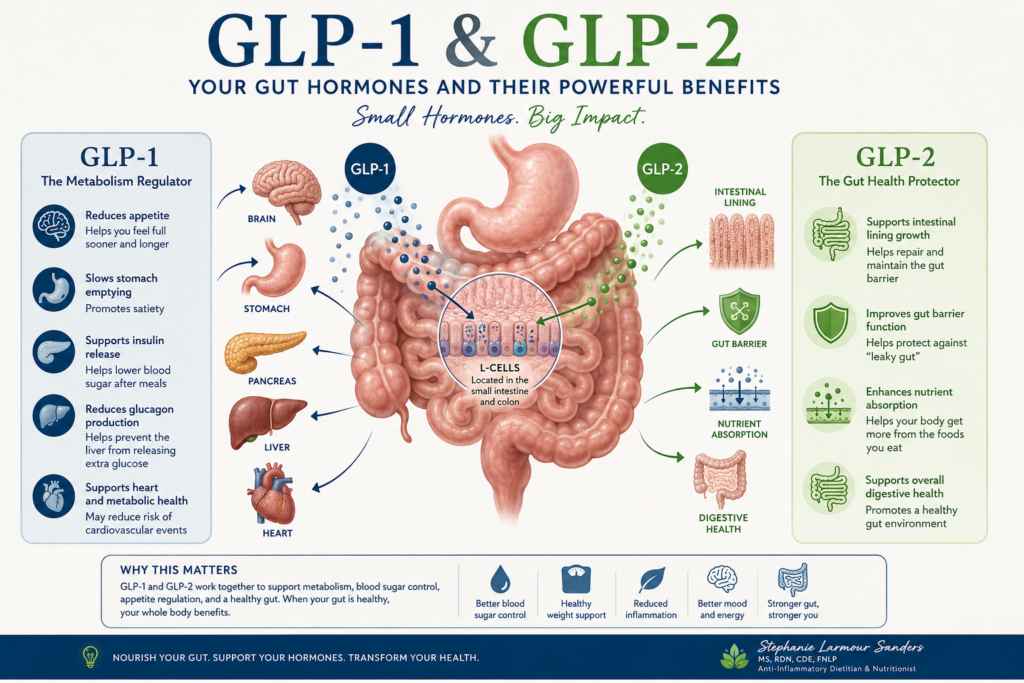
GLP-1 primarily helps regulate appetite, fullness, blood sugar, and insulin response. GLP-2 primarily supports intestinal structure, barrier integrity, and nutrient absorption.
Why Have GLP-1 Medications Become So Popular?
GLP-1 medications influence biological hunger and fullness signals.
For many people, this makes it easier to:
- Feel satisfied with smaller portions
- Experience less food noise
- Reduce hunger
- Improve blood sugar
- Lose weight
- Maintain a more structured eating pattern
This is important because weight management is not simply a matter of willpower.
Appetite is influenced by complex interactions among:
- Hormones
- The brain
- The digestive system
- Sleep
- Stress
- Food composition
- Medications
- Muscle mass
- Blood sugar regulation
- Genetics and environment
Potential Benefits of GLP-1 Medications
Improved Blood Sugar Control
GLP-1 medications may improve insulin release when blood sugar is elevated and reduce excessive glucose production.
For people with Type 2 diabetes, this can contribute to improved blood sugar and A1C levels.
Meaningful Weight Loss
Many people experience clinically meaningful weight loss while using these medications.
Weight loss may contribute to improvements in:
- Blood pressure
- Blood sugar
- Mobility
- Sleep apnea
- Joint discomfort
- Triglycerides
- Quality of life
Reduced Hunger and Food Noise
Some individuals describe having fewer persistent thoughts about food and feeling more satisfied after eating.
Cardiovascular Benefits
Certain GLP-1 medications have demonstrated cardiovascular benefits for selected patients at elevated risk.
Possible Metabolic and Liver Benefits
These medications may also improve several metabolic risk factors and may benefit some individuals with metabolic liver disease.
Potential Drawbacks and Considerations
Digestive Side Effects
Common side effects may include:
- Nausea
- Vomiting
- Constipation
- Diarrhea
- Reflux
- Bloating
- Abdominal discomfort
- Reduced tolerance for larger meals
These symptoms may improve as the body adjusts, but some individuals continue to experience difficulty.
Inadequate Nutrition
When appetite drops significantly, people may eat too little protein, fiber, fluid, vitamins, and minerals.
Eating less does not automatically mean eating better.
A very small diet composed mostly of low-nutrient foods may contribute to:
- Fatigue
- Weakness
- Constipation
- Nutrient gaps
- Poor recovery
- Reduced muscle mass
Loss of Lean Muscle
Weight loss can include both body fat and lean tissue.
This is especially important for middle-aged and older adults because muscle supports:
- Strength
- Mobility
- Balance
- Glucose disposal
- Metabolism
- Bone health
- Healthy aging
- Independence
Adequate protein and appropriate resistance exercise should be considered part of the treatment plan.
Weight Regain After Discontinuation
Some people regain weight after stopping medication, particularly when sustainable food and lifestyle habits have not been established.
This does not mean the person failed.
It reflects the ongoing biological forces that influence appetite and body weight.
Cost and Access
Cost, insurance coverage, medication availability, and eligibility can affect access.
Medical Risks and Contraindications
These medications are not appropriate for everyone.
A qualified healthcare practitioner should review:
- Medical history
- Current medications
- Digestive symptoms
- Gallbladder or pancreatic history
- Kidney status
- Pregnancy plans
- Personal and family history
- Individual risks and treatment goals
Comparison chart showing benefits, considerations, and long-term roles of GLP-1 medications and nutrition and lifestyle approaches.
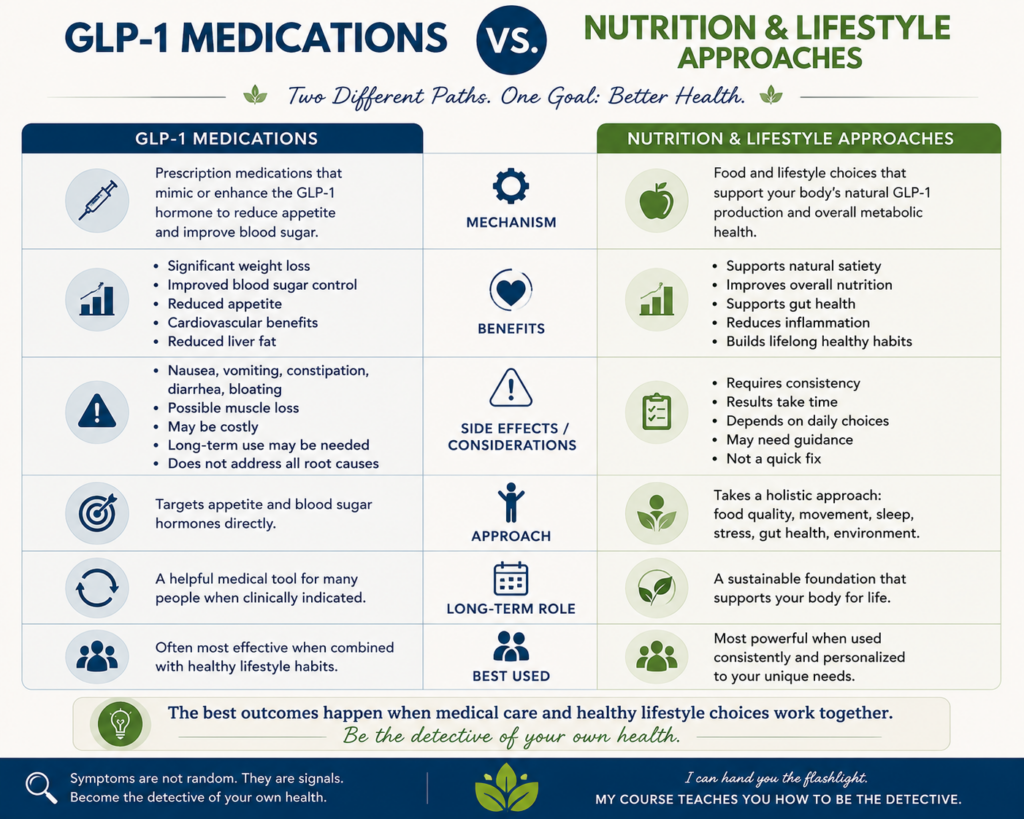
Medication and lifestyle are not competing approaches. When medication is medically appropriate, nutrition and lifestyle habits remain essential for supporting muscle, digestion, blood sugar, and long-term health.
Can Nutrition Support the Body’s Natural GLP-1 Response?
Yes, meals can stimulate the body’s natural release of fullness and digestive hormones, including GLP-1.
However, nutrition does not produce the same strength or duration of effect as a prescription GLP-1 medication.
It is therefore more accurate to say that nutrition can support the body’s natural GLP-1 system rather than claim that food directly replaces medication.
For some people, nutrition and lifestyle changes may be enough to improve fullness, weight, and blood sugar.
For others, medication may be medically appropriate.
Many people benefit most from combining appropriate medical care with strong nutrition and lifestyle support.
Seven Ways to Naturally Support Your GLP-1 System
1. Eat Enough Protein
Protein contributes to fullness and stimulates several digestive and appetite-regulating hormones.
Protein also helps protect muscle during weight loss.
Possible protein choices include:
- Fish
- Chicken
- Turkey
- Eggs
- Greek yogurt
- Cottage cheese
- Lean meat
- Tofu
- Tempeh
- Beans
- Lentils
Protein needs vary according to age, body size, kidney function, activity level, health status, and weight-loss goals.
2. Increase Fiber Gradually
Fiber can slow digestion, improve fullness, support bowel regularity, and nourish beneficial intestinal bacteria.
Fiber-rich foods include:
- Vegetables
- Berries
- Apples
- Pears
- Beans
- Lentils
- Oats
- Barley
- Chia seeds
- Ground flaxseed
Increase fiber gradually and drink adequate fluid, especially when constipation is already present.
3. Choose Healthy Fats
Healthy fats may help improve meal satisfaction and slow digestion.
Examples include:
- Extra-virgin olive oil
- Avocado
- Walnuts
- Almonds
- Pistachios
- Chia seeds
- Flaxseed
- Fatty fish
Portions still matter because fats are energy-dense, but they can be valuable parts of a balanced meal.
4. Eat Polyphenol-Rich Plant Foods
Polyphenols are plant compounds that help support antioxidant defenses and the intestinal microbiome.
Examples include:
- Blueberries
- Blackberries
- Cherries
- Colorful vegetables
- Herbs
- Spices
- Green tea
- Unsweetened cocoa
- Dark chocolate with a high cocoa percentage
A simple strategy is to include several different plant colors throughout the week.
5. Include Fermented Foods When Tolerated
Fermented foods may support microbial diversity and digestive health.
Examples include:
- Yogurt with live cultures
- Kefir
- Sauerkraut
- Kimchi
- Miso
- Tempeh
People with histamine intolerance, digestive disorders, or food sensitivities may not tolerate all fermented foods and should individualize their choices.
6. Move Your Body and Protect Muscle
Movement supports insulin sensitivity, blood sugar regulation, mood, mobility, and healthy aging.
Helpful forms of movement may include:
- Walking
- Swimming
- Resistance training
- Chair exercises
- Stretching
- Gardening
- Balance exercises
Resistance exercise is particularly important during intentional weight loss because it helps preserve lean muscle.
7. Prioritize Sleep and Stress Management
Poor sleep and chronic stress can affect:
- Hunger
- Cravings
- Insulin sensitivity
- Energy
- Food choices
- Emotional eating
- Motivation for movement
Small strategies may include:
- Maintaining a regular bedtime
- Reducing late-night screen exposure
- Using breathing exercises
- Spending time outside
- Journaling
- Practicing prayer or meditation
- Creating a relaxing evening routine
Infographic showing seven ways to support natural GLP-1 activity through protein, fiber, healthy fats, polyphenols, fermented foods, movement, sleep, and stress management.
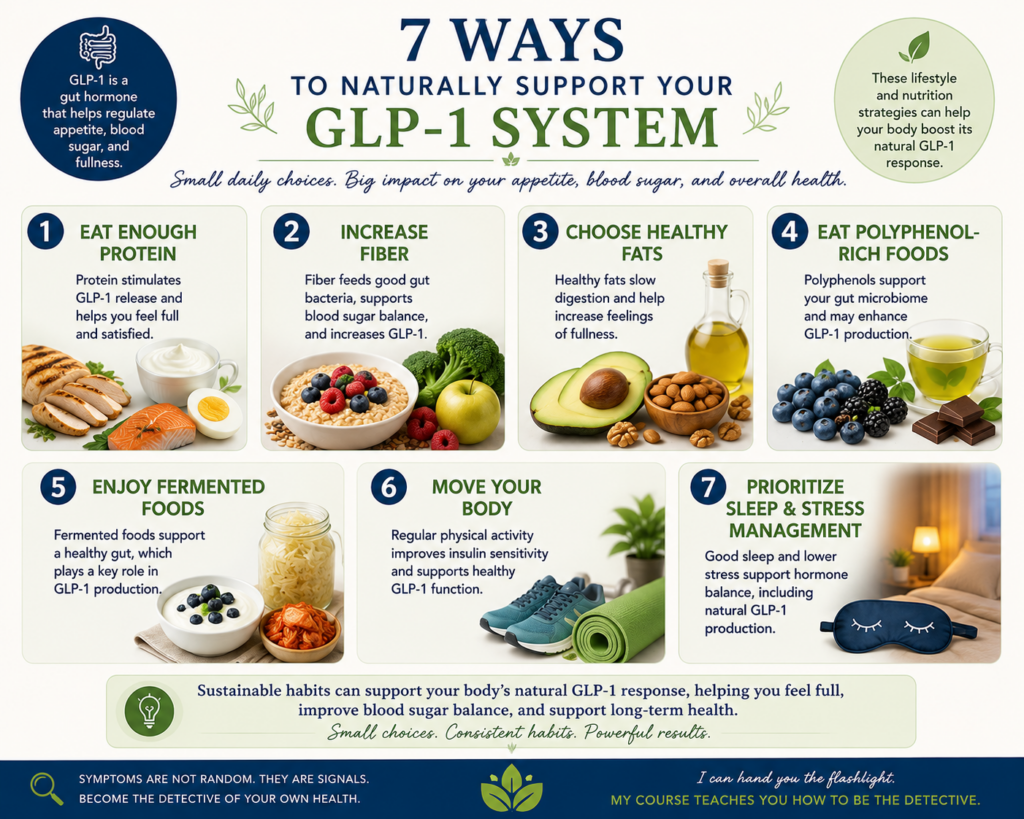
Protein, fiber, healthy fats, polyphenol-rich foods, fermented foods, movement, sleep, and stress management can support fullness, blood sugar regulation, gut health, and long-term metabolic wellness.
What Should You Eat While Taking a GLP-1 Medication?
Nutrition support is especially important while taking a GLP-1 medication because reduced appetite can make it difficult to meet basic nutritional needs.
Begin With Protein
Try to include protein at each meal.
When appetite is low, eat the protein portion first before becoming too full.
Choose Smaller, Balanced Meals
Large, rich, or high-fat meals may worsen nausea or fullness for some people.
Smaller meals may be better tolerated.
A balanced meal may include:
- A protein source
- A cooked or raw vegetable
- A high-fiber carbohydrate when tolerated
- A small amount of healthy fat
Hydrate Consistently
Reduced food intake, vomiting, diarrhea, or constipation can increase the importance of hydration.
Sip fluids regularly rather than waiting until you feel extremely thirsty.
Address Constipation Early
Helpful strategies may include:
- Adequate water
- Gradually increasing fiber
- Walking
- Kiwi
- Prunes
- Chia or ground flaxseed
- Appropriate magnesium under professional guidance
Severe or persistent constipation should be discussed with a healthcare practitioner.
Avoid Losing Muscle
Muscle preservation requires more than weight loss alone.
Focus on:
- Adequate protein
- Resistance exercise
- Sufficient calories
- Regular movement
- Appropriate vitamin and mineral intake
A dietitian can help create an individualized plan based on health conditions, food tolerance, medications, and personal needs.
Can Nutrition Be Used Instead of a GLP-1 Medication?
Sometimes—but not always.
Nutrition and lifestyle interventions may significantly improve metabolic health, particularly when they address:
- Food quality
- Protein intake
- Fiber intake
- Blood sugar patterns
- Sleep
- Stress
- Movement
- Muscle mass
- Emotional eating
- Meal timing
- Ultra-processed food intake
However, some individuals have medical conditions or biological factors for which medication may provide substantial benefit.
It would be misleading to promise that food will reproduce the effects of prescription GLP-1 therapy for everyone.
The better question is not:
“Which one is better?”
The better question is:
“What combination of nutrition, lifestyle support, and medical care is most appropriate for my body?”
Use the Detective Framework
Before deciding that weight gain, hunger, or fatigue is simply a willpower problem, begin gathering clues.
Ask yourself:
- When is my hunger strongest?
- Am I eating enough protein early in the day?
- How much fiber am I eating?
- Do I skip meals and overeat later?
- What happens to my energy after meals?
- How well am I sleeping?
- Am I losing strength or muscle?
- Is stress influencing my appetite?
- Are my medications affecting my weight or blood sugar?
- Do certain foods worsen nausea, reflux, bloating, or fatigue?
- What changed before my symptoms became worse?
A detective does not blame.
A detective observes, gathers evidence, looks for patterns, and makes informed adjustments.
Detective Framework health infographic showing symptoms as tree branches, possible root contributors, and five steps for recognizing patterns and taking action.
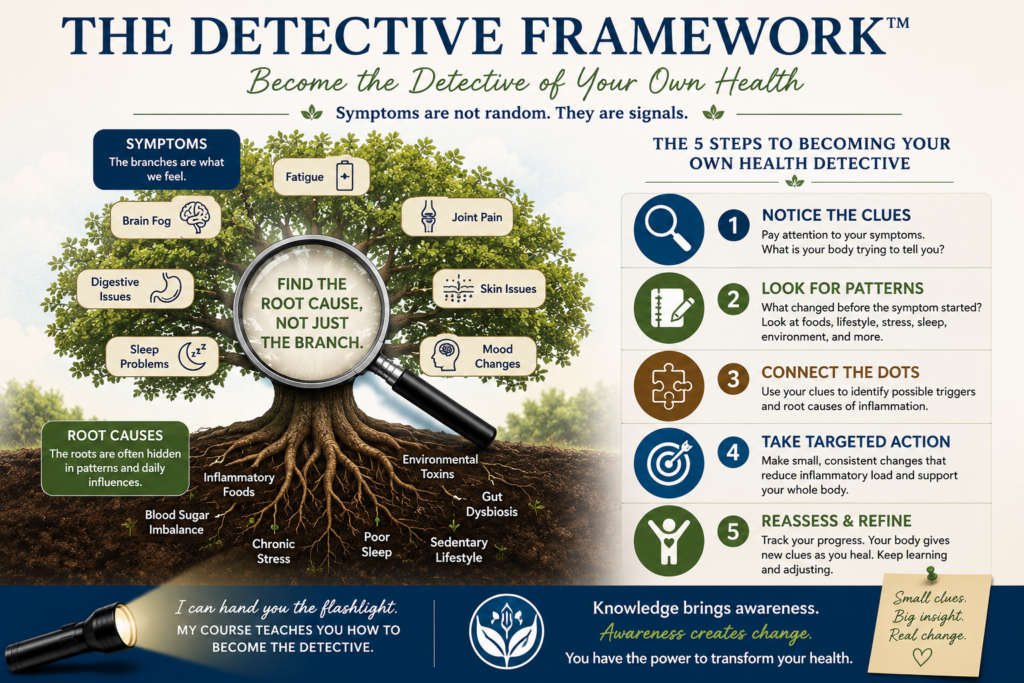
The Detective Framework helps us move beyond chasing symptoms. We notice the clues, look for patterns, connect the dots, take targeted action, and then reassess.
My Detective Perspective
I do not see this as a battle between medication and nutrition.
Medication can be a helpful medical tool.
Nutrition and lifestyle provide the foundation that supports the body before, during, and after weight loss.
Even when appetite is reduced by medication, the body still needs:
- Protein
- Fiber
- Vitamins
- Minerals
- Hydration
- Movement
- Muscle stimulation
- Rest
- Compassionate support
The goal is not simply to make the number on the scale smaller.
The goal is to protect your strength, support your metabolism, improve your health, and help you feel more confident caring for your body.
Final Thoughts
Weight management is not simply a matter of eating less or trying harder.
The body is influenced by hormones, sleep, stress, digestion, blood sugar, food quality, medications, movement, muscle mass, environment, and lived experience.
GLP-1 medications can provide important benefits for many people, but they do not eliminate the need for nutrition and lifestyle support.
Nutrition can help support the body’s natural fullness pathways, but it should not be presented as an exact replacement for prescription treatment.
Become curious about your symptoms.
Gather the clues.
Look for patterns.
Ask better questions.
Then work with your physician, registered dietitian, pharmacist, or other qualified healthcare practitioner to determine which tools are appropriate for you.
Symptoms are not random. They are signals.
I can hand you the flashlight, but my course teaches you how to become the detective.
Medical Disclaimer
This article is for educational purposes only and is not intended to diagnose, treat, cure, or prevent any medical condition. Do not begin, stop, or change a prescribed medication without consulting the healthcare practitioner who manages your care.
Seek prompt medical attention for severe or persistent abdominal pain, repeated vomiting, inability to keep fluids down, signs of dehydration, severe constipation, allergic symptoms, or other concerning changes.
About the Author
Stephanie Larmour Sanders, MS, RDN, CDE, FNLP is an Anti-Inflammatory Dietitian and Nutritionist with decades of healthcare experience.She helps adults recognize that symptoms may be clues and learn how food, sleep, stress, movement, digestion, blood sugar, and environmental factors can contribute to inflammatory load.
Her course, Detecting and Reducing Pro-Inflammatory Lifestyle Factors in 30 Days, gives participants a structured way to begin connecting the dots and becoming the detective of their own health.
Visit StephanieLarmour.com to learn more.
7 Jul, 2026 | Stephanie Sanders | No Comments
Daily Parkinson’s Support Plan Including Hydration, Meals, Gut Support, Movement, Sleep Routine, and Symptom Tracking
Stephanie Larmour Sanders MSRDN, CDE, FNLP
Dedicated to my Friend on the Serving Team at Rocky Peak Church
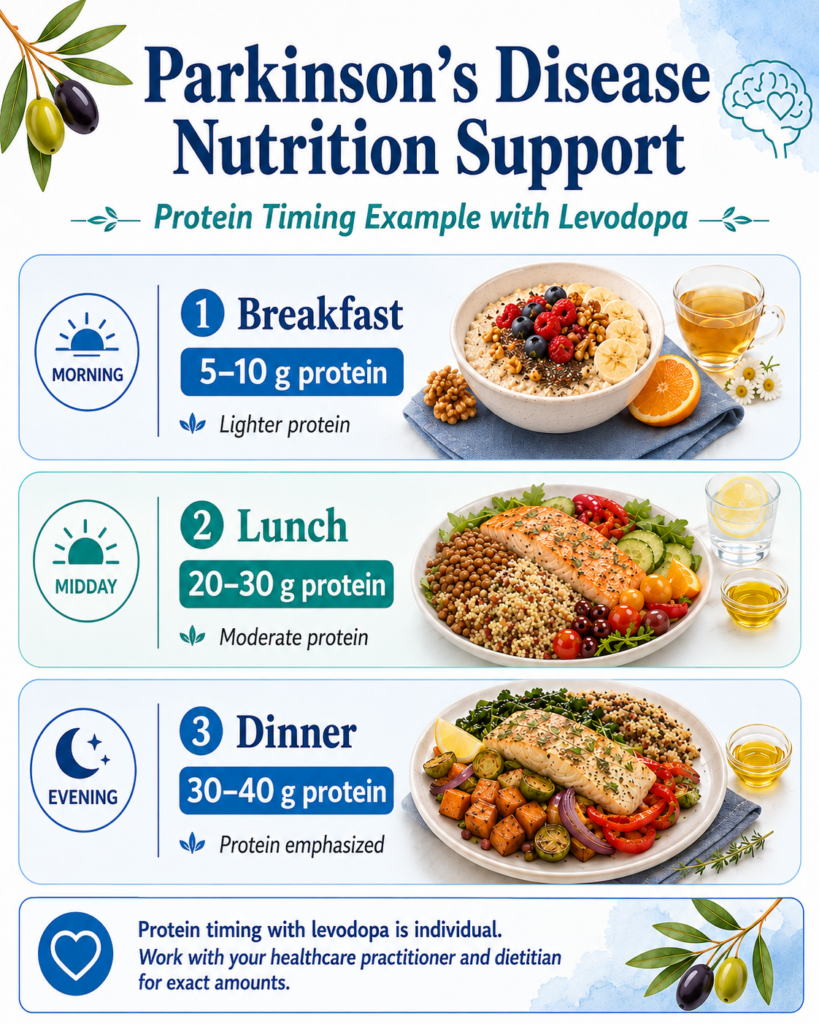
Hydration Matters
Hydration can affect constipation, blood pressure, energy, medication tolerance, thinking clarity, swallowing comfort, and muscle function.
Hydration Options
“`- Water: The simplest foundation.
- Herbal tea: Warm fluids may be soothing and easier to drink.
- Mineral water: May support hydration and minerals.
- Brothy soups: Helpful for fluids, minerals, and appetite.
- Smoothies: Useful when chewing, appetite, or protein intake is difficult.
- Water-rich foods: Cucumber, melon, oranges, soups, and cooked vegetables.
For people with swallowing difficulties, hydration should be discussed with the medical team or speech-language pathologist.
Watch for Swallowing and Weight Changes
Parkinson’s disease may eventually affect chewing and swallowing.
If these symptoms appear, a physician and speech-language pathologist should be involved.
Signs That Need Attention
“`- Coughing during meals
- Choking episodes
- Food sticking in the throat
- Taking much longer to eat
- Avoiding certain textures
- Unintentional weight loss
- Recurrent pneumonia
- Drooling or difficulty managing saliva
Nutrition can be adjusted with softer foods, moist foods, soups, smoothies, protein-rich purees, smaller meals, or texture modification if recommended.
The goal is safety, nourishment, and dignity.
Exercise and Movement
Exercise is one of the most important lifestyle tools for Parkinson’s disease.
A supportive movement plan may include walking, swimming, cycling, stretching, strength training, balance exercises, tai chi, dance, boxing-style Parkinson’s classes, or physical therapy-guided exercise.
Movement Can Support
“`- Balance: Helps reduce fall risk when practiced safely.
- Strength: Supports independence and daily function.
- Mood: Movement can support emotional well-being.
- Digestion: Gentle movement may help bowel motility.
- Blood sugar: Muscles use glucose during activity.
- Circulation: Movement supports blood flow.
- Confidence: Safe movement can help people feel more connected to their body.
Movement is not punishment.
Movement is support.
Sleep Support
Sleep problems are common in Parkinson’s disease.
Poor sleep can worsen fatigue, mood, inflammation, blood sugar balance, and daily function.
Sleep Support Steps
“`- Consistent bedtime routine: Helps cue the nervous system for rest.
- Morning sunlight: Supports circadian rhythm.
- Limit late caffeine: Especially if sleep is already disrupted.
- Reduce evening screens: Helps the brain wind down.
- Relaxation breathing: Supports the nervous system.
- Medication review: Sleep symptoms should be discussed with the physician.
- Safe sleep environment: Especially if there is movement during sleep.
Sleep is not wasted time.
Sleep is repair time.
Stress and Nervous System Support
A Parkinson’s diagnosis can bring fear, grief, frustration, and uncertainty.
Stress does not cause everything, but chronic stress can add inflammatory load and make symptoms feel harder to manage.
Nervous System Support Options
“`- Prayer or spiritual support: Helps many people feel grounded.
- Breathing exercises: Can calm the nervous system.
- Counseling: Offers emotional support after diagnosis.
- Support groups: Help people feel less alone.
- Time outdoors: Nature can support calm and regulation.
- Music: Can support mood, movement, and connection.
- Caregiver support: The caregiver needs care too.
- Asking for help earlier: Support is not weakness.
The person diagnosed needs support.
The caregiver needs support too.
Reduce Environmental Inflammatory Load
A practical anti-inflammatory lifestyle plan may also include reducing unnecessary environmental stressors.
Environmental Support Steps
“`- Avoid pesticide use at home when possible.
- Wash produce well.
- Choose organic when practical for higher-pesticide produce.
- Filter drinking water if needed.
- Improve indoor air quality.
- Avoid smoking and secondhand smoke.
- Reduce synthetic fragrances if sensitive.
- Use less-toxic cleaning products.
This is not about fear.
It is about lowering the body’s burden where possible.
A Simple Daily Parkinson’s Support Plan
Morning
“`- Take medication as directed.
- Hydrate early.
- Get morning light.
- Eat a balanced breakfast.
- Move gently.
- Notice digestion, stiffness, energy, and mood.
Midday
“`- Build a colorful meal.
- Include protein, timed appropriately if using levodopa.
- Add fiber-rich foods.
- Walk or stretch.
- Drink fluids.
- Track symptoms if needed.
Evening
“`- Eat a nourishing dinner.
- Support bowel regularity.
- Reduce screen stimulation.
- Prepare for sleep.
- Practice relaxation.
- Note any symptom patterns.
Weekly
“`- Plan meals.
- Include strength and balance work.
- Review constipation patterns.
- Track weight changes.
- Check medication timing.
- Ask for support.
- Follow up with the healthcare team.
What I Would Prioritize First
If someone is newly diagnosed, I would not ask them to change everything at once.
I would begin with these five priorities:
Five Priorities After Diagnosis
“`- Medication and meal timing: Especially if taking levodopa.
- Constipation support: Because gut function affects comfort and quality of life.
- Protein and muscle protection: Because strength matters for independence.
- Movement plan: Especially balance, strength, stretching, and safe aerobic activity.
- Anti-inflammatory plate: Because the body needs nutrients every day.
Final Thoughts
Parkinson’s disease is not just a diagnosis.
It is a whole-person condition that can affect movement, digestion, sleep, mood, energy, swallowing, independence, and family life.
Nutrition and lifestyle cannot replace medical treatment.
But they can support the person living with Parkinson’s disease.
A Strong Support Plan Includes
“`- Neurology care
- Medication management
- Mediterranean / MIND-style nutrition
- Protein timing when needed
- Fiber and hydration
- Constipation support
- Exercise and physical therapy
- Sleep support
- Stress reduction
- Environmental toxin reduction
- Caregiver support
- Symptom tracking
The goal is not perfection.
The goal is support.
One clue at a time.
One meal at a time.
One walk at a time.
One question at a time.
Symptoms are not random. They are signals.
And with the right support, we can begin to follow the clues.
Gentle Next Step
“`If this article helped you think differently about Parkinson’s disease, nutrition, and inflammation, I invite you to begin noticing the clues your body may already be giving you.
My course, Detecting and Reducing Pro-Inflammatory Lifestyle Factors in 30 Days, was created to help people begin connecting the dots between symptoms, food, stress, sleep, environment, and daily habits.
I can hand you the flashlight.
The course teaches you how to become the detective.
4 Jul, 2026 | Stephanie Sanders | No Comments
Parkinson’s Disease and Inflammation: Could the Body Be Leaving Clues Early?
By Stephanie Larmour Sanders MS, RDN, CDE, FNLP
Anti-Inflammatory Dietitian and Nutritionist
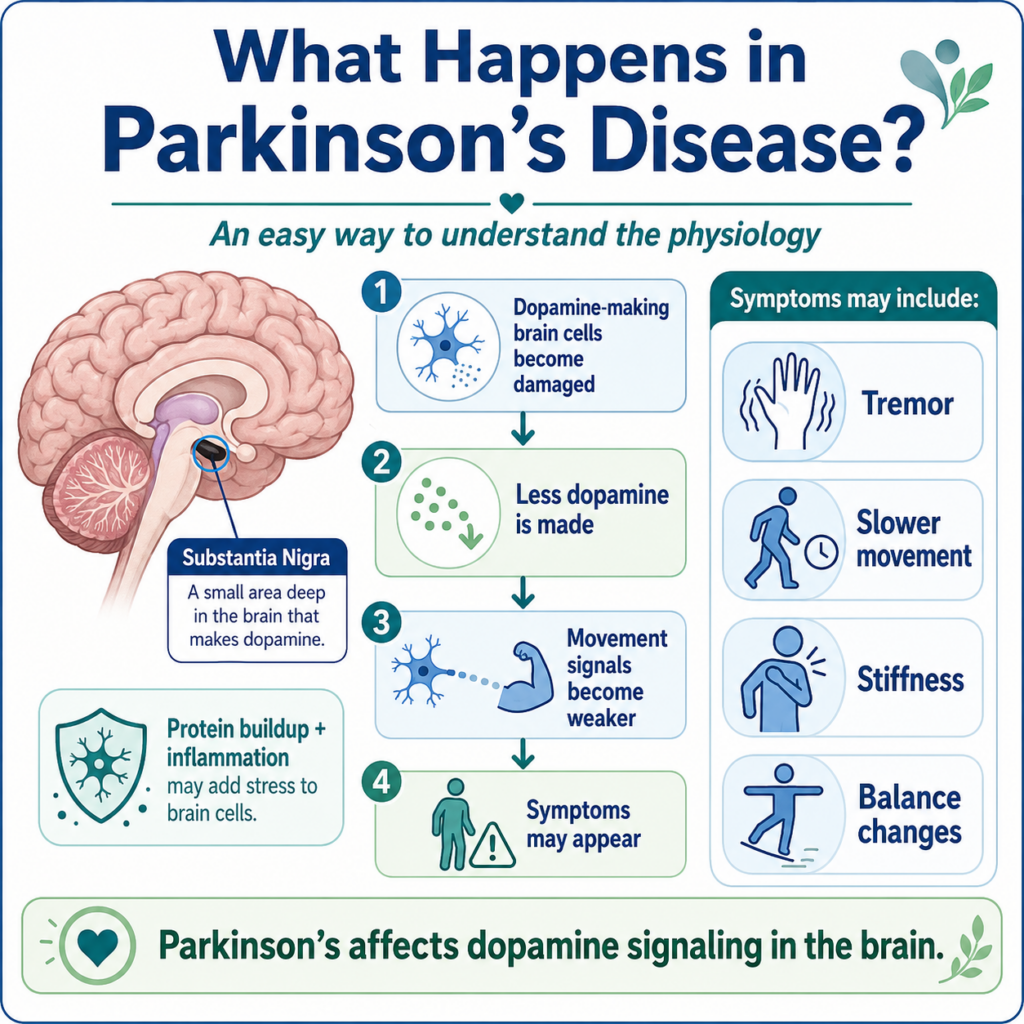
Parkinson’s disease is often thought of as a movement disorder.
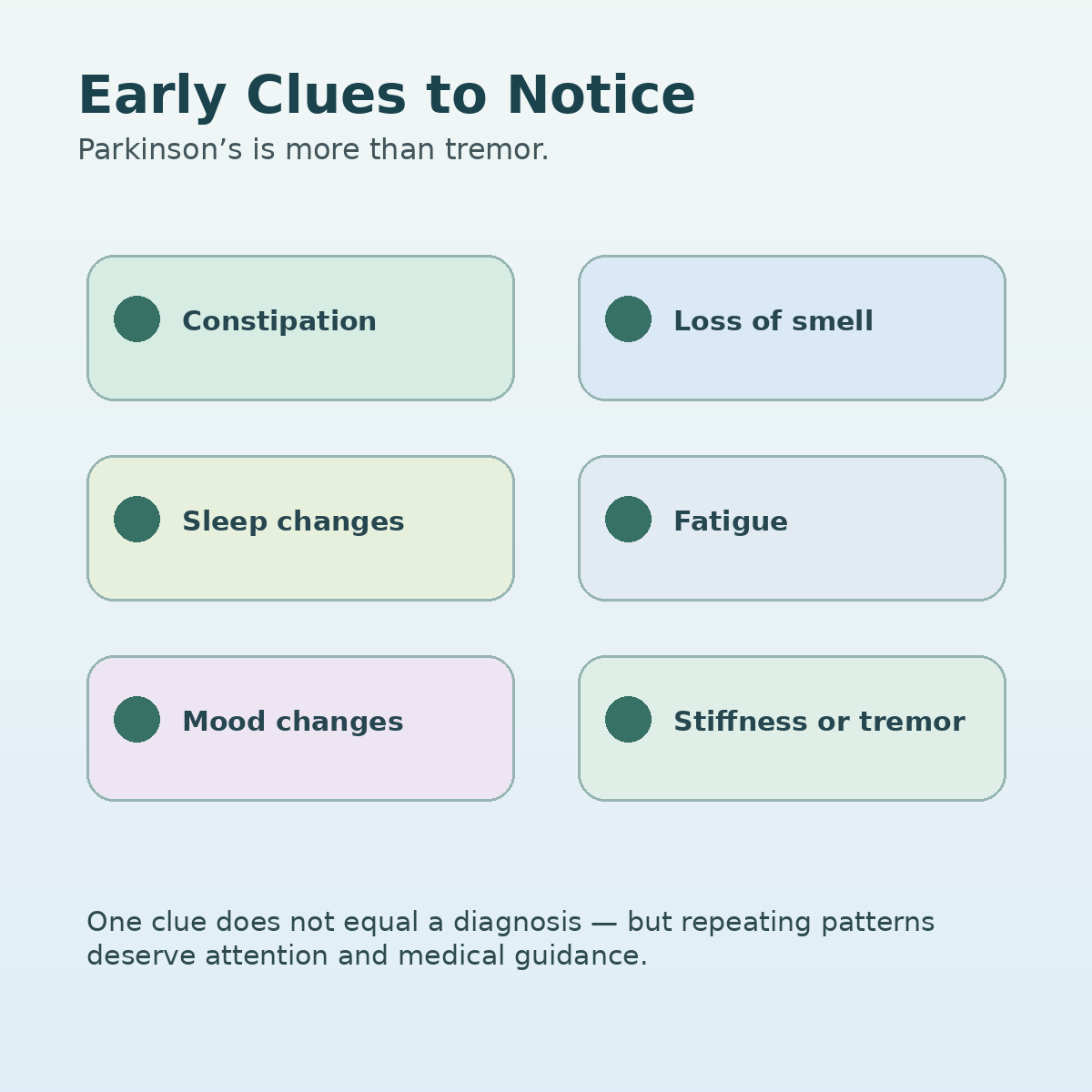
Most people think first of tremors, stiffness, slower movement, smaller steps, or balance changes. But Parkinson’s disease is more than a tremor. It is a progressive nervous system disorder that affects movement and may also involve many non-movement symptoms, including constipation, sleep changes, fatigue, mood changes, loss of smell, and changes in thinking or memory.
Symptoms are not random. They are signals.
With Parkinson’s disease, those signals may come from the brain, gut, immune system, nervous system, mitochondria, and inflammatory pathways of the body.
The goal of this article is not to say that inflammation is the only cause of Parkinson’s disease. Parkinson’s is complex and requires medical evaluation and care. But inflammation may be one part of the larger picture, and understanding that connection can help us pay closer attention to the clues the body may be giving.
Parkinson’s Is More Than a Tremor
A tremor may be the symptom that gets noticed first, but Parkinson’s can affect much more than movement.
Many people may also experience non-movement symptoms. Some of these symptoms can appear years before diagnosis.
Body Clues That May Deserve Attention
“`- Constipation: May be one of the earlier non-movement symptoms and should not be dismissed.
- Loss of smell: A change in smell can sometimes appear before movement symptoms are recognized.
- Sleep disruption: Acting out dreams, restless sleep, or daytime sleepiness may be important clues.
- Fatigue: Ongoing low energy may reflect more than “just getting older.”
- Mood changes: Anxiety, depression, or emotional changes can be part of the whole-body picture.
- Balance changes: Feeling less steady or more cautious while walking may be a sign to investigate.
- Stiffness or tremor: These may be more visible clues, but they are not the only ones.
One symptom does not mean a person has Parkinson’s disease. But repeating symptoms and patterns deserve attention.
Is Inflammation a Possible Precursor?
Researchers are studying the role of inflammation in Parkinson’s disease, especially something called neuroinflammation.
Neuroinflammation means inflammation involving the brain and nervous system.
This does not mean inflammation alone causes Parkinson’s disease. Parkinson’s may involve many factors, including genetics, environmental exposures, mitochondrial dysfunction, oxidative stress, alpha-synuclein changes, gut-brain communication, and aging.
But inflammation may be one part of the process.
What may be adding inflammatory stress to the body over time?
Possible Contributors to Inflammatory Load
“`- Poor diet quality: A diet low in nutrients may reduce the body’s resilience.
- Ultra-processed foods: These may add inflammatory burden when eaten frequently.
- Blood sugar swings: Repeated highs and lows can stress the body.
- Poor sleep: Sleep is when the brain and body repair.
- Chronic stress: Long-term stress can affect immune and inflammatory pathways.
- Constipation: Sluggish elimination may affect gut comfort and inflammatory balance.
- Gut imbalance: The gut and brain are constantly communicating.
- Environmental toxin exposure: Pesticides, smoke, and pollutants may add burden.
- Low antioxidant intake: The brain needs antioxidant protection.
- Lack of movement: Movement supports circulation, balance, digestion, and brain health.
- Chronic immune activation: Ongoing immune stress may increase inflammatory signaling.
- Nutrient insufficiencies: The nervous system needs steady nutritional support.
These factors do not mean a person will develop Parkinson’s disease. But they may increase the body’s total inflammatory load.
The Gut-Brain Connection
One of the most important areas to notice in Parkinson’s disease is the gut.
Constipation can appear years before classic movement symptoms. This is important because the gut is not separate from the brain.
The gut affects many important functions.
Why Gut Health Matters
“`- Nutrient absorption: The body needs nutrients to support the brain, muscles, and immune system.
- Immune activity: Much of the immune system is connected to the gut.
- Inflammatory signaling: Gut imbalance may contribute to inflammatory messages in the body.
- Detoxification pathways: Regular elimination helps the body remove waste.
- Medication absorption: Constipation and slowed digestion may affect how medications work.
- Comfort and appetite: Digestive symptoms can reduce food intake and quality of life.
- Microbiome balance: Gut bacteria help influence immune and metabolic health.
When constipation is ongoing, it should not be brushed aside.
Constipation is not just an inconvenience. It may be a clue.
That does not mean constipation always points to Parkinson’s disease. Many things can cause constipation. But when constipation is persistent, worsening, or appears with other symptoms such as loss of smell, sleep changes, stiffness, tremor, or balance changes, it is worth discussing with a healthcare provider.
Oxidative Stress and Brain Health
The brain uses a tremendous amount of energy.
Because of this, it is vulnerable to oxidative stress. Oxidative stress happens when the body has more free radical activity than antioxidant defense. Over time, oxidative stress may contribute to cellular damage and inflammation.
This is one reason researchers are interested in food patterns that provide antioxidants and anti-inflammatory compounds.
Foods That Support Antioxidant Defense
“`- Blueberries and blackberries: Rich in colorful plant compounds.
- Leafy greens: Provide folate, magnesium, vitamin K, and phytonutrients.
- Broccoli and cruciferous vegetables: Support detoxification and cellular defense pathways.
- Beans and lentils: Provide fiber, minerals, and plant-based protein.
- Nuts and seeds: Provide healthy fats, minerals, and antioxidant compounds.
- Extra virgin olive oil: A key part of Mediterranean-style eating.
- Herbs and spices: Small amounts can provide powerful phytonutrients.
- Fatty fish: Provides omega-3 fats that support inflammatory balance.
Food is not a cure.
But food can support the body.
Environmental Clues
Environmental exposure is another area researchers continue to study.
This is not meant to create fear.
It is meant to create awareness.
Ways to Reduce Environmental Inflammatory Load
“`- Wash produce well: Especially fruits and vegetables eaten with the skin.
- Choose organic when practical: Especially for higher-pesticide produce.
- Avoid unnecessary pesticide use at home: Lawn and garden exposures can add up.
- Filter water if needed: Especially if water quality is a concern.
- Improve indoor air quality: Open windows when safe, change filters, and reduce pollutants.
- Avoid smoking and secondhand smoke: Smoke increases inflammatory burden.
- Reduce synthetic fragrances if sensitive: Fragrances can be irritating for some people.
- Use safer cleaning products: Lowering chemical exposure may reduce total body burden.
The goal is not perfection.
The goal is reducing burden where possible.
The Detective Framework
When we look at Parkinson’s disease through the detective framework, we do not blame the body.
We listen to the body.
A detective asks better questions.
Questions to Ask
“`- What symptoms are showing up?
- When did they begin?
- What has changed?
- What is getting worse?
- What helps?
- What repeats?
- What needs medical attention?
Parkinson’s disease requires medical diagnosis and care. But awareness matters.
The body may leave clues before symptoms become loud.
The goal is to notice those clues early enough to ask better questions.
Final Thoughts
Parkinson’s disease is complex.
Inflammation may be part of the picture, but it is not the whole picture. Parkinson’s may involve brain changes, gut-brain communication, oxidative stress, mitochondrial function, immune activity, environmental exposures, and genetic factors.
The most important message is this:
Symptoms Deserve Attention
“`- Constipation deserves attention.
- Sleep changes deserve attention.
- Loss of smell deserves attention.
- Fatigue deserves attention.
- Mood changes deserve attention.
- Movement changes deserve attention.
Symptoms are not random.
They are signals.
And when we learn to follow the clues with compassion, we can better support the whole person.
Gentle Next Step
“`If this article helped you think differently about symptoms, I invite you to begin noticing the clues your body may already be giving you.
My course, Detecting and Reducing Pro-Inflammatory Lifestyle Factors in 30 Days, was created to help people begin connecting the dots between symptoms, food, stress, sleep, environment, and daily habits.
I can hand you the flashlight.
The course teaches you how to become the detective.
22 Jun, 2026 | Stephanie Sanders | No Comments
Sjögren’s Syndrome: Looking Beyond Dry Eyes and Dry Mouth.
Understanding the Root Causes, Nutrition Strategies, and Anti-Inflammatory Solutions
By Stephanie Larmour Sanders, MS, RDN, CDE, FNLP
Anti-Inflammatory Dietitian and Nutritionist

For many people, Sjögren’s syndrome begins with symptoms that seem unrelated:
- Dry eyes
- Dry mouth
- Fatigue
- Brain fog
- Joint pain
- Digestive issues
Unfortunately, these symptoms are often dismissed as part of aging or stress. However, symptoms are signals.
Sjögren’s syndrome is an autoimmune disease in which the immune system mistakenly attacks the glands that produce tears and saliva. While dryness is the hallmark symptom, the disease can affect many systems throughout the body.
What Is Sjögren’s Syndrome?
Sjögren’s syndrome is a chronic autoimmune condition characterized by inflammation of moisture-producing glands.
The disease most commonly affects:
- Tear glands
- Salivary glands
However, inflammation may also affect:
- Joints
- Muscles
- Skin
- Thyroid
- Digestive tract
- Lungs
- Kidneys
- Nervous system
Many individuals report overwhelming fatigue that significantly affects quality of life.
What Causes Sjögren’s Syndrome?
Researchers believe several factors contribute to the development of autoimmune disease.
Genetic Susceptibility
Some individuals inherit genes that increase autoimmune risk.
Chronic Inflammation
Inflammation is designed to protect us from injury and infection. When inflammation becomes chronic, immune regulation may become impaired.
Viral Triggers
Several viruses have been investigated as potential contributors:
- Epstein-Barr Virus (EBV)
- Cytomegalovirus (CMV)
- Human Herpes Virus-6
Women represent approximately 90% of Sjögren’s cases, suggesting hormones may influence disease development.
Hormonal Influences
Reduced estrogen levels have been linked to Sjögren’s syndrome-like symptoms in animal studies. However, human research has yielded conflicting outcomes regarding the role hormone levels in this syndrome.
Environmental Factors
Potential contributors include:
- Chronic stress
- Poor sleep
- Environmental toxins
- Smoking
- Nutrient deficiencies
- Poor dietary quality
A Functional and Anti-Inflammatory Perspective
From an anti-inflammatory perspective, Sjögren’s syndrome may reflect years of accumulating inflammatory burden.
Think of inflammation like a bucket.
Each stressor adds to the bucket:
- Poor nutrition
- Blood sugar imbalance
- Lack of movement
- Chronic stress
- Sleep deprivation
- Environmental exposures
Eventually the bucket overflows and symptoms appear. Symptoms are often the body’s way of communicating that underlying systems need support.
Nutrition Strategies That May Help Reduce Inflammatory Burden
While nutrition does not cure Sjögren’s syndrome, it may help support overall health and reduce inflammatory load.
Focus on Anti-Inflammatory Foods
Eat the Rainbow
Colorful fruits and vegetables contain phytonutrients that help protect cells from oxidative stress.
Examples include:
- Blueberries
- Strawberries
- Cherries
- Spinach
- Kale
- Broccoli
- Bell peppers
- Purple cabbage
Include Omega-3 Fats
Omega-3 fatty acids may help regulate inflammatory pathways.
Sources include:
- Wild salmon
- Sardines
- Mackerel
- Herring
- Chia seeds
- Flaxseeds
- Walnuts
Prioritize Healthy Fats
- Extra virgin olive oil
- Avocados
- Nuts
- Seeds
Stay Well Hydrated
Because dryness is common, hydration becomes especially important.
Consider:
- Water
- Herbal teas
- Broths
- Electrolyte-rich fluids
Foods That May Increase Inflammatory Load
Many individuals feel better when reducing:
- Ultra-processed foods
- Added sugars
- Refined carbohydrates
- Fried foods
- Excess alcohol
Some individuals may benefit from evaluating possible food sensitivities such as:
- Gluten
- Dairy
- Soy
- Corn
Work with a qualified healthcare professional before making major dietary restrictions.
Key Nutrients Worth Discussing With Your Healthcare Provider
Vitamin D
Supports immune regulation.
Suggested laboratory target:
40–80 ng/mL
Magnesium
Supports:
- Sleep
- Stress management
- Blood sugar regulation
- Muscle function
Omega-3 Fatty Acids
Important for inflammatory balance.
Zinc
Supports immune function and tissue repair.
Selenium
Important for antioxidant protection and thyroid function.
Vitamin B12
Supports nerve function and energy production.
Laboratory Values to Consider
Autoimmune Testing
- ANA
- SSA (Ro)
- SSB (La)
- Rheumatoid Factor
Inflammatory Markers
- High Sensitivity CRP
- ESR
Nutrient Assessment
- Vitamin D
- Vitamin B12
- Folate
- Ferritin
- Zinc
- Selenium
- RBC Magnesium
Blood Sugar Assessment
- Fasting Glucose
- Fasting Insulin
- Hemoglobin A1c
Thyroid Evaluation
Because thyroid disorders commonly overlap with Sjögren’s syndrome, discuss testing of:
- TSH
- Free T4
- Free T3
- Thyroid Peroxidase Antibodies (TPO)
- Thyroglobulin Antibodies
Lifestyle Strategies That Support Healing
Sleep :Aim for 7–9 hours nightly.
Movement
Consider:
- Walking
- Swimming
- Strength training
- Yoga
Stress Management
Helpful practices may include:
- Prayer
- Meditation
- Deep breathing
- Nature exposure
Environmental Health
Reduce exposure when possible to:
- Tobacco smoke
- Pesticides
- PFAS chemicals
- Plastics
- Artificial fragrances
The Big Picture
Sjögren’s syndrome is not simply a disease of dry eyes and dry mout. It is a complex autoimmune condition involving inflammation, immune regulation, nutrition, environmental exposures, and lifestyle factors.
Although there is no known cure, many individuals can improve their quality of life by reducing inflammatory burden and supporting the body’s natural healing systems.
I believe symptoms are not random. They are signals.
My goal is to help people learn how to connect the dots, identify inflammatory triggers, and build a healthier future.
I can hand you the flashlight.
My course teaches you how to become the detective. Found under course.
References
- Sjögren’s Foundation
- National Institute of Arthritis and Musculoskeletal and Skin Diseases (NIAMS)
- American College of Rheumatology
- Furman D et al. Chronic inflammation in the etiology of disease across the lifespan. Nature Medicine.
- Harvard T.H. Chan School of Public Health
- National Institutes of Health (NIH)
Medical Disclaimer
This article is for educational purposes only and is not intended to diagnose, treat, or replace medical care. Sjögren’s disease should be evaluated and monitored by a qualified healthcare provider, often a rheumatologist, especially if symptoms involve the lungs, kidneys, nerves, blood vessels, or other organs.
20 Jun, 2026 | Stephanie Sanders | No Comments
Fathers Day Beef Ribs on a Traeger, you want a balance of savory, sweet, and smoky flavors while letting the beef shine.


Beef Ribs
Ingredients
Simple Traeger Beef Rib Marinade
- 1/4 cup olive oil
- 1/4 cup coconut aminos or low-sodium soy sauce
- 2 tablespoons Worcestershire sauce
- 2 tablespoons apple cider vinegar
- 4 cloves garlic, minced
- 1 tablespoon Dijon mustard
- 1 tablespoon smoked paprika
- 1 teaspoon black pepper
- 1 teaspoon onion powder
- 1 teaspoon dried thyme
- Optional: 1 tablespoon honey or maple syrup
Instructions
- Mix all ingredients together.
- Place ribs in a large zip bag or glass dish.
- Pour marinade over ribs.
- Refrigerate 4–12 hours (overnight is ideal).
- Remove ribs 30 minutes before smoking.
Dry Rub (My Favorite for Beef Ribs)
After marinating, pat the ribs dry and apply:
- 2 tablespoons coarse black pepper
- 2 tablespoons smoked paprika
- 1 tablespoon garlic powder
- 1 tablespoon onion powder
- 2 teaspoons kosher salt
- 1 teaspoon chili powder
- 1 teaspoon mustard powder
Traeger Cooking Method
Temperature
- Set Traeger to 225°F
Wood Pellets
Good choices:
- Hickory
- Oak
- Mesquite (stronger)
- Cherry mixed with oak
Smoking
- Place ribs bone-side down.
- Smoke for 3 hours.
Wrap
After 3 hours:
- Place ribs on foil or butcher paper.
- Add:
- 2 tablespoons beef broth
- 1 tablespoon apple cider vinegar
- Optional: 1 tablespoon butter
Wrap tightly.
Continue Cooking
- Smoke another 2–3 hours at 225°F.
- Ribs are done when:
- Internal temperature reaches about 200–205°F.
- A probe slides in with little resistance.
Optional Barbecue Glaze
During the last 30 minutes:
Mix:
- 1/2 cup barbecue sauce
- 1 tablespoon apple cider vinegar
- 1 teaspoon Worcestershire sauce
Brush lightly on the ribs and return to the smoker uncovered.
Anti-Inflammatory Twist
Since you often focus on anti-inflammatory cooking:
- Use avocado oil instead of vegetable oil.
- Choose a barbecue sauce without high-fructose corn syrup.
- Add fresh rosemary and thyme to the marinade.
- Serve with:
- Grilled zucchini from your garden
- Coleslaw made with olive oil vinaigrette
- Roasted sweet potatoes
- Fresh tomato and basil salad
The combination of smoked beef, fresh herbs, colorful vegetables, and healthy fats creates a meal that is both satisfying and aligned with your anti-inflammatory nutrition philosophy.